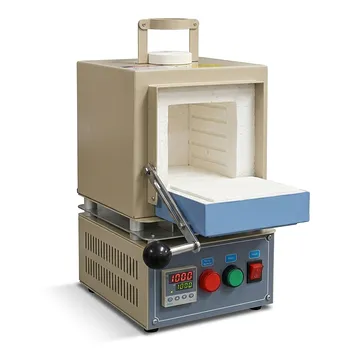
Why is a laboratory muffle furnace indispensable for evaluating bio-char performance as a solid fuel? Optimize Quality.
Updated 3 months ago
The laboratory muffle furnace is the definitive tool for establishing the energy profile of bio-char. By providing a highly controlled environment for high-temperature oxidation, it allows researchers to accurately quantify ash content, fixed carbon, and volatile matter. These metrics are the industry standard for determining fuel quality, predicting operational risks like boiler fouling, and ensuring the consistency of the pyrolysis process.
Core Takeaway: A muffle furnace is indispensable because it performs the proximate analysis required to validate bio-char as a viable solid fuel, specifically by isolating non-combustible minerals that dictate combustion efficiency and equipment longevity.
Quantifying Mineral Residue and Combustion Risks
The Critical Role of Ash Content Determination
The furnace evaluates fuel quality by completely oxidizing organic components to leave only inorganic ash. This residue reflects the concentration of non-combustible minerals that remain after the bio-char is burned.
Predicting Slagging and Fouling
High ash content is a primary indicator of potential slagging and fouling risks in industrial boilers. By quantifying these minerals, engineers can predict how bio-char will interact with heat exchange surfaces and prevent costly equipment damage.
Standardizing High-Temperature Oxidation
Precise measurement often requires heating samples at specific temperatures, such as 550°C or 750°C, for several hours. This ensures that all carbonaceous material is removed, leaving a reliable baseline for calculating the fuel’s purity and mineral enrichment.
Defining Fuel Quality through Proximate Analysis
Measuring Volatile Matter and Fixed Carbon
A muffle furnace is essential for determining the degree of carbonization by applying specific temperature programs. These programs distinguish between volatile matter (gases released during heating) and fixed carbon (the solid combustible residue).
Establishing the Energy Density
The ratio of fixed carbon to volatile matter determines how a fuel burns and how much energy it releases. The furnace’s ability to maintain stable temperatures, typically between 300°C and 700°C, allows for the precise characterization of these parameters across different feedstock types.
Benchmarking against Standard Protocols
Evaluating bio-char as a solid fuel requires adherence to standardized heating protocols. The muffle furnace provides the uniform thermal environment necessary to meet these regulatory and scientific benchmarks for fuel performance.
Optimizing the Pyrolysis Lifecycle
Precision Pretreatment for Experimental Accuracy
Before pyrolysis, the furnace can be used at lower temperatures (e.g., 50°C) to remove moisture and surface contaminants from biomass like palm or coconut shells. This step ensures that subsequent energy measurements are not skewed by water weight or fiber impurities.
Analyzing the Impact of Production Temperatures
By adjusting the peak pyrolysis temperature within the furnace, researchers can observe how different heat levels alter the bio-char’s chemical properties. This includes changes in pH, Cation Exchange Capacity (CEC), and the preservation of polar functional groups.
Enhancing Performance through Chemical Activation
In addition to analysis, the furnace provides the heat treatment needed for chemical activation with agents like potassium hydroxide. This process clears impurities from the carbon pores, significantly increasing the specific surface area and improving the overall quality of the fuel or catalyst.
Understanding the Trade-offs and Limitations
Risk of Mineral Volatilization
While high temperatures are necessary for ashing, excessive heat can cause certain volatile minerals to evaporate. This can lead to an underestimation of the total ash content if the temperature program is not strictly controlled according to the feedstock's properties.
Energy Consumption and Throughput
Muffle furnaces are generally batch-processing tools that require significant energy to maintain high temperatures for long durations. This makes them ideal for laboratory-scale validation and quality control but less suitable for continuous, high-volume production monitoring without multiple units.
Crucible and Sample Contamination
At extreme temperatures, interactions between the sample and the porcelain or quartz crucibles can occur. Researchers must ensure that the crucible material is chemically inert relative to the specific bio-char minerals being analyzed to prevent data inaccuracy.
How to Apply These Findings to Your Project
If your primary focus is Boiler Safety and Maintenance: Use the furnace's ashing function to prioritize feedstocks with low mineral concentrations to minimize slagging and fouling risks.
If your primary focus is High-Heat Energy Output: Focus on the "Fixed Carbon" measurement obtained via proximate analysis to identify the bio-char variants with the highest energy density.
If your primary focus is Process Optimization: Utilize the furnace to test a range of pyrolysis temperatures (300°C–700°C) to find the "sweet spot" where volatile matter is reduced without sacrificing carbon yield.
The laboratory muffle furnace remains the cornerstone of bio-char evaluation, turning raw thermal data into the actionable metrics required for the solid fuel industry.
Summary Table:
| Parameter | Measurement Method | Industry Significance |
|---|---|---|
| Ash Content | High-temperature oxidation (550°C-750°C) | Predicts slagging and fouling risks in boilers |
| Fixed Carbon | Carbonization after volatile removal | Determines energy density and fuel heat output |
| Volatile Matter | Controlled heating in inert environments | Dictates ignition stability and combustion purity |
| Surface Area | Chemical activation (e.g., with KOH) | Enhances catalytic performance and fuel quality |
Unlock Reliable Bio-char Data with THERMUNITS
Precision is paramount in material science and industrial R&D. THERMUNITS is a leading manufacturer of advanced thermal processing solutions, providing the high-temperature laboratory equipment you need to validate bio-char performance and optimize fuel quality.
Our extensive product range includes:
- High-Performance Furnaces: Muffle, Vacuum, Atmosphere, Tube, Rotary, and Hot Press models.
- Advanced Systems: CVD/PECVD systems, Dental Furnaces, and Vacuum Induction Melting (VIM) furnaces.
- Support Equipment: Electric rotary kilns and premium Thermal Elements.
Whether you are conducting proximate analysis or complex chemical activation, our equipment ensures uniform heating and stable temperature control for superior experimental results.
Ready to elevate your heat treatment capabilities?
Contact our experts today to find the perfect solution for your thermal research needs!
References
- Jelena Isailović, Vesna Antić. The energy potential of the products obtained by pyrolysis of agricultural waste. DOI: 10.5937/rgd240033i
Mentioned Products
- 1200C Muffle Furnace 12x8x5 7.2L Heating Chamber with Quartz Observation Window and Vent Port
- 1800C Bench Top Muffle Furnace with Kanthal Super 1900 Heating Elements and 3.6L Alumina Fiber Chamber
- Five Side Heating Muffle Furnace High Purity Alumina Fiber 27L Chamber 1200C High Temperature Thermal Processing System for Sintering Annealing and Materials Research
- High Temperature 1200C Muffle Furnace 27L Volume 12x12x12 Chamber with Programmable PID Controller for Laboratory Material Science
- High Temperature 1800C Compact Muffle Furnace with Kanthal Super 1900 Heating Elements and 1.7L Alumina Chamber
People Also Ask
- What is the function of an experimental muffle furnace in the conversion of FeOOH to α-Fe2O3? Optimize Phase Transition
- Why is a muffle furnace required for MoO2@HCNF pre-oxidation? Crucial Steps for High-Performance Composites
- What is the function of a high-temperature Muffle furnace in removing residual solvents? Essential Bismuth Synthesis
- What is the function of Muffle furnace calcination? Essential steps for Pr-doped SrFeMoO6 Perovskite synthesis.
- What are the primary functions of a Muffle furnace in oxide calcination? Achieve high purity and phase control.

Tech Team · ThermUnits
Last updated on Jun 03, 2026
Related Products
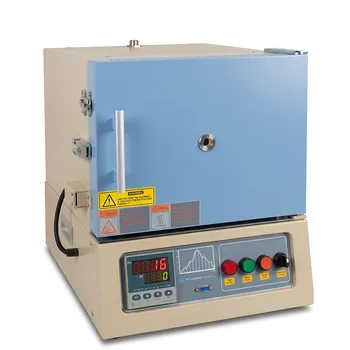
1200C Muffle Furnace 12x8x5 7.2L Heating Chamber with Quartz Observation Window and Vent Port
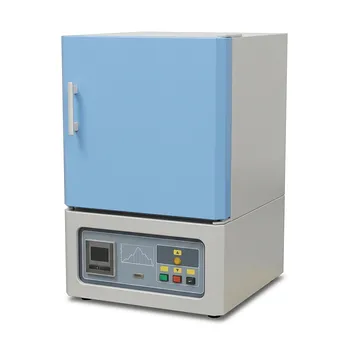
1800C Bench Top Muffle Furnace with Kanthal Super 1900 Heating Elements and 3.6L Alumina Fiber Chamber
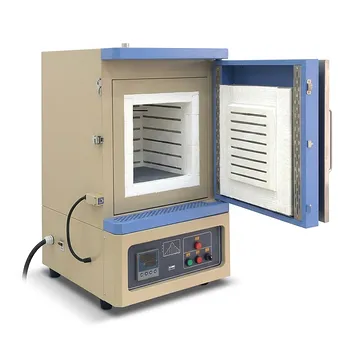
Five Side Heating Muffle Furnace High Purity Alumina Fiber 27L Chamber 1200C High Temperature Thermal Processing System for Sintering Annealing and Materials Research
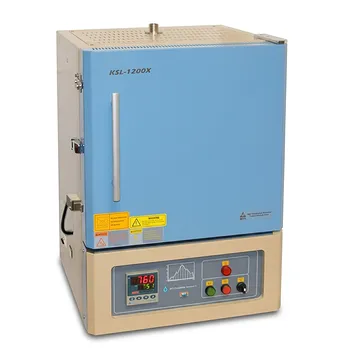
High Temperature 1200C Muffle Furnace 27L Volume 12x12x12 Chamber with Programmable PID Controller for Laboratory Material Science
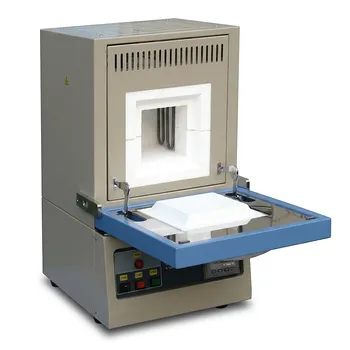
High Temperature 1800C Compact Muffle Furnace with Kanthal Super 1900 Heating Elements and 1.7L Alumina Chamber
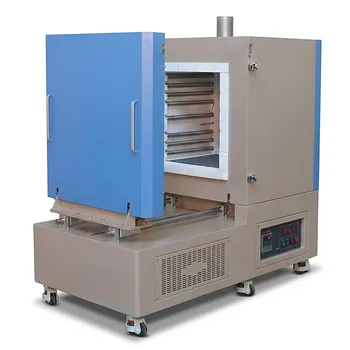
1200C Five Side Heating Muffle Furnace with Sliding Door 125L Volume High Temperature Heat Treatment System for Large Scale Sintering and Annealing
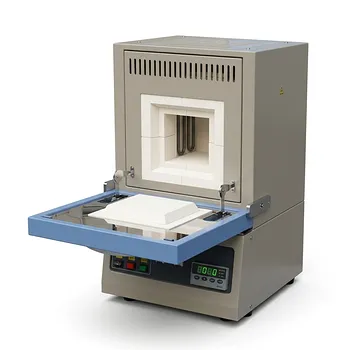
Five Sided Heating Muffle Furnace High Uniformity 1200C Lab Box Furnace 27L Alumina Fiber Chamber
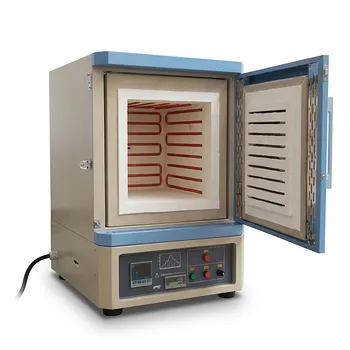
Five Side Heating Muffle Furnace 1200C High Uniformity 64L Chamber 16x16x16 Inch Industrial Heat Treatment
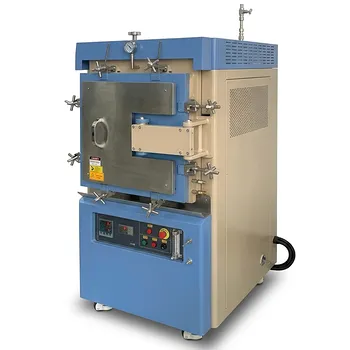
Atmosphere Controlled Muffle Furnace 1700C Maximum Temperature 80L High Capacity Vacuum Inert Gas Box Furnace
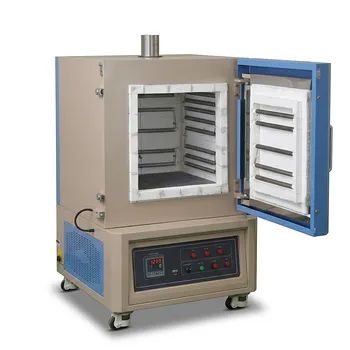
1200C High Temperature 125L Muffle Furnace 5 Side Heating for Large Batch Sintering with Optional Alloy Debinding Chamber
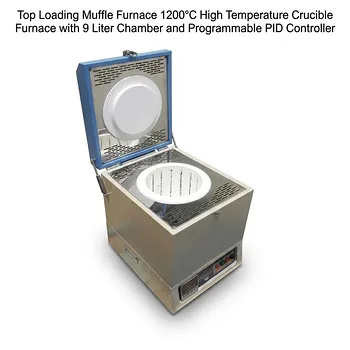
Top Loading Muffle Furnace 1200°C High Temperature Crucible Furnace with 9 Liter Chamber and Programmable PID Controller
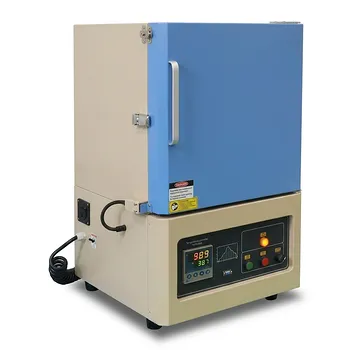
1200°C High Temperature Muffle Furnace 19L Chamber with 50 Segment Programmable Controller
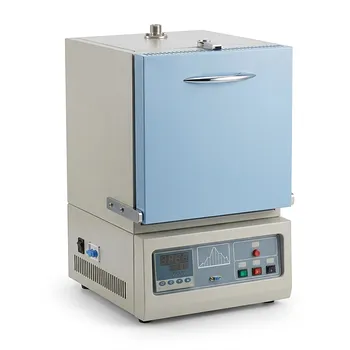
1750C Compact Muffle Furnace 1.7L Ultra High Temperature Laboratory Sintering System for Advanced Ceramics and Material Science Research
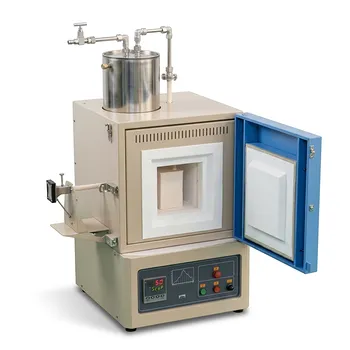
High Temperature Bench Top Muffle Furnace 1700C with Integrated Evaporating Particle Collection and 8x8x8 Alumina Fiber Chamber
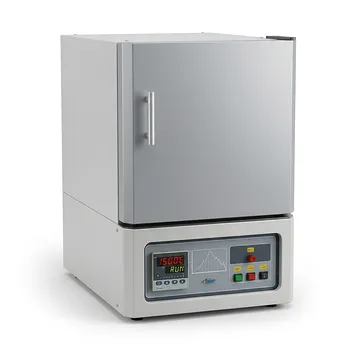
High Temperature 1500C Benchtop Muffle Furnace 3.6L Alumina Fiber Chamber Programmable Controller Sintering Annealing Carbonization Thermal Processing System
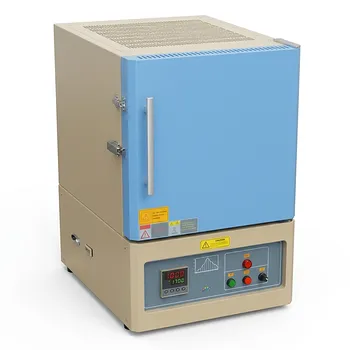
Large Bench Top 1700C High Temperature Muffle Furnace with 19L Chamber for Advanced Material Sintering and Annealing
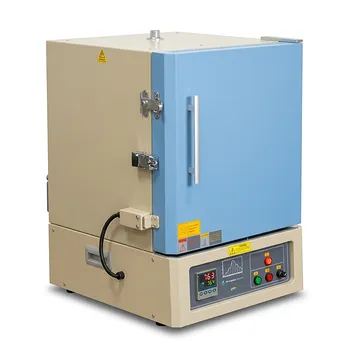
Large Capacity 1200C Muffle Furnace 64 Liter Chamber with Digital PID Controller and Built In Venting Port
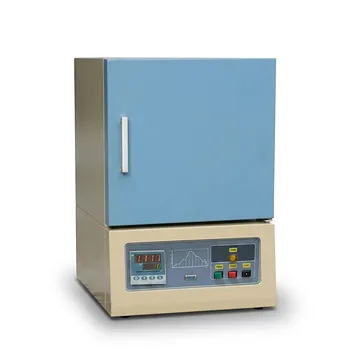
Ultra High Temperature Bench Top Muffle Furnace 1750C Sintering System with Kanthal Super Heating Elements and Precision Digital Control
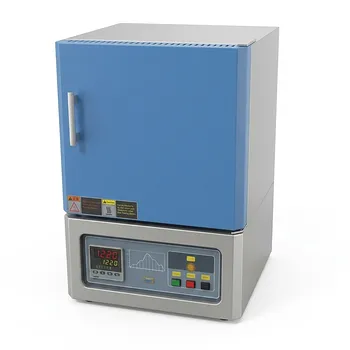
High Temperature Benchtop Muffle Furnace 1700C 10L Chamber Alumina Fiber Insulation MoSi2 Heating Elements