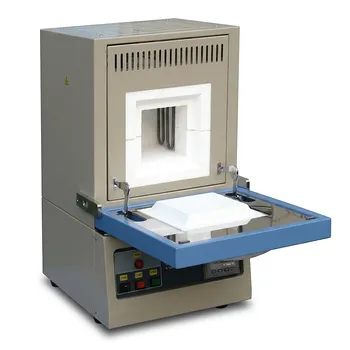
Why is a muffle furnace essential for analyzing the ash characteristics of blended fuels? Optimize Fuel Safety
Updated 3 months ago
A muffle furnace is the indispensable tool for isolating inorganic residue from blended fuels to determine ash content and chemical composition. It provides a precisely controlled, high-temperature oxidative environment that completely mineralizes organic matter, allowing laboratory personnel to quantify the non-combustible minerals that drive slagging, fouling, and corrosion in industrial boilers.
The muffle furnace serves as the foundational platform for fuel analysis by enabling the "dry ashing" process, which is essential for calculating slagging indices and predicting how high-sulfur coal and SRF blends will impact operational efficiency and equipment longevity.
Achieving Complete Mineralization
The Necessity of Controlled Oxidation
To analyze the ash characteristics of a fuel blend, all organic components must be removed without losing the inorganic mineral structure. A muffle furnace utilizes a closed heating structure to maintain a stable, high-temperature field (often ranging from 550°C to 850°C depending on the standard) that ensures complete oxidation and volatilization of carbonaceous material.
Isolation of Inorganic Residues
By burning off the organic matrix, the furnace leaves behind a pure inorganic residue. This residue is the "ash" used to calculate the fuel's total ash content, a primary indicator for evaluating combustion efficiency and the volume of waste the fuel will generate.
Predicting Slagging and Fouling Risks
Determining Melting Temperatures (IDT and ST)
High-sulfur coal and SRF blends are notorious for complex melting behaviors that can lead to "slagging" (molten ash deposits). The muffle furnace is used to prepare ash cones for melting tests (such as ASTM D1857), where researchers observe deformation at temperatures up to 1275°C to identify the Initial Deformation Temperature (IDT) and Softening Temperature (ST).
Calculating Fouling Indices
The ash obtained from the muffle furnace serves as the core input for calculating indices that predict the risk of kiln ring formation and boiler tube fouling. Understanding these indices allows operators to adjust fuel ratios or combustion temperatures to prevent costly unscheduled shutdowns.
Enabling Advanced Chemical Analysis
Preparation for XRF and Elemental Detection
The "clean" ash produced by the furnace is required for downstream analysis techniques like X-Ray Fluorescence (XRF). This process is critical for detecting alkali metal oxides (such as K2O and Na2O), which are often prevalent in SRF and can significantly increase the risk of furnace lining corrosion and slag fluidity.
Assessing High-Sulfur Implications
In blends containing high-sulfur coal, the muffle furnace helps researchers understand how sulfur interacts with the mineral ash. This is vital for predicting the chemical composition of clinker and the potential for sulfur-driven corrosion on heating surfaces.
Understanding the Trade-offs
Volatilization of Trace Elements
While high temperatures are necessary for mineralization, excessive heat can lead to the unintended volatilization of certain trace elements or salts (like chlorides) common in SRF. This can result in a slight underestimation of the total ash content if the temperature is not strictly regulated according to specific testing standards.
Time and Energy Consumption
Achieving a stable thermal field for "dry ashing" is a time-intensive process, often requiring several hours (e.g., 575°C for 5 hours) to ensure carbon-free results. The high energy demand of maintaining temperatures above 1000°C means that laboratory throughput must be carefully balanced against precision requirements.
How to Apply This to Your Project
Making the Right Choice for Your Goal
- If your primary focus is operational safety: Use the muffle furnace to identify the Softening Temperature (ST) to ensure your boiler operating temperature remains below the ash fusion point.
- If your primary focus is environmental compliance: Utilize the furnace to prepare ash for XRF analysis to quantify heavy metals and minerals introduced by the SRF component.
- If your primary focus is fuel blending optimization: Run standardized ash content tests at 850°C to calculate the slagging indices of different coal-to-SRF ratios.
The muffle furnace provides the empirical data necessary to transform raw fuel blends into predictable energy sources while protecting critical industrial infrastructure.
Summary Table:
| Feature/Process | Purpose in Fuel Analysis | Impact on Industrial Operations |
|---|---|---|
| Dry Ashing | Complete mineralization of organic matter | Accurately quantifies total ash content and waste volume. |
| Fusion Testing | Identifies Softening Temperature (ST) & IDT | Predicts and prevents slagging and molten ash deposits. |
| Sample Preparation | Prepares residue for XRF analysis | Detects alkali metals and heavy metals for compliance. |
| Corrosion Assessment | Analyzes sulfur-mineral interactions | Prevents sulfur-driven corrosion on boiler heating surfaces. |
| Thermal Field Control | Maintains stable high-temperature environment | Ensures consistent, carbon-free inorganic residues. |
Elevate Your Laboratory Research with Precision Thermal Solutions
Isolating inorganic residues and predicting fuel behavior requires the highest standards of thermal accuracy. THERMUNITS is a leading manufacturer of high-temperature laboratory equipment dedicated to supporting material science and industrial R&D.
From high-performance Muffle Furnaces for ash analysis to specialized Vacuum, Atmosphere, Tube, and Rotary Furnaces, our equipment is engineered for reliability and precision. We also offer advanced CVD/PECVD systems, Hot Press furnaces, Electric Rotary Kilns, and Vacuum Induction Melting (VIM) furnaces to meet the most demanding heat treatment requirements.
Why choose THERMUNITS?
- Comprehensive Range: Solutions for everything from dental applications to large-scale industrial R&D.
- Precision Control: Industry-leading temperature uniformity for accurate mineralization and fusion testing.
- Expert Support: Our team helps you select the right thermal elements and systems to protect your equipment and optimize fuel efficiency.
Ready to enhance your lab's efficiency and industrial safety? Contact our experts today to find the perfect thermal processing solution for your project!
References
- Hafizh Ghazidin, Arif Darmawan. Investigation of slagging-fouling tendency for high-sulfur coal and solid recovered fuel (SRF). DOI: 10.1088/1755-1315/1344/1/012003
Mentioned Products
- High Temperature Benchtop Muffle Furnace with Quartz Observation Window for Thermal Imaging and Material Analysis
- High Temperature 1200C Muffle Furnace 27L Volume 12x12x12 Chamber with Programmable PID Controller for Laboratory Material Science
- Large Bench Top 1700C High Temperature Muffle Furnace with 19L Chamber for Advanced Material Sintering and Annealing
- 1200C High Temperature 125L Muffle Furnace 5 Side Heating for Large Batch Sintering with Optional Alloy Debinding Chamber
- 1750C Compact Muffle Furnace 1.7L Ultra High Temperature Laboratory Sintering System for Advanced Ceramics and Material Science Research
People Also Ask
- What is the function of a muffle furnace in aluminoborosilicate glass prep? Stabilize Raw Materials for Superior Purity
- What is the function of a high-temperature muffle furnace in phosphorus-modified zeolite catalyst preparation?
- What is the function of a high-temp muffle furnace in Ni-V oxide synthesis? Optimize your material's performance.
- What role does a high-temperature muffle furnace play in evaluating the mineral composition of rock samples? LOI & XRF Guide
- What is the purpose of using muffle or tube furnaces in glass synthesis? Achieve Precise Melt-Quenching & Homogeneity

Tech Team · ThermUnits
Last updated on Jun 03, 2026
Related Products
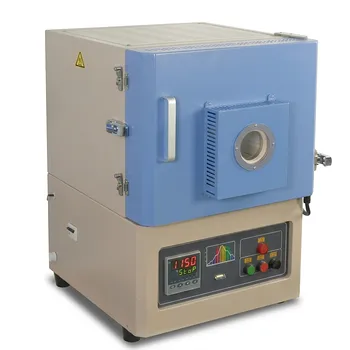
High Temperature Benchtop Muffle Furnace with Quartz Observation Window for Thermal Imaging and Material Analysis
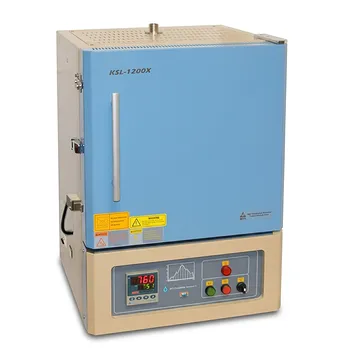
High Temperature 1200C Muffle Furnace 27L Volume 12x12x12 Chamber with Programmable PID Controller for Laboratory Material Science
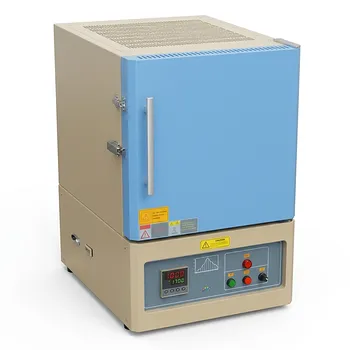
Large Bench Top 1700C High Temperature Muffle Furnace with 19L Chamber for Advanced Material Sintering and Annealing
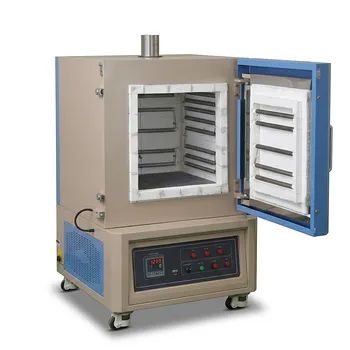
1200C High Temperature 125L Muffle Furnace 5 Side Heating for Large Batch Sintering with Optional Alloy Debinding Chamber
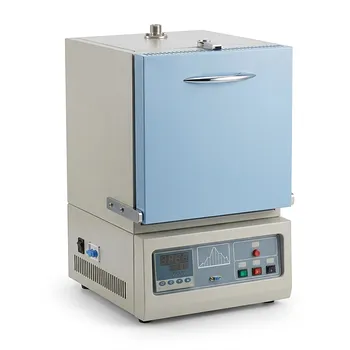
1750C Compact Muffle Furnace 1.7L Ultra High Temperature Laboratory Sintering System for Advanced Ceramics and Material Science Research
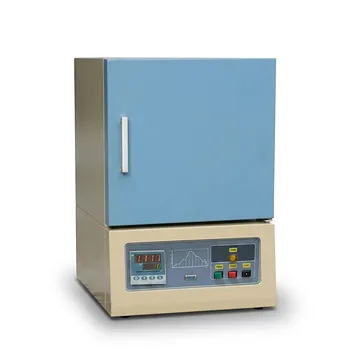
Ultra High Temperature Bench Top Muffle Furnace 1750C Sintering System with Kanthal Super Heating Elements and Precision Digital Control
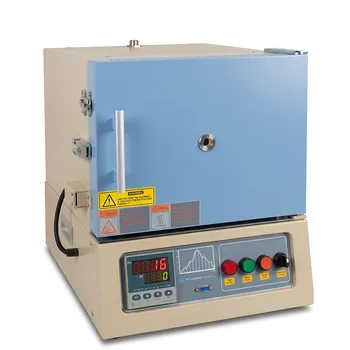
1200C Muffle Furnace 12x8x5 7.2L Heating Chamber with Quartz Observation Window and Vent Port
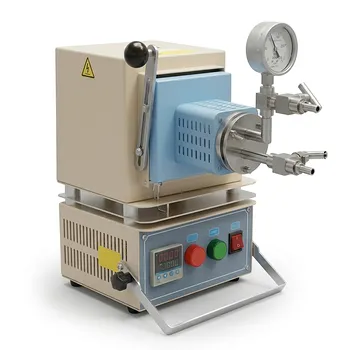
Compact Hybrid Muffle and Tube Furnace for 1000C Controlled Atmosphere Laboratory Material Sintering
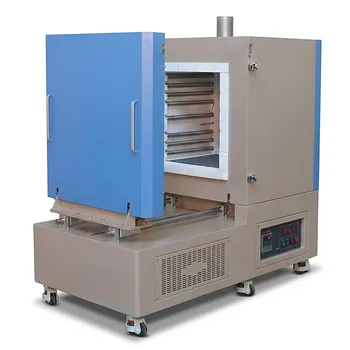
1200C Five Side Heating Muffle Furnace with Sliding Door 125L Volume High Temperature Heat Treatment System for Large Scale Sintering and Annealing
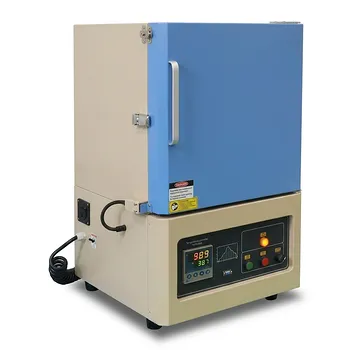
1200°C High Temperature Muffle Furnace 19L Chamber with 50 Segment Programmable Controller
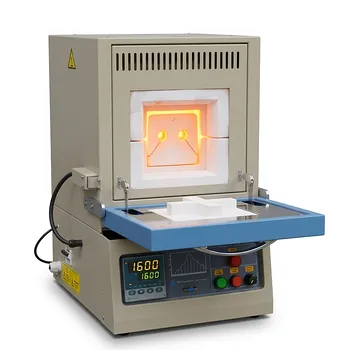
High Temperature Compact Muffle Furnace 1700 C with 30 Segment Programmable Controller and 1.7L Cubic Chamber
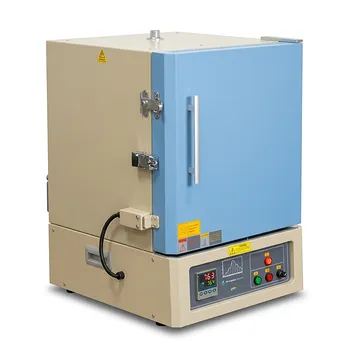
Large Capacity 1200C Muffle Furnace 64 Liter Chamber with Digital PID Controller and Built In Venting Port
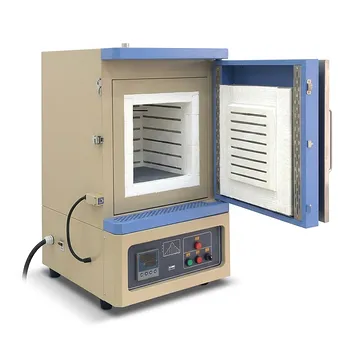
Five Side Heating Muffle Furnace High Purity Alumina Fiber 27L Chamber 1200C High Temperature Thermal Processing System for Sintering Annealing and Materials Research
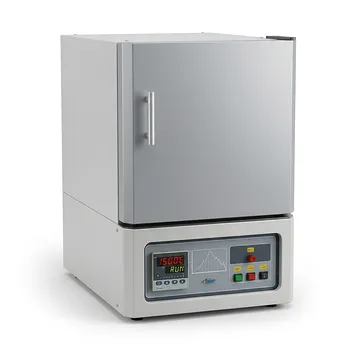
High Temperature 1500C Benchtop Muffle Furnace 3.6L Alumina Fiber Chamber Programmable Controller Sintering Annealing Carbonization Thermal Processing System
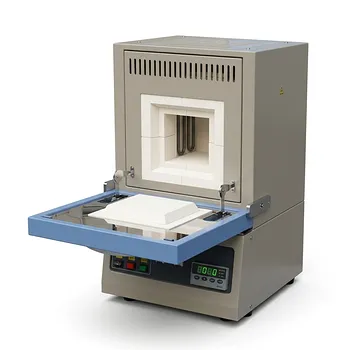
Five Sided Heating Muffle Furnace High Uniformity 1200C Lab Box Furnace 27L Alumina Fiber Chamber
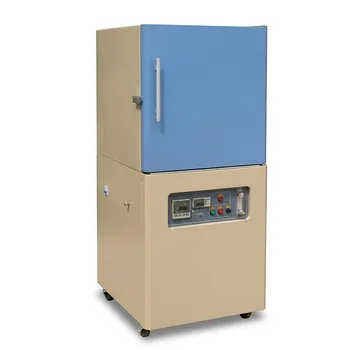
High Temperature Muffle Furnace with Dual Controllers and 36L Large Chamber 1700C Max
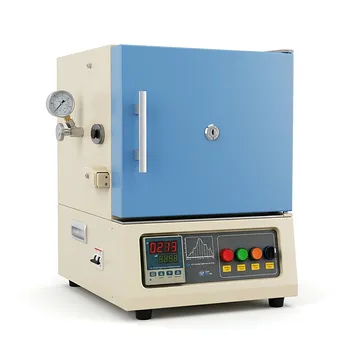
1200C Hybrid Muffle and Tube Furnace for Material Research with Dual Atmosphere Control Quartz Tubes
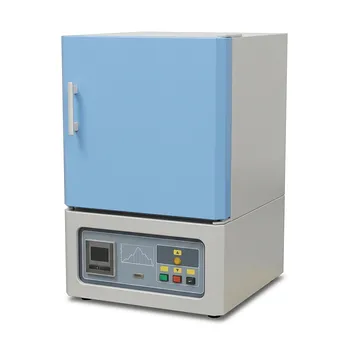
1800C Bench Top Muffle Furnace with Kanthal Super 1900 Heating Elements and 3.6L Alumina Fiber Chamber
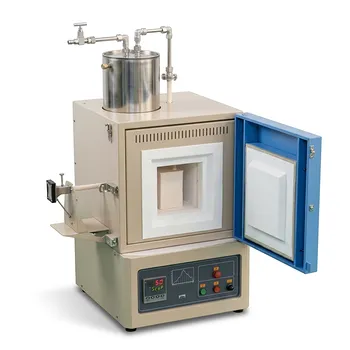
High Temperature Bench Top Muffle Furnace 1700C with Integrated Evaporating Particle Collection and 8x8x8 Alumina Fiber Chamber