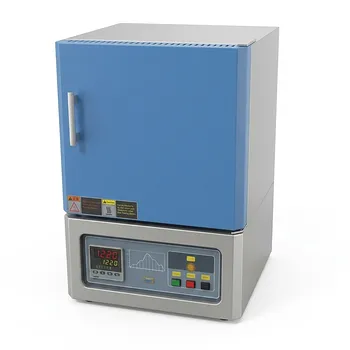
Why is a Muffle Furnace essential for the precursor pre-calcination process? Unlock Superior Ceramic Microstructure.
Updated 3 months ago
The muffle furnace is the cornerstone of ceramic pre-calcination because it provides a highly uniform, stable thermal field necessary for complete chemical decomposition and phase transformation. By precisely controlling the temperature environment, it ensures that precursors reach a state of high chemical reactivity and uniform composition, which is the mandatory foundation for producing high-density, defect-free final ceramics.
Core Takeaway: Pre-calcination in a muffle furnace transforms raw chemical precursors into stable, reactive oxide powders while eliminating volatile impurities. This stage is critical because it dictates the powder's particle size and phase purity, directly preventing cracks and structural failures during the final high-temperature sintering process.
Achieving Chemical and Phase Homogeneity
Facilitating Complete Thermal Decomposition
A muffle furnace provides the sustained heat required to break down commercial precursors like hydroxides, carbonates, and nitrates into their active oxide states. For example, it is used to trigger dehydroxylation reactions—such as turning kaolinite into metakaolin—which significantly increases the material's chemical activity.
Ensuring Uniform Phase Transformation
The stable thermal environment, often maintained at specific temperatures like 800°C, allows for the initial solid-state reaction among mixed powders to form complex structures like the perovskite phase. Without the uniform heat of a muffle furnace, localized temperature variations would lead to the formation of undesirable impurity phases that compromise the material’s performance.
Establishing Crystalline Foundations
By maintaining a constant temperature for extended periods, the furnace ensures the material reaches a stable chemical state before the final sintering. This process promotes the formation of specific crystalline structures, such as anatase or rutile TiO2, which are essential for the material's functional properties.
Microstructure Control and Reactivity
Limiting Initial Grain Growth
Precise temperature control is essential to limit the growth of grains during the pre-calcination stage. By keeping grains small and uniform, the furnace ensures the resulting powder remains highly reactive, which is a prerequisite for achieving high density in the final product.
Preventing Particle Agglomeration
Utilizing controlled heating rates, such as 7°C per minute, prevents the severe sintering or "clumping" of particles during their phase transition. This preservation of a high specific surface area is particularly vital for catalysts and high-performance ceramics that require efficient diffusion and reaction sites.
Managing Volume Effects
Pre-calcination reduces the "volume effect" of the powders by reacting them into denser phases before they are formed into shapes. This reduction in volume change during the final sintering stage is what allows manufacturers to produce ceramics with high dimensional accuracy.
Elimination of Volatiles and Defect Prevention
Removing Residual Impurities
The furnace environment facilitates the escape of volatile components like carbon dioxide, crystalline water, and nitrates. If these are not fully removed during pre-calcination, they will outgas during the final sintering stage, leading to the formation of internal pores or "bloating."
Reducing the Risk of Micro-cracks
By triggering moisture escape and dehydroxylation early in a controlled manner, the muffle furnace prevents the rapid internal pressure buildup that causes surface cracks. This ensures that the "green bodies" (unfired shapes) remain structurally sound as they transition to their final ceramic state.
Enhancing Sintering Density
A well-calcined powder packs more efficiently during the forming process, leading to higher-density green bodies. This increased density reduces the shrinkage rate during the final high-temperature firing, resulting in a more robust and mechanically stable end product.
Understanding the Trade-offs
The Balance of Temperature and Time
Setting the furnace temperature too low results in incomplete decomposition and the persistence of impurity phases. Conversely, excessive temperatures or overly long dwell times cause premature sintering, which reduces powder reactivity and makes subsequent milling much more difficult.
Heating Rate Sensitivity
Rapid heating rates can lead to non-uniform reactions within the powder bed, where the exterior of the sample reacts faster than the core. This creates chemical gradients that can cause structural stresses and inconsistent performance across a single batch of material.
Atmosphere Limitations
While most muffle furnaces operate in an air atmosphere, some precursors may require specific oxygen or nitrogen levels to prevent unwanted oxidation states. Relying on a standard air-filled muffle furnace for oxygen-sensitive materials can lead to the formation of incorrect oxide phases.
How to Apply This to Your Project
Recommendations for Pre-Calcination Success
To achieve the best results in ceramic preparation, your furnace strategy should align with your specific material requirements:
- If your primary focus is Phase Purity: Use a high-precision muffle furnace to maintain a stable temperature for at least 2 to 5 hours to ensure complete solid-state reactions.
- If your primary focus is High Surface Area: Implement a slow, controlled heating rate (e.g., 5-7°C/min) to prevent premature particle agglomeration and preserve reactivity.
- If your primary focus is Preventing Cracks: Ensure the calcination temperature is high enough to fully remove all crystalline water and carbonates before proceeding to the shaping and final sintering stages.
- If your primary focus is Dimensional Accuracy: Focus on maximizing the "volume effect" reduction during pre-calcination to minimize the shrinkage rate of the finished ceramic.
Mastering the pre-calcination stage in a muffle furnace is the most effective way to guarantee the structural integrity and chemical excellence of high-performance ceramic materials.
Summary Table:
| Process Phase | Muffle Furnace Function | Impact on Final Ceramic |
|---|---|---|
| Decomposition | Removal of volatiles (CO2, H2O, nitrates) | Prevents internal pores, cracks, and "bloating" |
| Phase Transition | Facilitates solid-state reactions (e.g., Perovskite) | Ensures chemical homogeneity and phase purity |
| Grain Control | Precise temperature & heating rate management | Maintains high reactivity and specific surface area |
| Volume Management | Pre-densification of powders | Reduces shrinkage and improves dimensional accuracy |
Elevate Your Material Research with THERMUNITS Precision
Achieving the perfect crystalline phase and microstructure starts with reliable thermal processing. THERMUNITS is a leading manufacturer of high-temperature laboratory equipment dedicated to supporting material science and industrial R&D. We provide the precise, uniform heating environments necessary for critical processes like precursor pre-calcination.
Our comprehensive range of thermal solutions includes:
- Advanced Furnaces: Muffle, Vacuum, Atmosphere, Tube, Rotary, and Hot Press Furnaces.
- Specialized Systems: CVD/PECVD systems, Dental Furnaces, and Vacuum Induction Melting (VIM) furnaces.
- Industrial Scale: Electric rotary kilns and high-performance thermal elements.
Whether you are refining ceramic powders or developing next-generation composites, our team is ready to provide the technical expertise and equipment you need.
Contact THERMUNITS Today to Optimize Your Heat Treatment Workflow
References
- Huabo Li, Wei‐Lin Dai. Size‐Dependent Copper Nanoparticles Supported on Carbon Nanotubes with Balanced Cu<sup>+</sup> and Cu<sup>0</sup> Dual Sites for the Selective Hydrogenation of Ethylene Carbonate. DOI: 10.1002/chem.202402699
Mentioned Products
- 1200C Muffle Furnace 12x8x5 7.2L Heating Chamber with Quartz Observation Window and Vent Port
- High Temperature 1200C Muffle Furnace 27L Volume 12x12x12 Chamber with Programmable PID Controller for Laboratory Material Science
- 1750C Compact Muffle Furnace 1.7L Ultra High Temperature Laboratory Sintering System for Advanced Ceramics and Material Science Research
- 1200C High Temperature 125L Muffle Furnace 5 Side Heating for Large Batch Sintering with Optional Alloy Debinding Chamber
- Ultra High Temperature Bench Top Muffle Furnace 1750C Sintering System with Kanthal Super Heating Elements and Precision Digital Control
People Also Ask
- What is the function of an experimental muffle furnace in the conversion of FeOOH to α-Fe2O3? Optimize Phase Transition
- Why is a muffle furnace required for MoO2@HCNF pre-oxidation? Crucial Steps for High-Performance Composites
- What is the function of a high-temperature Muffle furnace in removing residual solvents? Essential Bismuth Synthesis
- What is the function of Muffle furnace calcination? Essential steps for Pr-doped SrFeMoO6 Perovskite synthesis.
- What are the primary functions of a Muffle furnace in oxide calcination? Achieve high purity and phase control.

Tech Team · ThermUnits
Last updated on Jun 02, 2026
Related Products
1200C Muffle Furnace 12x8x5 7.2L Heating Chamber with Quartz Observation Window and Vent Port
High Temperature 1200C Muffle Furnace 27L Volume 12x12x12 Chamber with Programmable PID Controller for Laboratory Material Science
1750C Compact Muffle Furnace 1.7L Ultra High Temperature Laboratory Sintering System for Advanced Ceramics and Material Science Research
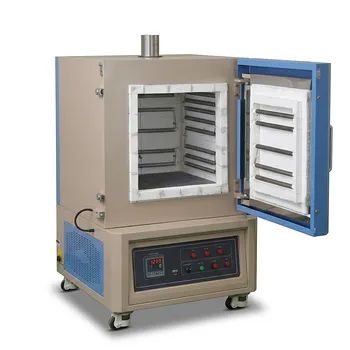
1200C High Temperature 125L Muffle Furnace 5 Side Heating for Large Batch Sintering with Optional Alloy Debinding Chamber
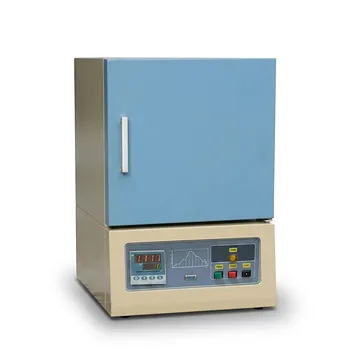
Ultra High Temperature Bench Top Muffle Furnace 1750C Sintering System with Kanthal Super Heating Elements and Precision Digital Control
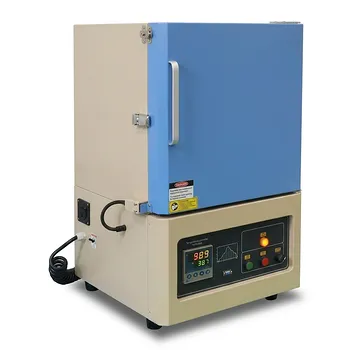
1200°C High Temperature Muffle Furnace 19L Chamber with 50 Segment Programmable Controller
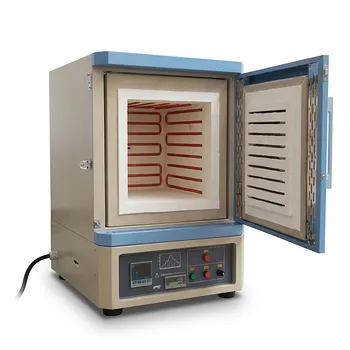
Five Side Heating Muffle Furnace 1200C High Uniformity 64L Chamber 16x16x16 Inch Industrial Heat Treatment
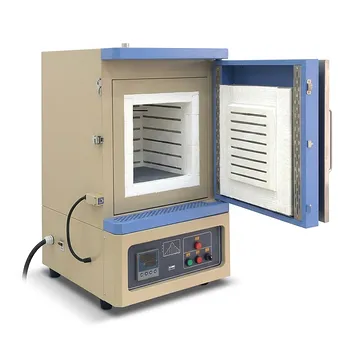
Five Side Heating Muffle Furnace High Purity Alumina Fiber 27L Chamber 1200C High Temperature Thermal Processing System for Sintering Annealing and Materials Research
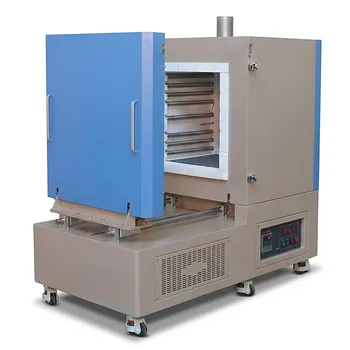
1200C Five Side Heating Muffle Furnace with Sliding Door 125L Volume High Temperature Heat Treatment System for Large Scale Sintering and Annealing
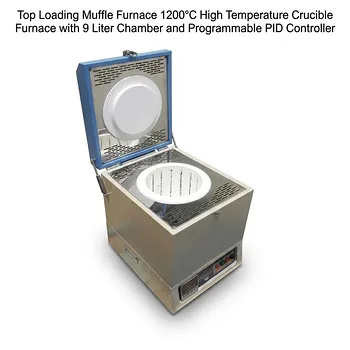
Top Loading Muffle Furnace 1200°C High Temperature Crucible Furnace with 9 Liter Chamber and Programmable PID Controller
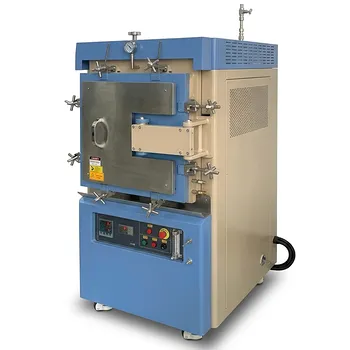
Atmosphere Controlled Muffle Furnace 1700C Maximum Temperature 80L High Capacity Vacuum Inert Gas Box Furnace
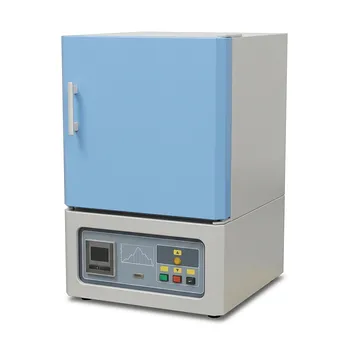
1800C Bench Top Muffle Furnace with Kanthal Super 1900 Heating Elements and 3.6L Alumina Fiber Chamber
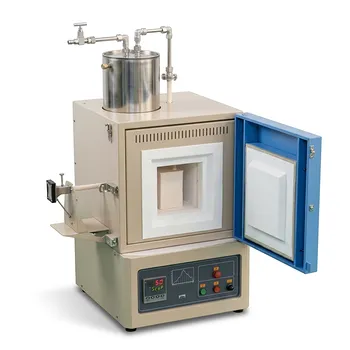
High Temperature Bench Top Muffle Furnace 1700C with Integrated Evaporating Particle Collection and 8x8x8 Alumina Fiber Chamber
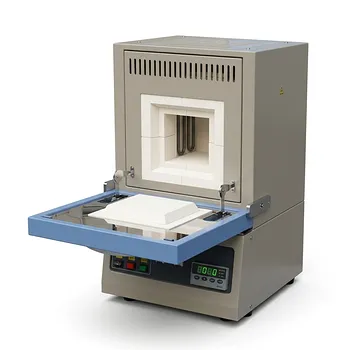
Five Sided Heating Muffle Furnace High Uniformity 1200C Lab Box Furnace 27L Alumina Fiber Chamber
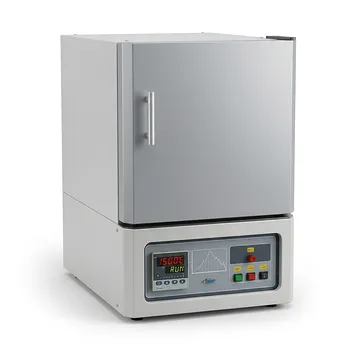
High Temperature 1500C Benchtop Muffle Furnace 3.6L Alumina Fiber Chamber Programmable Controller Sintering Annealing Carbonization Thermal Processing System
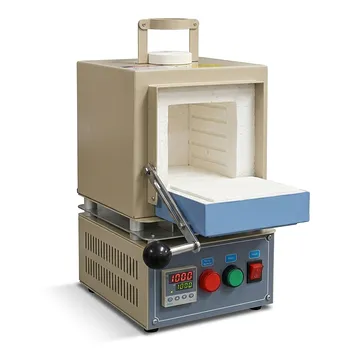
Compact 1000C Muffle Furnace with Programmable Controller and 2 Inch Top Port for Vacuum and Atmosphere Material Research
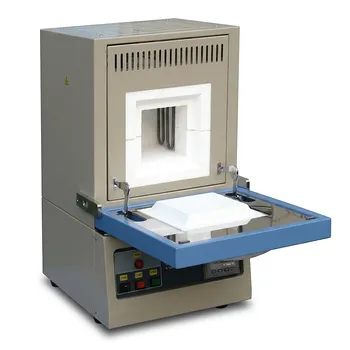
High Temperature 1800C Compact Muffle Furnace with Kanthal Super 1900 Heating Elements and 1.7L Alumina Chamber
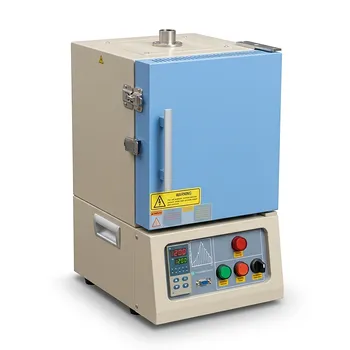
1200°C Small Box Furnace 4.2 Liter Programmable Muffle Furnace with High Purity Alumina Insulation and PID Control
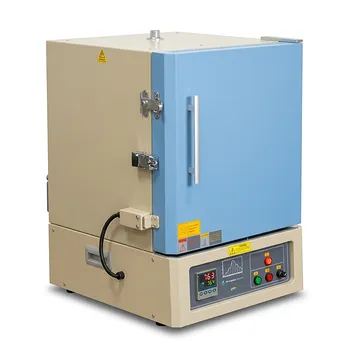
Large Capacity 1200C Muffle Furnace 64 Liter Chamber with Digital PID Controller and Built In Venting Port