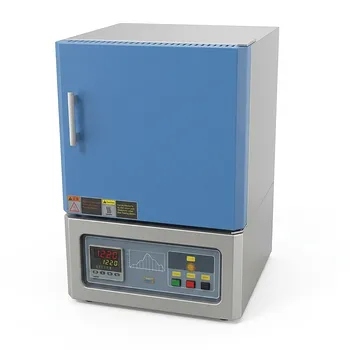
Why is a Muffle Furnace used for the pre-oxidation step of polymer-coated substrates? Ensure Material Stability & Form
Updated 6 months ago
Muffle furnaces serve as the critical bridge between raw polymer coatings and stable carbonized materials. By providing a uniform high-temperature environment in an air atmosphere—typically around 280°C—the furnace facilitates the cross-linking and cyclization of polymer molecules. This process converts linear thermoplastic structures into a heat-resistant "ladder" framework, ensuring the coating survives subsequent high-temperature stages without melting or peeling.
The central takeaway: A muffle furnace is used for pre-oxidation to chemically stabilize polymer precursors, transforming them from heat-sensitive chains into a robust, non-melting structure that maintains its physical integrity during extreme thermal processing.
The Chemical Transformation of the Polymer
From Linear Chains to Ladder Structures
During pre-oxidation, polymers like Polyacrylonitrile (PAN) undergo a fundamental shift in their molecular geometry. The heat induces cyclization, where linear molecules rearrange into a more rigid, hexagonal ladder structure. This new chemical state is significantly more stable and possesses a much higher melting point than the original precursor.
The Role of Air and Oxygen
The muffle furnace provides a controlled air oxidation environment that introduces oxygen-containing functional groups into the material framework. These groups facilitate further dehydrogenation and cross-linking, which are essential for creating a stable skeleton. Without this aerobic environment, the polymer would likely degrade or fail to form the necessary internal bonds.
Achieving a Stable Physical State
By reaching a stable chemical state at moderate temperatures, the coating becomes anchored to the substrate. This prevents the common issue of the coating peeling off or collapsing when the temperature is ramped up for the next phase. The furnace environment ensures this transition happens uniformly across the entire surface of the material.
Ensuring Structural Integrity During Carbonization
Preventing Thermal Deformation
Unmodified polymers are typically thermoplastic, meaning they would melt and lose their shape if placed directly into a carbonization furnace. The pre-oxidation step ensures the fibers or coatings do not melt or adhere to each other when exposed to temperatures exceeding 1000°C. This is vital for maintaining specific architectures, such as hollow nanofibers or complex molded pellets.
Precision Heating and Uniformity
Muffle furnaces provide the stable and uniform thermal field required for consistent chemical decomposition. Precise heating curves—often as slow as 1°C per minute—are used to prevent the rapid release of volatiles that could rupture the coating. This level of control ensures that the final material maintains its mechanical properties and morphology.
Promoting Phase Transformation
Beyond simply hardening the polymer, the furnace environment can facilitate complete phase transformations. For specific applications, such as alloy anodes, it allows for the cultivation of dense oxide films that improve electrochemical stability. This step changes the surface reactivity, providing a superior interface for the final product's intended use.
Understanding the Trade-offs and Pitfalls
The Risk of Rapid Heating
If the heating rate within the muffle furnace is too aggressive, the exothermic reactions of cyclization can become uncontrolled. This often leads to thermal runaway, where the fibers burn or melt internally before the ladder structure has a chance to form. Precision control is the only way to avoid this structural failure.
Inconsistent Oxygen Diffusion
If the air circulation within the furnace is uneven, different parts of the substrate may oxidize at different rates. This result creates structural gradients, where the exterior of the coating is stable but the core remains thermoplastic. Such inconsistencies lead to the "skin-core" effect, which causes fragile, brittle, or hollowed-out centers during carbonization.
How to Apply This to Your Project
Recommendations for Material Stability
A successful pre-oxidation phase depends heavily on aligning your furnace settings with your specific material goals.
- If your primary focus is maintaining nanofiber morphology: Use a precision-controlled furnace to apply a very slow heating rate (e.g., 1°C/min) to 280°C to ensure uniform cyclization without melting.
- If your primary focus is substrate adhesion: Ensure the air atmosphere is consistently circulated to promote deep cross-linking at the interface, preventing peeling during the high-temp stage.
- If your primary focus is developing specific pore structures: Utilize a dwell time (e.g., 2 hours at 573K) to introduce oxygen-containing groups that stabilize the carbon framework against excessive softening.
Ultimately, the muffle furnace acts as a chemical stabilizer, ensuring your material preserves its intended form while undergoing the extreme transitions required for high-performance applications.
Summary Table:
| Process Objective | Chemical Action | Thermal Requirement | Resulting Benefit |
|---|---|---|---|
| Cyclization | Linear chains to ladder structure | Uniform 280°C (Air) | Higher melting point, heat resistance |
| Cross-linking | Dehydrogenation & oxygen groups | Controlled air circulation | Prevents peeling and structural collapse |
| Stabilization | Rigid hexagonal framework | Precise slow heating rates | Maintains morphology at >1000°C |
Elevate Your Research with Precision Thermal Solutions
Maximize the success of your material preparation—from pre-oxidation to advanced carbonization—with THERMUNITS. As a leading manufacturer of high-temperature laboratory equipment for material science and industrial R&D, we understand that precision is non-negotiable.
Our comprehensive range of thermal processing solutions includes:
- Muffle & Tube Furnaces: Perfect for uniform pre-oxidation and air stabilization.
- Vacuum & Atmosphere Furnaces: Essential for controlled carbonization and high-purity processing.
- CVD/PECVD Systems & Rotary Kilns: Advanced tools for specialized material synthesis.
Whether you are developing hollow nanofibers or complex alloy anodes, THERMUNITS provides the stable thermal fields and precise control necessary to prevent thermal deformation and ensure structural integrity.
Ready to optimize your heat treatment workflow? Contact our experts today to find the perfect furnace solution for your laboratory.
References
- Nurbolat Issatayev, Arailym Nurpeissova. Three-dimensional carbon coated and high mass-loaded NiO@Ni foam anode with high specific capacity for lithium ion batteries. DOI: 10.1039/d4ra07119k
Mentioned Products
- 1200C Muffle Furnace 12x8x5 7.2L Heating Chamber with Quartz Observation Window and Vent Port
- High Temperature 1200C Muffle Furnace 27L Volume 12x12x12 Chamber with Programmable PID Controller for Laboratory Material Science
- 1750C Compact Muffle Furnace 1.7L Ultra High Temperature Laboratory Sintering System for Advanced Ceramics and Material Science Research
- 1200C High Temperature 125L Muffle Furnace 5 Side Heating for Large Batch Sintering with Optional Alloy Debinding Chamber
- Ultra High Temperature Bench Top Muffle Furnace 1750C Sintering System with Kanthal Super Heating Elements and Precision Digital Control
People Also Ask
- What is the function of an experimental muffle furnace in the conversion of FeOOH to α-Fe2O3? Optimize Phase Transition
- What are the primary functions of a Muffle furnace in oxide calcination? Achieve high purity and phase control.
- What is the function of a high-temperature Muffle furnace in removing residual solvents? Essential Bismuth Synthesis
- What is the function of Muffle furnace calcination? Essential steps for Pr-doped SrFeMoO6 Perovskite synthesis.
- Why is a muffle furnace required for MoO2@HCNF pre-oxidation? Crucial Steps for High-Performance Composites

Tech Team · ThermUnits
Last updated on Apr 14, 2026
Related Products
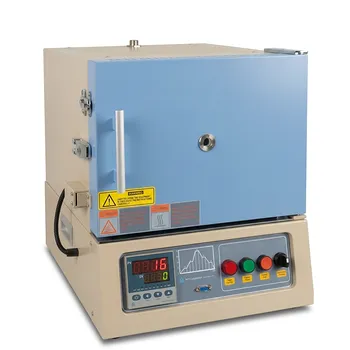
1200C Muffle Furnace 12x8x5 7.2L Heating Chamber with Quartz Observation Window and Vent Port
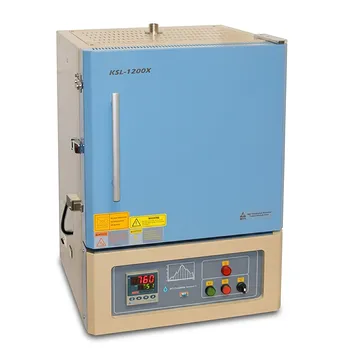
High Temperature 1200C Muffle Furnace 27L Volume 12x12x12 Chamber with Programmable PID Controller for Laboratory Material Science
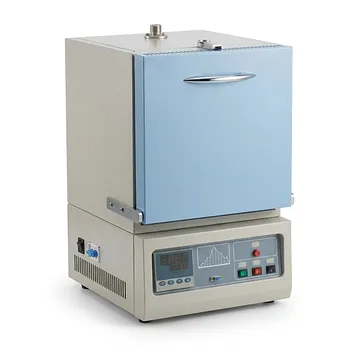
1750C Compact Muffle Furnace 1.7L Ultra High Temperature Laboratory Sintering System for Advanced Ceramics and Material Science Research
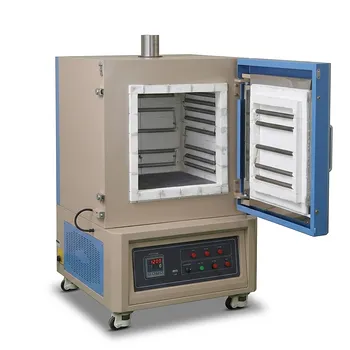
1200C High Temperature 125L Muffle Furnace 5 Side Heating for Large Batch Sintering with Optional Alloy Debinding Chamber
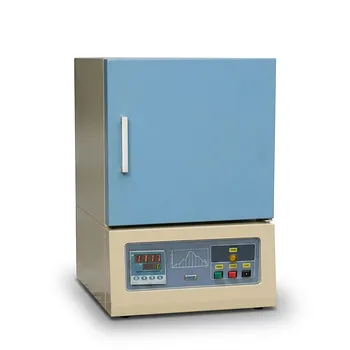
Ultra High Temperature Bench Top Muffle Furnace 1750C Sintering System with Kanthal Super Heating Elements and Precision Digital Control
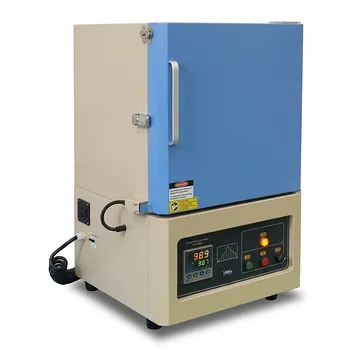
1200°C High Temperature Muffle Furnace 19L Chamber with 50 Segment Programmable Controller
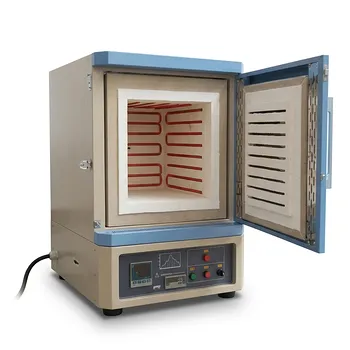
Five Side Heating Muffle Furnace 1200C High Uniformity 64L Chamber 16x16x16 Inch Industrial Heat Treatment
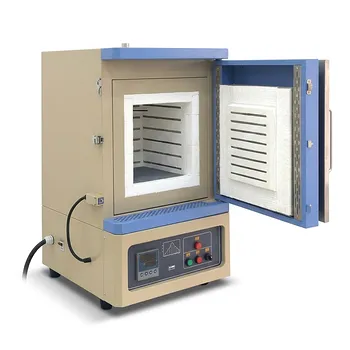
Five Side Heating Muffle Furnace High Purity Alumina Fiber 27L Chamber 1200C High Temperature Thermal Processing System for Sintering Annealing and Materials Research
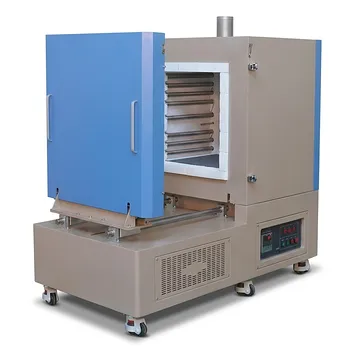
1200C Five Side Heating Muffle Furnace with Sliding Door 125L Volume High Temperature Heat Treatment System for Large Scale Sintering and Annealing
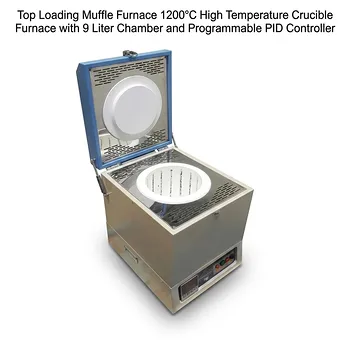
Top Loading Muffle Furnace 1200°C High Temperature Crucible Furnace with 9 Liter Chamber and Programmable PID Controller
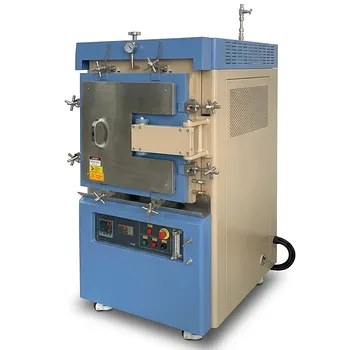
Atmosphere Controlled Muffle Furnace 1700C Maximum Temperature 80L High Capacity Vacuum Inert Gas Box Furnace
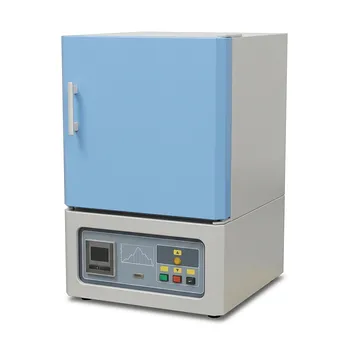
1800C Bench Top Muffle Furnace with Kanthal Super 1900 Heating Elements and 3.6L Alumina Fiber Chamber
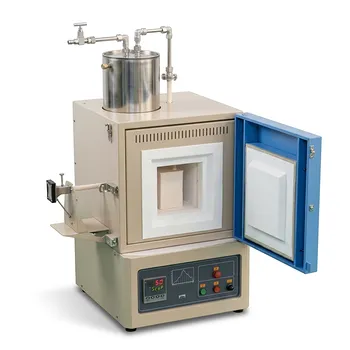
High Temperature Bench Top Muffle Furnace 1700C with Integrated Evaporating Particle Collection and 8x8x8 Alumina Fiber Chamber
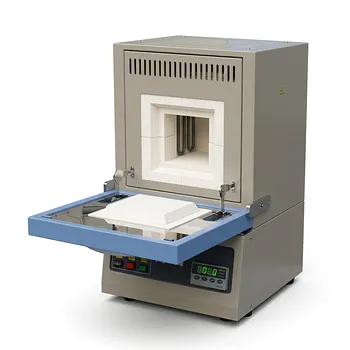
Five Sided Heating Muffle Furnace High Uniformity 1200C Lab Box Furnace 27L Alumina Fiber Chamber
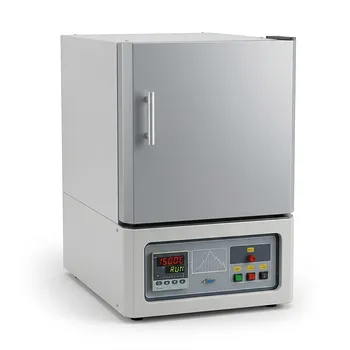
High Temperature 1500C Benchtop Muffle Furnace 3.6L Alumina Fiber Chamber Programmable Controller Sintering Annealing Carbonization Thermal Processing System
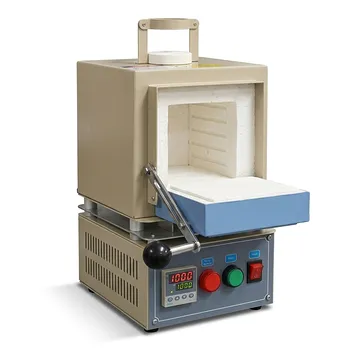
Compact 1000C Muffle Furnace with Programmable Controller and 2 Inch Top Port for Vacuum and Atmosphere Material Research
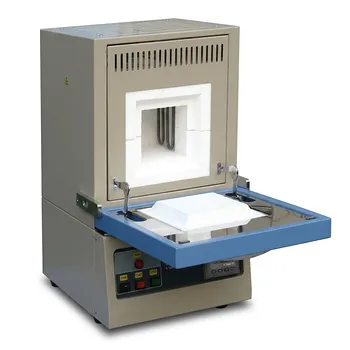
High Temperature 1800C Compact Muffle Furnace with Kanthal Super 1900 Heating Elements and 1.7L Alumina Chamber
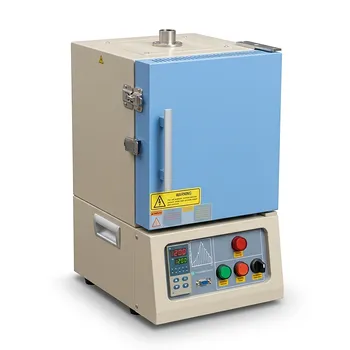
1200°C Small Box Furnace 4.2 Liter Programmable Muffle Furnace with High Purity Alumina Insulation and PID Control
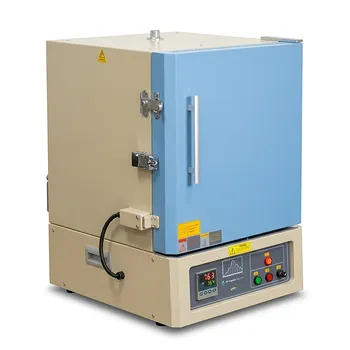
Large Capacity 1200C Muffle Furnace 64 Liter Chamber with Digital PID Controller and Built In Venting Port