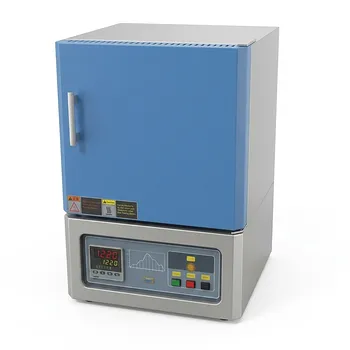
Why is a secondary heat treatment at 500°C in a muffle furnace necessary for powders? Key to Phase Transformation
Updated 3 months ago
Secondary heat treatment at approximately 500°C is a critical phase transformation step required to convert chemical precursors into functional materials. For powders synthesized via co-precipitation, this process drives the thermal decomposition and dehydration of initial hydroxide or hydrated oxide mixtures, transitioning them into stable, high-entropy oxide nanopowders.
The 500°C treatment acts as a chemical and structural bridge, transforming unstable precursors into active oxide phases while simultaneously refining the material’s porosity and surface area. This temperature provides the necessary energy to break chemical bonds in precursors without triggering excessive particle growth or sintering.
The Chemical Necessity of Calcination
Decomposition of Precursor Species
The initial co-precipitation process typically yields a mixture of metal hydroxides, carbonates, or hydrated oxides rather than a final oxide. At 500°C, these precursors undergo thermal decomposition, releasing volatile components like water vapor and carbon dioxide to leave behind a pure metal oxide framework.
Conversion to Active Catalytic Phases
In many applications, such as the production of CuMn2O4 spinel or Fe2O3, this specific temperature range is required to convert adsorbed nitrates or salts into active species. This transition is essential for constructing stable, three-dimensional porous catalytic systems suitable for industrial use.
Dehydration and Phase Purity
Removing chemically bound water is vital for achieving atomic-level stability. Controlled dehydration at this stage ensures the material achieves its intended crystalline structure, such as the formation of high-entropy oxides characterized by uniform elemental distribution.
Structural and Morphological Refinement
Development of High Specific Surface Area
The escape of gases during the decomposition of hydroxides creates a network of microscopic pores. This results in nanopowders with a high specific surface area, which is a decisive factor for materials used in catalysis, adsorption, and energy storage.
Stress Relaxation and Lattice Stabilization
Materials produced through mechanical or chemical precipitation often harbor residual stresses and structural defects. A 500°C environment allows for thermal relaxation, effectively eliminating unstable stresses and preventing the material from cracking or failing during subsequent applications.
Controlled Growth and Particle Size
While higher temperatures might accelerate reactions, 500°C is often a "sweet spot" that provides enough energy for phase conversion while preventing uncontrolled sintering. This ensures the particles remain at the nanoscale, preserving the reactive properties of the powder.
Understanding the Trade-offs
Risk of Incomplete Conversion
If the temperature remains significantly below 500°C, the conversion of hydroxides to oxides may be incomplete. Residual precursors can act as impurities, leading to poor electrical properties, reduced catalytic activity, or structural instability in the final product.
The Danger of Over-Sintering
Conversely, exceeding the required temperature can lead to "sintering," where nanoparticles begin to fuse together. This drastically reduces the specific surface area and destroys the uniform pore distribution achieved during the co-precipitation stage.
Environmental and Energy Costs
Maintaining a stable 500°C environment in a muffle furnace requires significant energy and precise control. Any fluctuations in temperature can lead to non-uniformity in the batch, resulting in inconsistent material performance across different production cycles.
How to Apply This to Your Project
Recommendations for Material Optimization
- If your primary focus is maximizing catalytic activity: Ensure the 500°C soak time is sufficient to fully convert nitrates and hydroxides into active spinel or oxide phases.
- If your primary focus is maintaining a high surface area: Monitor the heating rate closely to allow gas escape without collapsing the delicate pore structures of the nanopowder.
- If your primary focus is structural durability: Utilize the 500°C dwell time as a stress-relief phase to stabilize the crystal lattice and prevent future mechanical failure.
The secondary heat treatment is the definitive step that transforms a raw chemical precipitate into a high-performance, technologically viable material.
Summary Table:
| Process Step | Mechanism at 500°C | Impact on Final Powder |
|---|---|---|
| Decomposition | Removal of $H_2O$ and $CO_2$ | Converts precursors into pure metal oxides |
| Phase Control | Atomic restructuring | Forms active catalytic phases (e.g., spinels) |
| Morphology | Controlled gas escape | Creates high specific surface area and pores |
| Stabilization | Thermal lattice relaxation | Reduces residual stress and prevents cracking |
| Growth Control | Minimal sintering energy | Maintains particles at the nano-scale |
Elevate Your Material Research with THERMUNITS Precision
Achieving the perfect 500°C phase transformation requires absolute thermal accuracy and atmosphere control. As a leading manufacturer of high-temperature laboratory equipment, THERMUNITS empowers material scientists and industrial R&D engineers with high-performance thermal solutions designed for excellence.
Whether you are synthesizing nanopowders, developing catalysts, or researching high-entropy oxides, our comprehensive range of equipment ensures consistent, repeatable results:
- Versatile Furnaces: Muffle, Vacuum, Atmosphere, Tube, Rotary, and Hot Press Furnaces.
- Advanced Systems: CVD/PECVD systems, Dental Furnaces, and Vacuum Induction Melting (VIM) furnaces.
- Specialized Equipment: Electric rotary kilns, Thermal Elements, and custom heat treatment solutions.
Ready to optimize your powder synthesis and heat treatment process?
Contact our technical team today to discover how THERMUNITS can provide the perfect thermal environment for your next breakthrough!
References
- Lishan Dong, Zhifeng Wang. Porous High-Entropy Oxide Anode Materials for Li-Ion Batteries: Preparation, Characterization, and Applications. DOI: 10.3390/ma17071542
Mentioned Products
- 1200C Muffle Furnace 12x8x5 7.2L Heating Chamber with Quartz Observation Window and Vent Port
- High Temperature 1200C Muffle Furnace 27L Volume 12x12x12 Chamber with Programmable PID Controller for Laboratory Material Science
- 1750C Compact Muffle Furnace 1.7L Ultra High Temperature Laboratory Sintering System for Advanced Ceramics and Material Science Research
- 1200C High Temperature 125L Muffle Furnace 5 Side Heating for Large Batch Sintering with Optional Alloy Debinding Chamber
- Ultra High Temperature Bench Top Muffle Furnace 1750C Sintering System with Kanthal Super Heating Elements and Precision Digital Control
People Also Ask
- What is the function of an experimental muffle furnace in the conversion of FeOOH to α-Fe2O3? Optimize Phase Transition
- Why is a muffle furnace required for MoO2@HCNF pre-oxidation? Crucial Steps for High-Performance Composites
- What is the function of a high-temperature Muffle furnace in removing residual solvents? Essential Bismuth Synthesis
- What is the function of Muffle furnace calcination? Essential steps for Pr-doped SrFeMoO6 Perovskite synthesis.
- What are the primary functions of a Muffle furnace in oxide calcination? Achieve high purity and phase control.

Tech Team · ThermUnits
Last updated on Jun 02, 2026
Related Products
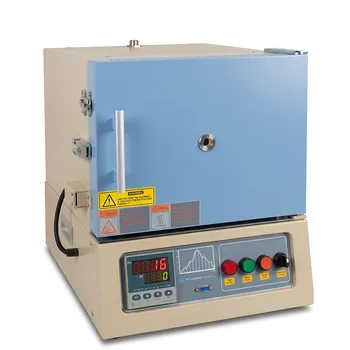
1200C Muffle Furnace 12x8x5 7.2L Heating Chamber with Quartz Observation Window and Vent Port
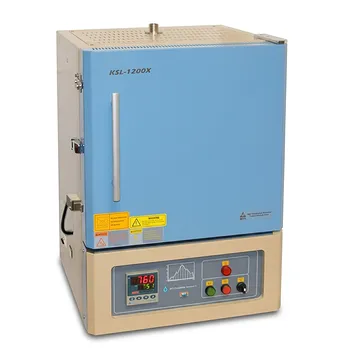
High Temperature 1200C Muffle Furnace 27L Volume 12x12x12 Chamber with Programmable PID Controller for Laboratory Material Science
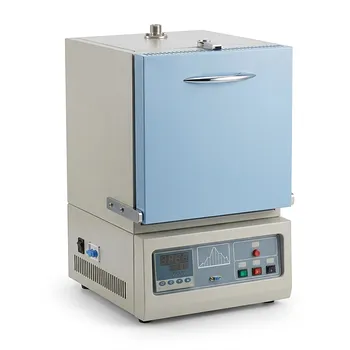
1750C Compact Muffle Furnace 1.7L Ultra High Temperature Laboratory Sintering System for Advanced Ceramics and Material Science Research
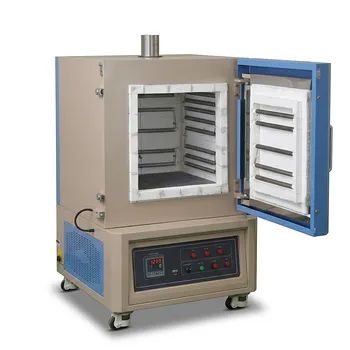
1200C High Temperature 125L Muffle Furnace 5 Side Heating for Large Batch Sintering with Optional Alloy Debinding Chamber
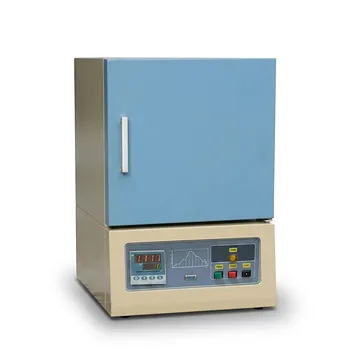
Ultra High Temperature Bench Top Muffle Furnace 1750C Sintering System with Kanthal Super Heating Elements and Precision Digital Control
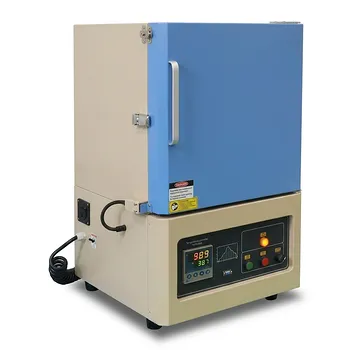
1200°C High Temperature Muffle Furnace 19L Chamber with 50 Segment Programmable Controller
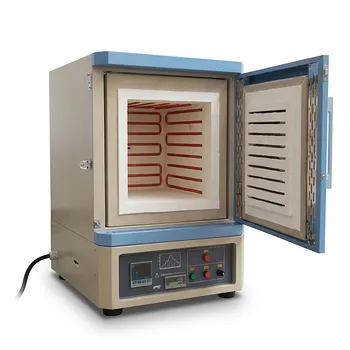
Five Side Heating Muffle Furnace 1200C High Uniformity 64L Chamber 16x16x16 Inch Industrial Heat Treatment
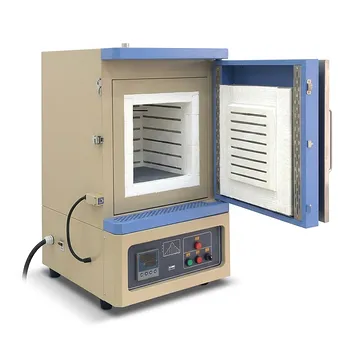
Five Side Heating Muffle Furnace High Purity Alumina Fiber 27L Chamber 1200C High Temperature Thermal Processing System for Sintering Annealing and Materials Research
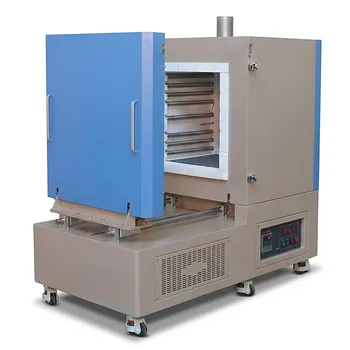
1200C Five Side Heating Muffle Furnace with Sliding Door 125L Volume High Temperature Heat Treatment System for Large Scale Sintering and Annealing
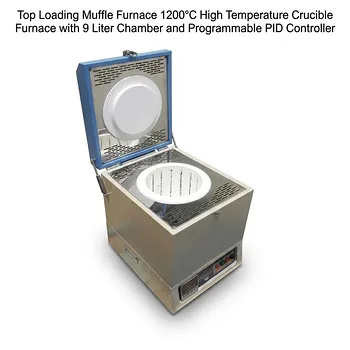
Top Loading Muffle Furnace 1200°C High Temperature Crucible Furnace with 9 Liter Chamber and Programmable PID Controller
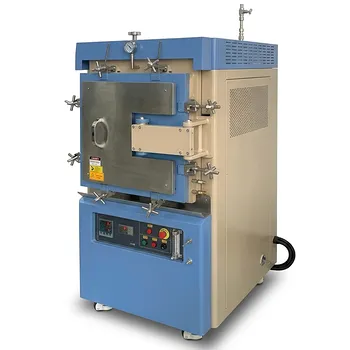
Atmosphere Controlled Muffle Furnace 1700C Maximum Temperature 80L High Capacity Vacuum Inert Gas Box Furnace
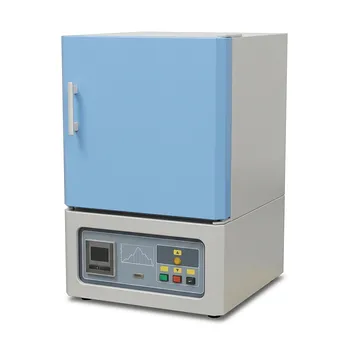
1800C Bench Top Muffle Furnace with Kanthal Super 1900 Heating Elements and 3.6L Alumina Fiber Chamber
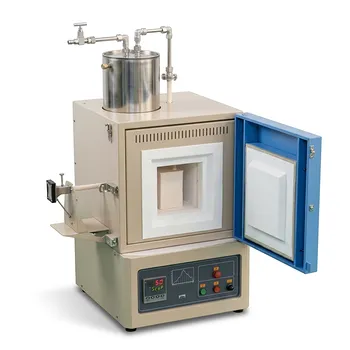
High Temperature Bench Top Muffle Furnace 1700C with Integrated Evaporating Particle Collection and 8x8x8 Alumina Fiber Chamber
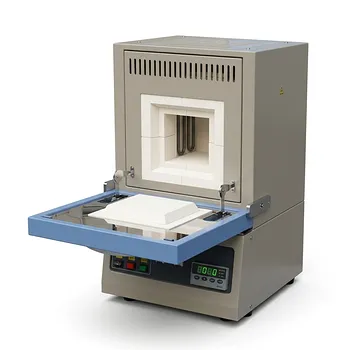
Five Sided Heating Muffle Furnace High Uniformity 1200C Lab Box Furnace 27L Alumina Fiber Chamber
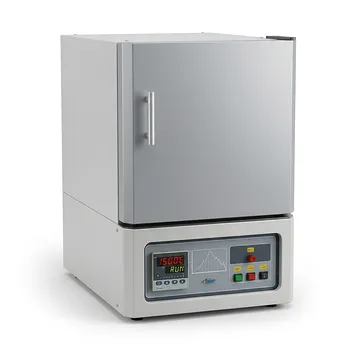
High Temperature 1500C Benchtop Muffle Furnace 3.6L Alumina Fiber Chamber Programmable Controller Sintering Annealing Carbonization Thermal Processing System
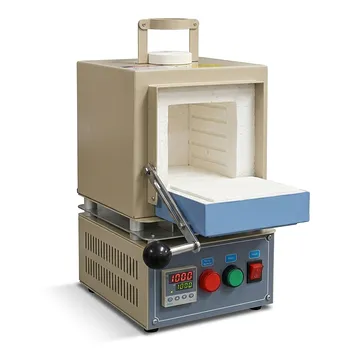
Compact 1000C Muffle Furnace with Programmable Controller and 2 Inch Top Port for Vacuum and Atmosphere Material Research
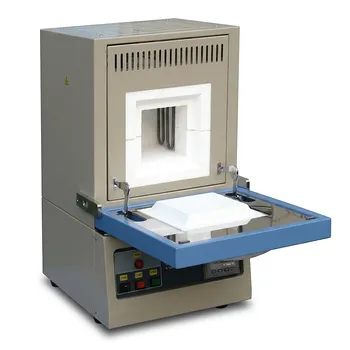
High Temperature 1800C Compact Muffle Furnace with Kanthal Super 1900 Heating Elements and 1.7L Alumina Chamber
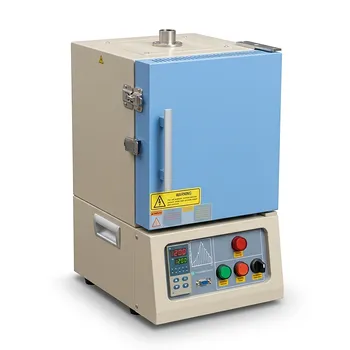
1200°C Small Box Furnace 4.2 Liter Programmable Muffle Furnace with High Purity Alumina Insulation and PID Control
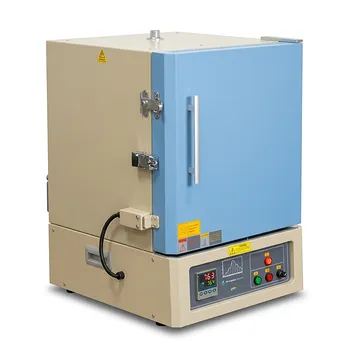
Large Capacity 1200C Muffle Furnace 64 Liter Chamber with Digital PID Controller and Built In Venting Port