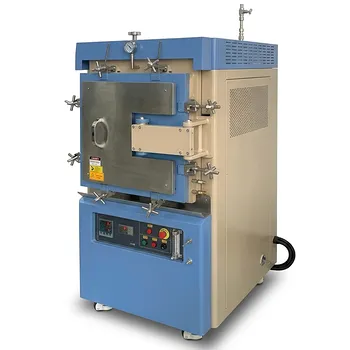
Why is an industrial muffle furnace used for the air calcination of graphene oxide? Master Precision Thermal Processing
Updated 3 months ago
Industrial muffle furnaces are utilized for the air calcination of graphene oxide because they provide a highly stable, oxygen-rich thermal environment necessary for precise chemical modification. By maintaining controlled temperatures—typically ranging from 100 °C to 700 °C—these furnaces allow researchers to redistribute oxygen-containing functional groups and repair structural flaws in the carbon lattice. This specific thermal processing is critical for optimizing the material's surface chemistry for advanced applications in catalysis and environmental adsorption.
The muffle furnace serves as a precision reactor that balances the removal and redistribution of oxygen groups to minimize defect density. This controlled calcination ensures that graphene oxide achieves the exact structural integrity and functional profile required for high-performance industrial use.
Precise Control of Functional Group Redistribution
Managing Hydroxyl and Carboxyl Groups
The primary role of the muffle furnace is to facilitate the strategic movement and transformation of hydroxyl (-OH) and carboxyl (-COOH) groups on the graphene surface. At specific temperature intervals, the thermal energy induces a redistribution of these groups rather than a simple, chaotic removal. This precise management allows for the fine-tuning of the material's chemical reactivity.
Optimization at 500 °C
Research indicates that air calcination at approximately 500 °C within a muffle furnace represents a "sweet spot" for material performance. At this temperature, the furnace maximizes the content of beneficial oxygen-containing groups while simultaneously minimizing defect density. This specific balance is what makes the material highly effective for adsorption and catalytic activities.
Thermal Decomposition of Precursors
Beyond surface modification, the furnace provides the energy required for the thermal decomposition of organic components or moisture. This ensures that the final graphene product is free from residual impurities that could interfere with its intended chemical behavior. The stable thermal field prevents "hot spots" that could lead to uneven processing.
Structural Refinement and Defect Healing
Compensating for Surface Defects
The calcination process in a muffle furnace is not merely about heating; it is about structural compensation. The stable air-heated environment provides the conditions necessary for atoms to rearrange, effectively "healing" holes or irregularities in the graphene oxide sheets. This leads to a more robust and predictable material structure.
Restoring the Carbon Network
In certain thermal processing scenarios, the furnace helps restore the sp2 hybridized carbon network. By selectively removing specific oxygen groups at controlled temperatures (such as 325 °C), the furnace increases the material's electrical conductivity. This transformation is vital for creating sensors and electronic components from graphene derivatives.
Phase Transitions and Crystallinity
The muffle furnace is also instrumental in transitioning materials from an amorphous state to a stable crystalline phase. This is particularly important when graphene oxide is used in conjunction with other oxides, such as CeO2 or Fe3O4. The constant-temperature environment ensures the formation of nanoparticles with high specific surface areas.
Providing a Stable Oxidative Atmosphere
The Role of Air in Calcination
Unlike vacuum or inert gas furnaces, a muffle furnace operating in "air" provides a controlled oxidative atmosphere. This oxygen-rich environment is necessary for specific oxidation reactions that wouldn't occur in a nitrogen or argon shield. It allows for the complete conversion of raw precursors into uniform oxide powders.
Consistency in Large-Scale Production
Industrial muffle furnaces are designed to maintain a uniform thermal field across the entire heating chamber. This consistency is essential for ensuring that every gram of graphene oxide undergoes the same chemical transformation. Without this uniformity, the resulting material would exhibit inconsistent performance across different batches.
Sacrificial Template Removal
In some manufacturing workflows, graphene oxide is used as a sacrificial template to shape other nanostructures, like silica. The muffle furnace can be set to higher temperatures (e.g., 700 °C) to completely oxidize and remove the GO template. This leaves behind a refined secondary material with enhanced mechanical properties, such as increased Young’s modulus.
Understanding the Trade-offs and Pitfalls
Oxidation vs. Reduction
The most significant challenge in using a muffle furnace for GO is the narrow window between functionalization and combustion. While air calcination at 500 °C optimizes functional groups, exceeding this temperature significantly in an oxygen-rich environment can lead to the total oxidation (burning) of the carbon structure.
Temperature Sensitivity
Graphene oxide is highly sensitive to heating rates; heating too quickly can cause rapid gas evolution, leading to "exfoliation" or structural damage. Precise ramp-rate control is necessary to prevent the material from physically blowing out of its container during the removal of oxygen groups.
Environmental Influence
Because a muffle furnace is open to the ambient atmosphere, fluctuations in humidity or local air composition can occasionally affect the calcination results. For highly sensitive applications, the consistency of the lab or factory environment must be monitored alongside the furnace temperature.
How to Apply This to Your Project
When utilizing a muffle furnace for graphene oxide processing, your temperature and atmospheric settings must align with your final performance goals.
- If your primary focus is Catalytic Activity: Aim for air calcination near 500 °C to maximize oxygen-containing functional groups while keeping defect density at its lowest.
- If your primary focus is Electrical Conductivity: Target a lower thermal reduction temperature around 325 °C to restore the carbon lattice and selectively remove hydroxyl groups.
- If your primary focus is Composite Strengthening: Use the furnace at 400 °C to remove specific oxygen groups, which improves the material's compatibility and thermal stability within epoxy resin matrices.
- If your primary focus is Structural Reinforcement: Utilize the furnace as a tool for atomic rearrangement at 700 °C to increase the mechanical rigidity and Young's modulus of associated nanosheets.
The industrial muffle furnace is the definitive tool for transforming raw graphene oxide into a high-value, functionally optimized material through precise thermal and atmospheric control.
Summary Table:
| Temperature Range | Primary Thermal Effect | Key Application Area |
|---|---|---|
| ~325 °C | Restores carbon network & conductivity | Sensors & Electronic Components |
| ~500 °C | Maximizes functional groups; low defects | Catalysis & Environmental Adsorption |
| ~700 °C | Atomic rearrangement & template removal | Structural Reinforcement & Nano-silica |
| 100-700 °C | General redistribution of -OH and -COOH | Surface Chemistry Optimization |
Elevate Your Graphene Research with THERMUNITS
Precision is the difference between a failed batch and a breakthrough material. THERMUNITS is a leading manufacturer of high-temperature laboratory equipment specifically designed for the rigorous demands of material science and industrial R&D.
Our industrial Muffle Furnaces provide the stable oxidative atmosphere and uniform thermal field essential for the precise air calcination of graphene oxide. Beyond muffle furnaces, we offer a comprehensive suite of thermal solutions, including:
- Atmosphere & Vacuum Furnaces for controlled reduction.
- CVD/PECVD Systems for advanced graphene growth.
- Tube, Rotary, and Hot Press Furnaces for diverse heat treatments.
- VIM & Dental Furnaces for specialized material processing.
Ready to optimize your functional group redistribution and achieve superior structural integrity? Contact our technical team today to find the perfect thermal processing solution for your laboratory!
References
- Kui Lu, Guosheng Shi. Graphene Oxide Treated by Temperature with Enhancement of Adsorption for Organic Pollutants and Catalytic Degradation with Hydrogen Peroxide. DOI: 10.1007/s10562-023-04575-w
Mentioned Products
- Five Side Heating Muffle Furnace 1200C High Uniformity 64L Chamber 16x16x16 Inch Industrial Heat Treatment
- Industrial Large Box Furnace 1700C 216L High Temp Muffle Sintering System
- 1200C Muffle Furnace 12x8x5 7.2L Heating Chamber with Quartz Observation Window and Vent Port
- High Temperature 1200C Muffle Furnace 27L Volume 12x12x12 Chamber with Programmable PID Controller for Laboratory Material Science
- 1200C High Temperature 125L Muffle Furnace 5 Side Heating for Large Batch Sintering with Optional Alloy Debinding Chamber
People Also Ask
- How does the heating mechanism of a muffle furnace differ from that of an open-flame furnace? Indirect vs Direct Heat
- Why is the muffle design advantageous for the production of ceramics and glass? Ensure Purity and Structural Integrity
- Why is a muffle furnace used for a 220°C preliminary baking after coating α-Fe2O3 nanorods with melamine? Explained
- What is the function of Muffle furnace calcination? Essential steps for Pr-doped SrFeMoO6 Perovskite synthesis.
- What is the function of an experimental muffle furnace in the conversion of FeOOH to α-Fe2O3? Optimize Phase Transition

Tech Team · ThermUnits
Last updated on Jun 02, 2026
Related Products
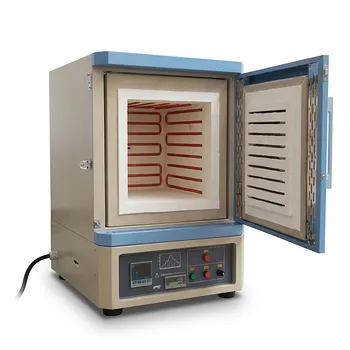
Five Side Heating Muffle Furnace 1200C High Uniformity 64L Chamber 16x16x16 Inch Industrial Heat Treatment
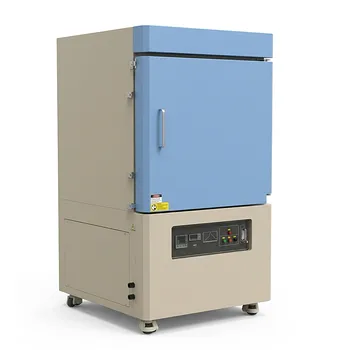
Industrial Large Box Furnace 1700C 216L High Temp Muffle Sintering System
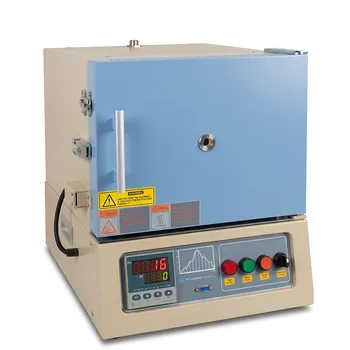
1200C Muffle Furnace 12x8x5 7.2L Heating Chamber with Quartz Observation Window and Vent Port
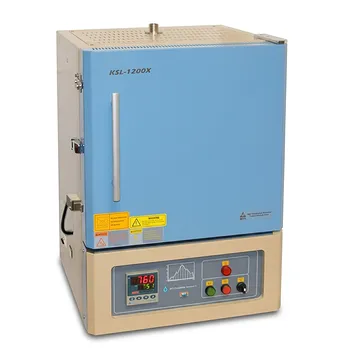
High Temperature 1200C Muffle Furnace 27L Volume 12x12x12 Chamber with Programmable PID Controller for Laboratory Material Science
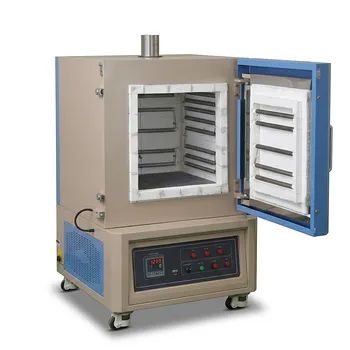
1200C High Temperature 125L Muffle Furnace 5 Side Heating for Large Batch Sintering with Optional Alloy Debinding Chamber
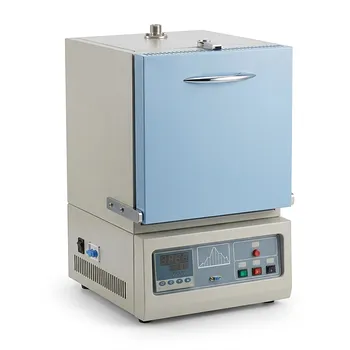
1750C Compact Muffle Furnace 1.7L Ultra High Temperature Laboratory Sintering System for Advanced Ceramics and Material Science Research
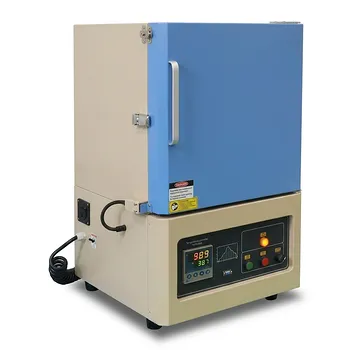
1200°C High Temperature Muffle Furnace 19L Chamber with 50 Segment Programmable Controller
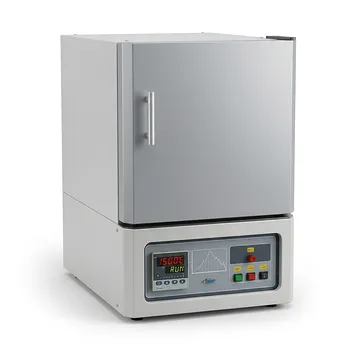
High Temperature 1500C Benchtop Muffle Furnace 3.6L Alumina Fiber Chamber Programmable Controller Sintering Annealing Carbonization Thermal Processing System
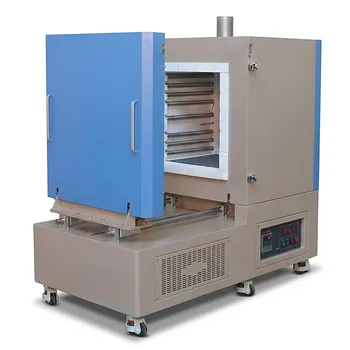
1200C Five Side Heating Muffle Furnace with Sliding Door 125L Volume High Temperature Heat Treatment System for Large Scale Sintering and Annealing
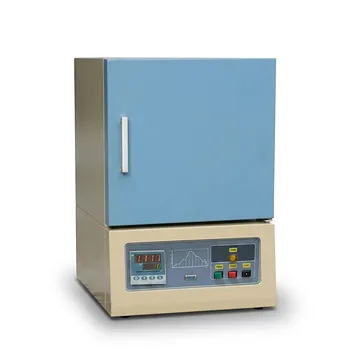
Ultra High Temperature Bench Top Muffle Furnace 1750C Sintering System with Kanthal Super Heating Elements and Precision Digital Control
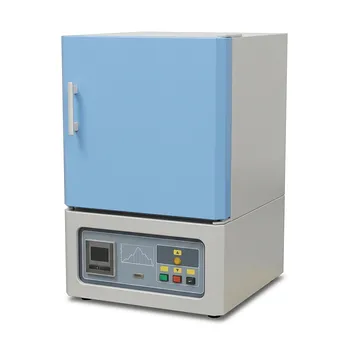
1800C Bench Top Muffle Furnace with Kanthal Super 1900 Heating Elements and 3.6L Alumina Fiber Chamber
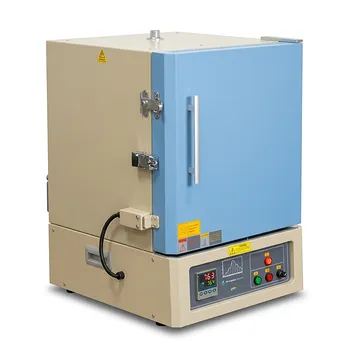
Large Capacity 1200C Muffle Furnace 64 Liter Chamber with Digital PID Controller and Built In Venting Port
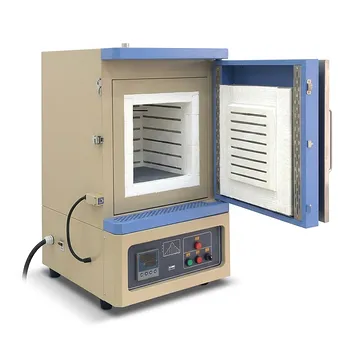
Five Side Heating Muffle Furnace High Purity Alumina Fiber 27L Chamber 1200C High Temperature Thermal Processing System for Sintering Annealing and Materials Research
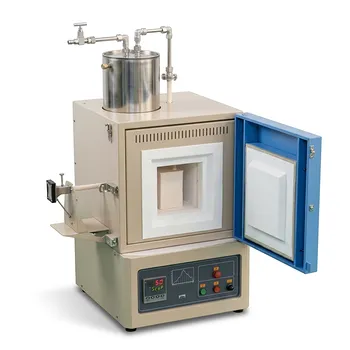
High Temperature Bench Top Muffle Furnace 1700C with Integrated Evaporating Particle Collection and 8x8x8 Alumina Fiber Chamber
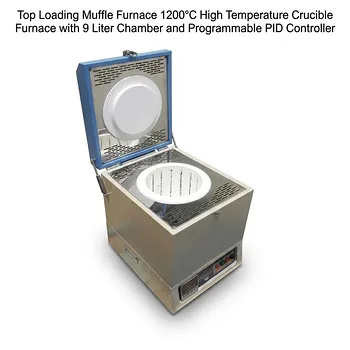
Top Loading Muffle Furnace 1200°C High Temperature Crucible Furnace with 9 Liter Chamber and Programmable PID Controller
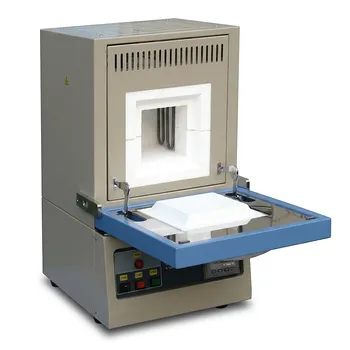
High Temperature 1800C Compact Muffle Furnace with Kanthal Super 1900 Heating Elements and 1.7L Alumina Chamber
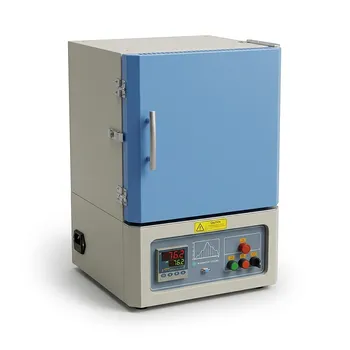
1750C Bench Top Muffle Furnace 3.6L High Grade Molybdenum Disilicide Heating Elements Laboratory Heat Treatment Equipment
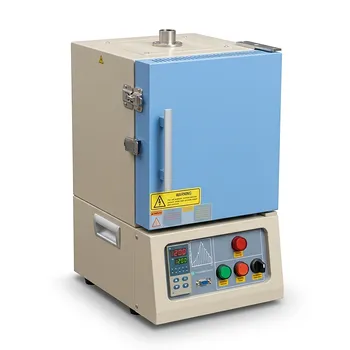
1200°C Small Box Furnace 4.2 Liter Programmable Muffle Furnace with High Purity Alumina Insulation and PID Control
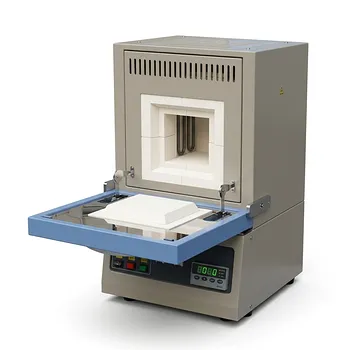
Five Sided Heating Muffle Furnace High Uniformity 1200C Lab Box Furnace 27L Alumina Fiber Chamber