Why is argon atmosphere protection necessary during the melting process of magnesium alloys such as Mg-Zn-Y? Key Benefits
Updated 3 months ago
Argon atmosphere protection is essential because magnesium is an extremely reactive metal that oxidizes or ignites almost instantly when exposed to air at melting temperatures. By using high-purity argon, manufacturers create an inert barrier that isolates the molten Mg-Zn-Y alloy from oxygen and nitrogen. This prevents material loss, maintains the precise chemical composition required for high-performance applications, and ensures the safety of the melting process.
Core Takeaway: Argon serves as a critical chemical shield that prevents the aggressive oxidation and combustion of magnesium. Without this inert environment, the alloy would suffer from significant composition loss, slag contamination, and degraded mechanical properties.
The Chemical Volatility of Magnesium Alloys
Preventing Atmospheric Combustion
Magnesium has an incredibly high affinity for oxygen, making it prone to rapid oxidation or even violent combustion when heated in an open environment. At the temperatures required for melting (typically above 650°C), the metal reacts with atmospheric oxygen to form magnesium oxide (MgO).
Isolating Reactive Alloying Elements
In Mg-Zn-Y alloys, the presence of Yttrium—a rare earth element—adds another layer of complexity. Yttrium is highly reactive and easily forms oxides or nitrides if exposed to even trace amounts of air, which would deplete the alloy of its most critical strengthening components.
Eliminating Slag and Inclusion Formation
When magnesium reacts with air, it creates "slag" or non-metallic inclusions within the melt. These impurities act as structural defects in the final ingot, significantly reducing the material's fatigue life and overall structural integrity.
Maintaining Precise Chemical Stoichiometry
Preservation of the Design Formula
High-performance alloys like Mg-Zn-Y are engineered with specific elemental ratios to achieve desired characteristics such as high strength-to-weight ratios. Argon protection ensures that none of these elements are "lost" to the atmosphere through oxidative reactions during the smelting process.
Controlling Phase Formation
The mechanical properties of Mg-Zn-Y depend on the formation of specific microscopic phases (such as the W-phase or I-phase). If oxygen or nitrogen interferes with the melt, it can trigger the formation of unintended impurity phases that make the metal brittle.
Ensuring Uniform Grain Growth
As seen in high-temperature processing, a stable argon atmosphere allows for more controlled cooling and solidification. This leads to a more uniform grain size and eliminates residual stresses that often occur when surface oxidation creates temperature gradients across the material.
Understanding the Trade-offs and Challenges
The Cost of High-Purity Gas
Maintaining a continuous flow of high-purity argon significantly increases the operational cost of the melting process. While lower-grade argon might seem cost-effective, even minor impurities can lead to surface discoloration or localized oxidation sites.
Risk of Gas Entrapment
While argon protects the surface, improper introduction of the gas can lead to turbulence in the melt pool. This may cause argon bubbles to become trapped in the solidifying metal, resulting in "porosity" (tiny holes) that weakens the final component.
Furnace Sealing Requirements
Argon protection is only as effective as the seal of the melting chamber. Any leak in the system creates a "Venturi effect" that can pull oxygen into the chamber, rendering the argon shield ineffective and potentially leading to a localized fire.
How to Optimize the Protective Environment
To ensure the highest quality Mg-Zn-Y alloy, the melting process must be strictly controlled through the following strategies:
- If your primary focus is Chemical Purity: Utilize ultra-high-purity argon (99.999%) and a vacuum-purge cycle before melting to ensure all residual oxygen is removed from the chamber.
- If your primary focus is Structural Integrity: Monitor and control the argon flow rate to prevent melt turbulence, ensuring the gas sits as a heavy, still "blanket" over the liquid metal.
- If your primary focus is Surface Quality: Maintain a positive pressure environment within the furnace to ensure that any leaks result in argon escaping rather than oxygen entering.
The successful production of magnesium alloys depends entirely on the ability to silence the metal's natural reactivity through a controlled, inert atmosphere.
Summary Table:
| Feature | Description | Benefit |
|---|---|---|
| Oxidation Prevention | Isolates Mg from O2 and N2 | Prevents metal ignition and material loss |
| Composition Control | Protects reactive elements (Y, Zn) | Maintains precise chemical stoichiometry |
| Purity Assurance | Eliminates slag/inclusion formation | Enhances fatigue life and structural integrity |
| Process Safety | Creates a stable inert barrier | Reduces risk of violent reactive combustion |
Elevate Your Material Research with THERMUNITS Precision Furnaces
Processing reactive materials like Mg-Zn-Y requires uncompromising atmospheric control. THERMUNITS is a leading manufacturer of high-temperature laboratory equipment, offering specialized solutions for material science and industrial R&D. Our systems are designed to provide the ultra-pure, inert environments necessary to prevent oxidation and ensure the highest quality heat treatment results.
Our Comprehensive Range Includes:
- Vacuum & Atmosphere Furnaces: Muffle, Tube, Rotary, and Box types.
- Advanced Melting Systems: Vacuum Induction Melting (VIM) and Hot Press Furnaces.
- Thin Film Research: High-performance CVD and PECVD systems.
Ready to optimize your alloy melting process? Contact our technical experts today to discover how our thermal solutions can enhance your lab's efficiency and material performance!
References
- Yunsheng Wang, Yoshihito Kawamura. Mg-1.88Zn-0.75Y Cast Alloys with High Thermal Conductivity of 141 Wm<sup>−1</sup>K<sup>−1</sup>. DOI: 10.2320/matertrans.mt-l2024015
Mentioned Products
- Atmosphere Controlled Continuous Casting Furnace with Secondary Charge Function for Induction Melting and Metal Alloy Wire Production
- High Temperature Induction Melting System with Integrated Ultra High Purity Glove Box for Metallic Alloy Processing
- 1100C Crucible Melting Furnace with Stirring Function for Glovebox and Air Sensitive Alloy Research
- High Throughput Induction Melting and Casting Furnace for Superalloy Research 1700C Atmosphere Controlled Multi Sample System
People Also Ask
- Why use atmosphere-controlled induction furnaces for biochar & slag foaming? Replicate EAF physics with precision.
- What technical advantages does Vacuum Induction Melting offer regarding alloy homogeneity and purity? Enhance Performance
- What is the primary role of a Vacuum Induction Melting furnace in the smelting of Fe-Cr-N alloys? Ensuring High Purity
- What are the key structural components that make up a Vacuum Induction Melting (VIM) furnace system? Full Guide
- How does a Vacuum Induction Melting furnace heat materials while preventing atmospheric contamination? Achieve High Purity

Tech Team · ThermUnits
Last updated on Jun 02, 2026
Related Products
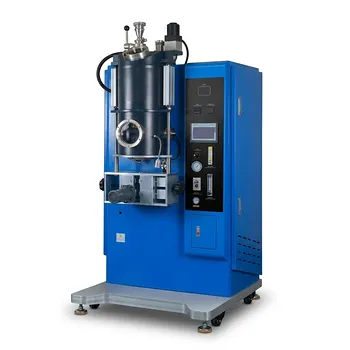
Atmosphere Controlled Continuous Casting Furnace with Secondary Charge Function for Induction Melting and Metal Alloy Wire Production
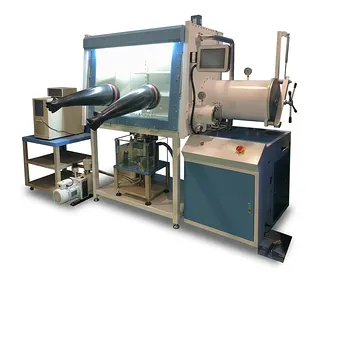
High Temperature Induction Melting System with Integrated Ultra High Purity Glove Box for Metallic Alloy Processing
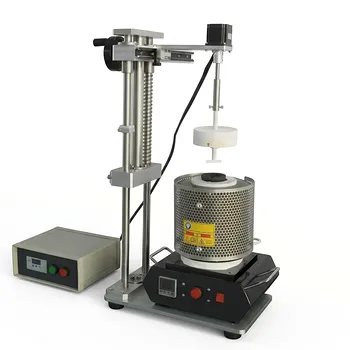
1100C Crucible Melting Furnace with Stirring Function for Glovebox and Air Sensitive Alloy Research