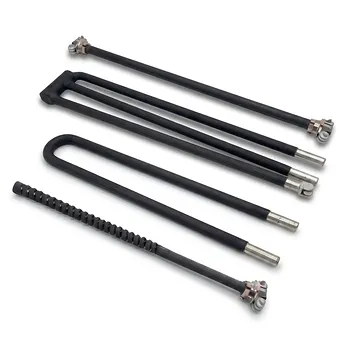
Why is nitrogen protection required for S/C cathode prep? Ensure High-Performance Synthesis
Updated 3 months ago
Nitrogen protection is essential because it prevents the oxidative loss of active sulfur and the formation of harmful byproducts during the high-temperature melt-diffusion process. Without this inert environment, the sulfur would react with atmospheric oxygen, leading to significant material degradation and reduced electrochemical performance.
Maintaining a nitrogen-protected environment ensures the chemical stability of sulfur while it transitions into a highly fluid liquid state. This allows for precise, atomic-scale loading into the carbon framework, which is the foundation for efficient electron transfer in the finished battery.
Preventing Chemical Degradation and Material Loss
Eliminating Oxidative Loss
Sulfur is highly susceptible to oxidation when heated in the presence of air. Nitrogen protection displaces oxygen, ensuring that the active sulfur remains within the composite rather than being lost to the atmosphere as sulfur dioxide or other gases.
Inhibiting Harmful Byproducts
At elevated temperatures, sulfur can react with moisture or oxygen to form impurities that interfere with battery chemistry. By using an inert atmosphere, researchers ensure that the purity of the S/C composite is maintained, preventing side reactions that would otherwise degrade cycle life.
Optimizing the Melt-Diffusion Mechanism
The Fluidity "Sweet Spot" at 155 °C
Heating sulfur to exactly 155 °C is a deliberate choice because the element exhibits its lowest viscosity and highest fluidity at this temperature. In a protected environment, this liquid sulfur can flow freely without the risk of premature solidification or chemical alteration.
Achieving Atomic-Scale Uniform Loading
High fluidity enables the sulfur to penetrate the micropores of the conductive carbon framework via capillary action. This results in a uniform distribution of active material at the atomic scale, which is vital for providing the necessary pathways for rapid electron transfer during battery discharge.
Understanding the Trade-offs and Pitfalls
Precision in Temperature Control
While 155 °C is the ideal target, even minor fluctuations can drastically change sulfur's behavior. If the temperature rises too far beyond this point, sulfur becomes increasingly viscous due to polymerization, which hinders its ability to enter the smallest carbon pores.
Gas Purity and Flow Dynamics
The quality of the nitrogen is just as important as its presence; using low-purity gas can introduce trace oxygen that still causes partial oxidation. Furthermore, an excessively high flow rate of nitrogen may carry away sublimated sulfur before it has the chance to melt and diffuse into the carbon carrier.
How to Apply This to Your Material Synthesis
When preparing sulfur/carbon composites, your setup must prioritize environmental control to ensure high-capacity results.
- If your primary focus is maximizing active material utilization: Ensure the nitrogen environment is completely sealed and maintain the temperature at 155 °C to leverage maximum capillary action.
- If your primary focus is long-term cycle stability: Use high-purity nitrogen (99.999%) to eliminate trace oxidation, which prevents the formation of resistive chemical impurities.
- If your primary focus is structural uniformity: Utilize a conductive carbon with high surface area, such as acetylene black, and allow sufficient dwell time for the melt to fully saturate the micropores.
A strictly controlled nitrogen environment is the fundamental safeguard that allows for the creation of high-performance, chemically pure S/C composite cathodes.
Summary Table:
| Key Factor | Role of Nitrogen Protection | Impact on Material Performance |
|---|---|---|
| Oxidation Control | Displaces oxygen to prevent sulfur loss | High active material retention and capacity |
| Fluidity Optimization | Maintains inertness during 155°C melting | Atomic-scale uniform loading into carbon pores |
| Chemical Purity | Inhibits formation of harmful SO2/byproducts | Enhanced electrochemical stability and cycle life |
| Structural Integrity | Prevents premature solidification/side reactions | Efficient electron transfer pathways |
Optimize Your Material Synthesis with THERMUNITS
As a global leader in high-temperature laboratory equipment for material science and industrial R&D, THERMUNITS offers a comprehensive range of thermal solutions, including Atmosphere, Vacuum, and Tube furnaces, specifically engineered for sensitive processes like sulfur/carbon (S/C) composite preparation. Our systems provide the precise temperature stability and atmosphere control necessary to prevent oxidation and ensure uniform material loading.
Whether you are focusing on maximizing material utilization or long-term cycle stability, our expert-grade furnaces deliver the reliability your research demands.
Ready to enhance your lab's efficiency and material performance? Contact our experts today to find your ideal furnace solution!
References
- Xiangyu Tan, Xin Cai. Cobalt–zinc carbides embedded in N-doped porous carbon nanospheres as polysulfide mediators for efficient lithium–sulfur batteries. DOI: 10.1039/d4ra04657a
Mentioned Products
- High Temperature Vertical Hybrid Furnace with Alumina Tube and SiC Heating for SOFC Coin Cell Testing and Atmosphere Processing
- Induction Heating System with Temperature Control for High Temperature Vacuum Sintering and Melting
- Molybdenum Disilicide MoSi2 Thermal Elements Electric Furnace Heating Element High Temperature Resistance
- Silicon Carbide SiC Thermal Heating Elements for Industrial Electric Furnaces
People Also Ask
- Purpose of Nitrogen Flow in Carbon Activation? Optimize Yield with High-Purity Tube Furnace Environments
- Technical Value of Tube Furnaces for Pomegranate Peel Hard Carbon: Precision Carbonization & Battery Material Synthesis
- What technical conditions does a horizontal alumina tube furnace provide? Optimize Liquid Copper Infiltration
- What role do alumina preheating tubes and heating elements play in flash smelting simulation? Optimize Thermal Precision
- What critical process conditions does a high-temperature tube furnace provide? Mastering Catalyst Activation Success

Tech Team · ThermUnits
Last updated on Jun 03, 2026
Related Products
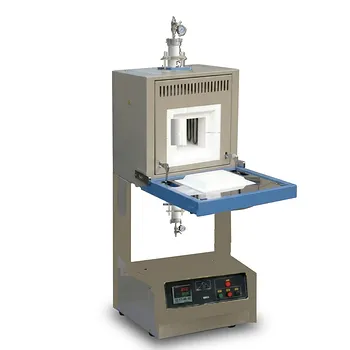
High Temperature Vertical Hybrid Furnace with Alumina Tube and SiC Heating for SOFC Coin Cell Testing and Atmosphere Processing
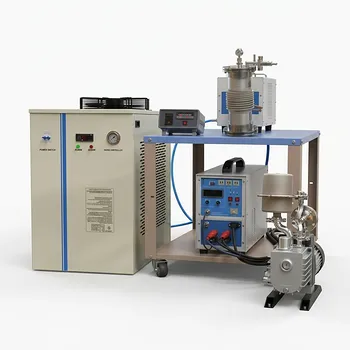
Induction Heating System with Temperature Control for High Temperature Vacuum Sintering and Melting

Molybdenum Disilicide MoSi2 Thermal Elements Electric Furnace Heating Element High Temperature Resistance