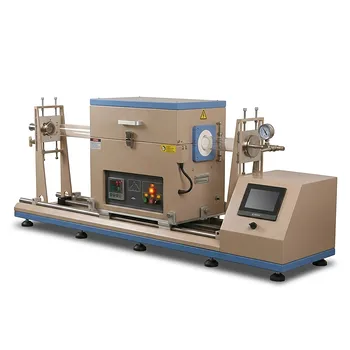
Purpose of Nitrogen Flow in Carbon Activation? Optimize Yield with High-Purity Tube Furnace Environments
Updated 3 months ago
High-purity nitrogen is used to create an inert atmosphere that prevents the oxidative combustion of carbon materials at high temperatures. By displacing oxygen within the tube furnace, nitrogen ensures that organic precursors undergo pyrolysis—a thermal decomposition in the absence of oxygen—rather than simply burning away. This protective environment is essential for the precise reconstruction of the carbon framework and the development of the internal pore structures required for high-performance adsorption.
The primary purpose of high-purity nitrogen flow is to isolate carbon materials from oxygen, allowing for controlled thermal processing that maximizes carbon yield and optimizes pore architecture by removing volatile by-products.
Preventing Oxidative Degradation
Displacing Atmospheric Oxygen
High-purity nitrogen acts as a physical barrier that flushes out ambient air from the furnace chamber. This creates an anaerobic environment necessary to prevent the carbon skeleton from reacting with oxygen at temperatures often exceeding 700°C.
Maximizing Carbon Yield
Without a nitrogen blanket, biomass and organic precursors would undergo non-selective oxidation, turning the raw material into ash and gaseous CO2. The inert atmosphere ensures that the carbon remains in a solid state, directly increasing the final yield of the activation process.
Safeguarding the Carbon Framework
Maintaining an oxygen-free zone allows the carbon atoms to rearrange into a stable, conductive lattice. This structural integrity is the foundation for the material's mechanical strength and its ability to host complex pore networks.
Facilitating Precise Pore Development
Enabling Selective Etching
During chemical activation, specific agents are used to "eat away" parts of the carbon to create pores. An inert nitrogen atmosphere ensures that this etching is selective, allowing the activator to work precisely rather than having the entire surface degraded by atmospheric oxygen.
Preventing Secondary Deposition
As materials heat up, they release volatile organic compounds and gases like carbon monoxide. The continuous flow of nitrogen sweeps these volatiles out of the reaction zone, preventing them from re-depositing into and "clogging" the newly formed micropores.
Preserving Surface Chemistry
For specialized applications, such as electromagnetic wave absorption, the carbon must retain specific lattice defects and functional groups. Nitrogen protection prevents these sensitive surface features from being destroyed by high-temperature oxidation.
Critical Variables and Potential Pitfalls
The Impact of Gas Purity
Using nitrogen with a purity lower than 99.99% introduces trace amounts of oxygen and moisture. Even minute levels of oxygen can cause "over-activation," where pores become too large (mesopores turning into macropores), thereby reducing the effective surface area.
Balancing Flow Rates
The flow rate must be high enough to remove by-products but stable enough to maintain a constant temperature profile. If the flow is too low, volatile impurities may linger, leading to a "dirty" carbon product with poor adsorption performance.
Temperature Management
The protective benefits of nitrogen are only effective if the furnace seal is maintained. At extreme temperatures, even a small leak can allow enough oxygen into the system to trigger spontaneous combustion of the carbonized material.
Applying These Principles to Your Process
How to Optimize Your Activation Goal
- If your primary focus is Maximum Surface Area: Maintain a high, constant nitrogen flow (e.g., 300 mL/min) to ensure all volatile "pore-blockers" are immediately flushed from the system.
- If your primary focus is High Carbon Yield: Ensure the furnace is fully purged with nitrogen before heating begins to prevent any initial oxidative loss during the ramp-up phase.
- If your primary focus is Specific Surface Chemistry: Use ultra-high purity nitrogen (99.999%) to protect delicate surface functional groups from trace oxidation that could alter the material's electronic properties.
The strategic use of high-purity nitrogen transforms a simple heating process into a controlled chemical synthesis, ensuring the resulting carbon material is both structurally sound and functionally potent.
Summary Table:
| Function | Role in Carbon Activation | Key Benefit |
|---|---|---|
| Oxygen Displacement | Creates an anaerobic environment | Prevents combustion and maximizes carbon yield |
| Volatile Removal | Sweeps away organic by-products | Prevents pore clogging and ensures material purity |
| Selective Etching | Enables controlled chemical reactions | Allows for precise development of internal pore architecture |
| Purity Maintenance | Minimizes trace oxygen (99.99%+ purity) | Prevents over-activation and preserves surface chemistry |
Maximize Your Material Performance with THERMUNITS
As a leading manufacturer of high-temperature laboratory equipment, THERMUNITS specializes in providing the precise thermal environments required for advanced material science and industrial R&D. Whether you are focusing on carbon activation, pyrolysis, or specialized chemical synthesis, our equipment ensures the atmospheric integrity your research demands.
How THERMUNITS Empowers Your Lab:
- Comprehensive Thermal Solutions: We offer a wide range of Tube Furnaces, Muffle, Vacuum, Atmosphere, Rotary, and Hot Press furnaces designed for stability and durability.
- Advanced Systems: Our CVD/PECVD systems and vacuum induction melting furnaces (VIM) are engineered for high-purity applications and complex heat treatments.
- Precision Components: From Dental Furnaces to high-quality Thermal Elements, we provide the tools to prevent over-activation and optimize carbon framework reconstruction.
Ready to enhance your lab's efficiency and achieve superior material yields? Contact us today to discuss your specific thermal processing requirements with our experts!
References
- Gabriel Ogbeh, Nicholas O. Emaikwu. Statistical optimization of iodine adsorption for <i>Pentaclethra macrophylla</i> pods activated carbon production. DOI: 10.4314/swj.v18i4.22
Mentioned Products
- High Temperature Dual Zone Rotating Tube Furnace 1500C Silicon Carbide Heating for Advanced Material Synthesis
- High Temperature 1700C Vertical Tube Furnace for Powder Spherification and Material Sintering
- Compact High Temperature 1600C Tube Furnace with 50mm Alumina Tube and Vacuum Flanges for Material Sintering
- High Temperature 1200C Split Tube Furnace with Optional Quartz Tube Sizes and Vacuum Sealing Flanges for Material Science Research
- High Temperature Tube Furnace 1500C with Sliding Flanges and 50mm OD for Rapid Thermal Processing Fast Heating and Cooling
People Also Ask
- What is the function of CVD furnaces in graphene prep? Enhancing Photodetector Charge Transport
- Why use CVD and a tube furnace for Pd3P0.95/NC catalyst phosphidation? Ensure high phase purity and performance.
- CVD Tube Furnace Advantages for Pd-P Catalyst Durability: Precision Control for 40,000+ Cycles
- How does a rotary tube furnace improve the processing of granular materials? Enhance Uniformity and Reaction Kinetics
- How does a Chemical Vapor Deposition (CVD) tube furnace facilitate synchronized nitridation? Precision Nano-Engineering.

Tech Team · ThermUnits
Last updated on Jun 03, 2026
Related Products
High Temperature Dual Zone Rotating Tube Furnace 1500C Silicon Carbide Heating for Advanced Material Synthesis

High Temperature 1700C Vertical Tube Furnace for Powder Spherification and Material Sintering

Compact High Temperature 1600C Tube Furnace with 50mm Alumina Tube and Vacuum Flanges for Material Sintering
High Temperature 1200C Split Tube Furnace with Optional Quartz Tube Sizes and Vacuum Sealing Flanges for Material Science Research

High Temperature Tube Furnace 1500C with Sliding Flanges and 50mm OD for Rapid Thermal Processing Fast Heating and Cooling
1100C High Pressure Rocking Tube Furnace with 2 Inch Super Alloy Processing Tube for Material Synthesis
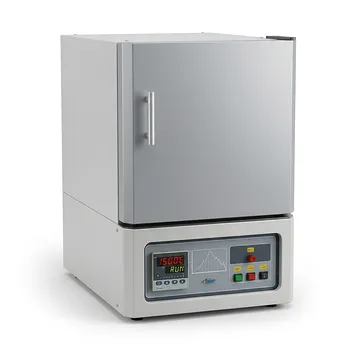
High Temperature 1500C Benchtop Muffle Furnace 3.6L Alumina Fiber Chamber Programmable Controller Sintering Annealing Carbonization Thermal Processing System
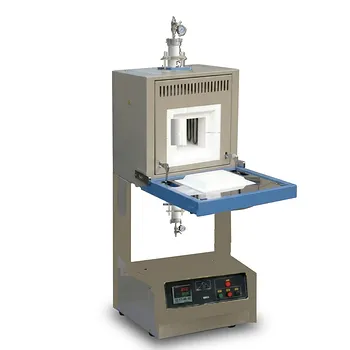
High Temperature Vertical Hybrid Furnace with Alumina Tube and SiC Heating for SOFC Coin Cell Testing and Atmosphere Processing

High Temperature Automated 5 Inch Tube Furnace for Autonomous Material Research and Advanced Laboratory R&D

1100C Tube Furnace with Vacuum Flange and Programmable Temperature Controller for Material Science and Industrial Heat Treatment

High Temperature 1700C Tube Furnace with High Vacuum Turbomolecular Pump System and Multi Channel Mass Flow Controller Gas Mixer
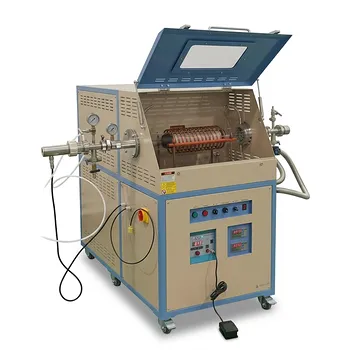
Ultra High Temperature 2300C Induction Heated Graphite Tube Furnace with Infrared Control
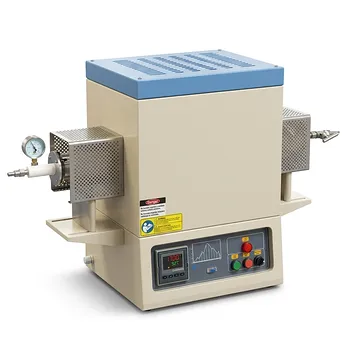
High Temperature Three Zone Tube Furnace 1700C with Alumina Tube and Water Cooled Flanges
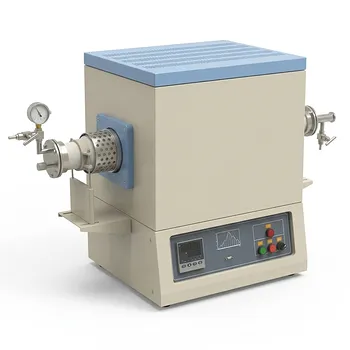
1750°C High Temperature Benchtop Vacuum Atmosphere Tube Furnace with Kanthal Super 1800 Heating Elements and 60mm Alumina Processing Tube

1800C High Temperature Compact Vacuum Tube Furnace with 60mm OD Alumina Tube and Kanthal MoSi2 Heating Elements
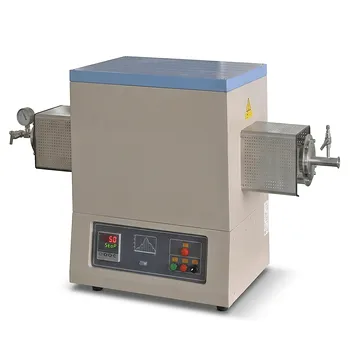
High Temperature 1700C Tube Furnace with 4 Inch OD Alumina Tube and Vacuum Sealing Flanges
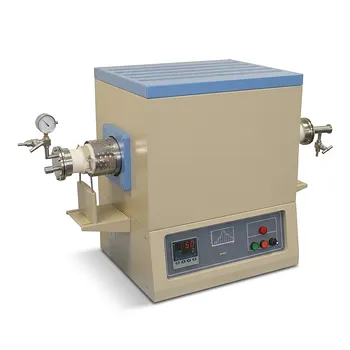
1700C High Temperature Alumina Tube Furnace with 18 Inch Heated Zone and Vacuum Sealing Flanges
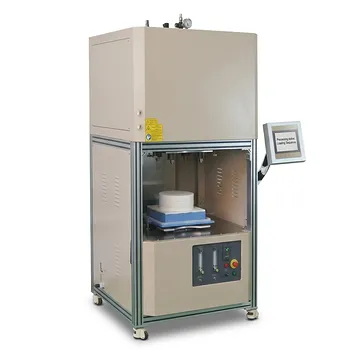
High Temperature Vertical Atmosphere Controlled Furnace with Automatic Bottom Loading and 1700°C Capacity for Advanced Material Research

High Temperature 1700C Benchtop Tube Furnace with 5 Inch Heating Zone High Purity Alumina Tube and Vacuum Sealing Flanges