What role do alumina preheating tubes and heating elements play in flash smelting simulation? Optimize Thermal Precision
Updated 3 months ago
Thermal preparation and atmospheric integrity are the twin pillars of a successful flash smelting simulation. In these experiments, alumina preheating tubes and heating elements function together to heat process gases to precise temperatures (such as 450 °C), providing the initial thermal energy required to trigger the rapid desulfurization and ignition of chalcopyrite particles. By utilizing chemically inert alumina, the system ensures that the gas composition remains stable and uncontaminated, accurately mimicking the conditions of industrial-scale smelting.
The combination of alumina preheating tubes and heating elements serves as the "thermal engine" of the experiment, providing the necessary energy to initiate ignition while maintaining the chemical purity of the reaction environment.
Simulating Industrial Thermal Conditions
Mimicking Process Air Preheating
In industrial flash smelting, process air is preheated before it enters the reaction chamber to ensure efficient combustion. The preheating system in a laboratory setting replicates this by using heating elements wound around the tube to reach specific targets, such as 450 °C.
Triggering Reaction Kinetics
Chalcopyrite particles require a specific threshold of initial thermal energy to begin reacting. The preheated oxygen supplied by these tubes provides that energy, facilitating the rapid desulfurization and ignition reactions necessary for a valid simulation.
The Material Advantages of Alumina
Ensuring Chemical Inertness
Alumina is chosen for its high-temperature resistance and its ability to remain non-reactive even in harsh environments. This chemical inertness prevents the tube itself from reacting with the experimental atmosphere, which is critical when using corrosive gases.
Maintaining Gas Stability
Flash smelting simulations often involve complex gas mixtures, including CO2, O2, SO2, and HCl. The alumina lining ensures these components remain stable and do not degrade or change concentration through contact with the furnace body.
Understanding the Trade-offs and Risks
Thermal Shock Sensitivity
While alumina is highly resistant to heat, it is relatively brittle and susceptible to thermal shock. Rapid heating or cooling cycles can cause the preheating tube to crack, potentially leaking gases and ruining the experimental data.
Heating Element Longevity
Externally wound heating elements are subject to oxidation and mechanical stress over time. If the elements are not maintained or if they are operated beyond their rated temperature, uneven heating zones can develop, leading to inconsistent ignition of the ore particles.
How to Optimize Your Simulation Setup
When configuring your flash smelting experiment, your choice of preheating parameters should align with your specific research objectives.
- If your primary focus is kinetic accuracy: Ensure the heating elements are calibrated to match the exact industrial preheat temperature to capture the precise moment of ignition.
- If your primary focus is gas composition analysis: Prioritize high-purity alumina tubes to prevent any catalytic effects or reactions between the tube wall and gases like SO2 or HCl.
- If your primary focus is equipment longevity: Implement a controlled ramp-up and cool-down schedule for the heating elements to minimize the risk of thermal shock to the alumina tube.
Precise thermal control and material purity are the fundamental requirements for transforming a laboratory simulation into a reliable model of industrial reality.
Summary Table:
| Component | Primary Function | Key Material Benefit | Operational Risk |
|---|---|---|---|
| Alumina Preheating Tube | Maintains gas purity & atmospheric integrity | High chemical inertness & heat resistance | Sensitive to thermal shock/cracking |
| Heating Elements | Provides initial thermal energy (e.g., 450°C) | Precise control of reaction kinetics | Oxidation & potential uneven heating |
Maximize Your Research Precision with THERMUNITS
At THERMUNITS, we understand that successful material science and industrial R&D depend on uncompromising thermal accuracy. As a leading manufacturer of high-temperature laboratory equipment, we offer a comprehensive range of solutions including Muffle, Vacuum, Atmosphere, Tube, Rotary, and Hot Press furnaces, as well as CVD/PECVD systems, Dental Furnaces, and Vacuum Induction Melting (VIM) furnaces.
Our high-purity thermal elements and advanced heating systems are engineered to withstand the rigors of flash smelting simulations and complex heat treatments, ensuring gas stability and reliable ignition every time.
Ready to elevate your laboratory’s capabilities? Contact our expert team today to find the perfect thermal processing solution for your specific application.
References
- Nobuyasu Nishioka, Hiromichi Takebe. Visualization of CuFeS2 Particle Ignition and Combustion Under Simulated Flash Smelting Conditions. DOI: 10.1007/s40831-024-00987-z
Mentioned Products
- 1800C High Temperature Compact Vacuum Tube Furnace with 60mm OD Alumina Tube and Kanthal MoSi2 Heating Elements
- High Temperature 1700C Three Zone Tube Furnace with Alumina Tube 50mm 60mm 80mm OD for Material Research and Industrial Heat Treatment
- 1700C High Temperature Alumina Tube Furnace with 18 Inch Heated Zone and Vacuum Sealing Flanges
- High Temperature 1700C Benchtop Tube Furnace with 5 Inch Heating Zone High Purity Alumina Tube and Vacuum Sealing Flanges
- High Temperature Vertical Hybrid Furnace with Alumina Tube and SiC Heating for SOFC Coin Cell Testing and Atmosphere Processing
People Also Ask
- What core functions does a high-temperature vacuum tube furnace provide? Optimize np-CuSn Sintering & Joint Integrity
- What is the primary function of a high-temperature tube furnace in Cu1-N-C synthesis? Precision Thermal Control.
- What impact does the heating rate of a tube furnace have on biochar microstructure? Optimize Your Material R&D.
- Role of Tube Furnace in KNNLST Ceramic Synthesis: Achieve High Phase Purity and Thermal Uniformity
- What is the role of a high-temperature tube furnace in the preparation of S-C3N4? Master Precision Material Synthesis

Tech Team · ThermUnits
Last updated on Jun 03, 2026
Related Products

1800C High Temperature Compact Vacuum Tube Furnace with 60mm OD Alumina Tube and Kanthal MoSi2 Heating Elements
High Temperature 1700C Three Zone Tube Furnace with Alumina Tube 50mm 60mm 80mm OD for Material Research and Industrial Heat Treatment
1700C High Temperature Alumina Tube Furnace with 18 Inch Heated Zone and Vacuum Sealing Flanges

High Temperature 1700C Benchtop Tube Furnace with 5 Inch Heating Zone High Purity Alumina Tube and Vacuum Sealing Flanges
High Temperature Vertical Hybrid Furnace with Alumina Tube and SiC Heating for SOFC Coin Cell Testing and Atmosphere Processing

1750°C High Temperature Benchtop Vacuum Atmosphere Tube Furnace with Kanthal Super 1800 Heating Elements and 60mm Alumina Processing Tube

Compact High Temperature 1600C Tube Furnace with 50mm Alumina Tube and Vacuum Flanges for Material Sintering
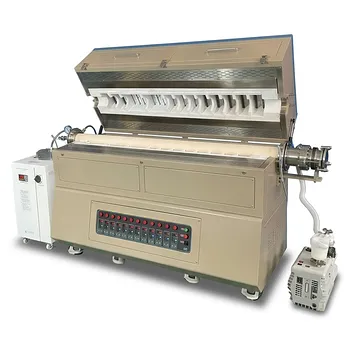
Twelve Zone 1700°C Multi Zone Split Tube Furnace with 100mm Alumina Processing Tube and Independent Temperature Gradient Control
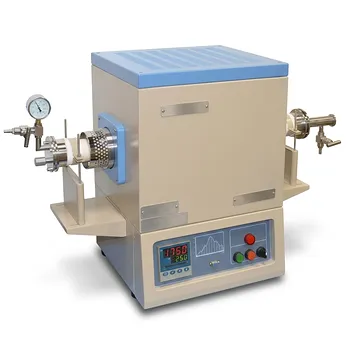
High Temperature Compact Vacuum Tube Furnace 1750C Max 60mm OD Alumina Tube
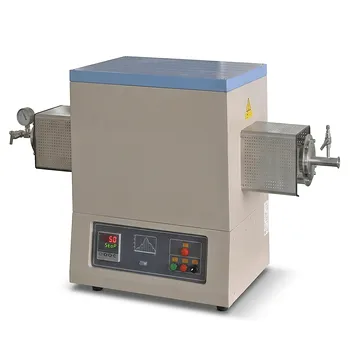
High Temperature 1700C Tube Furnace with 4 Inch OD Alumina Tube and Vacuum Sealing Flanges
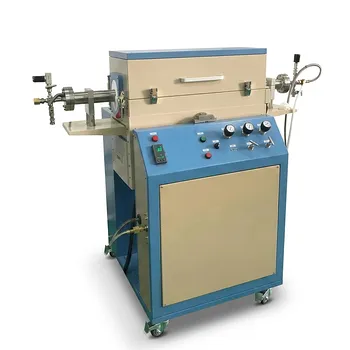
High Temperature Rocking Tube Furnace 1700°C Alumina Processing Tube with Precision Oscillation for Material Synthesis
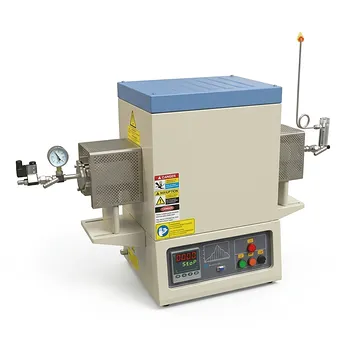
1700C Hydrogen Gas Tube Furnace with 60mm Alumina Process Tube and Integrated Hydrogen Safety Detector
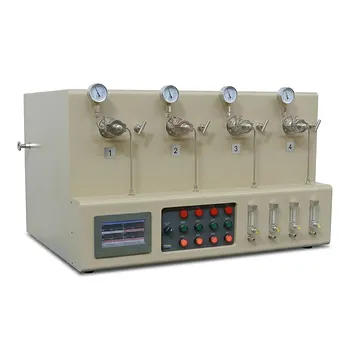
High Temperature 1700C 4 Channel Tube Furnace 1 Inch Alumina Tube for Hi-Throughput Annealing

High Temperature 1700C Six Zone Split Tube Furnace with Alumina Tube and Water Cooled Flanges

Vertical 1700C Vacuum and Atmosphere Tube Furnace with 80mm Alumina Tube
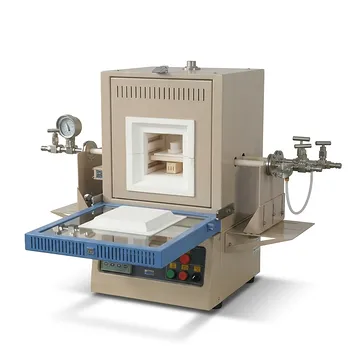
1700C Compact Hybrid Furnace with Dual Layer Box Sintering and Controlled Atmosphere Alumina Tubes
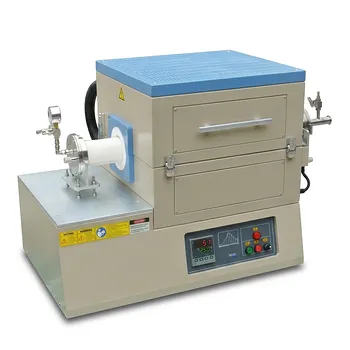
High Temperature 1700C Split Tube Furnace with Vacuum Flanges Valves and 60mm Alumina Tube
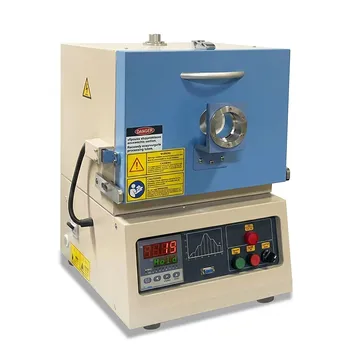
High Temperature Hybrid Muffle and Tube Furnace 1700C Programmable PID Controlled Box System with Vacuum Flange and Alumina Processing Tube
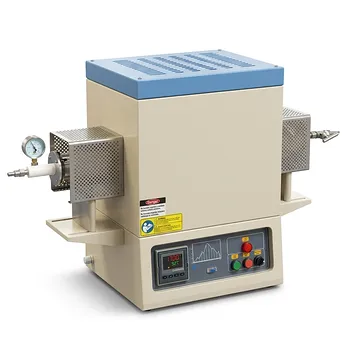
High Temperature Three Zone Tube Furnace 1700C with Alumina Tube and Water Cooled Flanges