What technical conditions does a horizontal alumina tube furnace provide? Optimize Liquid Copper Infiltration
Updated 3 months ago
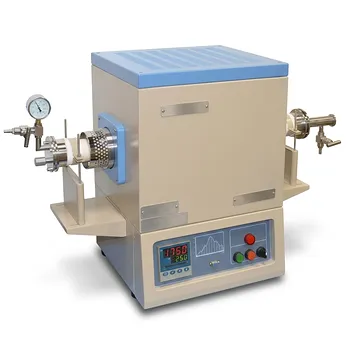
The horizontal alumina tube furnace provides a controlled, high-thermal environment essential for manufacturing metal-matrix composites. By sustaining temperatures up to 1400 °C and maintaining a flowing hydrogen atmosphere, the furnace creates the precise conditions needed for liquid copper to transition from a solid state into a fluid capable of penetrating dense tungsten structures. This setup ensures that the copper achieves the necessary fluidity to navigate the intricate channels of a tungsten lattice through a combination of capillary action and gravitational force.
The core value of the horizontal alumina tube furnace lies in its dual-channel capability: it simultaneously manages extreme thermal loads and a reducing atmosphere. This synergy allows for the seamless infiltration of liquid copper into tungsten, resulting in a structurally sound and uniform composite material.
The Role of High-Temperature Precision
Reaching the Melting Threshold
The furnace must reliably reach and maintain 1400 °C to ensure the copper is well above its melting point. At this temperature, the copper's viscosity is sufficiently low to allow for rapid movement through the tungsten lattice.
Maintaining a Uniform Thermal Field
A horizontal configuration helps establish a uniform thermal field across the length of the alumina tube. This consistency prevents premature solidification, ensuring the liquid copper penetrates the entire depth of the tungsten structure without leaving internal voids.
Atmosphere Control and Material Integrity
Utilizing a Flowing Hydrogen Atmosphere
The furnace provides dedicated channels for a flowing hydrogen atmosphere, which serves as a reducing agent. This environment is critical because it removes surface oxides from both the tungsten and the copper, which would otherwise impede the wetting process.
Enhancing Wetting and Fluidity
By maintaining an oxygen-free environment, the hydrogen atmosphere improves the surface energy interactions between the liquid and solid phases. This optimization allows the copper to "wet" the tungsten surfaces, facilitating easier flow into complex geometric channels.
Mechanics of Infiltration
Leveraging Capillary Action
The technical conditions within the tube furnace empower capillary action, where the liquid copper is literally pulled into the microscopic gaps of the tungsten lattice. The furnace’s stability ensures that this delicate physical process occurs steadily and completely.
The Influence of Gravity
In a horizontal furnace, gravity works alongside capillary forces to help distribute the liquid metal. Proper alignment of the lattice within the uniform thermal zone ensures that gravity assists rather than hinders the even distribution of the copper.
Understanding the Trade-offs
Thermal Shock and Material Fatigue
Alumina tubes, while excellent for high-temperature stability, are susceptible to thermal shock. Rapid heating or cooling cycles can lead to cracking, meaning the furnace must be ramped up and down slowly, increasing total processing time.
Hydrogen Safety and Handling
Operating with a flowing hydrogen atmosphere introduces significant safety requirements. High-temperature hydrogen is highly reactive and requires sophisticated sensing and venting systems to prevent combustion or leakage.
Optimizing the Infiltration Environment
How to Apply This to Your Project
To achieve the best results when infiltrating tungsten lattices with liquid copper, consider your specific production goals:
- If your primary focus is Maximum Density: Ensure the furnace remains at the peak temperature of 1400 °C for a longer "soak" time to allow capillary action to reach the innermost channels.
- If your primary focus is Surface Quality: Prioritize the purity of the hydrogen flow to ensure all oxides are stripped away before the copper begins to melt.
- If your primary focus is Equipment Longevity: Implement a strict, gradual ramping protocol for both heating and cooling to preserve the structural integrity of the alumina tube.
By mastering these technical conditions, you can transform a porous tungsten structure into a high-performance, fully dense copper-tungsten composite.
Summary Table:
| Parameter | Technical Condition | Purpose & Benefit |
|---|---|---|
| Max Temperature | 1400 °C | Ensures copper melting and low viscosity for infiltration. |
| Atmosphere | Flowing Hydrogen | Acts as a reducing agent to remove oxides and improve wetting. |
| Tube Material | Alumina | Provides high-temperature stability and chemical resistance. |
| Configuration | Horizontal Alignment | Establishes a uniform thermal field and leverages gravity/capillary action. |
| Process Control | Gradual Ramping | Prevents thermal shock to the alumina tube and ensures material integrity. |
Elevate Your Material Research with THERMUNITS Precision
Are you looking to perfect your metal-matrix composite manufacturing? THERMUNITS is a leading manufacturer of high-temperature laboratory equipment specifically designed for material science and industrial R&D. Our advanced Tube Furnaces, Vacuum and Atmosphere Furnaces, and CVD/PECVD systems provide the stable, high-thermal environments required for complex processes like tungsten lattice infiltration.
From Muffle and Rotary furnaces to Vacuum Induction Melting (VIM) and Hot Press solutions, we deliver the reliability your lab demands. Let our experts help you choose the ideal thermal processing equipment to achieve superior material density and surface quality.
Ready to optimize your heat treatment process?
Contact THERMUNITS Today to discuss your project requirements and request a custom quote!
References
- Aljaž Ivekovič, Jef Vleugels. Liquid-copper infiltration and characterization of additively manufactured W-lattice structures. DOI: 10.1016/j.jallcom.2024.178411
Mentioned Products
- Vertical 1700C Vacuum and Atmosphere Tube Furnace with 80mm Alumina Tube
- Twelve Zone 1700°C Multi Zone Split Tube Furnace with 100mm Alumina Processing Tube and Independent Temperature Gradient Control
- Multi Position Tube Furnace 1100C for Laboratory Material Research and Advanced Industrial Thermal Processing
- Vertical Hybrid High Temperature Furnace 1500C Alumina Tube SOFC Fuel Cell Testing Laboratory Heat Treatment Research Equipment
- High Temperature Vertical Hybrid Furnace with Alumina Tube and SiC Heating for SOFC Coin Cell Testing and Atmosphere Processing
People Also Ask
- How is an industrial-grade vertical tube furnace utilized in smelting leaching residues? Enhance Metal Recovery Efficiency
- What is the function of a laboratory-grade vertical tube furnace in fast pyrolysis? Optimize Composite Research.
- How does a vertical tube furnace facilitate thermoelectric alloy melting? Precision synthesis for material homogeneity.
- Why is a thermocouple sensor indispensable for monitoring the vertical tube furnace during gallium oxide nanowire production? Optimize VLS Growth
- What are the advantages of using a vertical tube furnace for crucible experiments simulating steel-slag interactions?

Tech Team · ThermUnits
Last updated on Jun 02, 2026
Related Products

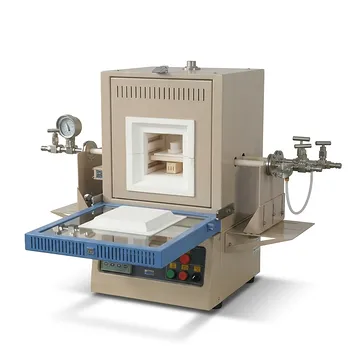
Vertical 1700C Vacuum and Atmosphere Tube Furnace with 80mm Alumina Tube
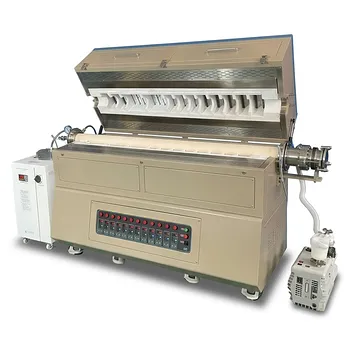
Twelve Zone 1700°C Multi Zone Split Tube Furnace with 100mm Alumina Processing Tube and Independent Temperature Gradient Control
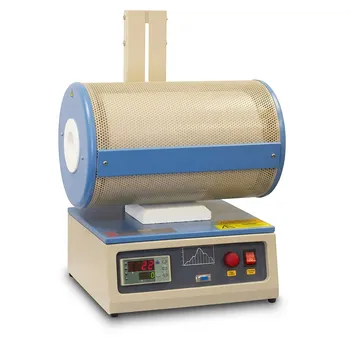
Multi Position Tube Furnace 1100C for Laboratory Material Research and Advanced Industrial Thermal Processing
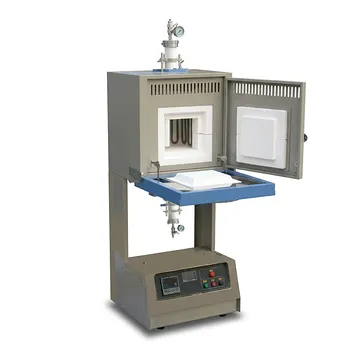
Vertical Hybrid High Temperature Furnace 1500C Alumina Tube SOFC Fuel Cell Testing Laboratory Heat Treatment Research Equipment
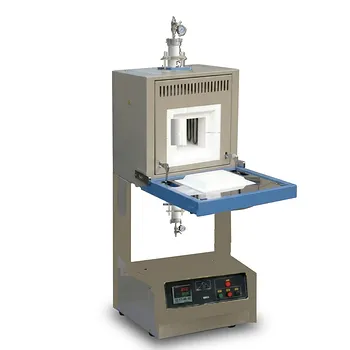
High Temperature Vertical Hybrid Furnace with Alumina Tube and SiC Heating for SOFC Coin Cell Testing and Atmosphere Processing

High Temperature 1700C Six Zone Split Tube Furnace with Alumina Tube and Water Cooled Flanges

Compact High Temperature 1600C Tube Furnace with 50mm Alumina Tube and Vacuum Flanges for Material Sintering
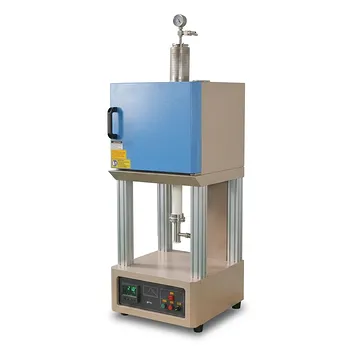
Hybrid High Temperature Tube and Box Furnace 1700C with 2 Inch Alumina Tube for Material Research

1700C Hydrogen Gas Tube Furnace with 60mm Alumina Process Tube and Integrated Hydrogen Safety Detector
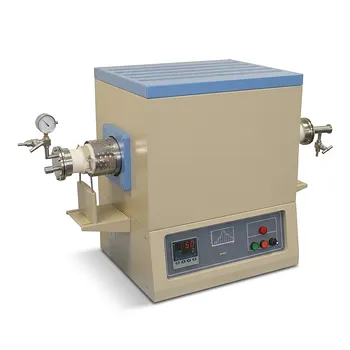
1700C High Temperature Alumina Tube Furnace with 18 Inch Heated Zone and Vacuum Sealing Flanges
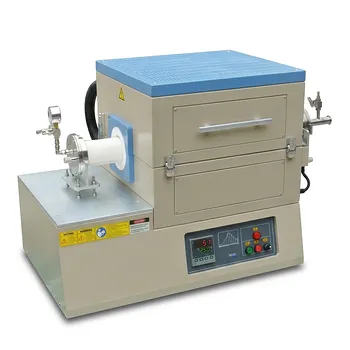
High Temperature 1700C Split Tube Furnace with Vacuum Flanges Valves and 60mm Alumina Tube

1800C High Temperature Compact Vacuum Tube Furnace with 60mm OD Alumina Tube and Kanthal MoSi2 Heating Elements
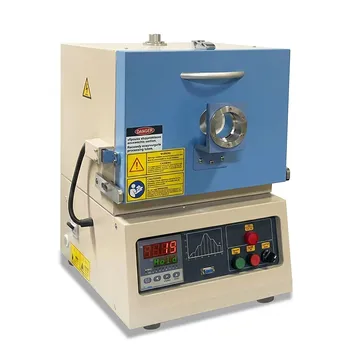
High Temperature Hybrid Muffle and Tube Furnace 1700C Programmable PID Controlled Box System with Vacuum Flange and Alumina Processing Tube

1750°C High Temperature Benchtop Vacuum Atmosphere Tube Furnace with Kanthal Super 1800 Heating Elements and 60mm Alumina Processing Tube
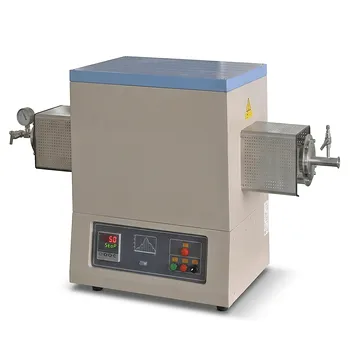
High Temperature 1700C Tube Furnace with 4 Inch OD Alumina Tube and Vacuum Sealing Flanges
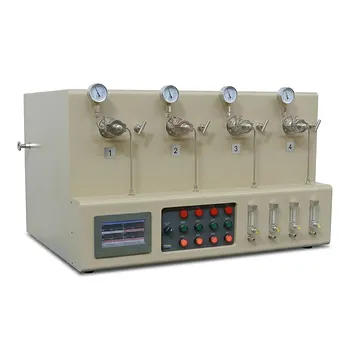
High Temperature 1700C 4 Channel Tube Furnace 1 Inch Alumina Tube for Hi-Throughput Annealing

High Temperature 1700C Benchtop Tube Furnace with 5 Inch Heating Zone High Purity Alumina Tube and Vacuum Sealing Flanges
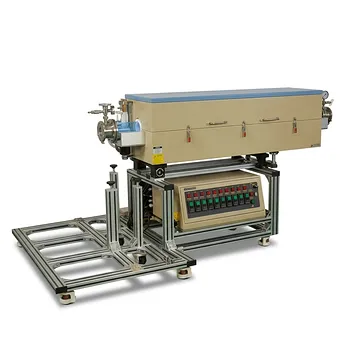
Ten Zone Multi Orientation Laboratory Tube Furnace for 1200C High Temperature Gradient Thermal Processing
High Temperature Compact Vacuum Tube Furnace 1750C Max 60mm OD Alumina Tube