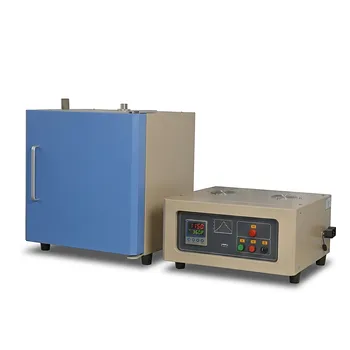
Why is long-duration heat treatment in an argon-protected annealing furnace necessary for Mg-Al-Ca alloys? Key Benefits
Updated 3 months ago
Long-duration heat treatment in an argon-protected furnace is the only way to achieve a homogenous, oxidation-free microstructure in Mg-Al-Ca alloys. By holding the material at 500°C for 24 to 48 hours, manufacturers can eliminate solidification segregation and dissolve residual second phases while preventing the highly reactive magnesium and calcium from burning or oxidizing. This process is essential for ensuring the material's mechanical properties are consistent throughout the entire component.
Core Takeaway: Long-duration annealing ensures chemical and structural uniformity by allowing solute elements to diffuse fully. Argon protection is vital because it acts as an inert shield, preventing the catastrophic oxidation that reactive magnesium and calcium would otherwise undergo at high temperatures.
Achieving Microstructural Equilibrium
Promoting Full Elemental Diffusion
During the casting process, magnesium alloys often suffer from solidification segregation, where elements are not distributed evenly. A long-duration soak at 500 °C provides the thermal energy necessary for solute elements to migrate through the lattice.
This 24-to-48-hour window is critical because diffusion is a time-dependent process. Without sufficient time, the core of the material will remain chemically different from the grain boundaries, leading to unpredictable mechanical performance.
Dissolving Non-Equilibrium Second Phases
Cast alloys frequently contain non-equilibrium second phases that form as the metal cools. These phases can act as brittle points or sites for premature failure during subsequent manufacturing steps.
High-temperature homogenization forces these residual phases to dissolve back into the primary magnesium matrix. This results in a cleaner, more uniform microstructure that is better suited for forging, rolling, or high-stress applications.
Maintaining Chemical Stability via Inert Protection
Mitigating the Reactivity of Magnesium and Calcium
Magnesium and Calcium are both highly reactive elements that have a strong affinity for oxygen. At an annealing temperature of 500 °C, these elements will react almost instantly with any available oxygen in a standard atmosphere.
Using an argon-protected furnace replaces the oxygen with an inert gas. This prevents the alloy from undergoing severe oxidation, which would otherwise degrade the metal and potentially lead to a hazardous "magnesium fire."
Preserving Surface and Internal Composition
Without argon protection, the surface of the alloy would develop a thick oxide scale, leading to a loss of critical alloying elements like calcium. This loss changes the chemical profile of the alloy's exterior, ruining its intended properties.
The inert atmosphere ensures that the chemical stability is maintained both on the surface and within the interior. By isolating the material from oxygen, the microstructural evolution is driven by internal thermodynamics rather than external chemical reactions.
Understanding the Trade-offs
The Cost of Time and Energy
Conducting heat treatments for up to 48 hours is energy-intensive and increases the production lead time. Engineers must balance the need for perfect homogeneity against the increased overhead costs of long-duration furnace runs.
Gas Purity and System Integrity
The effectiveness of the protection is entirely dependent on the purity of the argon and the seal of the furnace. Even trace amounts of oxygen or moisture in the argon stream can cause surface discoloration or localized oxidation in highly active Mg-Al-Ca alloys.
How to Apply This to Your Project
To ensure the best results when heat-treating reactive magnesium alloys, consider the following strategic goals:
- If your primary focus is Maximum Ductility: Prioritize the full 48-hour soak to ensure all brittle non-equilibrium phases are completely dissolved into the matrix.
- If your primary focus is Surface Quality: Ensure your furnace maintains a positive pressure of high-purity argon to prevent any ambient air from leaking into the heating chamber.
- If your primary focus is Cost Efficiency: Conduct a series of tests to determine if the 24-hour mark provides "sufficient" homogenization for your specific part geometry, as the final 24 hours offer diminishing returns for some applications.
By strictly controlling the atmosphere and duration of the annealing cycle, you transform a raw, segregated casting into a high-performance engineering material with predictable and stable properties.
Summary Table:
| Feature | Purpose | Impact on Mg-Al-Ca Alloys |
|---|---|---|
| 24-48h Duration | Full Elemental Diffusion | Eliminates segregation; ensures structural uniformity. |
| 500°C Temperature | Phase Dissolution | Dissolves brittle non-equilibrium phases into the matrix. |
| Argon Shielding | Oxidation Prevention | Protects reactive Mg and Ca from burning/degradation. |
| Inert Atmosphere | Chemical Stability | Preserves surface quality and critical alloying elements. |
Elevate Your Material Research with THERMUNITS
Achieving perfect homogeneity in reactive Mg-Al-Ca alloys requires absolute control over temperature and atmosphere. THERMUNITS is a leading manufacturer of high-temperature laboratory equipment, offering a comprehensive range of thermal solutions including Atmosphere, Vacuum, Tube, and Muffle furnaces.
Our equipment is engineered specifically for material science and industrial R&D, ensuring your alloys are processed in a stable, oxidation-free environment.
- Optimize your heat treatment cycles with precise control.
- Prevent hazardous oxidation of reactive magnesium and calcium elements.
- Ensure consistent mechanical properties across all your components.
Whether you need a specialized Dental Furnace, a Vacuum Induction Melting (VIM) furnace, or advanced CVD/PECVD systems, we have the expertise to support your heat treatment requirements.
Ready to enhance your lab's efficiency and material quality? Contact THERMUNITS today to find the perfect thermal processing solution for your project!
References
- W. Luo, H. Springer. Metallurgical Synthesis Methods for Mg-Al-Ca Scientific Model Materials. DOI: 10.1007/s11661-024-07655-7
Mentioned Products
- High Temperature 1500C Benchtop Muffle Furnace 3.6L Alumina Fiber Chamber Programmable Controller Sintering Annealing Carbonization Thermal Processing System
- Five Side Heating Muffle Furnace High Purity Alumina Fiber 27L Chamber 1200C High Temperature Thermal Processing System for Sintering Annealing and Materials Research
- Rapid Thermal Processing Atmosphere Controlled Bottom Loading Furnace 1100C with 50C Per Second Heating Rate for Wafer Annealing
- 1200C Five Side Heating Muffle Furnace with Sliding Door 125L Volume High Temperature Heat Treatment System for Large Scale Sintering and Annealing
- Large Bench Top 1700C High Temperature Muffle Furnace with 19L Chamber for Advanced Material Sintering and Annealing
People Also Ask
- Why is annealing in a high-temperature muffle furnace necessary for SiO2/Si substrate pretreatment before monolayer WS2 synthesis?
- What is the purpose of using muffle or tube furnaces in glass synthesis? Achieve Precise Melt-Quenching & Homogeneity
- What is the role of a high-temperature muffle furnace in the synthesis of graphitic carbon nitride (g-C3N4)? - Guide
- What is the necessity of 950 °C muffle furnace for aluminate spinel supports? Achieve Phase Purity & Lattice Integration
- What is the function of a high-temp muffle furnace in Ni-V oxide synthesis? Optimize your material's performance.

Tech Team · ThermUnits
Last updated on Jun 03, 2026
Related Products
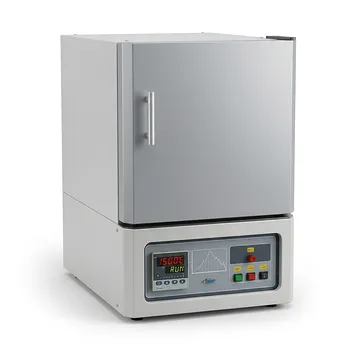
High Temperature 1500C Benchtop Muffle Furnace 3.6L Alumina Fiber Chamber Programmable Controller Sintering Annealing Carbonization Thermal Processing System
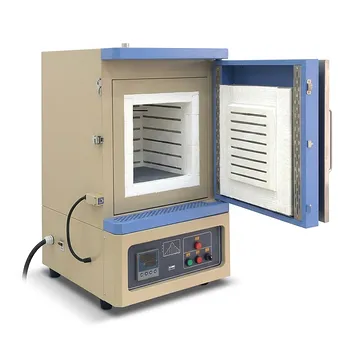
Five Side Heating Muffle Furnace High Purity Alumina Fiber 27L Chamber 1200C High Temperature Thermal Processing System for Sintering Annealing and Materials Research
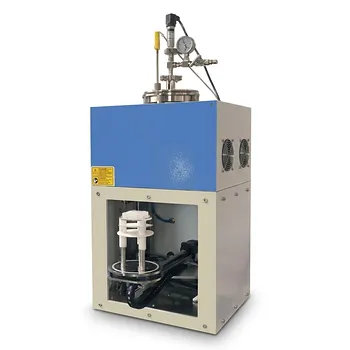
Rapid Thermal Processing Atmosphere Controlled Bottom Loading Furnace 1100C with 50C Per Second Heating Rate for Wafer Annealing
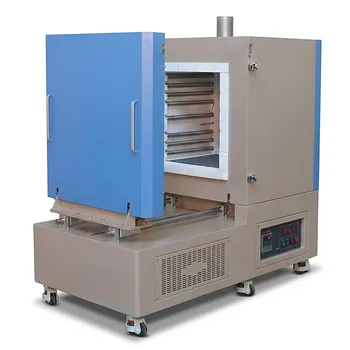
1200C Five Side Heating Muffle Furnace with Sliding Door 125L Volume High Temperature Heat Treatment System for Large Scale Sintering and Annealing
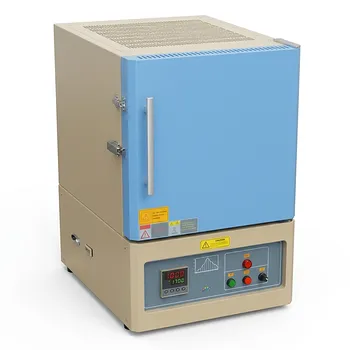
Large Bench Top 1700C High Temperature Muffle Furnace with 19L Chamber for Advanced Material Sintering and Annealing
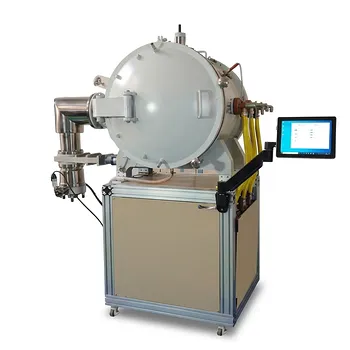
High Temperature Cold Wall Vacuum Furnace for Advanced Material Sintering and Annealing 1600C Heating Area 200x200x300mm
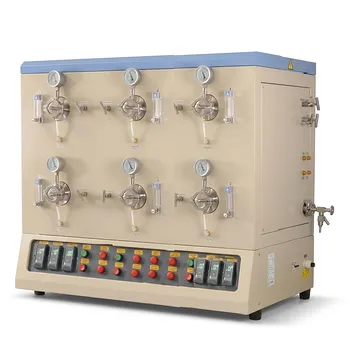
1200C High Throughput Multi Channel Tube Furnace with 50mm Quartz Tubes for Annealing and Material Phase Diagram Research
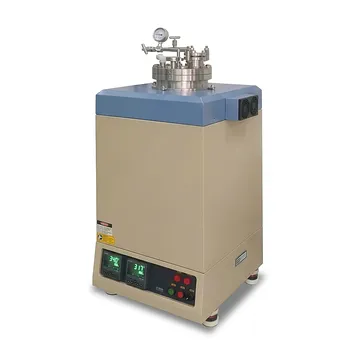
High Temperature 1000C Vacuum Furnace with 8 Inch ID Chamber for Material Sintering and Research Annealing
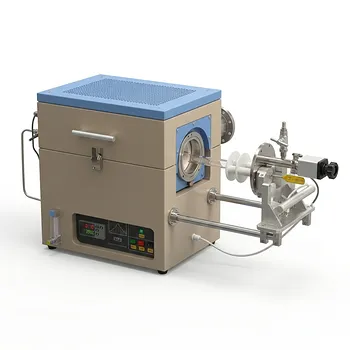
Compact Atmosphere Controlled Rapid Thermal Processing RTP Furnace with 4 Inch ID Quartz Tube 1100C
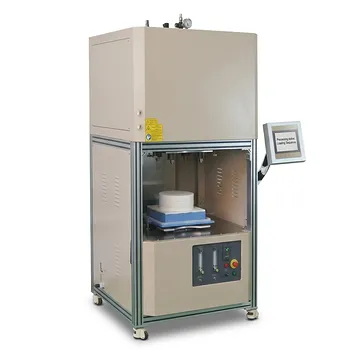
High Temperature Vertical Atmosphere Controlled Furnace with Automatic Bottom Loading and 1700°C Capacity for Advanced Material Research
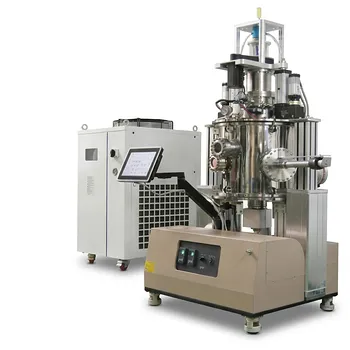
950C Rapid Thermal Processing Furnace for 12 Inch Wafer CSS Coating with Rotating Substrate Holder
High Temperature 800C Rapid Thermal Processing Furnace with Rotating Sample Holder for Close Spaced Sublimation and Thin Film Solar Cell Research

High Temperature 1700C Benchtop Tube Furnace with 5 Inch Heating Zone High Purity Alumina Tube and Vacuum Sealing Flanges
1700C Compact Hybrid Furnace with Dual Layer Box Sintering and Controlled Atmosphere Alumina Tubes