How does a high-temperature muffle furnace facilitate the preparation of defect-rich La2O2CO3 catalyst supports? Guide
Updated 3 months ago
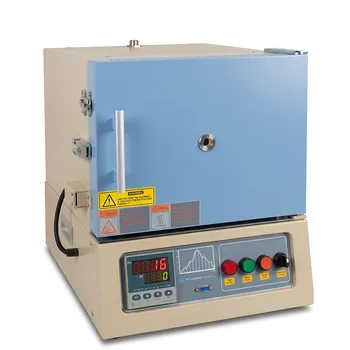
A high-temperature muffle furnace acts as a controlled reactor that transforms hydroxide precursors into defect-rich $La_2O_2CO_3$ through thermal decomposition. By maintaining precise temperatures, typically around $500^\circ C$, the furnace ensures the complete conversion of precursors into specific rod-like morphologies. The thermal stress generated during this calcination process introduces essential structural defects, specifically oxygen vacancies, which are vital for the catalyst's ability to activate carbon dioxide.
Core Takeaway: The muffle furnace facilitates $La_2O_2CO_3$ preparation by providing the thermal energy required for phase transformation and morphology stabilization while simultaneously engineering lattice defects through controlled thermal stress.
The Mechanisms of Phase Transformation and Morphology
Thermal Decomposition of Precursors
The furnace provides the necessary energy to drive the chemical transition from unstable hydroxide precursors to the stable oxycarbonate phase. This decomposition is not merely a change in state but a structured reorganization of the material's atomic framework.
Control of Rod-Like Morphologies
Precise temperature regulation within the muffle furnace is critical for maintaining the desired rod-like structure of the support. Deviations in temperature can lead to irregular shapes, which would diminish the specific surface area and the accessibility of active sites.
Stabilization of the $La_2O_2CO_3$ Lattice
By applying consistent heat, the furnace ensures that the resulting $La_2O_2CO_3$ attains a stable crystalline form. This stability is necessary for the catalyst to withstand the harsh conditions of industrial chemical reactions without losing its structural integrity.
Engineering Defects and Surface Properties
Introduction of Oxygen Vacancies
Thermal stress applied during the calcination process deliberately introduces oxygen vacancies into the $La_2O_2CO_3$ lattice. These vacancies serve as active sites that significantly enhance the support's capability to capture and activate $CO_2$ molecules.
Removal of Surface Impurities
Beyond structural changes, the high-temperature environment effectively eliminates adsorbed moisture and organic impurities. This cleaning process creates a pristine surface, allowing for more uniform loading of active metal components in subsequent preparation steps.
Management of Surface Hydroxyl States
The furnace environment allows for the adjustment of surface hydroxyl groups, which are critical for the anchoring of metal precursors. Proper management of these states prevents the agglomeration of noble metals, ensuring they remain highly dispersed across the support.
Understanding the Trade-offs
Temperature vs. Defect Density
While higher temperatures drive phase transformation, excessive heat can trigger a solid-phase reaction that heals lattice defects rather than creating them. This "thermal annealing" effect can reduce the transport efficiency of charge carriers and diminish the catalyst's overall activity.
Sintering and Surface Area Loss
Prolonged exposure to high temperatures in a muffle furnace can lead to sintering, where small particles fuse together. This process reduces the specific surface area and can collapse the multi-level pore structures created by pore-forming agents like starch.
Phase Purity vs. Mechanical Strength
Lower calcination temperatures might preserve more defects but can result in incomplete precursor conversion. This lack of structural maturity often leads to poor mechanical strength, making the catalyst support prone to degradation under high-pressure flow conditions.
How to Apply This to Your Project
Recommendations for Catalyst Optimization
To achieve the best results with your $La_2O_2CO_3$ supports, you must balance the furnace settings based on your specific catalytic requirements.
- If your primary focus is CO2 activation efficiency: Prioritize moderate temperatures (around $500^\circ C$) to maximize the density of oxygen vacancies while avoiding lattice healing.
- If your primary focus is structural longevity and strength: Utilize higher calcination temperatures or multi-stage heating to ensure complete solid-phase reactions and robust crystal formation.
- If your primary focus is high metal dispersion: Ensure the furnace provides a uniform thermal field to stabilize surface hydroxyls and prevent the agglomeration of active species.
The strategic use of a muffle furnace allows for the precise calibration of a catalyst support's chemical reactivity and physical durability.
Summary Table:
| Process Parameter | Role in Catalyst Support | Key Benefit |
|---|---|---|
| Thermal Decomposition | Converts precursors to $La_2O_2CO_3$ | Phase transformation & purity |
| Morphology Control | Maintains rod-like structures | High specific surface area |
| Calcination Stress | Introduces oxygen vacancies | Enhanced $CO_2$ activation |
| Temperature Control | Prevents thermal annealing | High defect density |
| Surface Cleaning | Removes moisture & impurities | Uniform metal loading |
Elevate Your Material Research with THERMUNITS Precision Heating
Precise thermal control is the difference between a high-performance catalyst and a failed experiment. THERMUNITS is a leading manufacturer of high-temperature laboratory equipment specifically designed for material science and industrial R&D. Our furnaces provide the uniform thermal fields necessary to engineer lattice defects and stabilize morphology in advanced catalyst supports like $La_2O_2CO_3$.
Our Comprehensive Thermal Solutions include:
- Muffle, Vacuum, & Atmosphere Furnaces for controlled calcination.
- Tube, Rotary, & Hot Press Furnaces for diverse material synthesis.
- CVD/PECVD Systems for thin-film and nanoparticle research.
- Vacuum Induction Melting (VIM) & Electric Rotary Kilns.
- Dental Furnaces & High-Quality Thermal Elements.
Optimize your heat treatment processes and achieve superior material properties today.
Contact Our Technical Team for a Custom Quote
References
- Rui Zhang, Hongjie Zhang. Synthesis of defect-rich La <sub>2</sub> O <sub>2</sub> CO <sub>3</sub> supports for enhanced CO <sub>2</sub> -to-methanol conversion efficiency. DOI: 10.1126/sciadv.adr3332
Mentioned Products
- High Temperature 1700C Bench Top Muffle Furnace with Alumina Fiber Insulation and 3.6L Chamber Capacity for Precision Sintering and Heat Treatment
- High Temperature 1500C Benchtop Muffle Furnace 3.6L Alumina Fiber Chamber Programmable Controller Sintering Annealing Carbonization Thermal Processing System
- 1200°C High Temperature Muffle Furnace 19L Chamber with 50 Segment Programmable Controller
- High Temperature Muffle Furnace with Dual Controllers and 36L Large Chamber 1700C Max
- Large Bench Top 1700C High Temperature Muffle Furnace with 19L Chamber for Advanced Material Sintering and Annealing
People Also Ask
- What role does a high-temperature muffle furnace play in evaluating the mineral composition of rock samples? LOI & XRF Guide
- What is the function of a high-temperature muffle furnace in phosphorus-modified zeolite catalyst preparation?
- What is the function of a high-temp muffle furnace in Ni-V oxide synthesis? Optimize your material's performance.
- What is the purpose of using muffle or tube furnaces in glass synthesis? Achieve Precise Melt-Quenching & Homogeneity
- What is the function of a muffle furnace in aluminoborosilicate glass prep? Stabilize Raw Materials for Superior Purity

Tech Team · ThermUnits
Last updated on Jun 03, 2026
Related Products
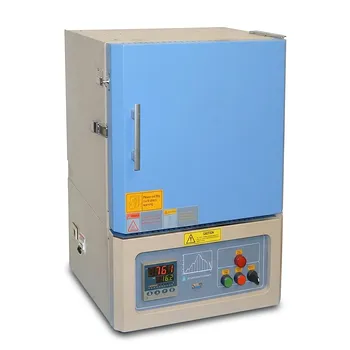
High Temperature 1700C Bench Top Muffle Furnace with Alumina Fiber Insulation and 3.6L Chamber Capacity for Precision Sintering and Heat Treatment
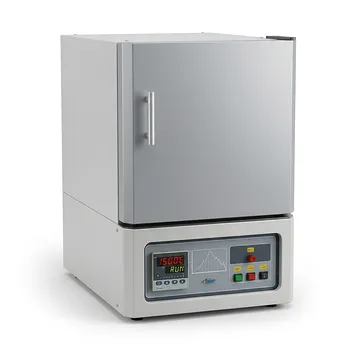
High Temperature 1500C Benchtop Muffle Furnace 3.6L Alumina Fiber Chamber Programmable Controller Sintering Annealing Carbonization Thermal Processing System
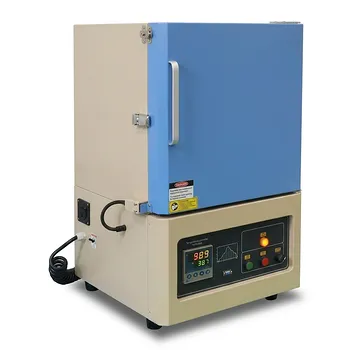
1200°C High Temperature Muffle Furnace 19L Chamber with 50 Segment Programmable Controller
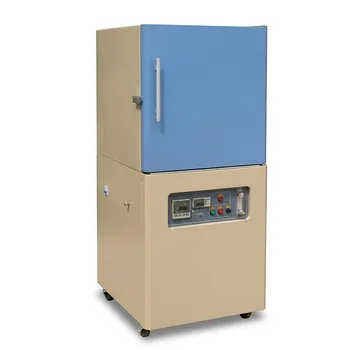
High Temperature Muffle Furnace with Dual Controllers and 36L Large Chamber 1700C Max
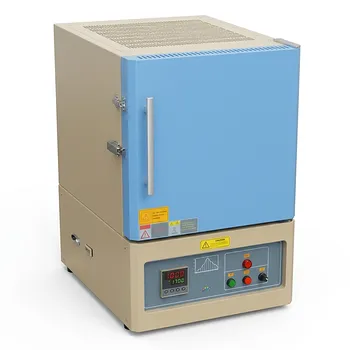
Large Bench Top 1700C High Temperature Muffle Furnace with 19L Chamber for Advanced Material Sintering and Annealing
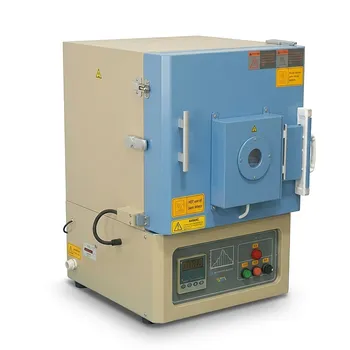
High Temperature Benchtop Muffle Furnace 1500C with 3.6L Chamber and Quartz Observation Window
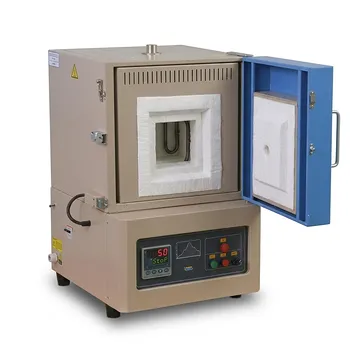
1800°C Bench Top Ultra High Temperature Muffle Furnace with Sapphire Observation Window and Top Feeding Port for Materials Research and Thermal Processing
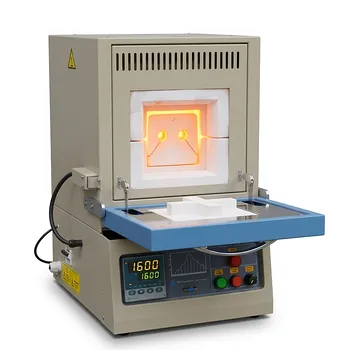
High Temperature Compact Muffle Furnace 1700 C with 30 Segment Programmable Controller and 1.7L Cubic Chamber
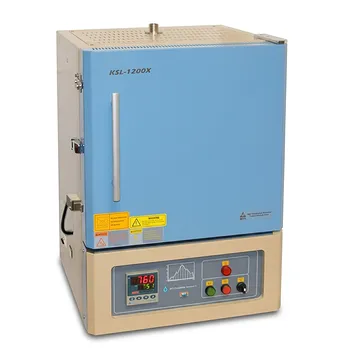
High Temperature 1200C Muffle Furnace 27L Volume 12x12x12 Chamber with Programmable PID Controller for Laboratory Material Science
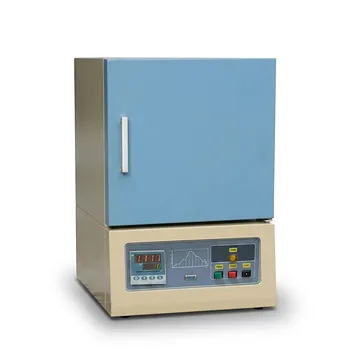
Ultra High Temperature Bench Top Muffle Furnace 1750C Sintering System with Kanthal Super Heating Elements and Precision Digital Control
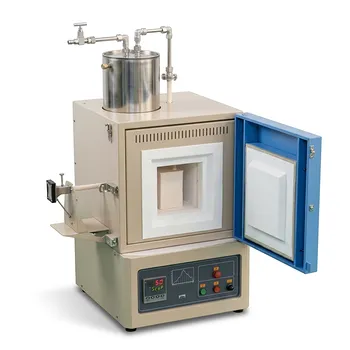
High Temperature Bench Top Muffle Furnace 1700C with Integrated Evaporating Particle Collection and 8x8x8 Alumina Fiber Chamber
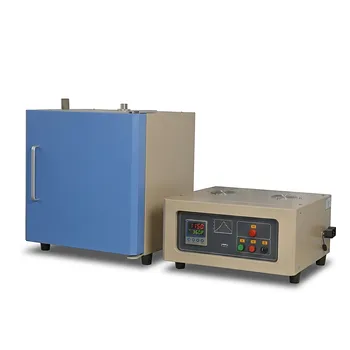
High Temperature Muffle Furnace with Alloy Chamber for Debinding and Sintering Applications
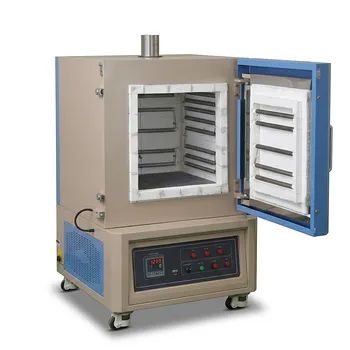
1200C High Temperature 125L Muffle Furnace 5 Side Heating for Large Batch Sintering with Optional Alloy Debinding Chamber
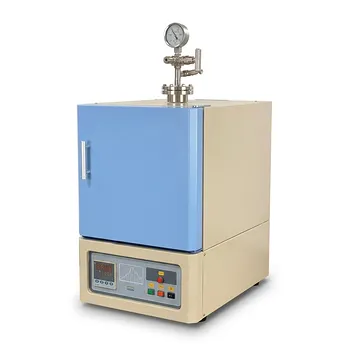
Hybrid High Temperature Muffle and Tube Furnace with 1500C Capability and Vacuum Flange Assembly
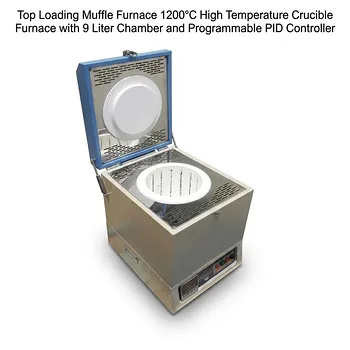
Top Loading Muffle Furnace 1200°C High Temperature Crucible Furnace with 9 Liter Chamber and Programmable PID Controller
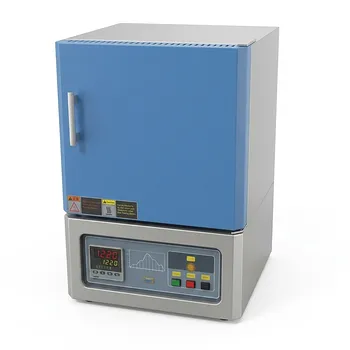
High Temperature Benchtop Muffle Furnace 1700C 10L Chamber Alumina Fiber Insulation MoSi2 Heating Elements
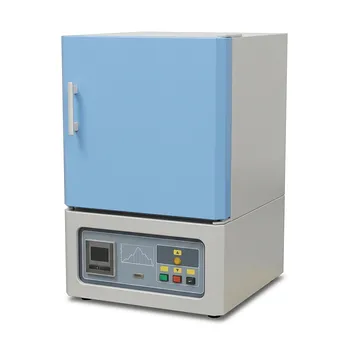
1800C Bench Top Muffle Furnace with Kanthal Super 1900 Heating Elements and 3.6L Alumina Fiber Chamber
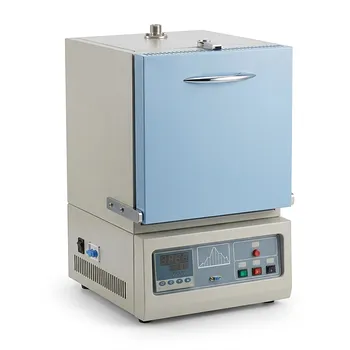
1750C Compact Muffle Furnace 1.7L Ultra High Temperature Laboratory Sintering System for Advanced Ceramics and Material Science Research
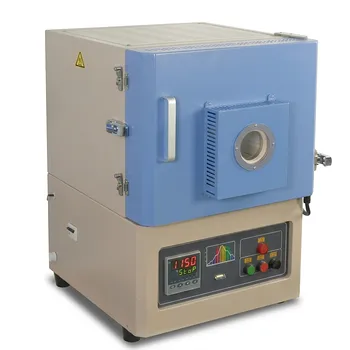
High Temperature Benchtop Muffle Furnace with Quartz Observation Window for Thermal Imaging and Material Analysis