Why is precise control of nitrogen flow using mass flow controllers necessary in sludge pyrolysis experiments? Guide
Updated 3 months ago
Precise nitrogen flow control is the primary mechanism for regulating the residence time of gas-phase products during thermal decomposition. Mass Flow Controllers (MFCs) are essential in sludge pyrolysis because they maintain a stable environment that prevents fluctuations in secondary reactions. This level of precision ensures that data remain comparable across different experimental conditions and that the resulting product distribution is a true reflection of the reaction parameters.
The use of mass flow controllers in sludge pyrolysis is critical for establishing an anaerobic environment, controlling the duration volatile products spend in the reaction zone, and ensuring the accuracy of mass balance calculations through consistent product transport.
Regulating Product Transformation and Quality
Precise Control of Residence Time
The nitrogen flow rate directly determines the residence time—the duration that gas-phase products remain in the high-temperature reaction zone. If the flow is too slow, vapors linger in the heat, leading to extended thermal contact that alters the final chemical composition.
Prevention of Secondary Reactions
Fluctuating flow rates can cause varying degrees of secondary cracking, where primary pyrolysis vapors decompose further into smaller gas molecules or solid coke. Robust flow control prevents these unintended reactions, ensuring that the collected bio-oil and gas profiles are consistent and reproducible.
Rapid Transport of Volatiles
A steady nitrogen stream acts as a carrier, rapidly sweeping volatile matter out of the furnace and into the condensation system. This "quenching" effect stops the reaction at a specific point, which is vital for studying the intermediate stages of sludge decomposition.
Establishing an Inert Chemical Environment
Total Oxygen Exclusion
Pyrolysis is an anaerobic process; even trace amounts of oxygen can lead to combustive oxidation rather than thermal decomposition. MFCs allow for a precise "purge" phase before heating and maintain a positive pressure of nitrogen to ensure no ambient air infiltrates the system.
Protecting Sensitive Materials
In experiments involving catalysts or specific sludge additives, precise nitrogen flow prevents the oxidation of metallic species like zero-valent iron or nickel. This allows for the formation of complex structures, such as protective graphitic shells, which would otherwise be lost to combustion at high temperatures.
Ensuring Pure Reductive Atmospheres
By maintaining a stable, low-pressure or atmospheric nitrogen environment, researchers can ensure a pure reductive atmosphere. This is necessary for the dehydration and decarbonization of organic resins and sludge components into stable biochar.
Ensuring Data Integrity and Comparability
Accuracy in Mass Balance
Precise flow control ensures that product vapors enter the cooling system at a consistent velocity, which is fundamental for accurate mass balance calculations. Without this stability, researchers cannot reliably account for the total mass of solids, liquids, and gases produced.
Standardizing Experimental Variables
When testing different sludge-to-conditioner ratios, the nitrogen flow must remain the constant variable. Using high-precision MFCs (typically regulating between 1 and 2.7 L/min) allows for a standardized platform where the only changing factor is the material composition itself.
Understanding the Trade-offs
While high nitrogen flow rates ensure rapid volatile removal and minimize secondary cracking, they can also over-dilute the gas-phase products. This dilution can make the detection of trace gases more difficult in downstream analysis systems and may reduce the efficiency of the condensation units.
Conversely, very low flow rates may maximize product concentration but increase the risk of system blockages due to heavy tar deposition. Finding the "optimal" flow rate via a mass flow controller is therefore a balance between maximizing product recovery and ensuring clear analytical resolution.
How to Apply This to Your Research
Implementing Precision Flow in Pyrolysis
- If your primary focus is Bio-oil Quality: Use higher nitrogen flow rates to minimize residence time and prevent secondary cracking of high-value vapors.
- If your primary focus is Biochar Structure: Prioritize the purging phase and maintain a steady, moderate flow to ensure a strictly anoxic environment for stable carbonization.
- If your primary focus is Gas Analysis: Calibrate your mass flow controller to a lower, stable setting to ensure gas-phase products are concentrated enough for accurate detection.
- If your primary focus is Catalyst Synthesis: Use high-purity nitrogen and precise flow to protect metallic nanoparticles from oxidation during the heating cycle.
Effective sludge pyrolysis requires transforming a complex waste stream into valuable commodities through the rigorous management of the gas-phase environment.
Summary Table:
| Key Factor | Function of Nitrogen Flow Control | Impact on Experimental Results |
|---|---|---|
| Residence Time | Regulates how long vapors stay in the heat zone | Prevents unintended chemical profile changes |
| Inert Atmosphere | Excludes oxygen and maintains anaerobic state | Stops combustion and protects sensitive catalysts |
| Mass Balance | Maintains consistent product transport velocity | Ensures accurate yield calculations for bio-oil/gas |
| Process Quenching | Rapidly sweeps volatiles to condensation units | Minimizes secondary cracking and stabilizes quality |
| Environment Purity | Creates a stable reductive atmosphere | Essential for carbonization and catalyst synthesis |
Transform Your Research with Precision Thermal Solutions from THERMUNITS
In sludge pyrolysis and material science, the difference between a breakthrough and a failed experiment lies in precision control. THERMUNITS is a leading manufacturer dedicated to providing high-performance laboratory equipment that ensures absolute stability in your R&D processes.
We offer a comprehensive range of thermal processing solutions tailored for demanding research environments, including:
- Atmosphere and Vacuum Furnaces for strict anaerobic conditions.
- Tube and Rotary Furnaces for continuous or batch pyrolysis.
- CVD/PECVD Systems for advanced material synthesis.
- Muffle, Dental, and Vacuum Induction Melting (VIM) Furnaces.
Whether you are focusing on biochar structure, bio-oil quality, or catalyst protection, THERMUNITS provides the reliability and precision your lab deserves.
Ready to optimize your thermal processing? Contact our experts today!
References
- Shan Cheng, Hong Tian. Insights into the Synergistic Effect and Inhibition Mechanism of Composite Conditioner on Sulfur-Containing Gases during Sewage Sludge Pyrolysis. DOI: 10.3390/molecules29174110
Mentioned Products
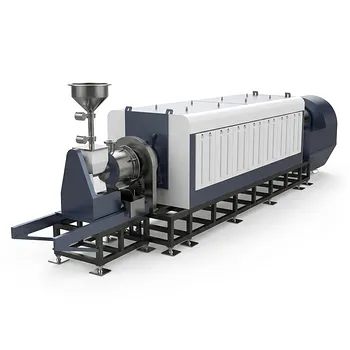
- Electric Rotary Kiln Small Rotary Furnace Biomass Pyrolysis Plant
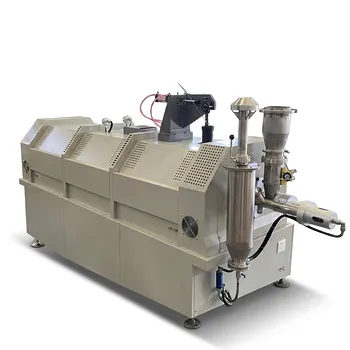
- Electric Rotary Kiln Continuous Working Small Rotary Furnace Heating Pyrolysis Plant
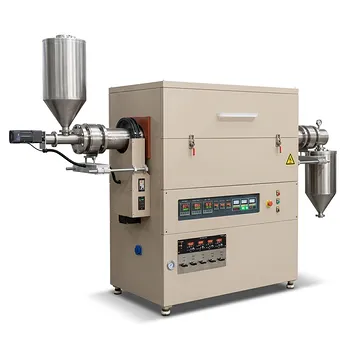
- High Temperature Tilting Rotary Tube Furnace with Integrated Mass Flow Control and Multi Zone Heating
People Also Ask
- How does the electric rotary kiln support environmental compliance and sustainability? Achieve Zero-Emission Production
- What are the maintenance and service life advantages of an electric rotary kiln? 25+ Year Longevity & Low Maintenance
- What thermal efficiency can be expected from an electric rotary kiln compared to fuel-fired alternatives? Gain 95% efficiency.
- How does the use of an electric rotary kiln facilitate CO2 capture in cement and lime production? Achieve High-Purity CCUS
- Which minerals and specialty chemicals are commonly processed using electric rotary kilns? Precision Thermal Processing Guide

Tech Team · ThermUnits
Last updated on Jun 02, 2026