Why is precise heat treatment necessary for TiNi ultra-fine wires? Control Secondary Phases for Superior Performance.
Updated 3 months ago
Controlling secondary phase precipitation is the fundamental mechanism for tuning the functional properties of TiNi ultra-fine wires. Precise heat treatment allows engineers to regulate the formation of precipitates like Ti3Ni4, which directly modifies the critical stress required for martensitic transformation. By managing these microstructural evolutions, manufacturers can ensure uniform composition and achieve superior tensile strength through dispersion strengthening, which is vital for the reliability of medical implants.
Precise heat treatment acts as a surgical tool for microstructure, enabling the deliberate precipitation of secondary phases to stabilize phase transformation temperatures and enhance mechanical durability. Without this precision, the alloy loses the functional consistency required for high-performance applications like ultra-fine medical wires.
The Impact of Secondary Phases on Mechanical Behavior
Tuning Martensitic Transformation
The concentration and distribution of secondary phases, particularly Ti3Ni4, are the primary levers for adjusting how TiNi responds to stress. By precisely controlling the precipitation of these phases, heat treatment modifies the critical stress needed to trigger the martensitic transformation, which defines the alloy's shape memory effect.
Strengthening via Dispersion
Secondary phases act as obstacles to dislocation movement within the TiNi matrix. Controlled precipitation results in a uniform dispersion of these particles, providing a strengthening effect that increases the overall tensile strength of the wire without sacrificing its core functionality.
Ensuring Chemical Homogeneity
Precise thermal management ensures that the chemical composition remains uniform across the entire length of the ultra-fine wire. This prevents localized variations in properties, guaranteeing that 100 μm diameter wires perform consistently during long-term service in the human body.
The Necessity of Precise Temperature and Kinetic Control
Managing Reaction Kinetics
TiNi alloys are highly sensitive to heating rates and specific temperature thresholds. Utilizing programmable temperature control (such as 3°C per minute) allows for the differentiation of distinct reaction stages, preventing the formation of undesirable binary phases or by-products caused by localized overheating.
Optimizing Dislocation Structures
Low-temperature, short-duration treatments are often preferred for maintaining the integrity of the wire's internal structure. These precise parameters optimize dislocation structures and precipitates, which are essential for achieving superior, continuous superelastic performance.
Eliminating Work Hardening
In the production of ultra-fine wires, multiple drawing stages introduce significant internal stress. Precise annealing is required to eliminate work hardening while simultaneously stabilizing the phase transformation properties, ensuring the wire remains flexible yet strong.
Understanding the Trade-offs and Risks
The Danger of Excessive Temperature
Applying heat above 500°C can be detrimental to the performance of TiNi alloys. At these higher temperatures, the material undergoes recrystallization and grain coarsening, which significantly reduces the superelasticity that makes TiNi valuable for medical applications.
Localized Overheating and Reaction Loss
Failure to maintain a stable thermal environment can lead to reaction loss of control. If temperatures fluctuate, the alloy may develop non-functional secondary phases like Ti2Ni or TiNi3 in an uncontrolled manner, leading to brittle behavior or unpredictable transformation temperatures.
Balancing Strength and Ductility
While secondary phase precipitation increases strength, excessive precipitation can lead to brittleness. The technical challenge lies in finding the "sweet spot" where dispersion strengthening enhances the wire's durability without compromising its ability to undergo repeated stress-induced transformations.
How to Apply These Principles to Your Project
When developing TiNi ultra-fine wires, your heat treatment strategy must align with the specific performance requirements of your end-use application.
- If your primary focus is Maximum Superelasticity: Use precise, low-temperature annealing (typically below 500°C) with short holding times to optimize precipitates while preventing grain coarsening.
- If your primary focus is High Tensile Strength: Prioritize the controlled precipitation of Ti3Ni4 through specific aging cycles to maximize the benefits of dispersion strengthening.
- If your primary focus is Functional Consistency in Implants: Utilize programmable furnaces with slow heating rates and high-precision temperature stability to ensure a perfectly uniform composition distribution.
By mastering the precision of the thermal cycle, you transform TiNi from a simple alloy into a highly engineered functional material capable of meeting the most demanding medical standards.
Summary Table:
| Key Mechanism | Impact on TiNi Ultra-fine Wires | Critical Control Parameter |
|---|---|---|
| Secondary Phase ($Ti_3Ni_4$) | Modifies transformation stress & tensile strength | Precise Aging Cycles |
| Dispersion Strengthening | Enhances durability without sacrificing functionality | Uniform Particle Distribution |
| Thermal Kinetics | Prevents undesirable binary phases/reaction loss | Programmable Heating Rates |
| Grain Management | Prevents coarsening & loss of superelasticity | Temperatures < 500°C |
Elevate Your Material Research with THERMUNITS
Achieve the extreme precision required for TiNi ultra-fine wire development with THERMUNITS, a leading manufacturer of high-temperature laboratory equipment. Our specialized Muffle, Vacuum, Atmosphere, and Tube furnaces provide the stable thermal environment and programmable control necessary to regulate secondary phase precipitation and ensure chemical homogeneity.
Whether you are focusing on CVD/PECVD systems, Hot Press furnaces, or vacuum induction melting (VIM), we deliver the thermal processing solutions that material scientists and industrial R&D teams rely on for superior results.
Ready to optimize your heat treatment protocols?
Contact our experts today to find the perfect solution for your lab.
References
- Екатерина Марченко, Kirill M. Dubovikov. Superelasticity and mechanical properties of tini thin wire after heat treatment. DOI: 10.15593/rjbiomech/2024.4.04
Mentioned Products
- 30KW High Frequency Induction Heater for Metal Melting and Industrial Heat Treatment 80-200kHz
- 1100C Tube Furnace with Vacuum Flange and Programmable Temperature Controller for Material Science and Industrial Heat Treatment
- Laboratory Tilting Rotary Tubular Furnaces for Material Science and Industrial Heat Treatment
- Mini Rotary Tubular Furnaces for Precision Powder Heat Treatment and Thermogravimetric Analysis
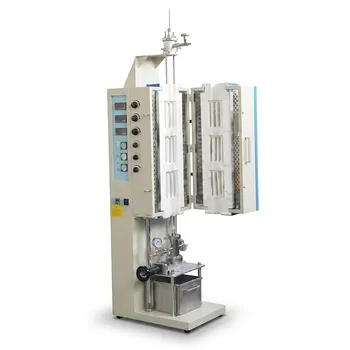
- 500C Vacuum Vertical Tube Furnace 84mm OD Sample Rotation Lifting System
People Also Ask
- How does the laboratory heating device ensure the stability of 3D-printed columnar structures? Precision Thermal Control
- What is the role of the high-frequency induction melting furnace in Mg-Zn-Y alloy production? Ensure Superior Purity
- What are the primary functions of a High-Frequency Induction Melting Furnace in LMD? Achieve Precision Microstructures
- Technical Advantages of Pt-Rh Thermocouples in High-Temp Combustion Research: Precision & Stability
- Why are platinum-rhodium thermocouples used during the lead anode slime reduction smelting process? | Maximize Yields

Tech Team · ThermUnits
Last updated on Jun 03, 2026
Related Products
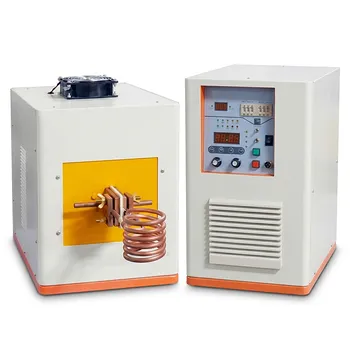
30KW High Frequency Induction Heater for Metal Melting and Industrial Heat Treatment 80-200kHz

1100C Tube Furnace with Vacuum Flange and Programmable Temperature Controller for Material Science and Industrial Heat Treatment
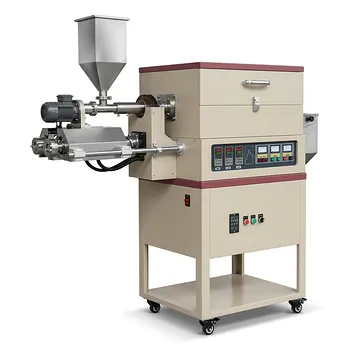
Laboratory Tilting Rotary Tubular Furnaces for Material Science and Industrial Heat Treatment
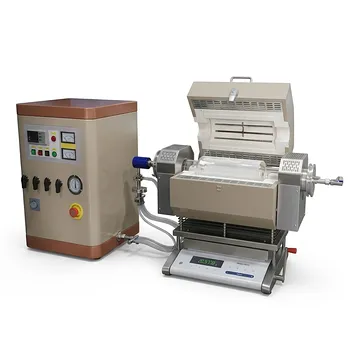
Mini Rotary Tubular Furnaces for Precision Powder Heat Treatment and Thermogravimetric Analysis
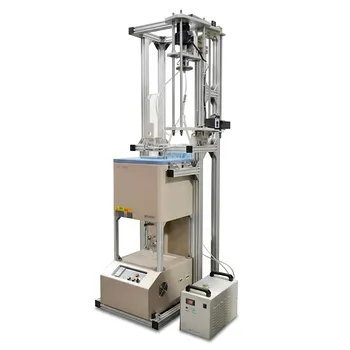
500C Vacuum Vertical Tube Furnace 84mm OD Sample Rotation Lifting System