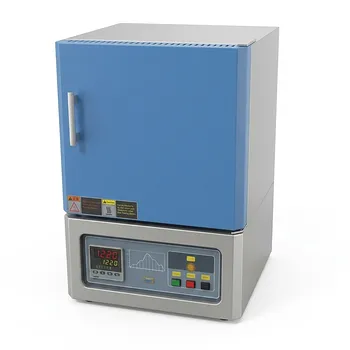
Why is precise heating rate control essential in a Muffle Furnace during MXene oxidation? Optimize Your Synthesis
Updated 5 months ago
Precise heating rate control is the defining factor in balancing the kinetics of chemical oxidation with the physical growth of crystal grains. In a Muffle Furnace, maintaining a steady rate—typically around 5 °C/min—ensures that MXene transitions into an oxide heterojunction without losing its essential layered structure or suffering from internal structural collapse.
Core Takeaway: Controlled heating prevents "violent" oxidation reactions that would otherwise destroy the material's morphology, allowing for the precise construction of high-quality type-II heterojunctions that are critical for efficient charge separation.
Preserving the Architecture of 2D Nanosheets
Preventing Structural Collapse
The primary risk during the thermal oxidation of MXene is a "violent" reaction where the transition from carbide to oxide happens too rapidly. A precise, slow heating rate allows the material to adjust to increasing thermal energy, preventing the structural collapse that occurs when internal stresses or rapid gas evolution overwhelm the layered framework. By moderating this transition, the furnace ensures the resulting oxide retains the original layered topological morphology of the parent MXene.
Managing Thermal Gradients
Uniform heating throughout the Muffle Furnace chamber eliminates thermal gradients that can cause uneven expansion within the material. When different parts of a nanosheet oxidize at different rates, it introduces excessive defects and mechanical strain. A steady heating rate ensures that the entire sample reaches the reaction threshold simultaneously, leading to a more regular nanosheet morphology.
Engineering the Heterojunction Interface
Balancing Oxidation and Grain Growth
The formation of a heterojunction, such as the transition into rutile TiO2 and monoclinic Ti2Nb10O29, requires a delicate balance between the rate of oxygen diffusion and the speed of grain growth. If the heating rate is too high, grains may grow too quickly or agglomerate, reducing the active surface area and ruining the interface. Precise control facilitates the growth of high-quality type-II heterojunction interfaces, which are essential for the movement of electrons and holes.
Enhancing Charge Separation Efficiency
The ultimate goal of preparing these oxide heterojunctions is often to improve photocatalytic activity. The quality of the interface directly determines the separation efficiency of photogenerated charges. A controlled thermal environment ensures the two generated oxide phases are perfectly aligned, minimizing the energy barriers that would otherwise hinder charge transport.
Understanding the Trade-offs
The Risk of Excessive Speed
Increasing the heating rate to save time often leads to particle sintering, where individual nanostructures fuse into a bulky, low-surface-area mass. Rapid heating can also trap lattice defects within the crystal structure, which act as recombination centers that "kill" the photocatalytic performance of the heterojunction.
The Limits of Slow Heating
While slow heating is generally preferred, an excessively slow ramp-up or prolonged isothermal hold can lead to over-oxidation. This may result in the loss of the specific stoichiometric ratios required for the desired semiconductor properties. Finding the "sweet spot"—such as the 5 °C/min mentioned in the primary research—is necessary to maximize crystallinity without inducing unwanted phase changes.
How to Apply This to Your Material Synthesis
To achieve high-performance oxide heterojunctions, your thermal treatment strategy must be tailored to the specific sensitivities of your precursor material.
- If your primary focus is Morphology Retention: Prioritize a slow ramp rate (1–5 °C/min) to allow for steady thermal decomposition and to prevent the violent release of gaseous byproducts.
- If your primary focus is Interface Quality: Ensure the Muffle Furnace provides a uniform thermal field to induce a simultaneous phase transition across the entire batch of 2D nanosheets.
- If your primary focus is Maximizing Surface Area: Use precise programmed temperature control to prevent grain agglomeration and maintain a fine, microcrystalline or amorphous state.
The success of MXene-to-oxide transformation rests on the ability of the hardware to master time and temperature as a single, integrated variable.
Summary Table:
| Parameter | Impact on MXene Oxidation | Desired Outcome |
|---|---|---|
| Slow Heating Rate (1-5 °C/min) | Prevents violent reactions and internal stresses | Preserved 2D layered morphology |
| Uniform Thermal Field | Eliminates thermal gradients and uneven expansion | Consistent nanosheet morphology & fewer defects |
| Programmed Control | Balances oxygen diffusion with grain growth speed | High-quality type-II heterojunction interfaces |
| Precise Cooling/Holding | Prevents over-oxidation and particle sintering | Optimized crystallinity and surface area |
Elevate Your Material R&D with THERMUNITS
Precision is the key to mastering complex transformations like MXene-to-oxide heterojunctions. At THERMUNITS, we understand that in material science, even a few degrees of variance can determine the success of your research.
As a leading manufacturer of high-temperature laboratory equipment, we provide the tools necessary for precise thermal processing. Our comprehensive range includes:
- Advanced Furnaces: Muffle, Vacuum, Atmosphere, Tube, Rotary, and Hot Press furnaces.
- Specialized Systems: CVD/PECVD systems, Dental Furnaces, and Vacuum Induction Melting (VIM) furnaces.
- Industrial Solutions: Electric rotary kilns and high-performance thermal elements.
Whether you are focusing on morphology retention, interface quality, or maximizing surface area, THERMUNITS equipment offers the stability and control your laboratory requires.
Ready to achieve superior heat treatment results? Contact our experts at THERMUNITS today to discuss your specific research needs and find the ideal furnace solution for your lab!
References
- Shalu Atri, Olivier Monfort. MXene-Derived Oxide Nanoheterostructures for Photocatalytic Sulfamethoxazole Degradation. DOI: 10.1021/acsanm.4c02523
Mentioned Products
- 1200C Muffle Furnace 12x8x5 7.2L Heating Chamber with Quartz Observation Window and Vent Port
- High Temperature 1200C Muffle Furnace 27L Volume 12x12x12 Chamber with Programmable PID Controller for Laboratory Material Science
- 1200C High Temperature 125L Muffle Furnace 5 Side Heating for Large Batch Sintering with Optional Alloy Debinding Chamber
- 1750C Compact Muffle Furnace 1.7L Ultra High Temperature Laboratory Sintering System for Advanced Ceramics and Material Science Research
- Ultra High Temperature Bench Top Muffle Furnace 1750C Sintering System with Kanthal Super Heating Elements and Precision Digital Control
People Also Ask
- What is the function of an experimental muffle furnace in the conversion of FeOOH to α-Fe2O3? Optimize Phase Transition
- Why is a muffle furnace required for MoO2@HCNF pre-oxidation? Crucial Steps for High-Performance Composites
- What is the function of a high-temperature Muffle furnace in removing residual solvents? Essential Bismuth Synthesis
- What is the function of Muffle furnace calcination? Essential steps for Pr-doped SrFeMoO6 Perovskite synthesis.
- What are the primary functions of a Muffle furnace in oxide calcination? Achieve high purity and phase control.

Tech Team · ThermUnits
Last updated on Apr 14, 2026
Related Products
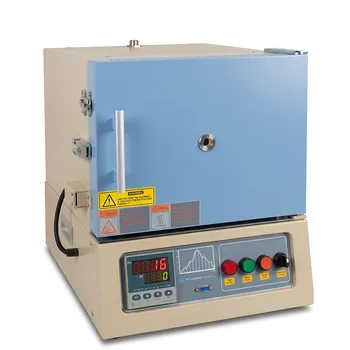
1200C Muffle Furnace 12x8x5 7.2L Heating Chamber with Quartz Observation Window and Vent Port
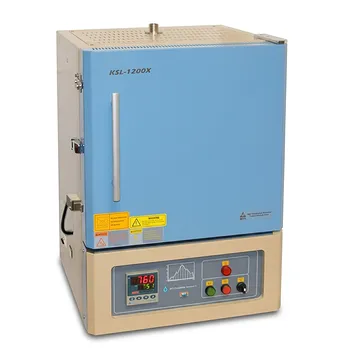
High Temperature 1200C Muffle Furnace 27L Volume 12x12x12 Chamber with Programmable PID Controller for Laboratory Material Science
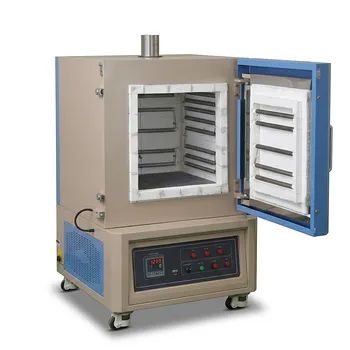
1200C High Temperature 125L Muffle Furnace 5 Side Heating for Large Batch Sintering with Optional Alloy Debinding Chamber
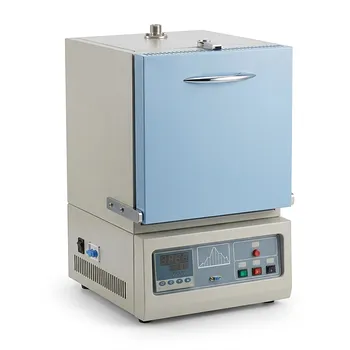
1750C Compact Muffle Furnace 1.7L Ultra High Temperature Laboratory Sintering System for Advanced Ceramics and Material Science Research
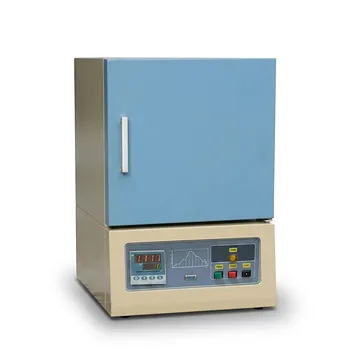
Ultra High Temperature Bench Top Muffle Furnace 1750C Sintering System with Kanthal Super Heating Elements and Precision Digital Control
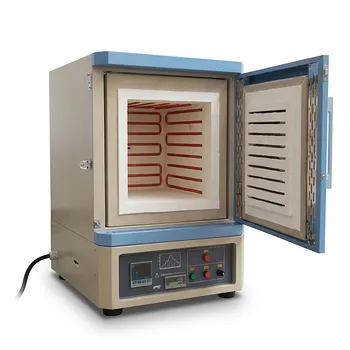
Five Side Heating Muffle Furnace 1200C High Uniformity 64L Chamber 16x16x16 Inch Industrial Heat Treatment
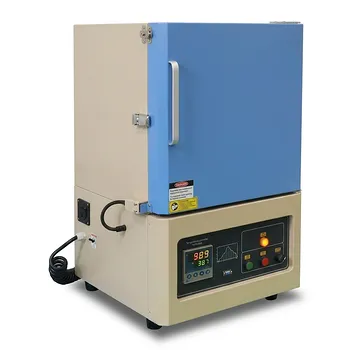
1200°C High Temperature Muffle Furnace 19L Chamber with 50 Segment Programmable Controller
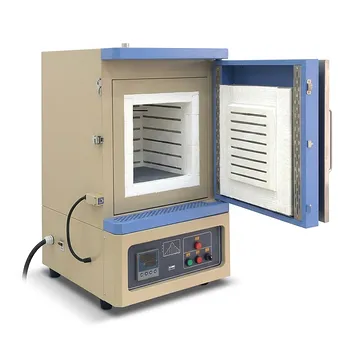
Five Side Heating Muffle Furnace High Purity Alumina Fiber 27L Chamber 1200C High Temperature Thermal Processing System for Sintering Annealing and Materials Research
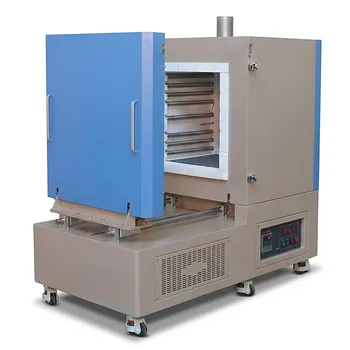
1200C Five Side Heating Muffle Furnace with Sliding Door 125L Volume High Temperature Heat Treatment System for Large Scale Sintering and Annealing
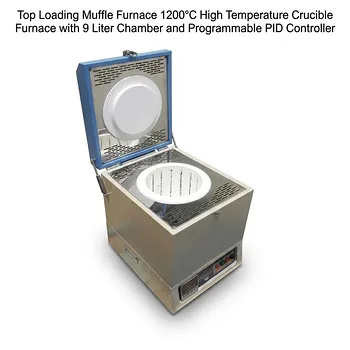
Top Loading Muffle Furnace 1200°C High Temperature Crucible Furnace with 9 Liter Chamber and Programmable PID Controller
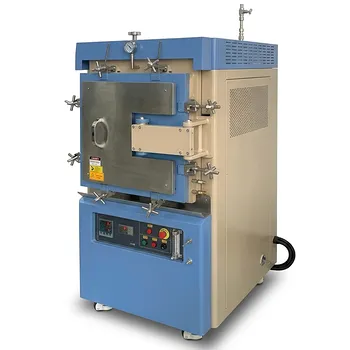
Atmosphere Controlled Muffle Furnace 1700C Maximum Temperature 80L High Capacity Vacuum Inert Gas Box Furnace
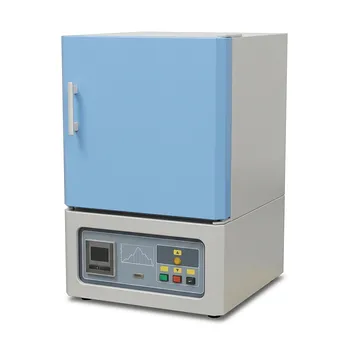
1800C Bench Top Muffle Furnace with Kanthal Super 1900 Heating Elements and 3.6L Alumina Fiber Chamber
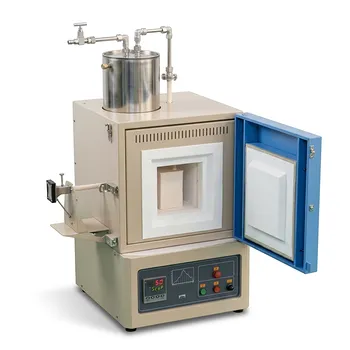
High Temperature Bench Top Muffle Furnace 1700C with Integrated Evaporating Particle Collection and 8x8x8 Alumina Fiber Chamber
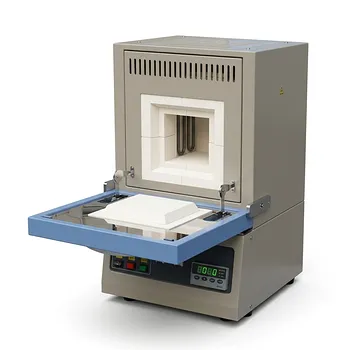
Five Sided Heating Muffle Furnace High Uniformity 1200C Lab Box Furnace 27L Alumina Fiber Chamber
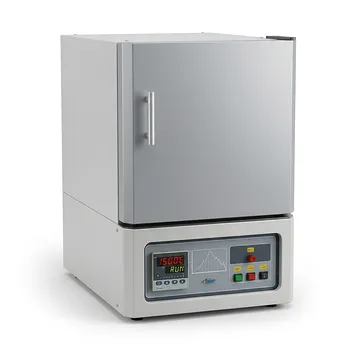
High Temperature 1500C Benchtop Muffle Furnace 3.6L Alumina Fiber Chamber Programmable Controller Sintering Annealing Carbonization Thermal Processing System
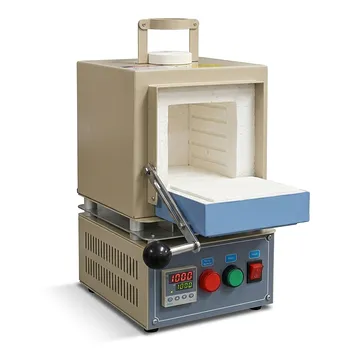
Compact 1000C Muffle Furnace with Programmable Controller and 2 Inch Top Port for Vacuum and Atmosphere Material Research
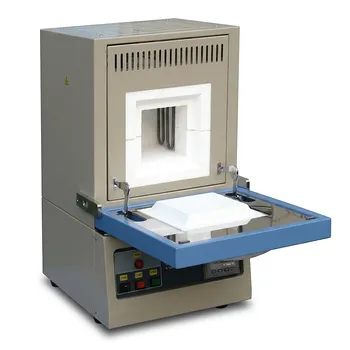
High Temperature 1800C Compact Muffle Furnace with Kanthal Super 1900 Heating Elements and 1.7L Alumina Chamber
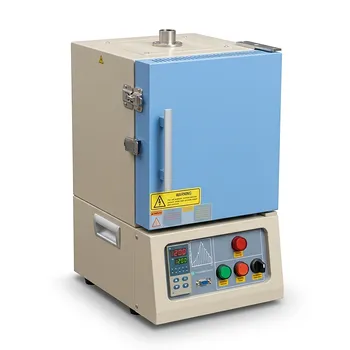
1200°C Small Box Furnace 4.2 Liter Programmable Muffle Furnace with High Purity Alumina Insulation and PID Control
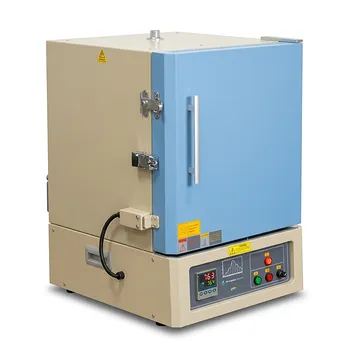
Large Capacity 1200C Muffle Furnace 64 Liter Chamber with Digital PID Controller and Built In Venting Port