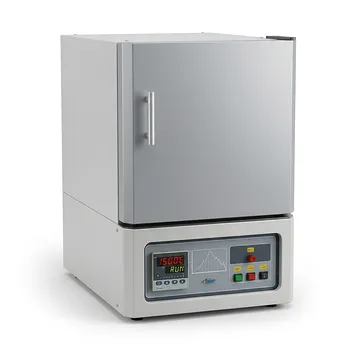
Why must a benchtop furnace ventilation hood be connected to a local exhaust system? Essential Safety & Extraction Tips
Updated 3 months ago
Connecting a benchtop furnace hood to a local exhaust system is a critical safety requirement. This connection creates a negative pressure environment that actively extracts hazardous waste gases and airborne ceramic fibers. By leveraging forced convection, the system ensures these pollutants are safely discharged through the facility’s main exhaust rather than accumulating in the operator's breathing zone.
A ventilation hood is not a passive shield; it requires an active suction source to transform it into a functional safety barrier. Without this connection, harmful particulates and thermal waste remain trapped or leak into the laboratory environment, posing significant health and operational risks.
The Mechanics of Active Extraction
Establishing Negative Pressure
A local exhaust system creates a lower pressure zone inside the hood relative to the laboratory. This pressure differential pulls air inward, preventing hazardous materials from escaping through the front opening or seams of the hood.
The Role of Forced Convection
Unlike passive venting, which relies on natural air movement, forced convection uses mechanical suction to move air at a consistent rate. This ensures that even heavy or stagnant gases are reliably transported into the ductwork and away from the equipment.
Managing Hazardous Byproducts
Capturing Microscopic Ceramic Fibers
Many benchtop furnaces utilize ceramic fiber insulation which can become brittle and airborne during high-temperature cycles. These fibers are known respiratory irritants and must be captured at the source before they can settle on laboratory surfaces or be inhaled.
Neutralizing Hot Waste Gases
Chemical reactions during heating can release volatile organic compounds (VOCs) or toxic fumes. A connected suction hose directs these high-temperature gases toward treatment points or safe discharge areas, protecting the lab's air quality.
Understanding the Trade-offs
Airflow Balance and Furnace Stability
Excessive suction can pull heat out of the furnace too rapidly, potentially compromising temperature uniformity. It is vital to balance the exhaust flow to ensure it protects the user without interfering with the furnace’s thermal profile.
Maintenance and System Integrity
A connected system requires regular inspection to ensure the suction hose is not clogged or degraded by heat. Relying on a system with a failing seal or a blocked filter creates a false sense of security while allowing pollutants to leak back into the workspace.
How to Apply This to Your Project
When integrating a furnace into your laboratory workflow, consider the specific requirements of your materials and the facility's infrastructure.
- If your primary focus is Operator Safety: Ensure the hood's face velocity is measured and meets local regulatory standards (such as OSHA or AIHA) for hazardous particulate extraction.
- If your primary focus is Equipment Longevity: Use high-temperature-rated suction hoses and regularly inspect the connection points for signs of thermal fatigue or ceramic dust accumulation.
- If your primary focus is Process Repeatability: Implement a dampener or variable speed controller on the exhaust system to prevent excessive airflow from causing temperature fluctuations within the furnace chamber.
Proper ventilation connection is the bridge between a functional furnace and a safe, professional laboratory environment.
Summary Table:
| Feature | Function | Benefit |
|---|---|---|
| Negative Pressure | Creates an inward airflow differential | Prevents hazardous fumes from escaping into the operator's zone |
| Forced Convection | Uses mechanical suction for air movement | Ensures heavy or stagnant waste gases are reliably discharged |
| Fiber Capture | Extracts airborne ceramic insulation fibers | Protects personnel from respiratory irritants and airborne particulates |
| VOC Management | Removes volatile organic compounds | Maintains high air quality during high-temperature chemical reactions |
Maximize Lab Safety and Precision with THERMUNITS
At THERMUNITS, we prioritize the safety and efficiency of your thermal processing workflows. As a leading manufacturer of high-temperature laboratory equipment for material science and industrial R&D, we provide a comprehensive range of solutions including Muffle, Vacuum, Atmosphere, Tube, Rotary, and Hot Press furnaces, CVD/PECVD systems, Dental Furnaces, and Vacuum Induction Melting (VIM) furnaces.
Don't compromise your laboratory environment with improper ventilation. Our experts can help you select the right equipment and integration strategies to manage hazardous byproducts effectively while maintaining perfect thermal stability.
Ready to upgrade your research capabilities?
Contact Our Technical Team Today to find the ideal heat treatment solution tailored to your specific R&D needs.
References
- Nina Z. Janković, Desirée L. Plata. Particles in a box: novel design and evaluation of an adaptable engineering control enclosure for a common split tube furnace to eliminate occupational exposure to refractory ceramic insulation fibers. DOI: 10.1039/d3en00041a
Mentioned Products
- High Temperature Benchtop Muffle Furnace 1500C with 3.6L Chamber and Quartz Observation Window
- High Temperature Benchtop Muffle Furnace with Quartz Observation Window for Thermal Imaging and Material Analysis
- 1800C Bench Top Muffle Furnace 18 Liters with Kanthal Super 1900 Heating Elements for High Purity Ceramic Sintering and Material Research
- High Temperature 1700C Benchtop Tube Furnace with 5 Inch Heating Zone High Purity Alumina Tube and Vacuum Sealing Flanges
- High Temperature 1500C Benchtop Muffle Furnace 3.6L Alumina Fiber Chamber Programmable Controller Sintering Annealing Carbonization Thermal Processing System
People Also Ask
- Why is annealing in a high-temperature muffle furnace necessary for SiO2/Si substrate pretreatment before monolayer WS2 synthesis?
- What is the purpose of using muffle or tube furnaces in glass synthesis? Achieve Precise Melt-Quenching & Homogeneity
- What role does a high-temperature muffle furnace play in the synthesis of Melem precursors? Precision Polymerization.
- What is the function of a muffle furnace in aluminoborosilicate glass prep? Stabilize Raw Materials for Superior Purity
- What is the function of a high-temp muffle furnace in Ni-V oxide synthesis? Optimize your material's performance.

Tech Team · ThermUnits
Last updated on Jun 03, 2026
Related Products
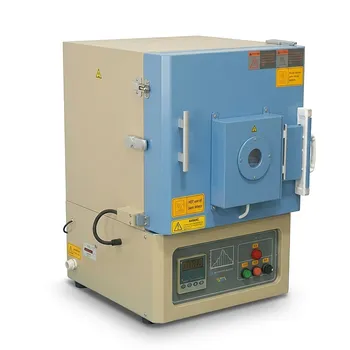
High Temperature Benchtop Muffle Furnace 1500C with 3.6L Chamber and Quartz Observation Window
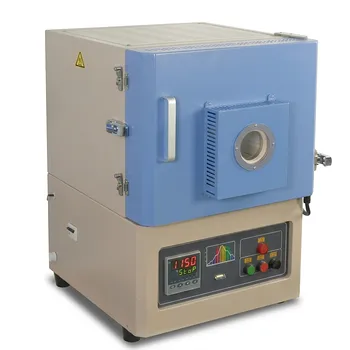
High Temperature Benchtop Muffle Furnace with Quartz Observation Window for Thermal Imaging and Material Analysis
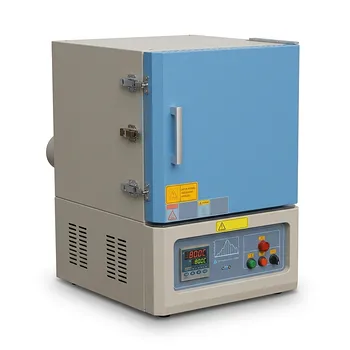
1800C Bench Top Muffle Furnace 18 Liters with Kanthal Super 1900 Heating Elements for High Purity Ceramic Sintering and Material Research

High Temperature 1700C Benchtop Tube Furnace with 5 Inch Heating Zone High Purity Alumina Tube and Vacuum Sealing Flanges