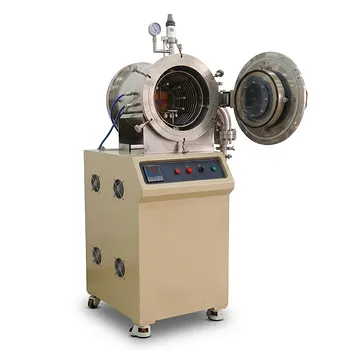
Why must a laboratory vacuum drying oven be used for molybdenum carbide precursors? Achieve High Purity & Stability
Updated 3 months ago
Vacuum drying precursors is a mandatory prerequisite for molybdenum carbide synthesis to ensure structural stability and chemical purity. By treating precursors at 80°C for 12 hours under vacuum, researchers completely remove physically adsorbed water and residual solvents like ethanol, preventing the structural collapse and unwanted side reactions that occur during subsequent high-temperature carbonization.
Core Takeaway: Pre-treating precursors in a vacuum oven is critical to prevent the destructive rapid vaporization of trapped fluids and to block side reactions between water vapor and the molybdenum source, ensuring a clean transition from molybdenum oxide to molybdenum carbide.
Preserving the Structural Integrity of the Catalyst
Preventing the Collapse of Particle Frameworks
During high-temperature carbonization, any residual liquid trapped within the precursor can reach its boiling point almost instantaneously. This rapid vaporization creates intense internal pressure that can lead to the collapse of the catalyst's particle structure or the destruction of delicate microporous frameworks.
Avoiding Particle Agglomeration
A vacuum environment allows for a gentle and thorough degassing process compared to standard drying methods. By removing solvents at lower temperatures, the vacuum oven prevents undesired particle agglomeration, which helps preserve the intended microscopic morphology and surface area of the precursor.
Reducing Internal Mechanical Stress
Even small amounts of moisture can cause significant internal stresses when subjected to ultra-high temperatures. Proper vacuum drying ensures that these stresses do not damage the crystal morphology or the newly formed structural bonds within the material.
Ensuring Chemical Purity and Phase Transition
Eliminating Side Reactions with Molybdenum
At the elevated temperatures required for carbonization, water vapor becomes highly reactive. Vacuum drying is essential to avoid side reactions between water vapor and the molybdenum source, which could interfere with the chemical pathway.
Securing the Oxide-to-Carbide Transition
The goal of the carbonization process is the precise transformation of molybdenum oxide into molybdenum carbide. By ensuring the powder is completely dry, researchers guarantee that the chemical environment remains controlled, maintaining the purity of the transition and the activity of the resulting catalyst.
Preventing Intermediate Oxidation
The vacuum environment effectively excludes oxygen from the system during the drying phase. This prevents the precursor from undergoing premature oxidative combustion or forming unwanted oxide layers that could compromise the electrochemical activity of the final product.
Understanding the Trade-offs and Pitfalls
Time and Energy Requirements
Vacuum drying is a time-intensive process, often requiring 12 hours or more to ensure deep removal of solvents from internal pores. Rushing this step by increasing the temperature or shortening the duration often results in incomplete drying and subsequent material failure.
Risk of Volatile Loss
While the vacuum removes unwanted solvents, it can also inadvertently remove volatile functional groups if the temperature is not strictly controlled. Maintaining the temperature at exactly 80°C is a calculated balance to remove moisture without stripping away essential organic components needed for carbonization.
How to Apply This to Your Synthesis Process
Implementing the Drying Protocol
To achieve the best results in molybdenum carbide synthesis, your preparation strategy should align with your specific material goals.
- If your primary focus is maximizing surface area: Ensure the vacuum level is held below 20 mbar to facilitate the most gentle degassing possible, preserving the pore structure.
- If your primary focus is chemical phase purity: Prioritize the 12-hour duration at 80°C to ensure that even chemically trapped water is removed before the precursor enters the high-temperature furnace.
- If your primary focus is preserving morphology: Use a slow ramp-up to the drying temperature to prevent any localized "boiling" effects within the precursor bed.
Properly executed vacuum drying transforms a sensitive precursor into a stable, dry powder ready for high-performance catalyst production.
Summary Table:
| Key Parameter | Requirement | Impact on Molybdenum Carbide |
|---|---|---|
| Drying Temp | 80°C | Prevents rapid vaporization and structural collapse |
| Duration | 12 Hours | Ensures deep degassing of trapped water/solvents |
| Environment | Vacuum (< 20 mbar) | Excludes oxygen to prevent premature oxidation |
| Process Goal | Pre-carbonization | Maintains catalyst morphology and surface area |
Optimize Your Material Synthesis with THERMUNITS Precision Equipment
Achieving the perfect molybdenum carbide phase transition requires absolute control over temperature and atmosphere. THERMUNITS is a leading manufacturer of high-temperature laboratory equipment, providing the reliability and precision essential for advanced material science and industrial R&D.
Whether you are performing delicate vacuum drying or high-temperature carbonization, our comprehensive range of thermal solutions—including Vacuum, Muffle, Atmosphere, Tube, Rotary, and Hot Press furnaces, as well as CVD/PECVD systems and Vacuum Induction Melting (VIM) furnaces—is engineered to preserve your material's structural integrity and chemical purity.
Ready to elevate your lab's heat treatment capabilities?
Contact THERMUNITS Today to Discuss Your Custom Solution
References
- Linyuan Zhou, Changwei Hu. Regulating the Hydrodeoxygenation Activity of Molybdenum Carbide with Different Diamines as Carbon Sources. DOI: 10.3390/catal14020138
Mentioned Products
- 1750C Bench Top Muffle Furnace 3.6L High Grade Molybdenum Disilicide Heating Elements Laboratory Heat Treatment Equipment
- 1600°C Cold Wall High Vacuum Chamber Furnace with Molybdenum Heating and 400mm Cube Work Zone
- High Temperature 1000C Vacuum Furnace with 8 Inch ID Chamber for Material Sintering and Research Annealing
- 1800C High Temperature Compact Vacuum Tube Furnace with 60mm OD Alumina Tube and Kanthal MoSi2 Heating Elements
- High Temperature Cold Wall High Vacuum Chamber Furnace 1400C for Advanced Material Processing
People Also Ask
- Why is a benchtop muffle furnace essential for U3O8 micromaterials? Achieve precision stoichiometry and purity.
- What materials are typically used for heating elements in muffle furnaces? A Guide to Performance & Temperature Limits
- What role does a laboratory high-temperature muffle furnace play in the ash analysis phase of biomass co-firing research? [Guide]
- What role does a high-temperature muffle furnace play in evaluating the mineral composition of rock samples? LOI & XRF Guide
- What is the function of a muffle furnace in aluminoborosilicate glass prep? Stabilize Raw Materials for Superior Purity

Tech Team · ThermUnits
Last updated on Jun 02, 2026
Related Products
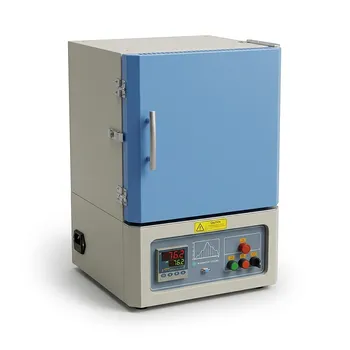
1750C Bench Top Muffle Furnace 3.6L High Grade Molybdenum Disilicide Heating Elements Laboratory Heat Treatment Equipment
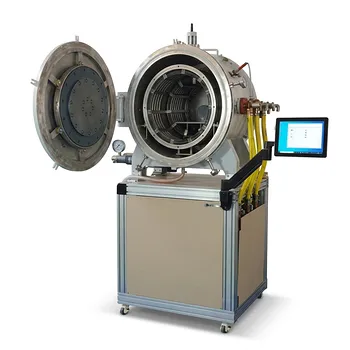
1600°C Cold Wall High Vacuum Chamber Furnace with Molybdenum Heating and 400mm Cube Work Zone
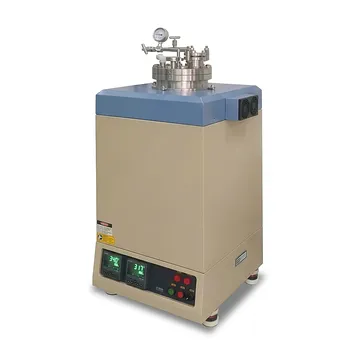
High Temperature 1000C Vacuum Furnace with 8 Inch ID Chamber for Material Sintering and Research Annealing

1800C High Temperature Compact Vacuum Tube Furnace with 60mm OD Alumina Tube and Kanthal MoSi2 Heating Elements