Why must high-purity alumina crucibles be used for Jarosite Residue smelting? Ensure Purity & Chemical Resistance
Updated 3 months ago
High-purity alumina crucibles are mandatory for Jarosite Residue reduction smelting because they offer the necessary chemical inertness and thermal stability to withstand a highly corrosive environment at 1400 °C. These containers prevent the crucible material from reacting with aggressive iron-silicate slags and molten metal alloys, ensuring that the chemical composition of the melt remains uncontaminated and the results of metal recovery tests are accurate.
To maintain the integrity of Jarosite smelting experiments, high-purity alumina acts as a non-reactive barrier against aggressive slags. Its use is the only way to ensure that recovered metal data reflects the raw material's potential rather than contamination from the equipment itself.
Resistance to Aggressive Chemical Erosion
Combatting Corrosive Iron-Silicate Slags
During the smelting of Jarosite residues, the process generates an iron-silicate slag that is exceptionally corrosive to standard refractory materials. High-purity alumina is specifically selected for its ability to resist this chemical attack at peak operating temperatures.
Stability Against Multi-Metal Alloys
Reduction smelting often involves the recovery of lead-silver alloys and other molten metals. High-purity alumina maintains its structural integrity when in contact with these molten phases, preventing erosion that would otherwise degrade the container.
Resilience to Basic Oxides and Fluxes
The smelting environment frequently contains basic oxides like Calcium Oxide (CaO) and Magnesium Oxide (MgO). Alumina's chemical stability ensures it does not react with these high-alkalinity components, preserving the purity of the slag and the melt.
Performance Under Extreme Thermal Stress
Structural Integrity at 1400 °C
Jarosite reduction requires sustained temperatures of at least 1400 °C to facilitate the necessary chemical reactions. High-purity alumina retains its mechanical strength and does not soften or deform under these intense heat loads.
Superior Thermal Shock Resistance
Smelting processes involve significant temperature fluctuations during charging and pouring. Alumina’s thermal shock resistance prevents the crucible from cracking or shattering when exposed to rapid changes in the thermal gradient.
Low Permeability for Precise Environments
High-purity alumina possesses low permeability, which is critical if the smelting is performed under a vacuum or specific atmospheric controls. This property prevents gas leakage and ensures that the oxygen content of the melt is not inadvertently altered by external interference.
Understanding the Trade-offs and Limitations
Vulnerability to Extremely Alkaline Fluxes
While high-purity alumina is highly resistant, it is not completely indestructible; extremely high concentrations of sodium-based fluxes can eventually lead to gradual wear. Users must monitor the slag chemistry to ensure the alkalinity does not exceed the crucible's rated tolerance over long durations.
Sensitivity to Mechanical Impact
Due to its high purity and crystalline structure, these crucibles are inherently brittle. They require careful handling and must be protected from physical impacts or mechanical stress, which can cause failure even if the material is thermally sound.
Cost vs. Longevity
High-purity alumina is more expensive than standard refractory grade materials. However, the avoidance of cross-contamination and the longer service life in corrosive environments typically justify the higher initial investment for analytical and industrial smelting.
How to Apply This to Your Smelting Project
Recommendations for Material Selection
- If your primary focus is analytical accuracy: Always use crucibles with a purity of 99% or higher to prevent trace elements like silica or iron from leaching into your samples.
- If your primary focus is high-volume recovery: Ensure the crucible walls are of sufficient thickness to withstand the hydrostatic pressure of the molten iron-silicate slag over extended dwell times.
- If your primary focus is vacuum stability: Verify the low-porosity specifications of the alumina to maintain a consistent environment and prevent oxygen contamination during the reduction phase.
Selecting high-purity alumina ensures that your reduction smelting results are a product of your process chemistry, not a byproduct of container failure.
Summary Table:
| Key Property | Benefit for Jarosite Smelting |
|---|---|
| Chemical Inertness | Resists highly corrosive iron-silicate slag and basic oxides (CaO/MgO). |
| High Thermal Stability | Maintains structural integrity at peak temperatures of 1400 °C. |
| 99%+ Purity Level | Prevents trace element leaching, ensuring accurate metal recovery data. |
| Thermal Shock Resistance | Prevents cracking during rapid temperature changes during charging. |
| Low Permeability | Ensures atmospheric control and prevents gas leakage in vacuum processes. |
Elevate Your Material Research with THERMUNITS
Maximize the accuracy of your smelting experiments and industrial R&D with high-performance thermal solutions. THERMUNITS is a leading manufacturer specializing in high-temperature laboratory equipment designed for the most demanding material science applications.
Our comprehensive range includes:
- Advanced Furnaces: Muffle, Vacuum, Atmosphere, Tube, Rotary, and Hot Press furnaces.
- Specialized Systems: CVD/PECVD systems, Dental Furnaces, and Vacuum Induction Melting (VIM) furnaces.
- Industrial Kilns: Electric rotary kilns and professional-grade Thermal Elements.
Whether you are performing Jarosite Residue reduction or developing complex alloys, our equipment provides the precision and durability your project requires. Contact our technical team today to find the perfect heat treatment solution for your lab!
References
- Cancio Jiménez-Lugos, Eduardo Colin García. Recovery of Silver and Lead from Jarosite Residues by Roasting and Reducing Pyrometallurgical Processes. DOI: 10.3390/met14080954
Mentioned Products
- Automatic 10 Crucible Induction Melting and Casting System with Stirring Function and Glovebox Integration 2000C
- 1100C Crucible Melting Furnace with Stirring Function for Glovebox and Air Sensitive Alloy Research
- Compact Crucible Melting Furnace 1100C Programmable Temperature Controller Metal Sintering Equipment
- High Temperature 1700C Benchtop Tube Furnace with 5 Inch Heating Zone High Purity Alumina Tube and Vacuum Sealing Flanges
- High Temperature Induction Melting System with Integrated Ultra High Purity Glove Box for Metallic Alloy Processing
People Also Ask
- Why must high-purity argon gas be used as a protective atmosphere during high-temperature reduction smelting experiments?
- How should the choice between a Quartz crucible and an Alumina crucible be made for La2O2S? Optimize Material Purity
- How does Vacuum Induction Melting mitigate hydrogen embrittlement? Ensure Structural Integrity for Critical Alloys
- What role does Vacuum Induction Melting play in medical implants? Ensure High-Purity Alloys for Superior Performance
- Why is Vacuum Induction Melting preferred for manufacturing corrosion-resistant alloys? Ensure Ultra-High Purity

Tech Team · ThermUnits
Last updated on Jun 02, 2026
Related Products
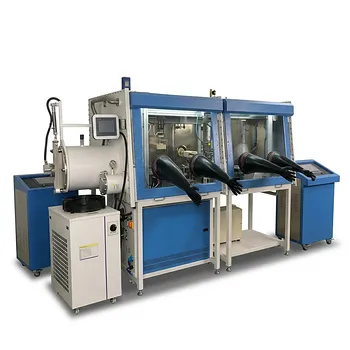
Automatic 10 Crucible Induction Melting and Casting System with Stirring Function and Glovebox Integration 2000C
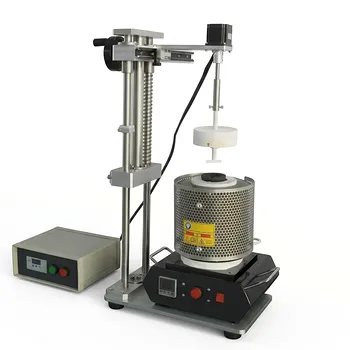
1100C Crucible Melting Furnace with Stirring Function for Glovebox and Air Sensitive Alloy Research
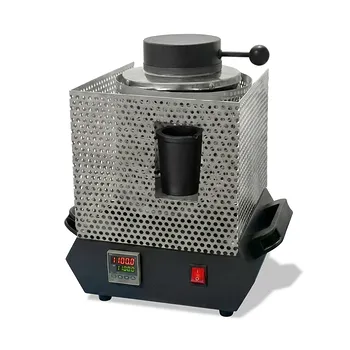
Compact Crucible Melting Furnace 1100C Programmable Temperature Controller Metal Sintering Equipment

High Temperature 1700C Benchtop Tube Furnace with 5 Inch Heating Zone High Purity Alumina Tube and Vacuum Sealing Flanges
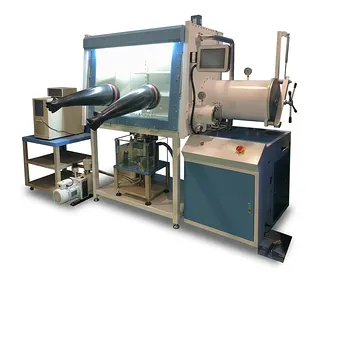
High Temperature Induction Melting System with Integrated Ultra High Purity Glove Box for Metallic Alloy Processing
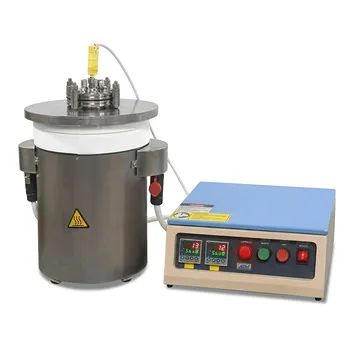
600°C Vertical Crucible Furnace with SS316 Alloy Reactor and 6 Port Vacuum Flange