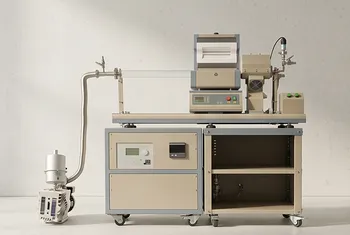
The Geography of Atoms: Engineering the Thermal Gradient in CVD Synthesis
May 01, 2026
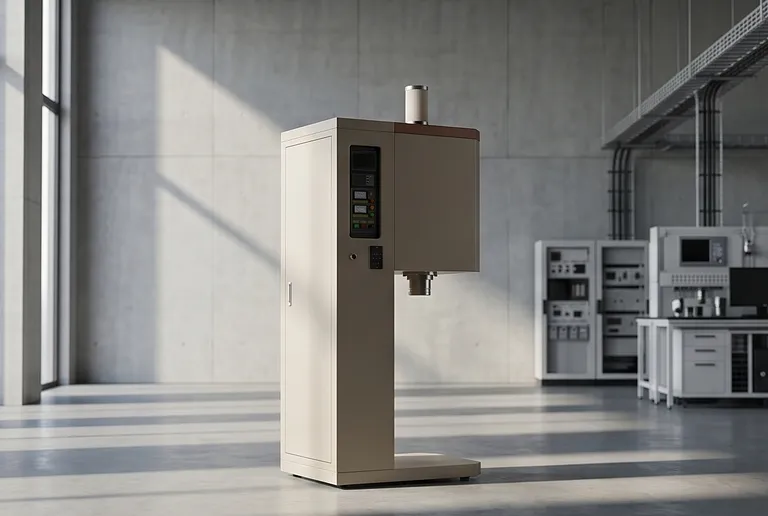
The Precision of Small Things
In material science, we often talk about the "what"—the revolutionary properties of 2D nanosheets like $Fe_{1+y}Te$. But we rarely talk about the "where."
Synthesis is not just a chemical reaction; it is a spatial problem. It is a matter of geography.
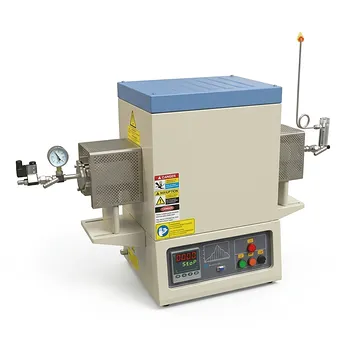
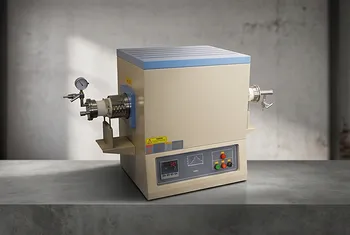
When you are working at the molecular level, heat is not a blunt instrument. It is a delivery vehicle. In the synthesis of iron-based superconductors, the horizontal tube furnace acts as the conductor of an invisible orchestra, moving atoms across a vacuum with the precision of a watchmaker.
The Architecture of a Reaction
The primary role of a horizontal tube furnace in Chemical Vapor Deposition (CVD) is to create a precisely controlled thermal field.
In the case of $Fe_{1+y}Te$, you are dealing with two precursors—Tellurium (Te) powder and Iron(II) chloride ($FeCl_2$)—that have fundamentally different personalities. They vaporize at different temperatures. They travel at different speeds.
To make them meet on a substrate and form a perfect crystal lattice, the furnace must perform three systemic functions:
- Differential Volatilization: Heating precursors in distinct "stages" so they enter the gas phase at the exact right moment.
- Spatial Separation: Maintaining a temperature gradient where the source is hot enough to vaporize, but the substrate is cool enough to allow for epitaxial growth.
- Kinetic Transport: Using thermal energy to drive the vapor toward the target, ensuring the reaction happens on the surface, not in the air.
The Physics of Patience
Precision is a double-edged sword. If the furnace temperature fluctuates by even a few degrees, the chemistry doesn't just "degrade"—it changes entirely.
Instead of thin, high-performance nanosheets, you get "bulk" crystals. The two-dimensional magic disappears. This is where the engineering of the furnace meets the psychology of the researcher: you are fighting against the natural tendency of atoms to clump together in disorder.
| Parameter | Impact on Synthesis | The "Engineer's Goal" |
|---|---|---|
| Thermal Gradient | Regulates volatilization of Te and $FeCl_2$ | Stability within $\pm 1^\circ C$ |
| Activation Energy | Breaks chemical bonds for crystallization | Optimized ramp-up rates |
| Vapor Density | Determines nanosheet thickness | Flow-rate/Temperature equilibrium |
| Atmospheric Integrity | Prevents oxidation of sensitive precursors | High-vacuum seal performance |
The Micro-Atmosphere: Managing the Void
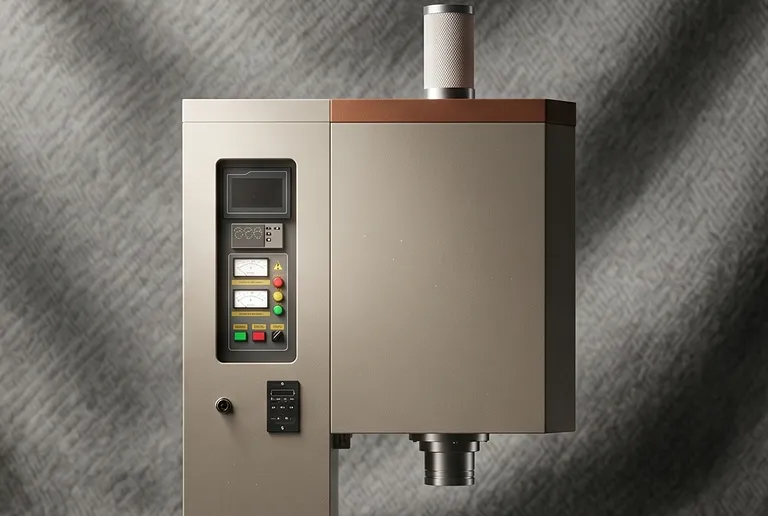
A horizontal tube furnace is more than a heater; it is a sanctuary.
By sealing the reaction within a quartz tube, we create an environment isolated from the chaos of the outside world. This "Atmospheric Integrity" is vital. When synthesizing $Fe_{1+y}Te$, oxygen is the enemy. One leak can turn a month of research into a vial of iron oxide.
The furnace provides the "Activation Energy"—the thermal spark—required to break chemical bonds in the precursors. It is the catalyst that allows atoms to rearrange themselves from a pile of powder into a structured, two-dimensional lattice.
Why Hardware is the Silent Partner
We often focus on the "Aha!" moments in the lab, but those moments are built on the back of reliable hardware.
At THERMUNITS, we understand that a furnace isn't just a box that gets hot. It is a system designed to manage the delicate trade-offs of material science:
- The balance between vapor saturation and depletion.
- The transition from research-grade precision to industrial scalability.
- The need for uniform thermal fields across a wide "sweet spot."
Our range of CVD/PECVD systems, Vacuum Tube Furnaces, and Atmosphere Furnaces are engineered for the "Engineer’s Romance"—the belief that with enough control, we can choreograph the movement of atoms.
From Theory to Nanosheets
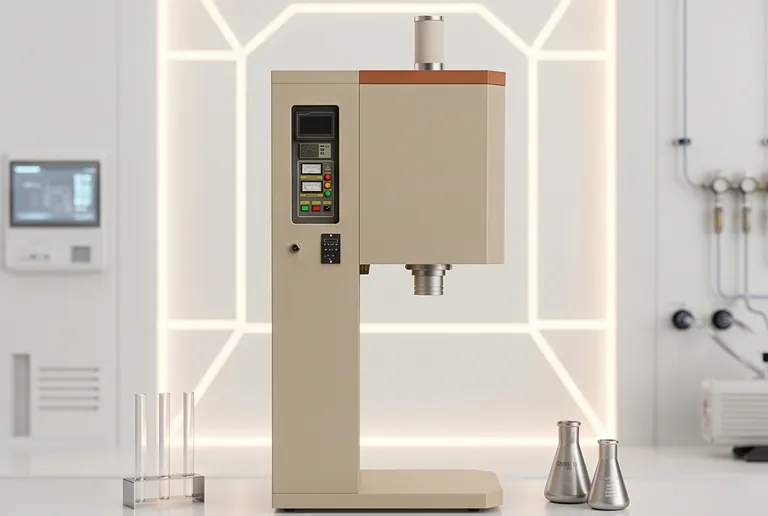
To achieve consistent results in 2D material synthesis, your hardware must match your ambition. Whether you are focusing on crystal purity, thickness control, or maximizing yield, the thermal field is the foundation of your success.
The horizontal tube furnace remains the indispensable engine of the modern laboratory, transforming raw precursors into the materials of the future through the simple, disciplined application of heat and space.
Quick Links
Suggested Products
Multi Position Tube Furnace 1100C for Laboratory Material Research and Advanced Industrial Thermal Processing 1200°C 10-Zone Split Tube Furnace with Horizontal and Vertical Mounting for Multi-Zone Thermal Gradients and Large Diameter Material Processing Ten Zone Multi Orientation Laboratory Tube Furnace for 1200C High Temperature Gradient Thermal Processing Split Vertical Tube Furnace with 1200C Quartz Tube and Stainless Steel Vacuum Flanges for Rapid Thermal Processing High Temperature 1700C Vertical Tube Furnace for Powder Spherification and Material SinteringFurther Reading
The Architecture of Heat: Why Verticality Defines Modern Metallurgical Simulation The Architecture of Order: Thermal Refinement in the Age of Solid-State Physics The Architecture of Activity: Why Geometry and Atmosphere Define the Modern Catalyst The Architecture of Invisible Chemistry: Engineering the Parallel-Plate CCP Reactor
ThermUnits
Last updated on Apr 15, 2026
Related Products
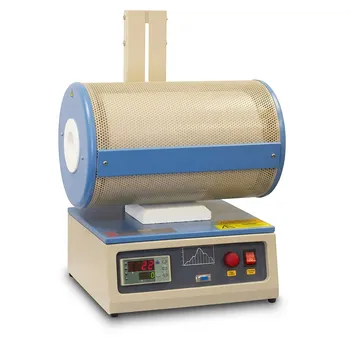
Multi Position Tube Furnace 1100C for Laboratory Material Research and Advanced Industrial Thermal Processing
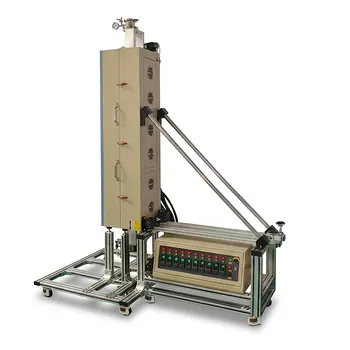
1200°C 10-Zone Split Tube Furnace with Horizontal and Vertical Mounting for Multi-Zone Thermal Gradients and Large Diameter Material Processing
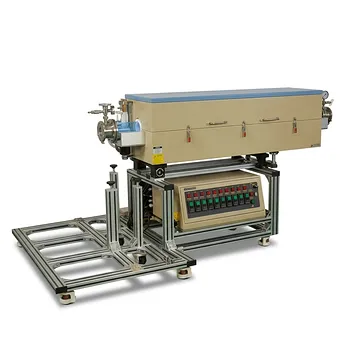
Ten Zone Multi Orientation Laboratory Tube Furnace for 1200C High Temperature Gradient Thermal Processing
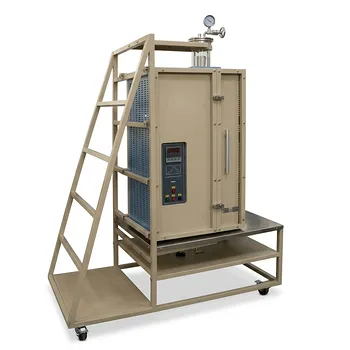
Split Vertical Tube Furnace with 1200C Quartz Tube and Stainless Steel Vacuum Flanges for Rapid Thermal Processing

High Temperature 1700C Vertical Tube Furnace for Powder Spherification and Material Sintering

Vertical 1700C Vacuum and Atmosphere Tube Furnace with 80mm Alumina Tube
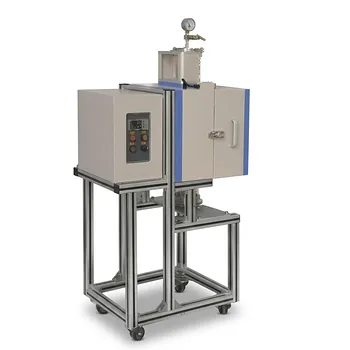
1200°C 5 Inch Vertical Quartz Tube Furnace with Stainless Steel Vacuum Flanges
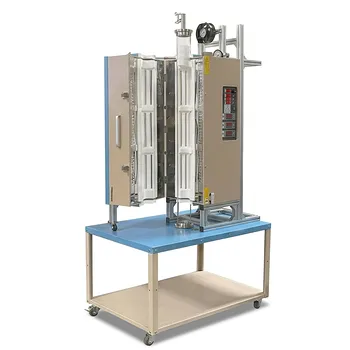
1200C Three Zone Split Vertical Tube Furnace 4 Inch Quartz Tube Stainless Steel Vacuum Flanges
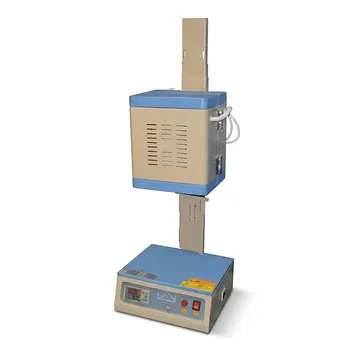
High Temperature Vertical Split Tube Furnace with PID Temperature Controller for 1 and 2 Inch Processing Tubes
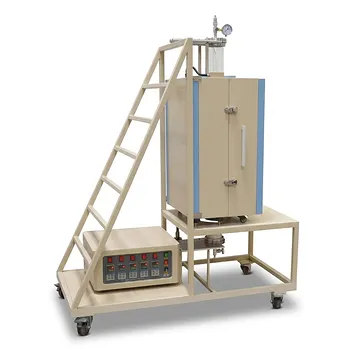
Five Zone Split Vertical Tube Furnace 1200C Max with 4 Inch Quartz Tube and Stainless Steel Vacuum Flanges
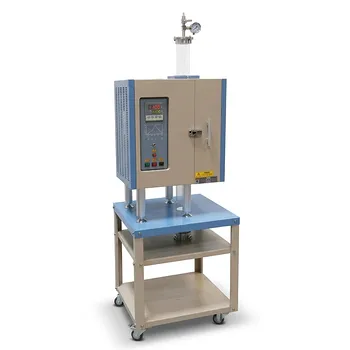
1100°C Split Vertical Tube Furnace with 80mm Quartz Tube and Stainless Steel Vacuum Flanges

Compact Vertical Split Quartz Tube Furnace with Stainless Steel Vacuum Flanges for Rapid Thermal Quenching and Controlled Atmosphere Material Processing
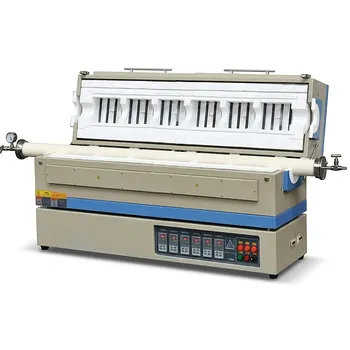
High Temperature 1700C Six Zone Split Tube Furnace with Alumina Tube and Water Cooled Flanges
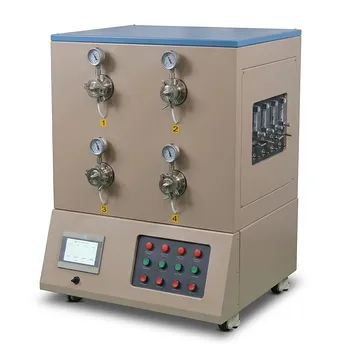
High Throughput 1200C Four Channel Tube Furnace with 3 Inch Quartz Tubes for Multi Zone Annealing and Material Research
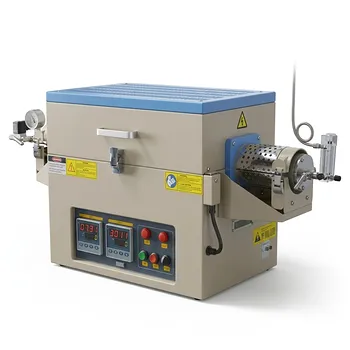
1100C Dual Zone Hydrogen Gas Tube Furnace with Quartz Tube and Integrated H2 Leak Detection System
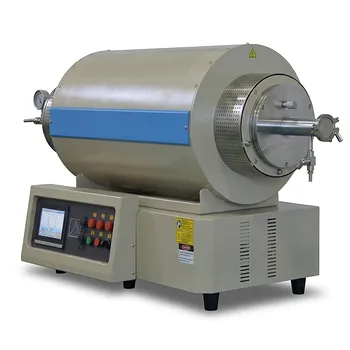
1200C Max Three Zone Tube Furnace 6 Inch OD Max with Tube and Flange
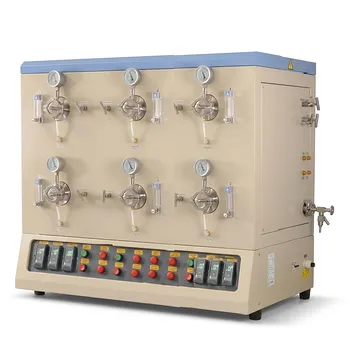
1200C High Throughput Multi Channel Tube Furnace with 50mm Quartz Tubes for Annealing and Material Phase Diagram Research
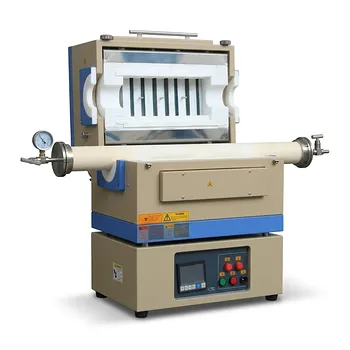
1500C Eight Zone Split Tube Furnace for Thermal Gradient Processing and Advanced Material Research
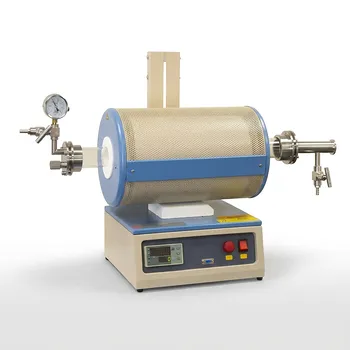
1100C Tube Furnace with Vacuum Flange and Programmable Temperature Controller for Material Science and Industrial Heat Treatment