The Molecular Scalpel: The Precise Violence of KOH/NaOH Activation in Carbon Synthesis
Jun 06, 2026
The Redemption of Bitumen
Bitumen is often viewed as the heavy, overlooked byproduct of the fossil fuel era. In its raw state, it is structurally chaotic and functionally inert.
Transforming this crude precursor into high-performance activated carbon is an act of molecular "surgery." It requires a specific kind of controlled violence: chemical etching.
At the heart of this transformation lies the use of strong alkalis—Potassium Hydroxide (KOH) and Sodium Hydroxide (NaOH). These are the scalpels that carve a labyrinth of pores into the carbon skeleton.
The Mechanism of Controlled Destruction
Chemical activation is not merely a heating process; it is a corrosive assault on the material's internal architecture.
Thermal Corrosion and Etching
Between 600°C and 1000°C, KOH and NaOH cease to be solids and become aggressive molten fluids. They penetrate the bitumen precursor, triggering an in-situ etching reaction. This reaction "eats" away at the carbon atoms, creating a dense network of micropores where once there was only solid mass.
Clearing the Amorphous Debris
Bitumen contains significant "amorphous" substances—disordered carbon atoms trapped between structural layers. The alkali agents target these regions first. By removing this "molecular clutter," the chemicals open up the internal surface area, transforming the material from a dense block into a high-capacity sponge.
The Exfoliation of Layers
As the temperature peaks, the chemical interaction causes carbon layers to peel and exfoliate. This increases the specific surface area from nearly zero to over 1,000 m²/g. You are essentially unfolding the material's internal geometry.
The Architecture of the Void
In material science, the "void" is where the value lies. The role of KOH and NaOH is to design these voids with intent.
- Hierarchical Porosity: The process creates a system of "highways" (mesopores) and "destinations" (micropores). This ensures that ions or pollutants can travel quickly through the material to their final adsorption site.
- Metallic Intercalation: Around 800°C, KOH can reduce to metallic potassium. This vaporized metal forces its way between carbon layers (intercalation), physically stretching the lattice to create even deeper porosity before being washed away.
- Surface Functionalization: The chemistry doesn't just change the shape; it changes the "personality" of the surface. The activation introduces hydroxyl (-OH) and carboxyl (-COOH) groups, which act as chemical hooks for capturing specific pollutants.
The Infrastructure of the Reaction
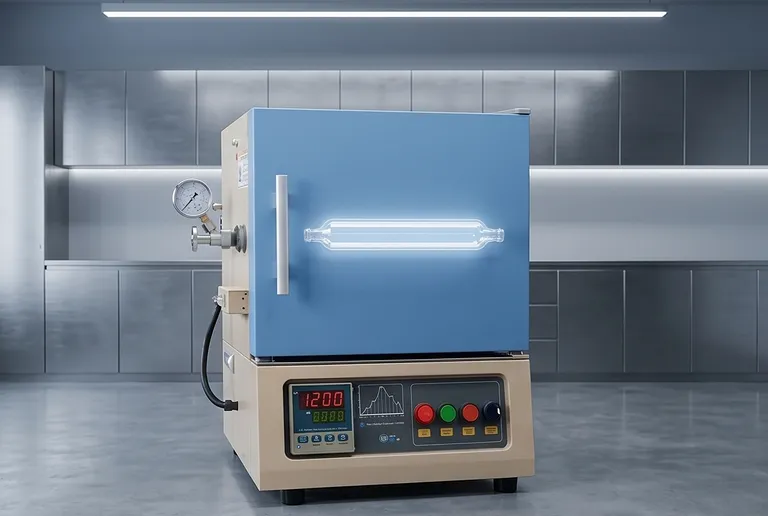
A chemical reaction is only as good as the environment that contains it. In the synthesis of activated carbon, the furnace is the "operating theater."
The Necessity of the Inert Shield
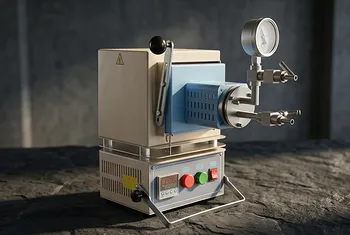
Without an oxygen-free environment, the carbon would simply burn away. A Tube Furnace provides a continuous flow of Nitrogen or Argon, creating a protective shroud that allows the etching to happen without total combustion.
Thermal Discipline
Activation is sensitive to the rate of change. A stable heating rate (3-10°C/min) is required to ensure the "violence" of the etching is uniform. Localized hot spots lead to "over-activation"—where the pore walls collapse, destroying the very structure you are trying to build.
The Engineering Trade-offs
In the Housel-esque sense, everything in material science has a price. To gain surface area, you must pay in yield.
| Feature | Role of KOH/NaOH | Impact on Carbon Structure |
|---|---|---|
| Chemical Etching | High-temp skeleton corrosion | Removes amorphous mass; creates micropores |
| Pore Development | Hierarchical creation | Boosts surface area (>1000 m²/g) |
| Functionalization | Intro of active groups | Adds -OH and -COOH for chemical bonding |
| Metal Reduction | Metallic vapor intercalation | Expands carbon lattice for deeper networks |
The Price of Admission
- Material Loss: The more you etch, the more mass you lose. Over-activation results in "burn-off," where the yield drops significantly.
- Equipment Fatigue: Molten KOH is notoriously "hungry." It can degrade quartz and ceramic tubes over time. Engineering a successful process requires selecting equipment that can withstand this chemical hostility.
- The Purge: Post-activation, the material must be washed with acid and deionized water to remove residual alkali. The pores you've created must be cleared of the tools used to make them.
Mastering the Thermal Field
The difference between a failed batch of charred bitumen and a high-value carbon electrode is precision.
At THERMUNITS, we understand that high-temperature R&D is a balance of aggression and control. Our range of Tube, Vacuum, and Atmosphere Furnaces is engineered specifically to provide the uniform thermal fields and gas-tight environments required for advanced chemical activation.
Whether you are scaling up a rotary kiln process or refining a CVD-based carbon synthesis, our systems offer the reliability needed to push the boundaries of material science.
To find the right thermal solution for your activation research, Contact Our Experts
Quick Links
Suggested Products
High Temperature Hydrogen Atmosphere Box Furnace 1650C Max Reducing Environment Material Synthesis System 8x8x8 Chamber Flammable Gas Control and Disposal Device with H2 Gas Leaking Detector and Safety Interlock System Induction Heating System with Temperature Control for High Temperature Vacuum Sintering and Melting High Temperature Induction Melting System with Integrated Ultra High Purity Glove Box for Metallic Alloy Processing Automatic 10 Crucible Induction Melting and Casting System with Stirring Function and Glovebox Integration 2000CFurther Reading
The Architecture of Controlled Disorder: Engineering Hard Carbon for the Sodium-Ion Era The Invisible Barrier: Why Precision Thermal Control Requires Chemical Silence The Geometry of Stability: Why LFP Regeneration Demands Atmospheric Discipline The Architecture of Heat: Why Atmosphere Control Defines the TiO2@NC Precursor The Architecture of Light: Managing Entropy in High-Temperature Phosphor Synthesis
ThermUnits
Last updated on Apr 14, 2026
Related Products
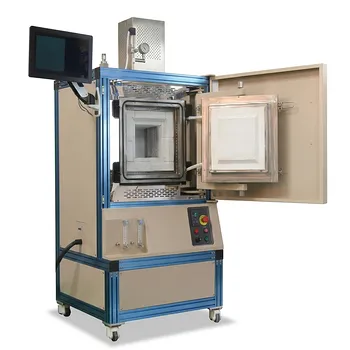
High Temperature Hydrogen Atmosphere Box Furnace 1650C Max Reducing Environment Material Synthesis System 8x8x8 Chamber
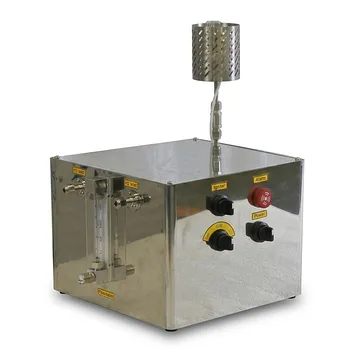
Flammable Gas Control and Disposal Device with H2 Gas Leaking Detector and Safety Interlock System
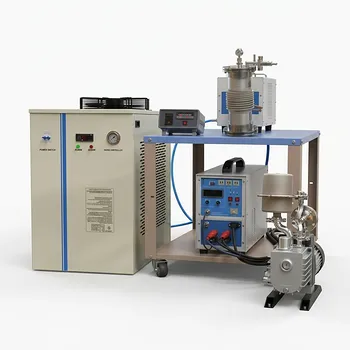
Induction Heating System with Temperature Control for High Temperature Vacuum Sintering and Melting
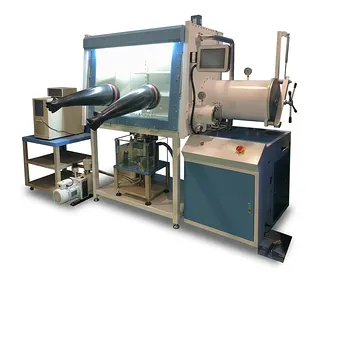
High Temperature Induction Melting System with Integrated Ultra High Purity Glove Box for Metallic Alloy Processing