The Geometry of Stability: Why LFP Regeneration Demands Atmospheric Discipline
Jun 15, 2026
The Renaissance of Spent Material
Battery recycling is often mistaken for waste management. In reality, it is a high-stakes rescue mission.
Lithium Iron Phosphate (LFP) is the workhorse of the energy transition, but its "second life" depends entirely on how we treat it at its most vulnerable moment: the final thermal stage.
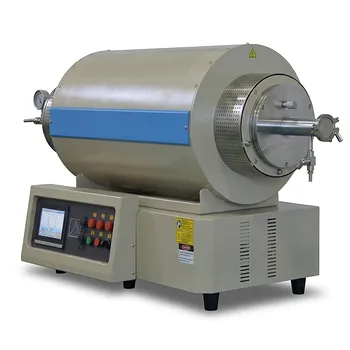
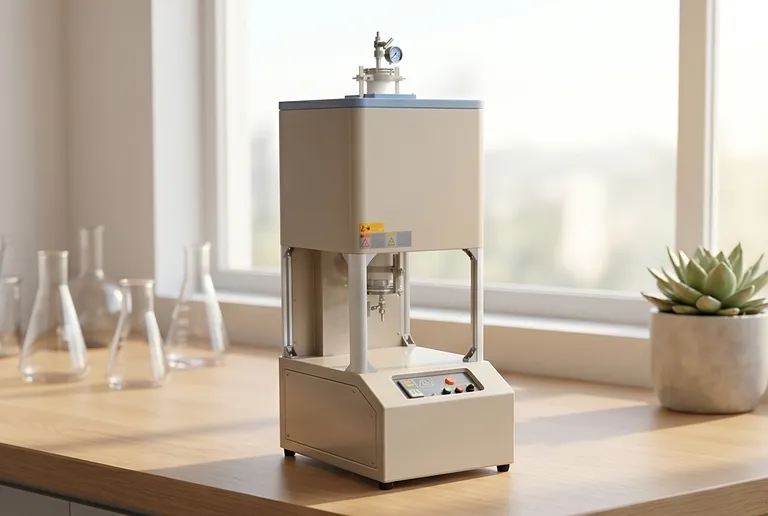
At 700°C, the difference between a high-performance cathode and expensive slag is a handful of oxygen molecules. This is why the atmosphere tube furnace is not just a tool—it is a specialized sanctuary for chemical restoration.
Oxygen: The Architect of Decay
The primary enemy of LFP regeneration is entropy—specifically, the natural urge of iron to oxidize.
The $Fe^{2+}$ Vulnerability
In a functional LFP crystal, iron must stay in its divalent state ($Fe^{2+}$). However, when exposed to heat and even trace amounts of oxygen, iron aggressively transitions to $Fe^{3+}$.
- The Result: The olivine crystal structure collapses.
- The Penalty: Irreversible loss of capacity and poor ion mobility.
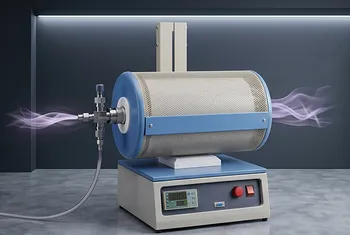
The atmosphere tube furnace acts as a mechanical bodyguard. By flooding the environment with high-purity argon or nitrogen (99.99%), it displaces oxygen entirely, ensuring the iron remains in its intended state.
Protecting the Dopants
Modern LFP isn't just iron and lithium; it’s a complex soup of aluminum or sodium dopants. These ions must occupy specific sites in the lattice. Without a strictly controlled inert environment, secondary reactions occur, and these dopants become "lost" in unintended phases.
Engineering the Conductive Highway
LFP is a poor conductor of electrons. To make it work, every particle must be wrapped in a microscopic "jacket" of carbon.
The Magic of Pyrolysis
By introducing organic precursors like glucose into the furnace, we initiate pyrolysis.
- In Air: The carbon would simply burn away into $CO_2$.
- In the Tube Furnace: The lack of oxygen forces the carbon to decompose into a thin, uniform conductive layer.
This layer is what allows a battery to charge and discharge rapidly. Without the precision of an atmosphere-controlled tube, this coating is never uniform, leading to "hot spots" and premature battery failure.
Structural Relaxation: The Annealing Phase
Throughout its first life and the mechanical shredding of recycling, the LFP lattice accumulates "internal stress." Atoms are pushed out of alignment.
Thermal treatment at 650°C is an act of atomic diplomacy. It provides the energy needed for atoms to migrate back to their lowest-energy, most stable positions.
| Process Phase | Temperature | Goal |
|---|---|---|
| Pre-calcination | 300°C | Removal of organic binders and moisture |
| Sintering | 700°C | Formation of the olivine crystal structure |
| Annealing | 650°C | Relief of lattice stress and crystallinity optimization |
The "Sweeping" Effect
Thermal chemistry is messy. The decomposition of precursors releases water vapor and $CO_2$. If these byproducts linger, they drive the chemical equilibrium backward, creating impurities.
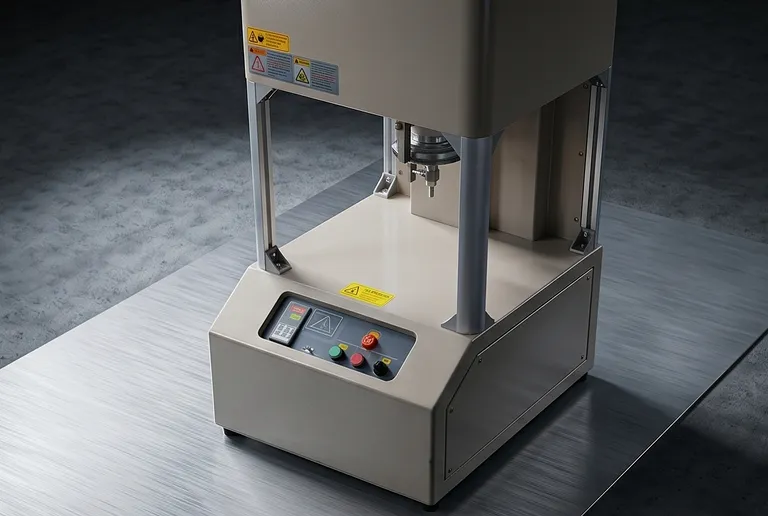
The tube furnace’s design creates a constant "sweep." The continuous flow of gas carries these gaseous byproducts away instantly, maintaining a low partial pressure that favors a pure, single-phase final product.
Managing the Trade-offs
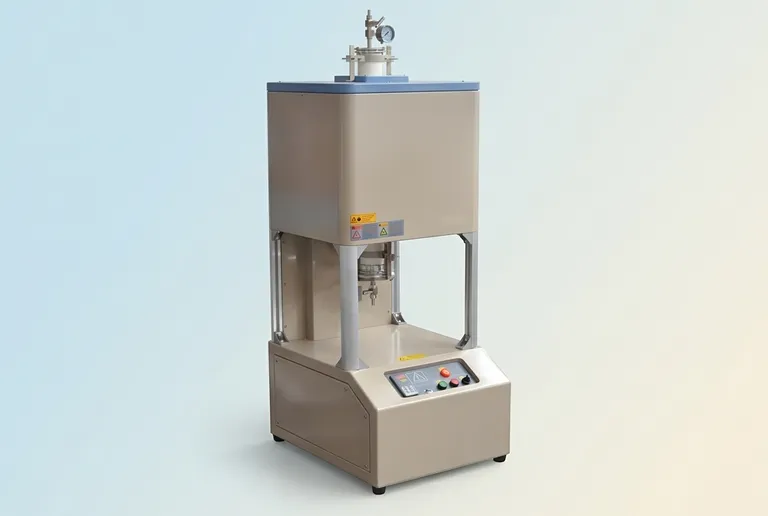
Precision comes at a cost. Engineers must balance three primary constraints:
- Gas Consumption: High-purity argon is expensive; the furnace must be perfectly sealed to minimize waste.
- Thermal Gradients: In larger tubes, the center may be cooler than the walls. Precise calibration is mandatory.
- Throughput: Unlike rotary kilns, tube furnaces are often batch-oriented, prioritizing quality over sheer volume.
The THERMUNITS Standard
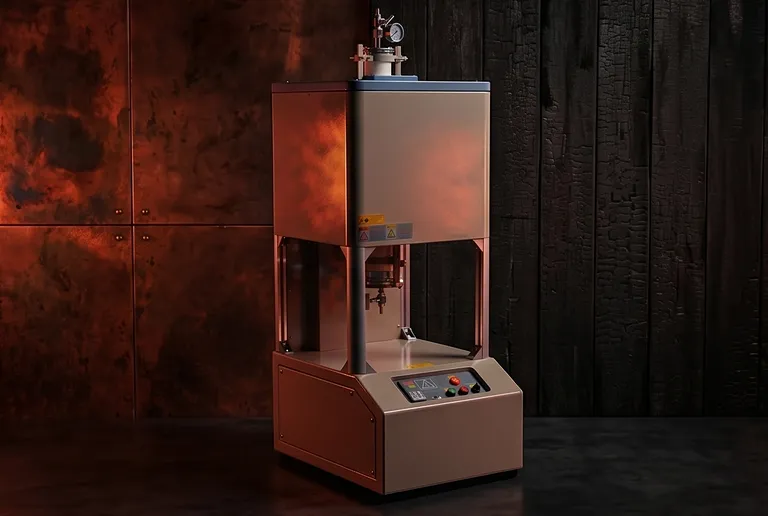
At THERMUNITS, we understand that material science is a game of margins. Our thermal processing solutions are engineered to provide the "Atmospheric Discipline" required for next-generation R&D.
From high-precision Atmosphere Tube Furnaces to advanced CVD/PECVD systems and Vacuum Induction Melting (VIM), we provide the hardware that allows researchers to turn "spent" materials into high-performance assets.
Whether you are optimizing LFP regeneration or pioneering new solid-state electrolytes, our systems ensure that your chemical intent is never compromised by environmental volatility.
Ready to bring precision to your thermal processing? Contact Our Experts
Quick Links
Suggested Products
Vertical 1700C Vacuum and Atmosphere Tube Furnace with 80mm Alumina Tube 1200C Hybrid Muffle and Tube Furnace for Material Research with Dual Atmosphere Control Quartz Tubes 1200°C Atmosphere Controlled Automatic Bottom Loading Furnace with 6 Inch Quartz Tube Compact Hybrid Muffle and Tube Furnace for 1000C Controlled Atmosphere Laboratory Material Sintering Compact Vertical Split Quartz Tube Furnace with Stainless Steel Vacuum Flanges for Rapid Thermal Quenching and Controlled Atmosphere Material ProcessingFurther Reading
The Silent Guardian of Kinetics: The Engineering Logic Behind Stable Molten Salt Environments The Architecture of Isolation: Why Atmosphere Defines Material Destiny The Invisible Architect: Precision Thermal Oxidation in NiO@Ni Synthesis The Architecture of Thrifty Precision: Why Tube Furnaces Define the R&D Continuity The Architect of Atoms: Why Precision is the Only Currency in TMD Synthesis
ThermUnits
Last updated on Apr 14, 2026
Related Products

Vertical 1700C Vacuum and Atmosphere Tube Furnace with 80mm Alumina Tube
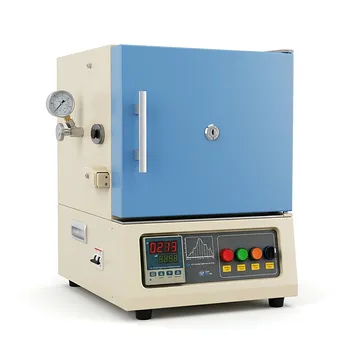
1200C Hybrid Muffle and Tube Furnace for Material Research with Dual Atmosphere Control Quartz Tubes
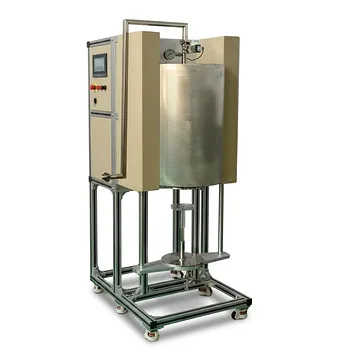
1200°C Atmosphere Controlled Automatic Bottom Loading Furnace with 6 Inch Quartz Tube
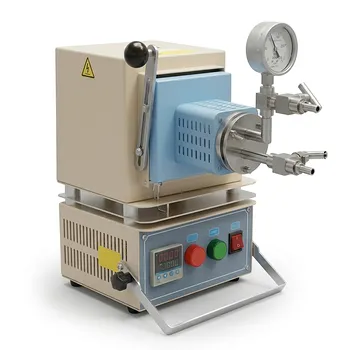
Compact Hybrid Muffle and Tube Furnace for 1000C Controlled Atmosphere Laboratory Material Sintering
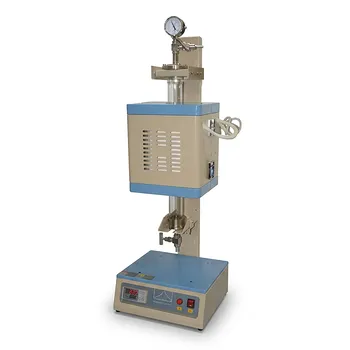
Compact Vertical Split Quartz Tube Furnace with Stainless Steel Vacuum Flanges for Rapid Thermal Quenching and Controlled Atmosphere Material Processing
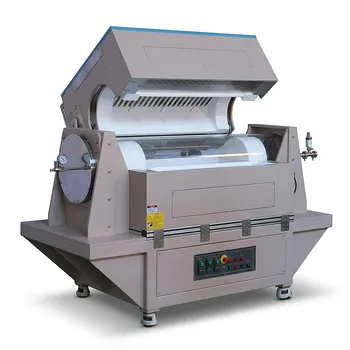
Three Zone Tube Furnace with 11 Inch or 15 Inch Quartz Tube and Hinged Flanges for Vacuum Atmosphere Heat Treatment
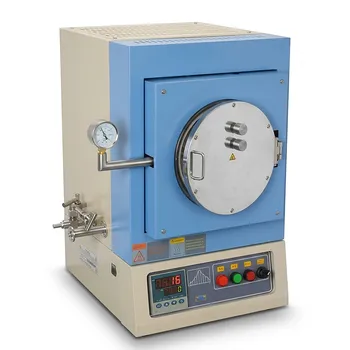
1100°C High Temperature Quartz Chamber Furnace 8 Inch OD with 7.6 Liter Capacity and Vacuum Atmosphere Capability
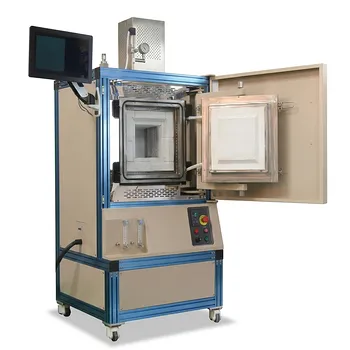
High Temperature Hydrogen Atmosphere Box Furnace 1650C Max Reducing Environment Material Synthesis System 8x8x8 Chamber

High Temperature 1700C Vertical Tube Furnace for Powder Spherification and Material Sintering

Compact High Temperature 1600C Tube Furnace with 50mm Alumina Tube and Vacuum Flanges for Material Sintering

High Temperature 1700C Tube Furnace with High Vacuum Turbomolecular Pump System and Multi Channel Mass Flow Controller Gas Mixer
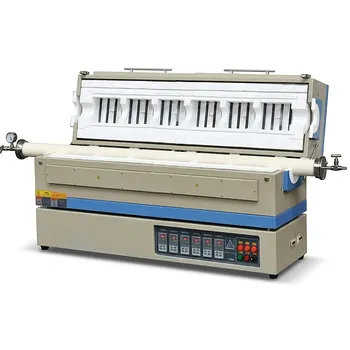
High Temperature 1700C Six Zone Split Tube Furnace with Alumina Tube and Water Cooled Flanges

1800C High Temperature Compact Vacuum Tube Furnace with 60mm OD Alumina Tube and Kanthal MoSi2 Heating Elements
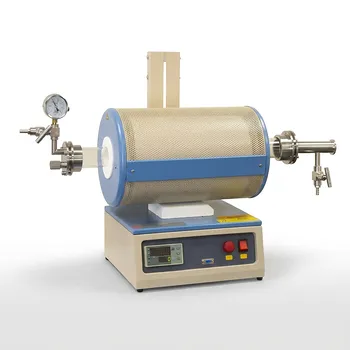
1100C Tube Furnace with Vacuum Flange and Programmable Temperature Controller for Material Science and Industrial Heat Treatment
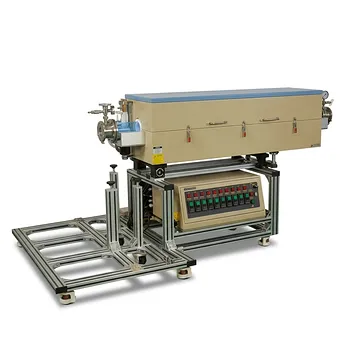
Ten Zone Multi Orientation Laboratory Tube Furnace for 1200C High Temperature Gradient Thermal Processing

High Temperature 1700C Benchtop Tube Furnace with 5 Inch Heating Zone High Purity Alumina Tube and Vacuum Sealing Flanges
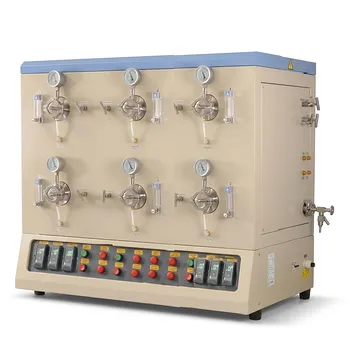
1200C High Throughput Multi Channel Tube Furnace with 50mm Quartz Tubes for Annealing and Material Phase Diagram Research
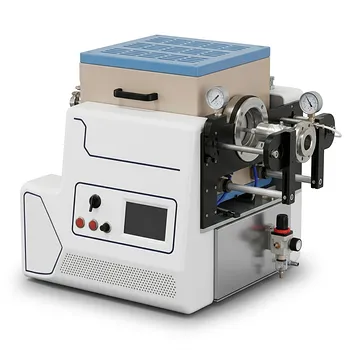
High Temperature Automated 5 Inch Tube Furnace for Autonomous Material Research and Advanced Laboratory R&D
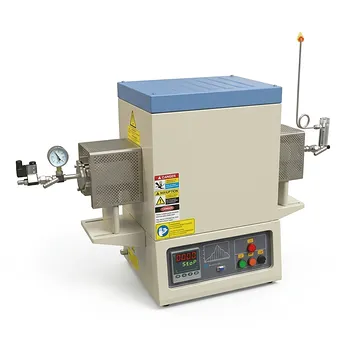
1700C Hydrogen Gas Tube Furnace with 60mm Alumina Process Tube and Integrated Hydrogen Safety Detector