How can re-sintering produce oversized W-MMC shielding? Master the tech to bypass Isostatic Press size limits.
Updated 3 months ago
The manufacturing of oversized tungsten-based multi-metal composite (W-MMC) components is achieved through a multi-stage re-sintering process that bypasses the physical limits of traditional Isostatic Pressing chambers. This method involves fabricating smaller, high-density pre-sintered segments and then fusing them into a singular, monolithic structure using high-temperature atomic diffusion. By precisely machining and re-joining these sections under extreme heat, engineers can produce massive, high-integrity shielding components that would otherwise be impossible to create in a single press cycle.
Re-sintering transforms discrete segments into a unified W-MMC structure by leveraging high-temperature atomic diffusion, effectively removing size constraints while maintaining uniform density and structural integrity.
Overcoming the Dimensional Constraints of Isostatic Pressing
The Physical Limitations of Pressing Equipment
Isostatic Pressing is often the gold standard for creating dense tungsten composites, but the process is inherently limited by the internal diameter and height of the pressure vessel. When a shielding component's dimensions exceed these physical boundaries, a traditional single-stage press becomes impossible.
Segmented Prototyping and Pre-Sintering
To circumvent these limits, the final component is designed as a series of smaller sub-assemblies. Each of these smaller segments is independently pre-sintered to its required density, ensuring that every individual piece meets strict material specifications before the final assembly.
The Re-Sintering Process Workflow
Precision Machining of Contact Interfaces
Once the pre-sintered segments are created, their contact surfaces must be precision-machined to an exacting tolerance. This ensures that when the pieces are joined, there is maximum surface-to-surface contact, which is vital for the success of the subsequent bonding phase.
Assembly and Specialized Sintering Molds
The machined segments are then nested within a specialized sintering mold designed to hold the complex geometry in place. This mold prevents shifting or warping during the high-temperature phase, ensuring the final oversized component maintains its intended dimensions.
Facilitating Atomic Diffusion at Temperature
The assembled structure undergoes a second high-temperature sintering cycle known as re-sintering. During this phase, atomic diffusion occurs across the machined interfaces, causing the atoms from adjacent segments to migrate and interlock.
Ensuring Structural Integrity in Large Components
Physical Bonding for High Integrity
The re-sintering process results in physical bonding that mimics the grain structure of a single-cast piece. This creates a large structural component with high integrity, capable of withstanding the mechanical stresses typically found in industrial shielding applications.
Maintaining Uniform Density
Because each segment was pre-sintered under controlled conditions, the final oversized unit exhibits uniform density throughout its entire volume. This is critical in radiation shielding, where density variations or "thin spots" would compromise the safety and effectiveness of the component.
Understanding the Trade-offs and Risks
Potential Weak Points at Interface Boundaries
If the precision machining of the interfaces is slightly off, the atomic diffusion may be incomplete, leading to microscopic voids. While the component may look solid, these localized areas of lower density could potentially lead to structural failure or radiation leakage under extreme conditions.
Dimensional Stability During Secondary Sintering
Subjecting already-sintered parts to a second high-heat cycle introduces the risk of thermal deformation. Managing the heat distribution within the specialized mold is essential to prevent the oversized component from warping as the interfaces fuse.
How to Apply Re-Sintering to Your Project
When planning the production of oversized W-MMC components, your approach should be dictated by the specific requirements of the shielding environment.
- If your primary focus is Maximum Shielding Effectiveness: Ensure that the precision machining of interfaces is held to the highest possible tolerance to eliminate any potential for density gaps at the joints.
- If your primary focus is Structural Longevity: Prioritize the design of the specialized sintering mold to prevent internal stresses and warping during the re-sintering phase.
- If your primary focus is Geometric Complexity: Utilize the segmented approach to create intricate internal shapes that would be impossible to form in a standard one-piece press.
By mastering the transition from discrete segments to a unified structure via re-sintering, you can successfully deploy tungsten-based shielding on a scale previously thought unattainable.
Summary Table:
| Feature | Benefit | Key Requirement |
|---|---|---|
| Multi-stage Sintering | Bypasses physical press size limits | Independent segment fabrication |
| Precision Machining | Ensures maximum surface contact | Tight interface tolerances |
| Atomic Diffusion | Creates a monolithic, unified structure | High-temperature thermal stability |
| Specialized Molds | Prevents warping and thermal deformation | Precise geometry containment |
Scale Your Material R&D with THERMUNITS Solutions
Manufacturing oversized W-MMC components requires extreme precision and advanced thermal control. THERMUNITS is a leading manufacturer of high-temperature laboratory equipment specifically designed for material science and industrial R&D. We empower your team to overcome size constraints with our comprehensive range of thermal processing solutions, including Vacuum, Atmosphere, Hot Press, and Tube furnaces, as well as CVD/PECVD systems and Vacuum Induction Melting (VIM) furnaces.
Our equipment provides the uniform heat distribution and atmospheric control necessary for successful atomic diffusion and high-integrity re-sintering. Contact us today to find the perfect furnace for your project and see how our expertise in heat treatment can enhance your laboratory's efficiency and manufacturing capabilities.
References
- Adéla Macháčková, Silvie Brožová. Applications of Tungsten Pseudo-Alloys in the Energy Sector. DOI: 10.3390/app14020647
Mentioned Products
- Compact Crucible Melting Furnace 1100C Programmable Temperature Controller Metal Sintering Equipment
- 1700C Compact Hybrid Furnace with Dual Layer Box Sintering and Controlled Atmosphere Alumina Tubes
- High Temperature 1700C Vertical Tube Furnace for Powder Spherification and Material Sintering
- Compact Hybrid Muffle and Tube Furnace for 1000C Controlled Atmosphere Laboratory Material Sintering
- Compact High Temperature 1600C Tube Furnace with 50mm Alumina Tube and Vacuum Flanges for Material Sintering
People Also Ask
- Why are internal getters such as Titanium used during the synthesis of oxygen-sensitive materials in a melting furnace?
- How should the choice between a Quartz crucible and an Alumina crucible be made for La2O2S? Optimize Material Purity
- What is the function of a programmable high-temperature Laboratory Furnace in evaluating the fire resistance of concrete?
- Why is a laboratory sintering furnace reaching 950°C required for Ho2YSbO7? Ensure Pure Pyrochlore Phase Purity
- What operational efficiencies do programmable dental furnaces provide to high-volume laboratories? Maximize Scalability

Tech Team · ThermUnits
Last updated on Jun 03, 2026
Related Products
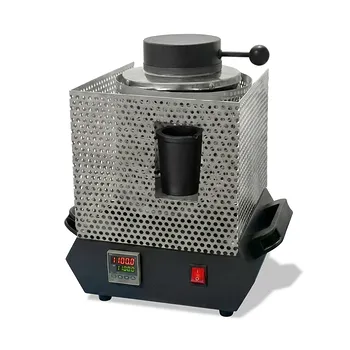
Compact Crucible Melting Furnace 1100C Programmable Temperature Controller Metal Sintering Equipment
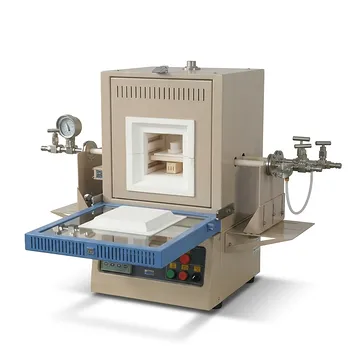
1700C Compact Hybrid Furnace with Dual Layer Box Sintering and Controlled Atmosphere Alumina Tubes

High Temperature 1700C Vertical Tube Furnace for Powder Spherification and Material Sintering
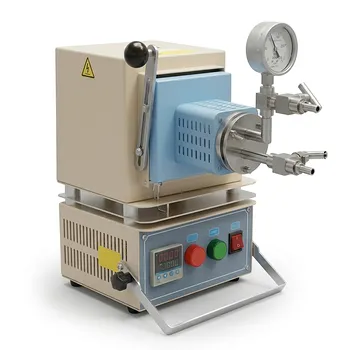
Compact Hybrid Muffle and Tube Furnace for 1000C Controlled Atmosphere Laboratory Material Sintering

Compact High Temperature 1600C Tube Furnace with 50mm Alumina Tube and Vacuum Flanges for Material Sintering
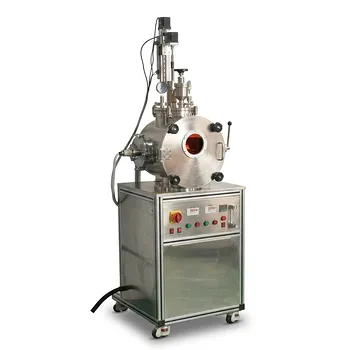
High Vacuum Melting Casting Furnace with Mechanical Stirring and Secondary Charge for Metallic Alloy Research
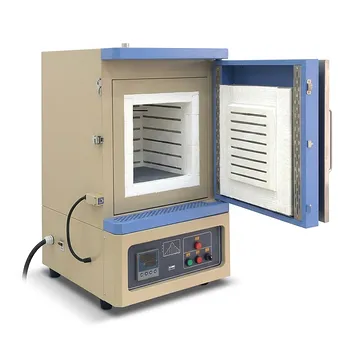
Five Side Heating Muffle Furnace High Purity Alumina Fiber 27L Chamber 1200C High Temperature Thermal Processing System for Sintering Annealing and Materials Research
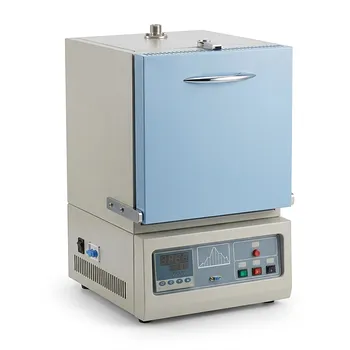
1750C Compact Muffle Furnace 1.7L Ultra High Temperature Laboratory Sintering System for Advanced Ceramics and Material Science Research
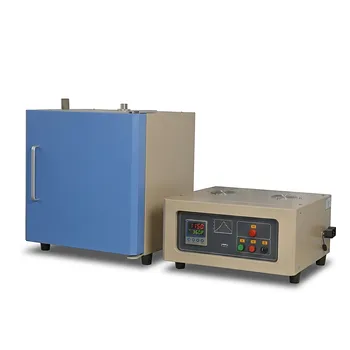
High Temperature Muffle Furnace with Alloy Chamber for Debinding and Sintering Applications
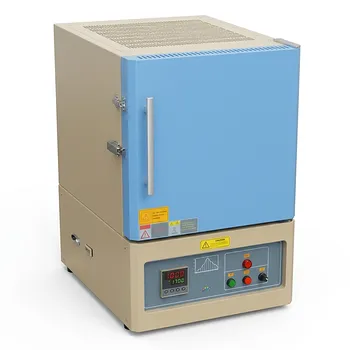
Large Bench Top 1700C High Temperature Muffle Furnace with 19L Chamber for Advanced Material Sintering and Annealing
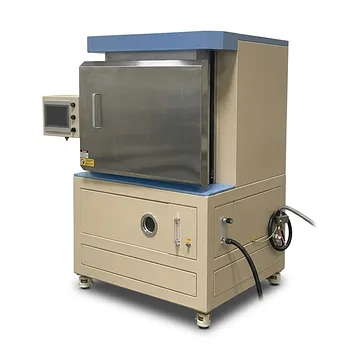
1650C High Temperature Atmosphere Controlled Box Furnace with 65L Chamber for Advanced Material Sintering and Industrial Heat Treatment
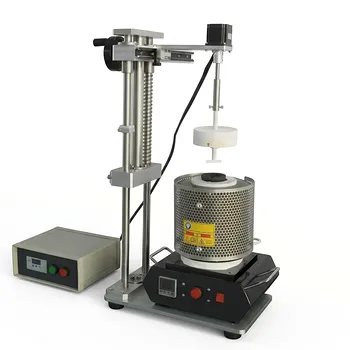
1100C Crucible Melting Furnace with Stirring Function for Glovebox and Air Sensitive Alloy Research
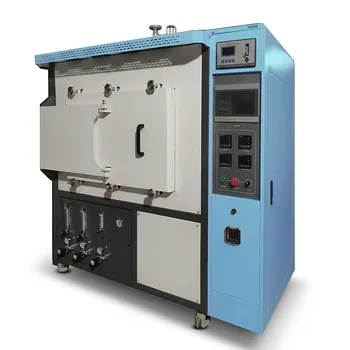
Roller Table Atmosphere Furnace 1500C High Temperature Battery Material Sintering System 112L Capacity
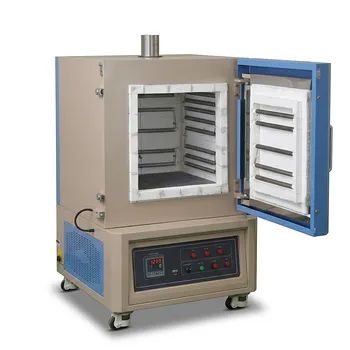
1200C High Temperature 125L Muffle Furnace 5 Side Heating for Large Batch Sintering with Optional Alloy Debinding Chamber
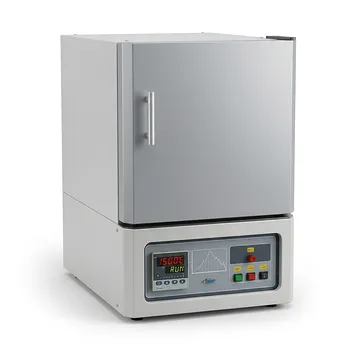
High Temperature 1500C Benchtop Muffle Furnace 3.6L Alumina Fiber Chamber Programmable Controller Sintering Annealing Carbonization Thermal Processing System
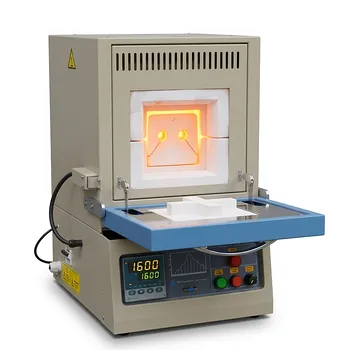
High Temperature Compact Muffle Furnace 1700 C with 30 Segment Programmable Controller and 1.7L Cubic Chamber
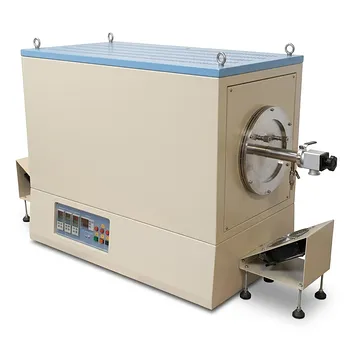
Four Zone Tube Furnace 1100C with 600mm Large Diameter Quartz Tube and Vacuum Flanges
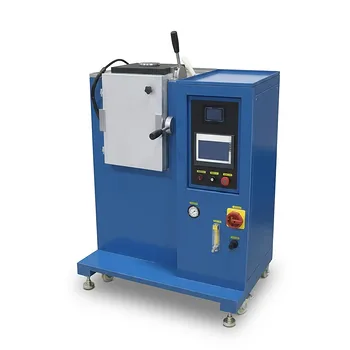
High Throughput Induction Melting and Casting Furnace for Superalloy Research 1700C Atmosphere Controlled Multi Sample System
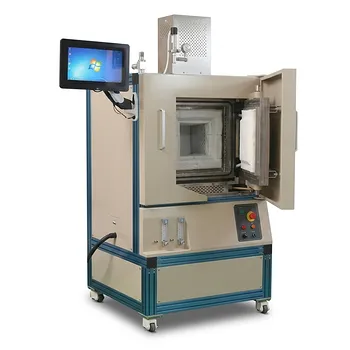
High Temperature Oxygen and Inert Atmosphere Controlled Furnace 8 Liter 1700C Sintering System for Advanced Materials RD