Why are internal getters such as Titanium used during the synthesis of oxygen-sensitive materials in a melting furnace?
Updated 3 months ago
In high-temperature material synthesis, purity and precision are paramount. Internal getters like Titanium serve a dual role as both chemical "sponges" for contaminants and physical benchmarks for thermal accuracy. They ensure that oxygen-sensitive materials remain pristine while providing a reliable calibration point for infrared sensors at temperatures exceeding 1600°C.
Internal getters act as atmospheric purifiers and thermal standards. By chemically neutralizing trace oxygen and providing a known melting point of 1660°C, they protect sensitive samples from oxidation and ensure the accuracy of non-contact temperature measurements.
The Chemical Role: Oxygen Scavenging and Purification
Neutralizing Residual Contaminants
Even high-purity argon gas often contains trace amounts of oxygen that can compromise the integrity of sensitive materials. Titanium reacts aggressively with these residual gases, absorbing them before they can interact with the primary sample.
Protecting Sample Integrity at High Temperatures
Oxidation rates accelerate significantly as temperatures rise, making internal getters essential for maintaining a clean melt pool. This process ensures the resulting material properties are not degraded by unwanted oxide inclusions or surface reactions.
The Metrological Role: Temperature Calibration
Leveraging the Melting Point Plateau
Titanium has a well-defined melting point of approximately 1660°C, which serves as a fixed physical constant. Researchers monitor the melting temperature plateau of the Titanium to verify the actual temperature within the furnace in real-time.
Calibrating Infrared Sensors
Infrared cameras require accurate emissivity data to calculate the temperatures of unknown compounds correctly. By using Titanium’s established emissivity and known melting point, researchers can calibrate their sensors to improve the reliability of all measurements within the melt.
Understanding the Trade-offs
Risk of Sample Cross-Contamination
If the getter is positioned too close to the sample, vapor phase transport or direct contact could introduce Titanium atoms into the material being synthesized. Careful placement is required to ensure the getter cleans the environment without altering the sample's chemistry.
Temperature Limitations
Titanium's utility as a calibration standard is inherently linked to its specific melting range. For materials synthesized at temperatures significantly higher or lower than 1660°C, different getter materials with different thermal properties must be selected.
How to Apply This to Your Project
To maximize the benefits of internal getters, you must balance their chemical activity with their physical placement within the furnace.
- If your primary focus is atmospheric purity: Place the Titanium getter in a location where it encounters the gas flow before the gas reaches your primary sample.
- If your primary focus is thermal accuracy: Ensure your infrared camera has a clear, unobstructed line of sight to the Titanium so you can accurately capture its 1660°C melting plateau.
Utilizing Titanium as an internal getter provides a robust, dual-purpose solution for maintaining the chemical purity and thermal precision necessary for advanced material synthesis.
Summary Table:
| Feature | Primary Function | Key Advantage |
|---|---|---|
| Chemical Scavenging | Absorbs trace oxygen & contaminants | Prevents sample oxidation & ensures high purity |
| Thermal Metrology | 1660°C Melting Point Plateau | Provides a physical standard for IR sensor calibration |
| Atmospheric Control | Neutralizes residual argon impurities | Maintains a pristine environment at high temperatures |
| Process Accuracy | Real-time emissivity adjustment | Increases reliability of non-contact measurements |
Elevate Your Material Research with THERMUNITS
Precision and purity are the cornerstones of successful high-temperature R&D. THERMUNITS is a leading manufacturer of advanced laboratory equipment, providing the specialized thermal environments required for oxygen-sensitive synthesis.
Our comprehensive range of solutions includes:
- Vacuum & Atmosphere Furnaces for controlled environments.
- Vacuum Induction Melting (VIM) Furnaces for superior alloy purity.
- CVD/PECVD & Rotary Kilns for scalable material processing.
- Muffle, Tube, and Hot Press Furnaces tailored for industrial R&D.
Whether you need to eliminate trace oxidation or require precise thermal calibration at 1600°C+, our equipment delivers the reliability your research demands.
Contact our technical experts today to find your ideal furnace solution
References
- Jordan Stone, Elizabeth S. Sooby. High-temperature thermal imaging to inform the arc-melt synthesis of nuclear materials. DOI: 10.3389/fnuen.2023.1322209
Mentioned Products
- 1100C Crucible Melting Furnace with Stirring Function for Glovebox and Air Sensitive Alloy Research
- Desktop Induction Melting Furnace with Automatic Rotary Casting Function up to 1700C for Advanced Metal Alloy Research
- Compact Crucible Melting Furnace 1100C Programmable Temperature Controller Metal Sintering Equipment
- Atmosphere Controlled Induction Melting Granulating Casting Furnace 1500C 5kg Capacity
- High Throughput Induction Melting and Casting Furnace for Superalloy Research 1700C Atmosphere Controlled Multi Sample System
People Also Ask
- How should the choice between a Quartz crucible and an Alumina crucible be made for La2O2S? Optimize Material Purity
- What technical capabilities must a high-temperature furnace possess for 1100°C HEA annealing? Precision & Stability.
- Why use ceramic crucibles for coal nano-hybrid heat treatment? Ensure Purity and Thermal Stability.
- Alumina Plates in Polymer Carbonization: Ensure Flatness and Suppress Shrinkage
- What role does a sacrificial graphite liner play in furnaces? Protect Components and Stabilize Slag Experiments

Tech Team · ThermUnits
Last updated on Jun 03, 2026
Related Products
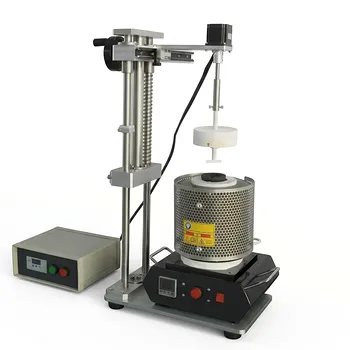
1100C Crucible Melting Furnace with Stirring Function for Glovebox and Air Sensitive Alloy Research
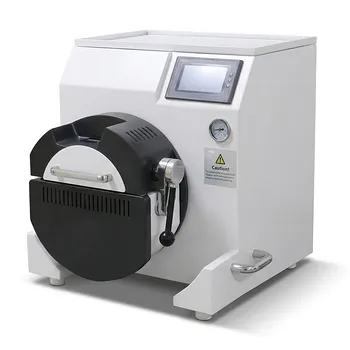
Desktop Induction Melting Furnace with Automatic Rotary Casting Function up to 1700C for Advanced Metal Alloy Research
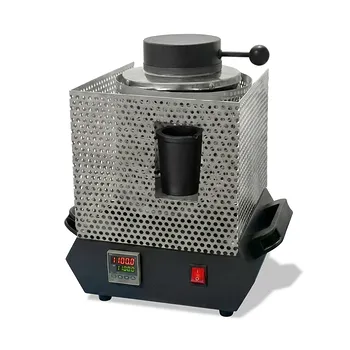
Compact Crucible Melting Furnace 1100C Programmable Temperature Controller Metal Sintering Equipment
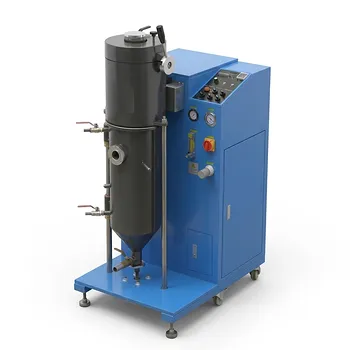
Atmosphere Controlled Induction Melting Granulating Casting Furnace 1500C 5kg Capacity
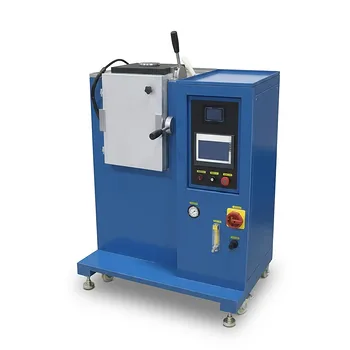
High Throughput Induction Melting and Casting Furnace for Superalloy Research 1700C Atmosphere Controlled Multi Sample System
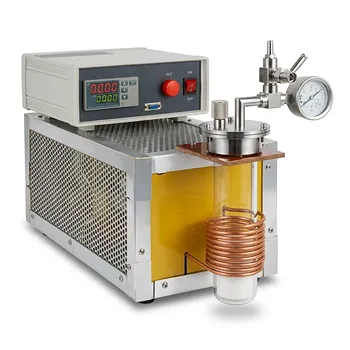
High Temperature Mini Induction Heating Furnace 1600C Laboratory Material Melting System
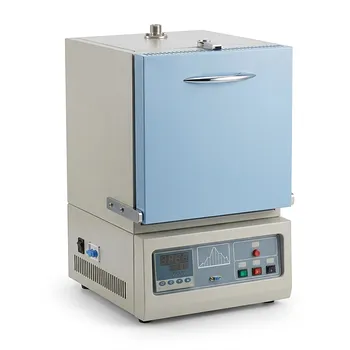
1750C Compact Muffle Furnace 1.7L Ultra High Temperature Laboratory Sintering System for Advanced Ceramics and Material Science Research
Large Bench Top 1700C High Temperature Muffle Furnace with 19L Chamber for Advanced Material Sintering and Annealing
1200C Five Side Heating Muffle Furnace with Sliding Door 125L Volume High Temperature Heat Treatment System for Large Scale Sintering and Annealing
High Temperature Muffle Furnace with Alloy Chamber for Debinding and Sintering Applications
High Temperature 1500C Benchtop Muffle Furnace 3.6L Alumina Fiber Chamber Programmable Controller Sintering Annealing Carbonization Thermal Processing System
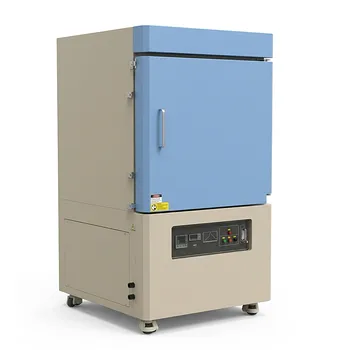
Industrial Large Box Furnace 1700C 216L High Temp Muffle Sintering System
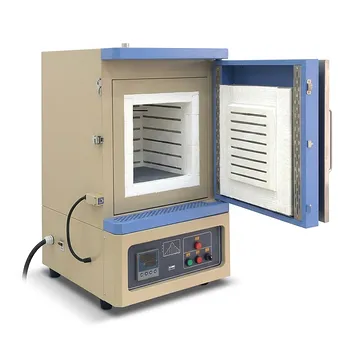
Five Side Heating Muffle Furnace High Purity Alumina Fiber 27L Chamber 1200C High Temperature Thermal Processing System for Sintering Annealing and Materials Research
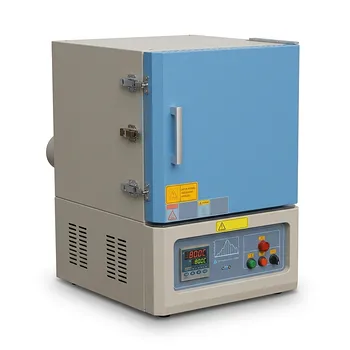
1800C Bench Top Muffle Furnace 18 Liters with Kanthal Super 1900 Heating Elements for High Purity Ceramic Sintering and Material Research
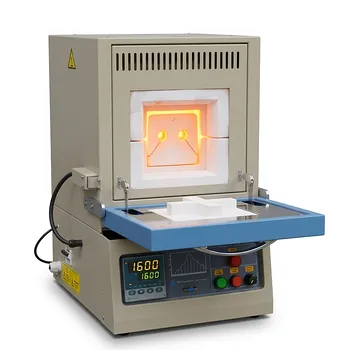
High Temperature Compact Muffle Furnace 1700 C with 30 Segment Programmable Controller and 1.7L Cubic Chamber
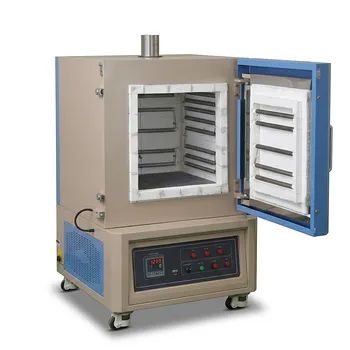
1200C High Temperature 125L Muffle Furnace 5 Side Heating for Large Batch Sintering with Optional Alloy Debinding Chamber
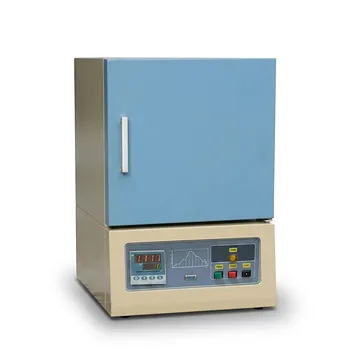
Ultra High Temperature Bench Top Muffle Furnace 1750C Sintering System with Kanthal Super Heating Elements and Precision Digital Control
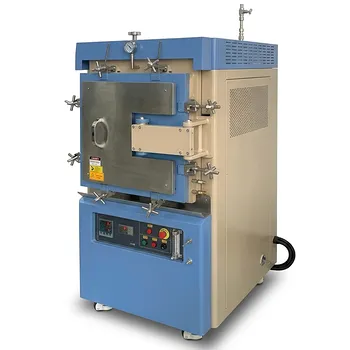
Atmosphere Controlled Muffle Furnace 1700C Maximum Temperature 80L High Capacity Vacuum Inert Gas Box Furnace
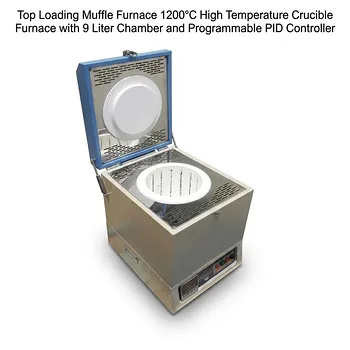
Top Loading Muffle Furnace 1200°C High Temperature Crucible Furnace with 9 Liter Chamber and Programmable PID Controller