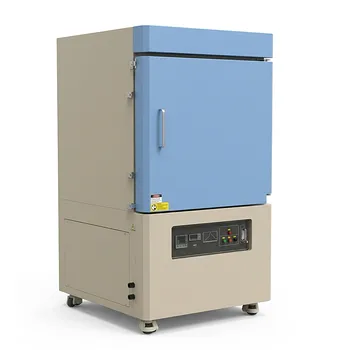
Why is a laboratory sintering furnace reaching 950°C required for Ho2YSbO7? Ensure Pure Pyrochlore Phase Purity
Updated 3 months ago
The synthesis of $\text{Ho}_2\text{YSbO}_7$ relies on a high-temperature solid-state sintering process to achieve its required crystal structure. A laboratory sintering furnace reaching 950°C is necessary to provide the thermal energy required for atomic diffusion and lattice rearrangement. This precise environment allows the compressed precursors to transform into a stable, single-phase pyrochlore structure, which is the foundation of the material's photoelectric performance.
Core Takeaway: A 950°C sintering furnace is the only way to provide the sustained thermal drive necessary to overcome lattice energy and ensure the long-range atomic ordering required for a pure $\text{Ho}_2\text{YSbO}_7$ crystal phase.
Driving Phase Transformation Through Thermal Energy
Overcoming Atomic Resistance
Solid-state precursors do not react spontaneously at room temperature because their atoms are locked in place. The furnace provides the thermal energy necessary for atoms to break their existing bonds and migrate across particle boundaries, a process known as atomic diffusion.
Formation of the Pyrochlore Structure
$\text{Ho}_2\text{YSbO}_7$ requires a specific crystalline arrangement called a pyrochlore structure to function effectively. Reaching 950°C ensures that the Holmium, Yttrium, and Antimony cations reach their designated positions within the lattice, creating a stable and uniform phase.
Eliminating Structural Defects
High-temperature environments facilitate the removal of internal voids and structural inconsistencies. By maintaining a constant 950°C environment, the furnace promotes a long-range ordered arrangement of cations, which minimizes defects that would otherwise hinder photoelectric efficiency.
The Necessity of Precise Thermal Management
The Importance of Extended Dwell Times
Preparing $\text{Ho}_2\text{YSbO}_7$ is not just about hitting a peak temperature; it requires "soaking" the material for extended periods, such as 600 minutes. A laboratory sintering furnace uses precise control curves to maintain this temperature without fluctuation, ensuring the reaction reaches completion.
Atmosphere and Purity Control
Advanced furnaces often allow for atmosphere control to prevent unwanted oxidation or contamination during the long heating cycle. This ensures that the final powder remains pure and that any volatile binders used during the compression phase are cleanly removed without compromising the internal structure.
Ensuring Phase Purity
Without the steady heat of a specialized furnace, the material may result in a multi-phase mixture rather than a single-phase crystal. Only a controlled sintering environment provides the consistency needed to ensure the entire sample transforms into the desired $\text{Ho}_2\text{YSbO}_7$ compound.
Understanding the Trade-offs and Challenges
Temperature Uniformity vs. Sample Size
In a sintering furnace, maintaining thermal gradients is a constant challenge; if the core of the sample is cooler than the surface, the phase transformation will be incomplete. This requires careful placement of the sample and specific heating rates to ensure the entire mass reaches 950°C simultaneously.
Grain Growth vs. Sintering Time
While longer sintering times improve crystallinity, they can also lead to excessive grain growth. If grains become too large, the mechanical and photoelectric properties of the powder may degrade, requiring a delicate balance between temperature, time, and the desired particle size.
Energy Constraints and Equipment Limits
While 950°C is lower than the temperatures required for materials like $\text{BaZrO}_3$ (which needs up to 1600°C), it still places significant stress on heating elements. Constant operation at these levels requires high-quality refractory materials to prevent furnace degradation and ensure repeatability in experimental results.
How to Apply This to Your Material Synthesis
When preparing $\text{Ho}_2\text{YSbO}_7$ or similar complex oxides, your choice of furnace and settings should align with your specific performance goals.
- If your primary focus is Phase Purity: Ensure your furnace is calibrated for a long dwell time (at least 600 minutes) to allow complete atomic rearrangement into the pyrochlore structure.
- If your primary focus is Photoelectric Sensitivity: Prioritize a furnace with high-precision PID controllers to avoid temperature overshoots that could cause unwanted secondary phases.
- If your primary focus is Particle Size Control: Experiment with slightly shorter sintering windows or faster cooling rates to prevent excessive grain growth while still achieving the 950°C threshold.
The precision of a laboratory sintering furnace is the defining factor in transforming raw precursors into a high-performance, single-phase $\text{Ho}_2\text{YSbO}_7$ crystal.
Summary Table:
| Key Parameter | Requirement | Role in Ho2YSbO7 Synthesis |
|---|---|---|
| Temperature | 950°C | Provides thermal energy for atomic diffusion and lattice rearrangement. |
| Dwell Time | ~600 Minutes | Ensures sufficient "soaking" for complete phase transformation. |
| Crystal Phase | Pyrochlore Structure | Achieves the specific lattice arrangement needed for photoelectric performance. |
| Environment | Controlled Atmosphere | Prevents oxidation and contamination during long heating cycles. |
| Critical Goal | Phase Purity | Eliminates structural defects and ensures a stable single-phase compound. |
Elevate Your Material Research with THERMUNITS
Achieving the precise thermal conditions required for complex oxides like Ho2YSbO7 demands equipment that offers uncompromising accuracy and stability. THERMUNITS is a leading manufacturer of high-temperature laboratory equipment specifically designed for material science and industrial R&D.
Whether you are synthesizing advanced powders or conducting complex heat treatments, our comprehensive range of thermal solutions—including Muffle, Vacuum, Atmosphere, Tube, Rotary, and Hot Press furnaces, as well as CVD/PECVD systems and Vacuum Induction Melting (VIM) furnaces—provides the uniform heating and precise PID control necessary for repeatable, high-purity results.
Ready to optimize your sintering process? Our experts are here to help you select the ideal furnace configuration for your specific research goals.
Contact THERMUNITS Today for a Professional Consultation
References
- Liang Hao, Jingfei Luan. The Fabrication and Property Characterization of a Ho2YSbO7/Bi2MoO6 Heterojunction Photocatalyst and the Application of the Photodegradation of Diuron under Visible Light Irradiation. DOI: 10.3390/ijms25084418
Mentioned Products
- High Temperature Compact Muffle Furnace 1700 C with 30 Segment Programmable Controller and 1.7L Cubic Chamber
- 1750C Compact Muffle Furnace 1.7L Ultra High Temperature Laboratory Sintering System for Advanced Ceramics and Material Science Research
- High Temperature 1700C Bench Top Muffle Furnace with Alumina Fiber Insulation and 3.6L Chamber Capacity for Precision Sintering and Heat Treatment
- High Temperature 1500C Benchtop Muffle Furnace 3.6L Alumina Fiber Chamber Programmable Controller Sintering Annealing Carbonization Thermal Processing System
- High Temperature Horizontal Electrical Assisted Sintering Furnace with 3KW Programmable Power Source for Advanced Ceramic Materials
People Also Ask
- What role does a high-temperature muffle furnace play in the synthesis of Melem precursors? Precision Polymerization.
- Why is annealing in a high-temperature muffle furnace necessary for SiO2/Si substrate pretreatment before monolayer WS2 synthesis?
- What is the function of a high-temperature muffle furnace in phosphorus-modified zeolite catalyst preparation?
- What is the function of a muffle furnace in aluminoborosilicate glass prep? Stabilize Raw Materials for Superior Purity
- What is the purpose of using muffle or tube furnaces in glass synthesis? Achieve Precise Melt-Quenching & Homogeneity

Tech Team · ThermUnits
Last updated on Jun 03, 2026
Related Products
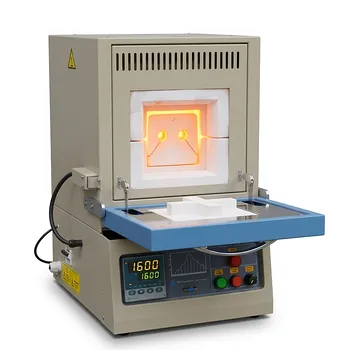
High Temperature Compact Muffle Furnace 1700 C with 30 Segment Programmable Controller and 1.7L Cubic Chamber
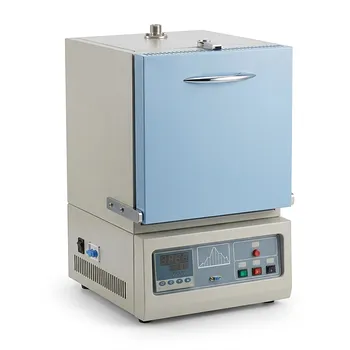
1750C Compact Muffle Furnace 1.7L Ultra High Temperature Laboratory Sintering System for Advanced Ceramics and Material Science Research
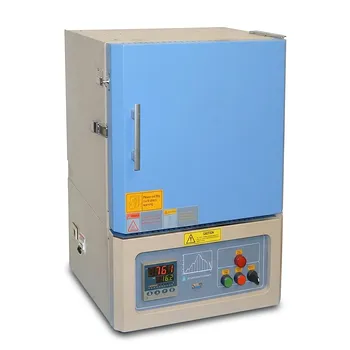
High Temperature 1700C Bench Top Muffle Furnace with Alumina Fiber Insulation and 3.6L Chamber Capacity for Precision Sintering and Heat Treatment
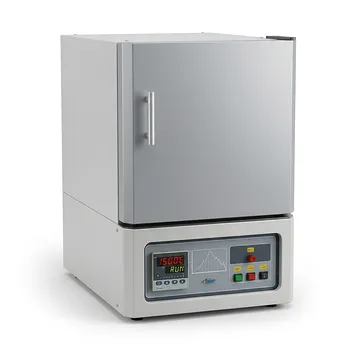
High Temperature 1500C Benchtop Muffle Furnace 3.6L Alumina Fiber Chamber Programmable Controller Sintering Annealing Carbonization Thermal Processing System
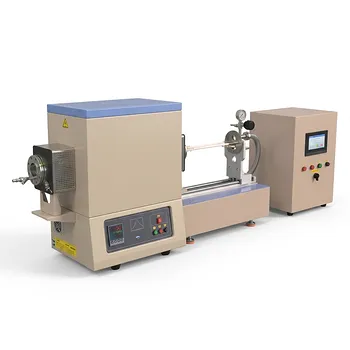
High Temperature Horizontal Electrical Assisted Sintering Furnace with 3KW Programmable Power Source for Advanced Ceramic Materials
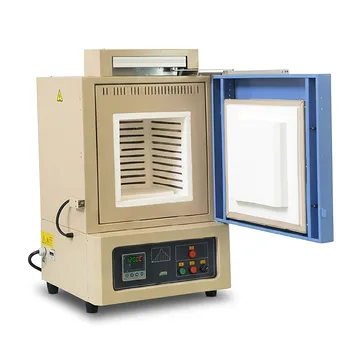
1200C High Temperature Muffle Furnace with Motorized Door and Automated PC Control for Industrial Sintering and Material Processing 27 Liter
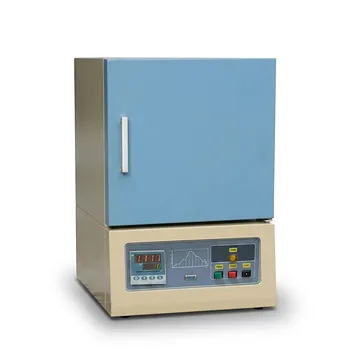
Ultra High Temperature Bench Top Muffle Furnace 1750C Sintering System with Kanthal Super Heating Elements and Precision Digital Control
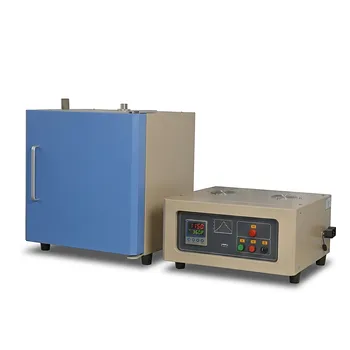
High Temperature Muffle Furnace with Alloy Chamber for Debinding and Sintering Applications
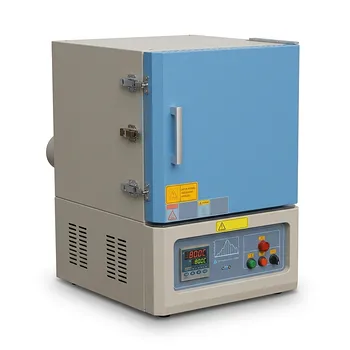
1800C Bench Top Muffle Furnace 18 Liters with Kanthal Super 1900 Heating Elements for High Purity Ceramic Sintering and Material Research
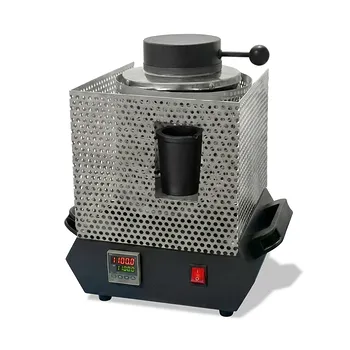
Compact Crucible Melting Furnace 1100C Programmable Temperature Controller Metal Sintering Equipment
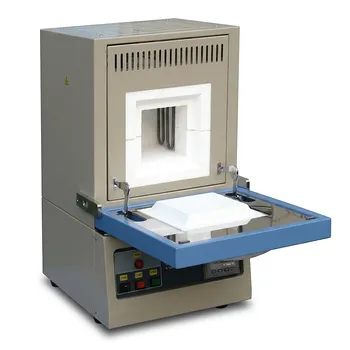
High Temperature 1800C Compact Muffle Furnace with Kanthal Super 1900 Heating Elements and 1.7L Alumina Chamber

High Temperature 1700C Vertical Tube Furnace for Powder Spherification and Material Sintering
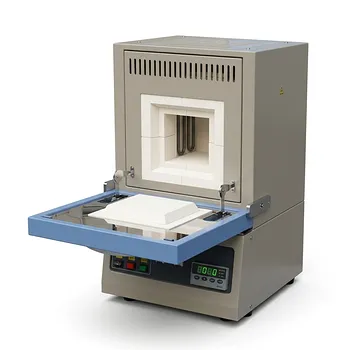
Five Sided Heating Muffle Furnace High Uniformity 1200C Lab Box Furnace 27L Alumina Fiber Chamber
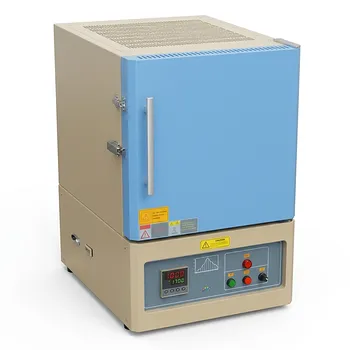
Large Bench Top 1700C High Temperature Muffle Furnace with 19L Chamber for Advanced Material Sintering and Annealing
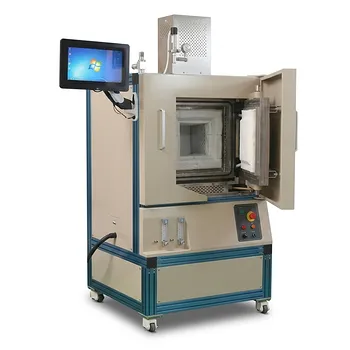
High Temperature Oxygen and Inert Atmosphere Controlled Furnace 8 Liter 1700C Sintering System for Advanced Materials RD
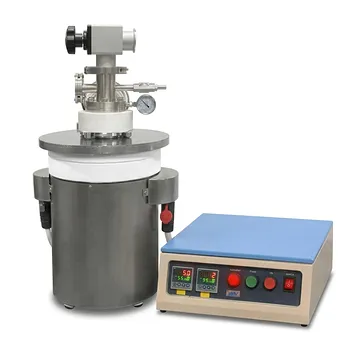
1100C High Temperature Vacuum Crucible Furnace with Quartz Chamber for Thermal Processing and Sintering
High Temperature Mini Induction Heating Furnace 1600C Laboratory Material Melting System
1650C High Temperature Atmosphere Controlled Box Furnace with 65L Chamber for Advanced Material Sintering and Industrial Heat Treatment
High Temperature Muffle Furnace with Dual Controllers and 36L Large Chamber 1700C Max