How do precision heating systems combined with thermocouple controls assist in the production of Biocoke? Enhance Fuel Quality
Updated 5 months ago
Precision heating and thermocouple controls are the dual pillars of Biocoke production, transforming raw biomass into high-density fuel by precisely managing the thermochemical behavior of lignin. By providing exact thermal energy during the pressing phase and utilizing real-time sensor feedback, these systems ensure the biomass reaches its optimal softening point without triggering excessive carbonization.
Core Takeaway: The integration of precision heating and thermocouple feedback allows manufacturers to harness lignin as a natural binder while preserving volatile content, resulting in a Biocoke product that balances high thermal stability with superior ignition performance.
The Role of Controlled Thermal Energy in Biomass Transformation
Activating Lignin as a Natural Binder
The primary objective of precision heating during the pressing process is to induce the softening of lignin, a complex organic polymer found in biomass. When heated to a specific temperature range, lignin transitions into a plasticized state, allowing it to flow and bind the fibers together without the need for synthetic additives.
Maintaining Structural Integrity During Pressing
By delivering uniform thermal energy, precision systems ensure that the entire mass of the Biocoke reached the required temperature simultaneously. This uniformity is critical for preventing internal stresses or fractures, ensuring the final fuel briquette is mechanically robust and dense enough for industrial use.
The Critical Function of Thermocouple Feedback
Enabling Closed-Loop Temperature Control
Thermocouples act as the "eyes" of the heating system, providing constant, accurate data on the internal temperature of the biomass. This data is fed into a closed-loop control system that adjusts heat output in real-time, compensating for variations in biomass moisture or ambient conditions to maintain a steady thermal profile.
Regulating the Maturation Stage
During the maturation stage, the precision provided by thermocouples is essential for preventing the material from crossing the threshold into excessive carbonization. By keeping the temperature within a narrow window, the system ensures the Biocoke remains chemically stable while retaining the "green" characteristics necessary for its specific fuel profile.
Understanding the Trade-offs and Risks
The Balance Between Density and Volatility
There is a fundamental trade-off between the duration of heat exposure and the retention of volatile content. While higher temperatures or longer exposure can increase the density and water resistance of the Biocoke, over-processing will drive off the volatile gases that are essential for easy ignition and sustained combustion.
Risks of Sensor Calibration Failure
Relying heavily on thermocouple data introduces a single point of failure: calibration drift. If a thermocouple provides inaccurate readings, the system may inadvertently under-heat the lignin (leading to a crumbly, low-quality product) or over-heat the biomass (leading to unintended carbonization and energy loss).
Optimizing Quality Through Thermal Management
Preserving Volatile Compounds for Performance
Precision control is the only way to maximize ignition performance by ensuring that volatile matter is trapped within the densified structure. These volatiles allow the Biocoke to catch fire more quickly than traditional coal or fully carbonized charcoal, making it a more versatile energy source.
Enhancing Long-Term Thermal Stability
A well-regulated heating process results in a product with high thermal stability, meaning it will not degrade or spontaneously combust during storage and transport. By hitting the exact maturation temperature, the system creates a chemically "finished" product that resists moisture reabsorption and microbial decay.
How to Apply This to Your Production Goals
If you are evaluating or implementing a Biocoke production line, consider your primary output requirements:
- If your primary focus is Maximum Ignition Speed: Prioritize a lower-temperature maturation profile monitored by high-sensitivity thermocouples to retain the highest possible percentage of volatile content.
- If your primary focus is Mechanical Durability and Transport: Increase the precision of the heating during the pressing stage to ensure full lignin plasticization, creating a harder, more weather-resistant fuel.
- If your primary focus is Energy Efficiency: Implement a high-speed closed-loop control system to minimize "thermal overshoot," reducing the total electricity or gas required to maintain maturation temperatures.
By mastering the intersection of heat application and sensory feedback, you ensure that biomass is not merely compressed, but chemically optimized for industrial energy demands.
Summary Table:
| System Component | Primary Function | Key Benefit for Biocoke |
|---|---|---|
| Precision Heating | Softens lignin (natural binder) | Ensures mechanical robustness and high density |
| Thermocouple Feedback | Real-time temperature monitoring | Enables closed-loop control to prevent over-carbonization |
| Thermal Uniformity | Consistent heat distribution | Eliminates internal stresses and structural fractures |
| Volatile Management | Regulates maturation stage | Preserves ignition performance and thermal stability |
Elevate Your Material Research with THERMUNITS
Precision is the difference between a failed experiment and a breakthrough in Biocoke production. THERMUNITS is a leading manufacturer of high-temperature laboratory equipment specifically designed for material science and industrial R&D. We provide the advanced thermal tools you need to master lignin plasticization and carbonization stages.
Our comprehensive range of thermal processing solutions includes:
- Furnaces: Muffle, Vacuum, Atmosphere, Tube, Rotary, and Hot Press furnaces.
- Advanced Systems: CVD/PECVD systems and Vacuum Induction Melting (VIM) furnaces.
- Specialized Equipment: Dental Furnaces, electric rotary kilns, and premium Thermal Elements.
Whether you are optimizing fuel density or enhancing ignition performance, THERMUNITS delivers the accuracy and reliability your lab demands.
Ready to refine your heat treatment process?
Contact our technical experts today to find the perfect solution for your R&D goals.
References
- Asri Gani, Yeggi Darnas. The Effect of Lignin and Cellulose on Combustion Characteristics of Biocoke. DOI: 10.37934/araset.52.2.99106
Mentioned Products
- 15KW 1700C Max Induction Heater 6 Inch Tube with Dose Feeding and Melt Stirring Function
- Induction Heating System with Temperature Control for High Temperature Vacuum Sintering and Melting
- 15KW Induction Heating System with 5 Inch Quartz Tube and 2200C Temperature Controller
- High Frequency Induction Heating System 7 KW Bench Top Heater with Automatic Timer Control and Dual Station Configuration
- High Frequency Desktop Induction Heater 15 KVA Induction Heating System with Automatic Timer Control for Material Research and Metal Melting
People Also Ask
- What is the primary role of vacuum in VIM for HEAs? Ensuring Purity and Compositional Precision
- Why is high-precision constant temperature heating equipment necessary for the synthesis of porous silicon? Ensure Pore Uniformity
- Why is high-precision heating necessary for cellulose-based carbon aerogel precursors? Ensure Structural Integrity
- Why is high-purity Argon required for melting High-Entropy Alloys (HEAs)? Ensure Precise Material Stoichiometry
- What are the advantages of FeCrAl heating coils in UHS? Simplify sintering and ensure high material purity.

Tech Team · ThermUnits
Last updated on Apr 14, 2026
Related Products
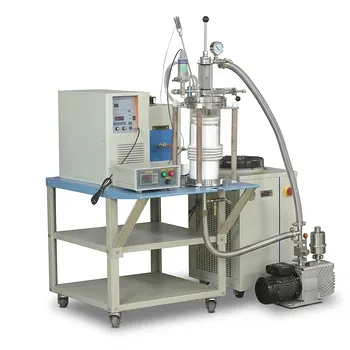
15KW 1700C Max Induction Heater 6 Inch Tube with Dose Feeding and Melt Stirring Function
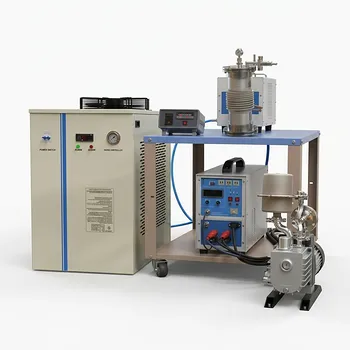
Induction Heating System with Temperature Control for High Temperature Vacuum Sintering and Melting
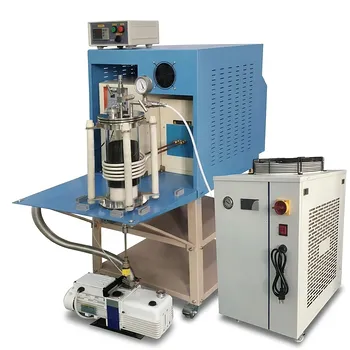
15KW Induction Heating System with 5 Inch Quartz Tube and 2200C Temperature Controller
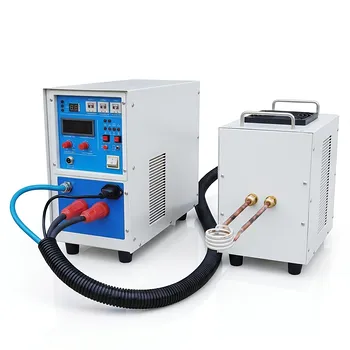
High Frequency Induction Heating System 7 KW Bench Top Heater with Automatic Timer Control and Dual Station Configuration
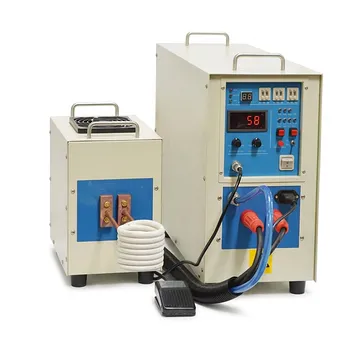
High Frequency Desktop Induction Heater 15 KVA Induction Heating System with Automatic Timer Control for Material Research and Metal Melting
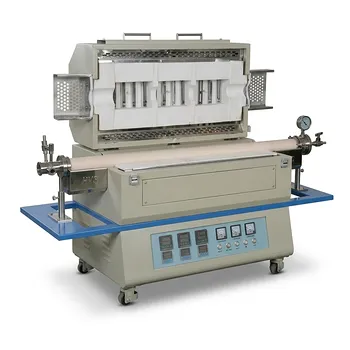
Three Temperature Zone Fast Heating Furnace 1500C Laboratory High Precision Thermal Processing System