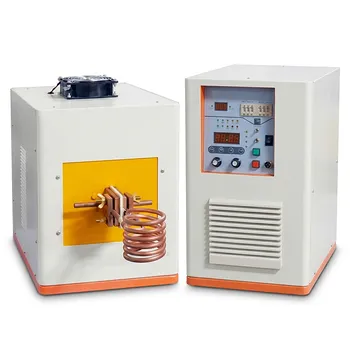
What is the primary role of vacuum in VIM for HEAs? Ensuring Purity and Compositional Precision
Updated 3 months ago
The primary role of the vacuum environment in Vacuum Induction Melting (VIM) is to provide a chemically inert atmosphere that prevents the oxidation of reactive metallic elements. In the context of High-Entropy Alloys (HEAs), this environment is critical for maintaining the precise chemical ratios of five or more elements while simultaneously purifying the melt. By eliminating atmospheric interference, VIM ensures the production of high-purity, single-phase solid solution ingots with minimal inclusions.
Core Takeaway: The vacuum environment serves a dual purpose: it acts as a protective barrier to prevent the loss of active elements through oxidation and functions as a refining agent by facilitating the removal of dissolved gases and volatile impurities.
Ensuring Compositional Precision in Complex Alloys
Preventing Oxidation of Active Elements
High-Entropy Alloys often incorporate highly reactive metals such as aluminum (Al) or titanium (Ti). In a standard atmosphere, these elements would rapidly oxidize at high temperatures, altering the alloy's chemistry and forming brittle oxides. The high-vacuum environment effectively inhibits this oxidative loss, ensuring that the final ingot matches the intended theoretical composition.
Maintaining Equiatomic Ratios
The defining characteristic of HEAs is their multi-element composition, often in near-equiatomic proportions. Because the vacuum prevents the selective loss of reactive components to the atmosphere, it allows for high compositional precision. This stability is essential for achieving the specific "entropy of mixing" required to form a stable, single-phase microstructure.
Purification and Refinement of the Melt
Removal of Dissolved Gases
The vacuum environment creates a pressure gradient that promotes the degassing of the liquid metal. It effectively removes dissolved gases such as oxygen, nitrogen, and hydrogen, which are known to cause porosity and embrittlement in cast alloys. Reducing these gases is a prerequisite for producing aerospace-grade or semiconductor-grade materials.
Volatilization of Impurities
Beyond gas removal, the vacuum facilitates the volatilization of harmful impurity elements with low vapor pressures. As these impurities reach the surface of the melt, the low-pressure environment encourages them to evaporate. This process significantly reduces non-metallic inclusions, leading to a cleaner, denser microstructural result.
Synergistic Homogenization with Electromagnetic Stirring
Promoting Deep Homogenization
While the vacuum protects the purity, the induction currents provide electromagnetic stirring within the crucible. This non-contact heating method ensures that the complex mixture of five or more elements achieves atomic-level uniform mixing. The lack of atmospheric resistance or slag formation allows the stirring action to be more effective.
Preventing Compositional Segregation
The combination of a vacuum and induction stirring prevents compositional segregation, where heavier elements might otherwise settle or lighter elements might float. This synergy is what allows for the production of consistent, high-performance special alloys with stable mechanical properties throughout the entire ingot.
Understanding the Trade-offs
Selective Evaporation of Desired Elements
A significant challenge in VIM is that the vacuum does not distinguish between "impurities" and "alloying elements" with high vapor pressures. Elements like manganese (Mn) or chromium (Cr) can unintentionally volatilize if the vacuum level is too high or the temperature is not strictly controlled. This requires precise management of the vacuum depth to balance purification with elemental retention.
Equipment and Operational Costs
Maintaining a high-vacuum environment requires specialized, airtight furnace chambers and powerful pumping systems. This increases the operational complexity and capital investment compared to traditional atmospheric induction melting. The process is typically reserved for high-value materials where purity and precision are non-negotiable.
Applying VIM to Your Material Goals
Recommendations for High-Entropy Alloy Production
- If your primary focus is elemental accuracy: Use a deep vacuum to prevent the oxidation of Al or Ti, but monitor the melt time closely to prevent the evaporation of volatile elements like manganese.
- If your primary focus is structural integrity: Prioritize the degassing phase of the vacuum process to eliminate hydrogen and nitrogen, which are the leading causes of internal cracks and voids.
- If your primary focus is large-scale production: Ensure the VIM system has robust electromagnetic stirring capabilities to manage the increased volume and maintain homogeneity across the larger ingot.
The vacuum environment is the foundational requirement for transforming a complex mixture of reactive elements into a high-purity, high-performance High-Entropy Alloy.
Summary Table:
| Key Role of Vacuum | Impact on High-Entropy Alloys (HEAs) |
|---|---|
| Oxidation Prevention | Protects reactive elements (Al, Ti) to maintain exact chemical ratios. |
| Melt Degassing | Removes dissolved O, N, and H to eliminate porosity and embrittlement. |
| Impurity Volatilization | Evaporates harmful low-vapor-pressure elements for higher metal purity. |
| Enhanced Homogeneity | Works with induction stirring to ensure uniform atomic-level mixing. |
Elevate Your Alloy Research with THERMUNITS Precision
Achieving the perfect equiatomic balance in High-Entropy Alloys requires uncompromising thermal control. THERMUNITS is a leading manufacturer of high-temperature laboratory equipment, providing the precision needed for advanced material science.
Whether you require Vacuum Induction Melting (VIM) furnaces for high-purity alloying, or specialized Muffle, Atmosphere, and Tube furnaces for precise heat treatment, our solutions are engineered for excellence. We help industrial R&D teams and researchers minimize inclusions and maximize compositional accuracy.
Ready to optimize your thermal processing? Contact our engineering team today to find the ideal furnace solution for your laboratory needs.
References
- Lingfeng Kuang, Xuezhang Xiao. Recent progress in high‐entropy nanocatalysts. DOI: 10.1002/cmt2.26
Mentioned Products
- 1900C Maximum High Temperature 7KW Vacuum Induction Melting System with 60mm Quartz Tube and Manual Temperature Control for Metallic Alloy Research
- High Temperature Induction Melting System with Integrated Ultra High Purity Glove Box for Metallic Alloy Processing
- High Pressure Induction Melting Casting System 1700C Max for Alloy Granulation and Infiltration Equipment
- High Throughput Induction Melting and Casting Furnace for Superalloy Research 1700C Atmosphere Controlled Multi Sample System
- High Vacuum Melting Casting Furnace with Mechanical Stirring and Secondary Charge for Metallic Alloy Research
People Also Ask
- What is the primary role of a Vacuum Induction Melting furnace in the smelting of Fe-Cr-N alloys? Ensuring High Purity
- How does a Vacuum Induction Melting furnace heat materials while preventing atmospheric contamination? Achieve High Purity
- What are the key structural components that make up a Vacuum Induction Melting (VIM) furnace system? Full Guide
- How does the skin effect influence VIM frequency selection? Optimize Heat Penetration & Stirring Efficiency
- What technical advantages does Vacuum Induction Melting offer regarding alloy homogeneity and purity? Enhance Performance

Tech Team · ThermUnits
Last updated on Jun 02, 2026
Related Products
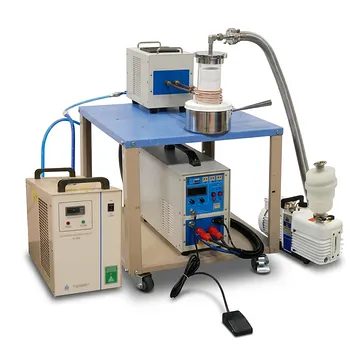
1900C Maximum High Temperature 7KW Vacuum Induction Melting System with 60mm Quartz Tube and Manual Temperature Control for Metallic Alloy Research
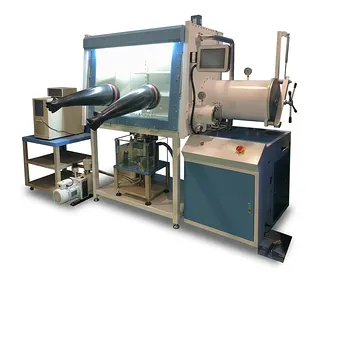
High Temperature Induction Melting System with Integrated Ultra High Purity Glove Box for Metallic Alloy Processing
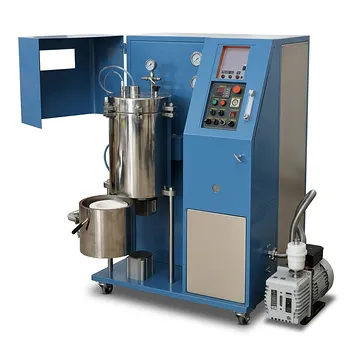
High Pressure Induction Melting Casting System 1700C Max for Alloy Granulation and Infiltration Equipment
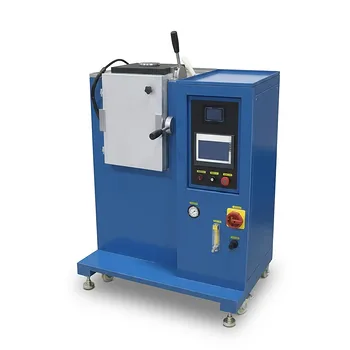
High Throughput Induction Melting and Casting Furnace for Superalloy Research 1700C Atmosphere Controlled Multi Sample System
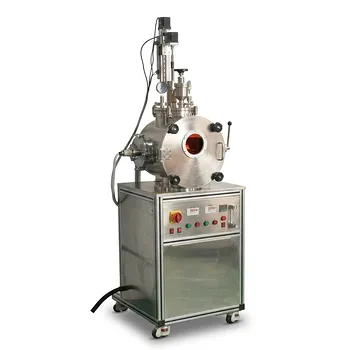
High Vacuum Melting Casting Furnace with Mechanical Stirring and Secondary Charge for Metallic Alloy Research
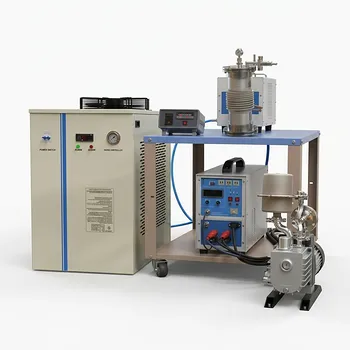
Induction Heating System with Temperature Control for High Temperature Vacuum Sintering and Melting
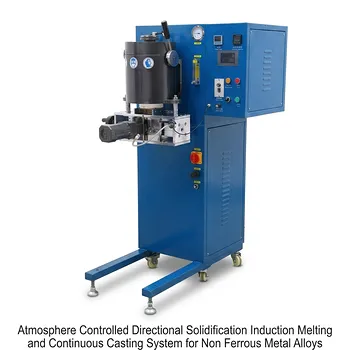
Atmosphere Controlled Directional Solidification Induction Melting and Continuous Casting System for Non Ferrous Metal Alloys
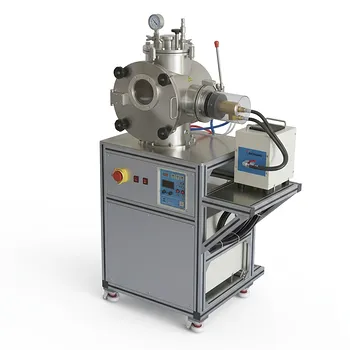
Induction Melting Casting Furnace 1750C Vacuum High Frequency Metal Processing Unit
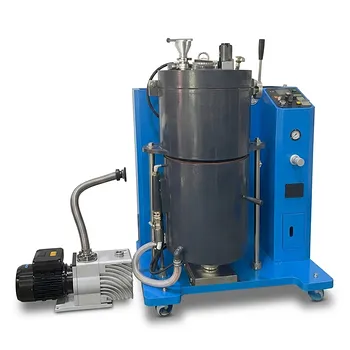
Atmosphere Controlled Induction Melting Casting System 1600C 10L Capacity
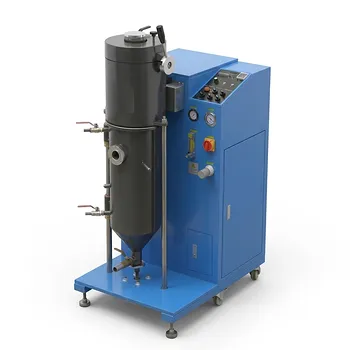
Atmosphere Controlled Induction Melting Granulating Casting Furnace 1500C 5kg Capacity
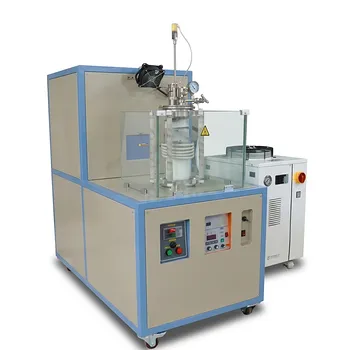
15KW Induction Melting System with Top Suction Casting for Thin Rod Production Up to 1200°C
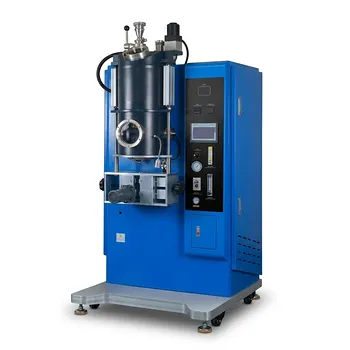
Atmosphere Controlled Continuous Casting Furnace with Secondary Charge Function for Induction Melting and Metal Alloy Wire Production
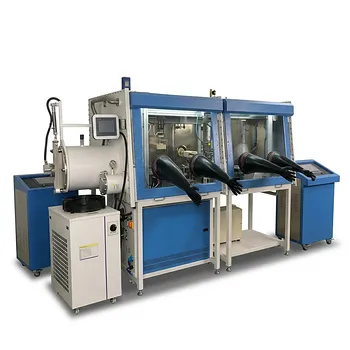
Automatic 10 Crucible Induction Melting and Casting System with Stirring Function and Glovebox Integration 2000C
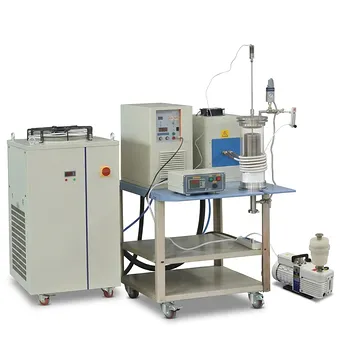
High Temperature Induction Melting System with Multi Cavity Crucible and 15KW Precision Digital Temperature Control
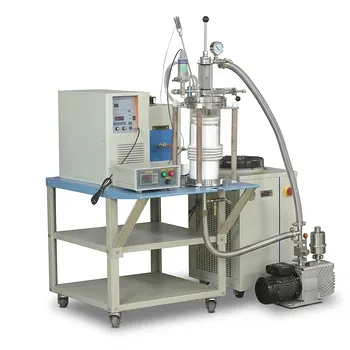
15KW 1700C Max Induction Heater 6 Inch Tube with Dose Feeding and Melt Stirring Function
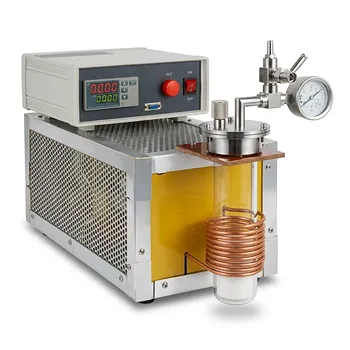
High Temperature Mini Induction Heating Furnace 1600C Laboratory Material Melting System
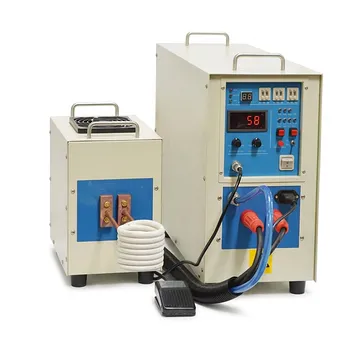
High Frequency Desktop Induction Heater 15 KVA Induction Heating System with Automatic Timer Control for Material Research and Metal Melting
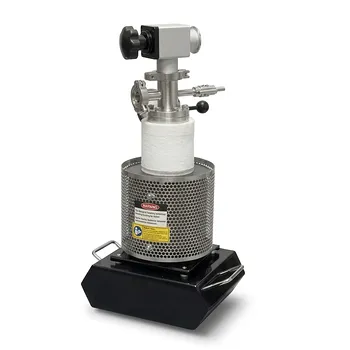
High Temperature 1100C Compact Top Loading Vertical Vacuum Tube Furnace for High Vacuum Noble Metal Melting and Material Research
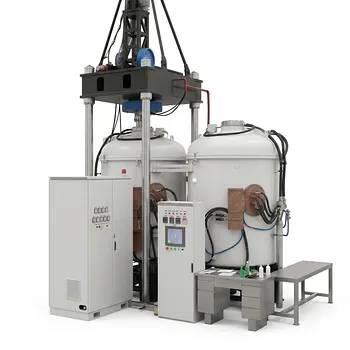
High Pressure 600T Vacuum Induction Hot Press Furnace for Advanced Material Heat Treatment and Sintering