How does a high-precision thermocouple ensure process repeatability in the preparation of titanium dioxide thin films? Master TiO2
Updated 3 months ago
Precise thermal management is the cornerstone of reproducible thin-film synthesis. High-precision thermocouples enable this by monitoring spatial temperature distribution in real-time, locking the deposition zone into a specific process window. This feedback loop prevents uncontrolled transitions between reaction regimes, ensuring that the structural and chemical properties of the titanium dioxide (TiO2) remain consistent across every production run.
Core Takeaway: High-precision thermocouples act as the critical sensory link in a feedback loop that stabilizes the thermal environment within a furnace. By maintaining rigorous control over reaction kinetics and phase transitions, they eliminate batch-to-batch variability in TiO2 film performance.
Stabilizing the Reaction Environment
Preventing Regime Shifting
The film-forming quality of amorphous TiO2 is exceptionally sensitive to temperature fluctuations. A high-precision thermocouple ensures the furnace does not drift between surface-reaction-controlled and gas-phase-reaction-controlled regimes.
By keeping the temperature within a narrow margin, the system ensures that the rate-limiting step of the deposition remains constant. This consistency is what allows different production batches to exhibit the same thickness and density.
Managing Precursor Kinetics
In Chemical Vapor Deposition (CVD) environments, temperature dictates the decomposition rate and diffusion distance of gas-phase precursors. Precise feedback allows for the regulation of the thermal field, ensuring precursors react exactly where and when they are intended to on the substrate.
This level of control is necessary for atomic-level growth, which is the basis for creating continuous, high-quality structures. Without accurate real-time data, nucleation growth kinetics become unpredictable.
Phase Transition and Microstructure Control
Driving the Amorphous-to-Crystalline Transition
TiO2 can exist in several phases, primarily anatase and rutile, each with distinct physical properties. High-precision thermocouples allow for the "tuning" of these phases by monitoring the thermal environment during Rapid Thermal Annealing (RTA).
The heating rate, which can reach up to 1000 °C/min, directly influences oxygen diffusion kinetics. Accurate monitoring ensures that the final ratio of rutile to anatase remains identical from one sample to the next.
Ensuring Batch-to-Batch Repeatability
Advanced laboratory equipment utilizes high-quality heating elements paired with PID temperature control algorithms. The thermocouple provides the raw data these algorithms need to minimize temperature oscillations.
By maintaining high temperature uniformity and stability, the system ensures that the microstructure of the TiO2 films remains consistent. This is vital for meeting the rigorous standards required for material science research and industrial mass production.
Understanding the Trade-offs
Placement vs. Accuracy
The primary challenge with thermocouples is that they measure temperature at a specific point, which may not reflect the exact temperature of the substrate surface. If the sensor is placed too far from the deposition zone, a "thermal lag" occurs, leading to delayed feedback.
Calibration and Degradation
Thermocouples can drift over time due to oxidation or contamination within the furnace environment. Even a high-precision sensor requires regular calibration to ensure that "500 °C" in month one is the same as "500 °C" in month six.
Uniformity vs. Precision
A single high-precision thermocouple can provide a very accurate reading of one spot, but it cannot guarantee spatial uniformity across a large substrate. Achieving true repeatability across large areas often requires multi-zone temperature control with multiple sensors.
How to Apply This to Your Project
Making the Right Choice for Your Goal
To achieve the best results in TiO2 thin film preparation, your hardware strategy must align with your specific performance targets.
- If your primary focus is batch-to-batch consistency: Invest in multi-zone temperature-controlled furnaces with integrated PID algorithms to minimize fluctuations.
- If your primary focus is specific phase ratios (Anatase/Rutile): Prioritize thermocouples with high sampling rates and fast response times to accurately monitor Rapid Thermal Annealing cycles.
- If your primary focus is large-area uniformity: Use a system with multiple high-precision thermocouples distributed across the deposition zone to map and correct the thermal field.
By centering your process on high-precision thermal feedback, you transform a sensitive chemical reaction into a predictable, industrial-grade manufacturing process.
Summary Table:
| Key Feature | Functional Impact | Benefit to TiO2 Process |
|---|---|---|
| Regime Stabilization | Prevents shifts between surface and gas-phase reactions | Consistent film thickness and density |
| Kinetic Regulation | Manages precursor decomposition and diffusion rates | Precise atomic-level structural growth |
| Phase Control | Monitors RTA heating rates (up to 1000°C/min) | Identical Anatase-to-Rutile ratios |
| PID Feedback Loop | Minimizes temperature oscillations and thermal drift | Reliable batch-to-batch repeatability |
Elevate Your Thin-Film Synthesis with THERMUNITS
Precision thermal management is the difference between a successful experiment and a failed batch. THERMUNITS is a leading manufacturer of high-temperature laboratory equipment for material science and industrial R&D. We provide the tools you need to achieve flawless process repeatability.
Our comprehensive range of thermal processing solutions includes:
- Advanced Furnaces: Muffle, Vacuum, Atmosphere, Tube, Rotary, and Hot Press furnaces.
- Deposition Systems: High-performance CVD and PECVD systems for thin-film preparation.
- Specialized R&D Tools: Dental Furnaces, vacuum induction melting (VIM) furnaces, and electric rotary kilns.
- Components: High-quality Thermal Elements and precision sensors for custom setups.
Ready to achieve industrial-grade consistency in your lab? Contact THERMUNITS Today to find the perfect thermal solution for your material science applications.
References
- Abdul Kuddus, Hajime Shirai. Spatial and Size Distributions of Ti(C<sub>5</sub>H<sub>7</sub>O<sub>2</sub>)<sub>2</sub>[(CH<sub>3</sub>)<sub>2</sub>CHO]<sub>2</sub> Mist Particles in a Tubular Furnace for Conformal and Uniform Deposition of Amorphous TiO<sub>2</sub> Thin Films. DOI: 10.1002/pssa.202400383
Mentioned Products
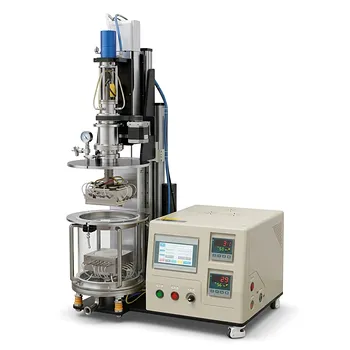
- High Temperature 800C Rapid Thermal Processing Furnace with Rotating Sample Holder for Close Spaced Sublimation and Thin Film Solar Cell Research
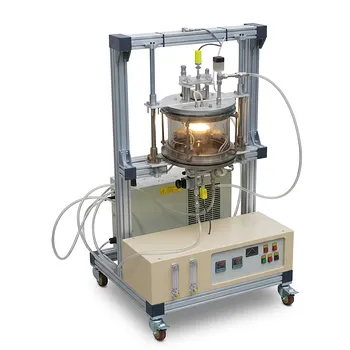
- Two Zones CSS Furnace for Rapid Thermal Processing Thin Film Coating 3 Inch Diameter 650C
- 950C Rapid Thermal Processing Furnace for 12 Inch Wafer CSS Coating with Rotating Substrate Holder
People Also Ask
- What role does a SiC-coated graphite susceptor play in H2Se selenization? Boost RTP Thermal Uniformity & Film Purity.
- What is the purpose of coating ceramic sheets with platinum paste? Achieve Stable High-Temp Ohmic Contacts
- What are the functional advantages of an RTP system for surface deposition? Enhance Heterojunction Interface Integrity
- What are the advantages of RTPR for Pd1/PU catalyst synthesis? Achieve superior single-atom dispersion and stability.
- How does a high-temperature tube furnace optimize palladium thin film pre-annealing? Improve Grain Growth & Stress Relief

Tech Team · ThermUnits
Last updated on Jun 02, 2026
Related Products
High Temperature 800C Rapid Thermal Processing Furnace with Rotating Sample Holder for Close Spaced Sublimation and Thin Film Solar Cell Research
Two Zones CSS Furnace for Rapid Thermal Processing Thin Film Coating 3 Inch Diameter 650C