How does a high-temperature tube furnace optimize palladium thin film pre-annealing? Improve Grain Growth & Stress Relief
Updated 3 months ago
High-temperature tube furnaces optimize palladium (Pd) thin films by providing the thermal energy and controlled environment necessary to reorganize the metal’s internal structure. Specifically, by heating the films to 600°C for one hour under a protective helium atmosphere, the furnace releases residual stresses from the sputtering process and promotes grain growth. This structural refinement reduces grain boundary density, which significantly improves the film's ability to deform under strain and prepares the surface for high-quality graphene nucleation.
Core Takeaway: A high-temperature tube furnace transforms unstable, sputtered palladium layers into highly crystalline, stress-free thin films. This optimization is essential for enhancing mechanical durability and ensuring the surface is chemically and structurally prepared for downstream applications like graphene growth.
Structural Transformation through Thermal Energy
Relaxation of Residual Sputtering Stresses
The process of depositing thin films via sputtering often introduces significant internal tension within the metal lattice. The high-temperature environment provides atoms with sufficient energy for thermal diffusion, allowing them to migrate into more stable positions and eliminate these internal stresses.
Promotion of Metal Grain Growth
At 600°C, palladium atoms rearrange to form larger, more defined crystal grains. This process, known as grain growth, reduces the overall volume of grain boundaries within the film, leading to a more continuous and uniform metallic structure.
Reduction of Grain Boundary Density
By minimizing the number of boundaries between grains, the furnace enhances the deformation capacity of the palladium layer. This is critical for applications where the thin film must withstand large mechanical strains without cracking or delaminating.
Precision Environmental Control
The Necessity of a Helium Atmosphere
The use of a helium protective atmosphere within the tube furnace is vital to prevent oxidation of the palladium during the heating cycle. This inert environment ensures that the thermal energy focuses purely on structural reorganization rather than unwanted chemical reactions.
Maintaining Surface Integrity for Graphene Nucleation
The combination of specific temperature and atmosphere creates an ideal surface topography. This pristine, highly crystalline surface acts as a template, facilitating the uniform nucleation and growth of high-quality, large-area graphene in subsequent processing steps.
Stable Thermal Distribution
High-temperature tube furnaces are designed to maintain a uniform temperature profile throughout the chamber. This stability ensures that the entire surface of the palladium film undergoes identical structural changes, preventing localized defects or inconsistent performance across the material.
Understanding the Trade-offs
The Risk of Over-Annealing
While heat promotes grain growth, excessive temperatures or prolonged exposure can lead to coarsening. If the temperature significantly exceeds the optimal 600°C threshold, the grains may become too large, potentially destroying the structural integrity or causing morphological changes that hinder performance.
Temperature Sensitivity and Interface Evolution
The evolution of thin-film interfaces is extremely sensitive to thermal precision. Inadequate heat will fail to trigger the necessary lattice rearrangement, while even minor fluctuations can result in insufficient stress relief or the formation of undesired crystal phases.
Balancing Time and Energy
Achieving the "ideal" film requires a precise balance between annealing duration and temperature. A one-hour cycle at 600°C is the standard for palladium, but deviations from this can result in a film that is either too brittle (under-processed) or lacks the required surface energy for graphene growth (over-processed).
How to Apply This to Your Project
When utilizing a high-temperature tube furnace for thin-film optimization, your specific goals will dictate your operational parameters:
- If your primary focus is mechanical flexibility: Prioritize the 600°C/1-hour cycle to maximize grain growth and minimize grain boundary density, which enhances the film's ability to handle large strains.
- If your primary focus is subsequent graphene growth: Ensure the helium atmosphere is ultra-pure to prevent even trace oxidation, as surface contaminants will inhibit uniform nucleation.
- If your primary focus is electrical stability: Monitor the furnace's thermal ramp-up and cool-down rates to avoid introducing new thermal stresses during the cooling phase.
The high-temperature tube furnace remains the definitive tool for converting raw sputtered layers into high-performance, functionally optimized thin films.
Summary Table:
| Optimization Factor | Process Mechanism | Impact on Palladium (Pd) Film |
|---|---|---|
| 600°C Thermal Energy | Thermal Diffusion | Releases residual sputtering stresses and promotes lattice rearrangement |
| Helium Atmosphere | Inert Environment | Prevents oxidation and ensures pristine surface integrity for nucleation |
| Controlled Heating | Grain Growth | Reduces grain boundary density to enhance mechanical deformation capacity |
| Thermal Stability | Uniform Distribution | Prevents localized defects and ensures consistent performance across the film |
Optimize Your Material Research with THERMUNITS
Precision thermal processing is the key to unlocking the full potential of your thin films. THERMUNITS is a leading manufacturer of high-temperature laboratory equipment for material science and industrial R&D. Whether you are optimizing palladium layers or developing advanced graphene applications, our comprehensive range of solutions—including Tube, Vacuum, Atmosphere, and CVD/PECVD systems—delivers the thermal precision your project demands.
From Muffle and Rotary furnaces to Vacuum Induction Melting (VIM) and Hot Press systems, we provide the tools to ensure your materials achieve superior structural and mechanical performance.
Ready to enhance your lab's capabilities? Contact us today to discuss your heat treatment requirements!
References
- Kaihao Zhang, Sameh Tawfick. Ultrathin damage-tolerant flexible metal interconnects reinforced by in-situ graphene synthesis. DOI: 10.1038/s41528-024-00300-8
Mentioned Products
- High Temperature 800C Rapid Thermal Processing Furnace with Rotating Sample Holder for Close Spaced Sublimation and Thin Film Solar Cell Research
- High Temperature 1700C 4 Channel Tube Furnace 1 Inch Alumina Tube for Hi-Throughput Annealing
- 1200C High Temperature 5 Inch Sliding Tube Furnace for Rapid Thermal Processing RTP and Wafer Annealing
- High Temperature 1800C Atmosphere Tube Furnace for CVD Research and Vacuum Sintering Precision Heat Treatment
- 950C Rapid Thermal Processing Furnace for 12 Inch Wafer CSS Coating with Rotating Substrate Holder
People Also Ask
- What role does a SiC-coated graphite susceptor play in H2Se selenization? Boost RTP Thermal Uniformity & Film Purity.
- What is the purpose of coating ceramic sheets with platinum paste? Achieve Stable High-Temp Ohmic Contacts
- What are the functional advantages of an RTP system for surface deposition? Enhance Heterojunction Interface Integrity
- What are the advantages of RTPR for Pd1/PU catalyst synthesis? Achieve superior single-atom dispersion and stability.
- Why is post-annealing in a high-temperature tube furnace required for LLTaO? Unlock High Perovskite Phase Purity

Tech Team · ThermUnits
Last updated on Jun 03, 2026
Related Products
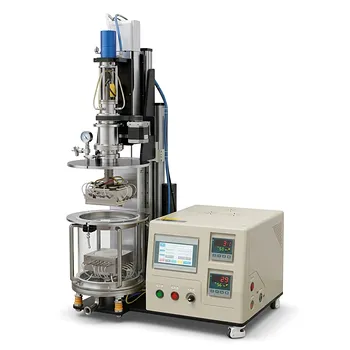
High Temperature 800C Rapid Thermal Processing Furnace with Rotating Sample Holder for Close Spaced Sublimation and Thin Film Solar Cell Research
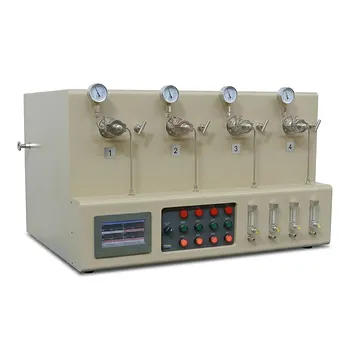
High Temperature 1700C 4 Channel Tube Furnace 1 Inch Alumina Tube for Hi-Throughput Annealing
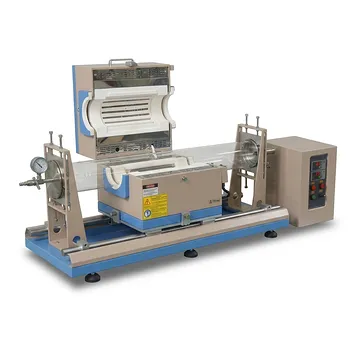
1200C High Temperature 5 Inch Sliding Tube Furnace for Rapid Thermal Processing RTP and Wafer Annealing
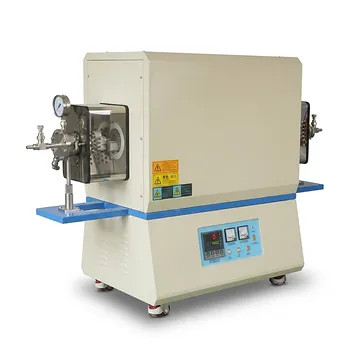
High Temperature 1800C Atmosphere Tube Furnace for CVD Research and Vacuum Sintering Precision Heat Treatment
950C Rapid Thermal Processing Furnace for 12 Inch Wafer CSS Coating with Rotating Substrate Holder
1200C High Throughput Multi Channel Tube Furnace with 50mm Quartz Tubes for Annealing and Material Phase Diagram Research
Large Bench Top 1700C High Temperature Muffle Furnace with 19L Chamber for Advanced Material Sintering and Annealing

High Temperature Tube Furnace 1500C with Sliding Flanges and 50mm OD for Rapid Thermal Processing Fast Heating and Cooling
High Temperature 1500C Benchtop Muffle Furnace 3.6L Alumina Fiber Chamber Programmable Controller Sintering Annealing Carbonization Thermal Processing System

Compact High Temperature 1600C Tube Furnace with 50mm Alumina Tube and Vacuum Flanges for Material Sintering
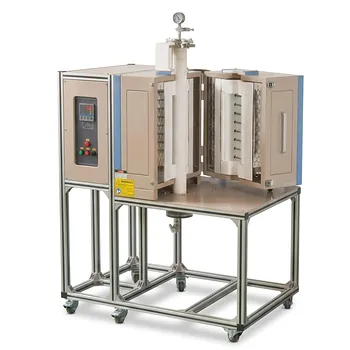
High Temperature 1700C Vertical Split Tube Furnace for Material Quenching and Single Crystal Growth

High Temperature 1700C Benchtop Tube Furnace with 5 Inch Heating Zone High Purity Alumina Tube and Vacuum Sealing Flanges

High Temperature 1700C Tube Furnace with High Vacuum Turbomolecular Pump System and Multi Channel Mass Flow Controller Gas Mixer

1750°C High Temperature Benchtop Vacuum Atmosphere Tube Furnace with Kanthal Super 1800 Heating Elements and 60mm Alumina Processing Tube
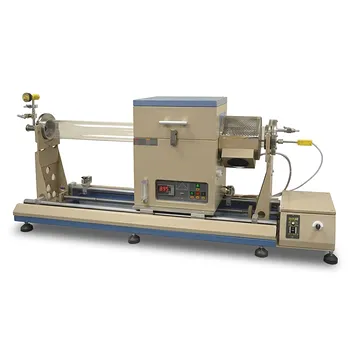
900 ºC Max Sliding RTP Tube Furnace with Rapid IR Heating and 4 Inch OD Quartz Tube
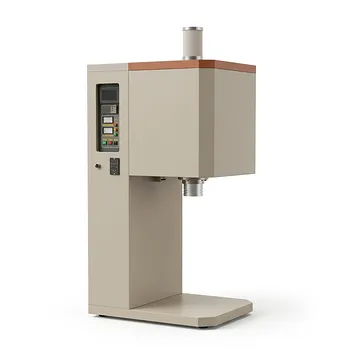
Vertical Openable Tube Furnace 0-1700c High Temperature Laboratory System for CVD and Vacuum Heat Treatment
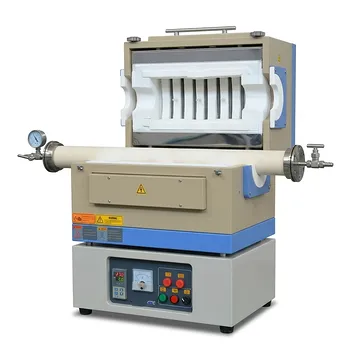
High Temperature 1600C Split Tube Furnace Vacuum Flanges Valves Optional 60mm 80mm Alumina Tube
High Temperature Dual Zone Rotating Tube Furnace 1500C Silicon Carbide Heating for Advanced Material Synthesis
1200C Max Three Zone Tube Furnace 6 Inch OD Max with Tube and Flange
