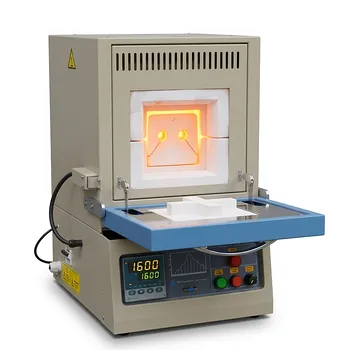
What is the purpose of coating ceramic sheets with platinum paste? Achieve Stable High-Temp Ohmic Contacts
Updated 3 months ago
Coating ceramic sheets with platinum paste followed by a 1200°C annealing treatment is essential for creating a stable, high-temperature ohmic contact. This specific process ensures that thermistor electrodes maintain electrical and chemical stability across extreme temperature ranges, specifically between 400°C and 1200°C. By bonding the platinum particles to the ceramic surface at high heat, the system prevents contact resistance drift caused by oxidation or material melting.
This procedure transforms a simple coating into a robust electrode interface capable of withstanding extreme thermal environments. It leverages platinum's antioxidant properties and high-temperature diffusion to ensure the sensor provides accurate, drift-free readings.
Establishing High-Temperature Electrical Stability
The Role of Platinum as a Conductive Medium
Platinum is selected for this application primarily due to its exceptional antioxidant properties and high melting point. Unlike base metals, platinum does not form non-conductive oxide layers when exposed to high heat, which is critical for maintaining a low-resistance path.
Maintaining Performance Across Wide Ranges
The combination of material choice and thermal treatment ensures the electrodes remain functional from 400°C to 1200°C. This stability is vital for thermistors used in industrial or aerospace applications where temperature fluctuations are radical and frequent.
Preventing Contact Resistance Drift
Without this specific treatment, the interface between the electrode and the ceramic could degrade, leading to resistance drift. The annealing process "locks" the electrical characteristics of the contact, ensuring that the sensor's output remains consistent over its operational lifespan.
The Mechanics of 1200°C Annealing
Formation of the Ohmic Contact Interface
The 1200°C annealing treatment promotes a stable ohmic contact between the platinum particles and the ceramic surface. This temperature provides enough energy for atoms to rearrange and form a strong, low-resistance physical and chemical bond.
Lattice Strain and Volume Shrinkage
High-temperature treatment helps pre-release internal lattice strain within the ceramic structure. By initiating these reactions during the annealing phase, the final product experiences a lower volume shrinkage rate during subsequent sintering stages, leading to higher material density.
Crystal Nucleus Formation
The heat facilitates a solid-state reaction and initiates crystal nucleus formation through thermal diffusion. This results in a purer phase structure, which is particularly important when working with complex materials like high-entropy pyrochlore ceramics.
Understanding the Trade-offs
Material Cost vs. Performance
The use of platinum paste significantly increases the manufacturing cost compared to silver or copper-based alternatives. However, for applications exceeding 400°C, cheaper metals would oxidize or melt, making platinum a technical necessity despite the price.
Precision in Thermal Processing
The 1200°C threshold is critical; insufficient heating will fail to form a true ohmic contact, while excessive heat could lead to unwanted grain growth or substrate deformation. Strict temperature control is required to balance the bond formation with the structural integrity of the ceramic sheet.
Complexity of the Interface
While the annealing creates a strong bond, the mismatch in thermal expansion coefficients between the metal and the ceramic can still introduce stress. The 1200°C treatment helps mitigate this by pre-conditioning the materials, but it does not entirely eliminate the need for careful material matching.
How to Apply This to Your Project
This process is the industry standard for high-reliability thermal sensing in extreme environments.
- If your primary focus is long-term sensor accuracy: Ensure the 1200°C annealing duration is sufficient to fully develop the ohmic contact, as this prevents measurement drift over time.
- If your primary focus is structural integrity: Use the high-temperature treatment to pre-release lattice strain and minimize shrinkage, which prevents cracking in the final ceramic product.
- If your primary focus is cost-efficiency: Evaluate if your operating environment truly exceeds 400°C; if it does not, lower-cost conductive pastes and lower annealing temperatures may be viable.
By masterfully controlling the interface between platinum and ceramic, you ensure a sensor that is both physically resilient and electrically precise under the harshest conditions.
Summary Table:
| Process/Material | Key Function | Benefit to Ceramic Sensors |
|---|---|---|
| Platinum Paste | Oxidation-resistant medium | Maintains low-resistance path up to 1200°C |
| 1200°C Annealing | Ohmic contact formation | Prevents electrical resistance drift over time |
| Thermal Diffusion | Crystal nucleus formation | Ensures a purer material phase structure |
| Lattice Strain Release | Internal energy reduction | Lowers volume shrinkage and increases density |
Elevate Your Material Research with THERMUNITS Precision Heating
Achieving the perfect 1200°C annealing environment requires uncompromising temperature control and reliability. THERMUNITS is a leading manufacturer of high-temperature laboratory equipment dedicated to material science and industrial R&D.
We offer a comprehensive range of thermal processing solutions tailored for creating stable electrode interfaces and advanced ceramics, including:
- High-Precision Muffle & Atmosphere Furnaces for stable annealing.
- Vacuum, Tube, and Rotary Furnaces for diverse heat treatment needs.
- Advanced CVD/PECVD & Hot Press Systems for complex material synthesis.
- Specialized Equipment: Dental Furnaces, VIM Furnaces, and high-quality Thermal Elements.
Whether you are developing high-temperature thermistors or exploring high-entropy ceramics, our equipment provides the thermal accuracy your project demands.
Ready to optimize your heat treatment process?
Contact our technical experts today to find the perfect furnace solution for your laboratory.
References
- Yi‐An Chen, Bo Gao. High-Entropy Thermistor Ceramics (La1/3Nd1/3M1/3)2(Zr1/2Sn1/2)2O7 (M = Sm, Eu, Gd, or Dy) with High Sensitivity for High-Temperature Measurements. DOI: 10.3390/s24237523
Mentioned Products
- High Temperature 1000C Vacuum Furnace with 8 Inch ID Chamber for Material Sintering and Research Annealing
- Large Bench Top 1700C High Temperature Muffle Furnace with 19L Chamber for Advanced Material Sintering and Annealing
- High Temperature 1500C Benchtop Muffle Furnace 3.6L Alumina Fiber Chamber Programmable Controller Sintering Annealing Carbonization Thermal Processing System
- High Temperature Cold Wall Vacuum Furnace for Advanced Material Sintering and Annealing 1600C Heating Area 200x200x300mm
- High Temperature 800C Rapid Thermal Processing Furnace with Rotating Sample Holder for Close Spaced Sublimation and Thin Film Solar Cell Research
People Also Ask
- How does the temperature control precision of a high-temperature sintering furnace affect Na1+xLa1-xZr2O6-δ ceramics?
- How does a high-temperature sintering furnace environment enhance NdFeB magnets? Achieve 98%+ density with precision.
- What role does a high-temperature annealing furnace play in forming ordered Pt3(CoNi) intermetallic catalysts?
- What is the function of high-vacuum furnaces in (Mo2/3V1/3)n+1AlCn MAX phase synthesis? Ensure Purity & Diffusion.
- How does a vacuum or atmosphere sintering furnace contribute to the congener-welding process of carbon nitride membranes?

Tech Team · ThermUnits
Last updated on Jun 02, 2026
Related Products
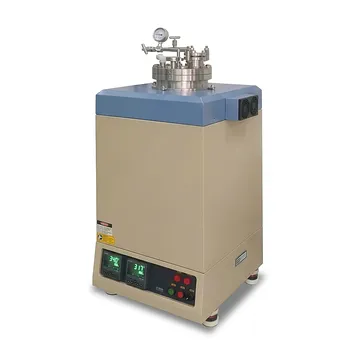
High Temperature 1000C Vacuum Furnace with 8 Inch ID Chamber for Material Sintering and Research Annealing
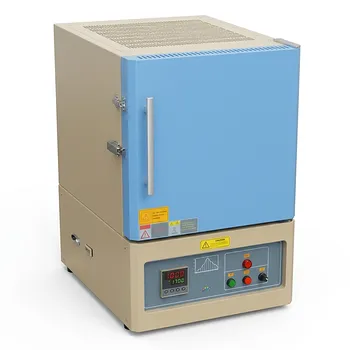
Large Bench Top 1700C High Temperature Muffle Furnace with 19L Chamber for Advanced Material Sintering and Annealing
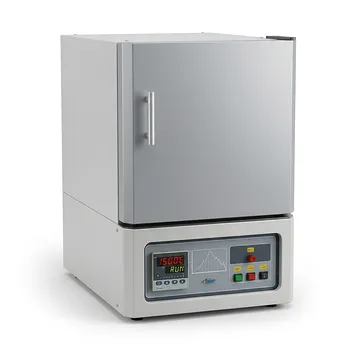
High Temperature 1500C Benchtop Muffle Furnace 3.6L Alumina Fiber Chamber Programmable Controller Sintering Annealing Carbonization Thermal Processing System
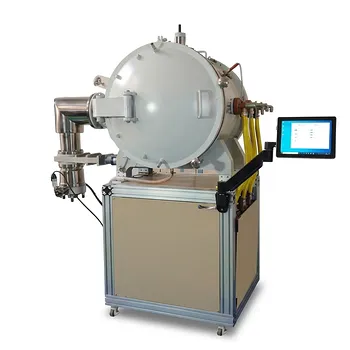
High Temperature Cold Wall Vacuum Furnace for Advanced Material Sintering and Annealing 1600C Heating Area 200x200x300mm
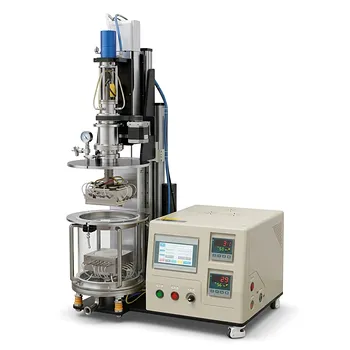
High Temperature 800C Rapid Thermal Processing Furnace with Rotating Sample Holder for Close Spaced Sublimation and Thin Film Solar Cell Research
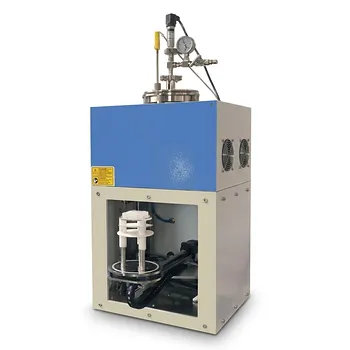
Rapid Thermal Processing Atmosphere Controlled Bottom Loading Furnace 1100C with 50C Per Second Heating Rate for Wafer Annealing
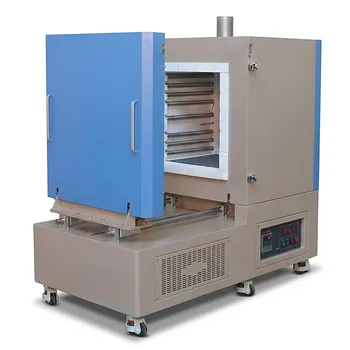
1200C Five Side Heating Muffle Furnace with Sliding Door 125L Volume High Temperature Heat Treatment System for Large Scale Sintering and Annealing
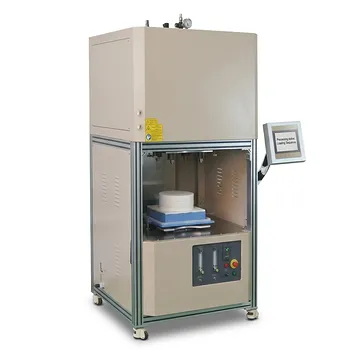
High Temperature Vertical Atmosphere Controlled Furnace with Automatic Bottom Loading and 1700°C Capacity for Advanced Material Research
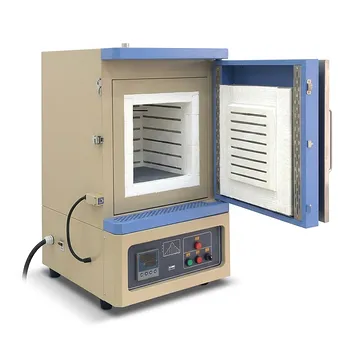
Five Side Heating Muffle Furnace High Purity Alumina Fiber 27L Chamber 1200C High Temperature Thermal Processing System for Sintering Annealing and Materials Research
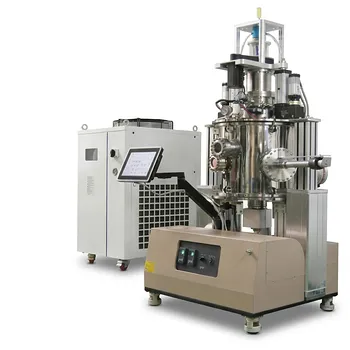
950C Rapid Thermal Processing Furnace for 12 Inch Wafer CSS Coating with Rotating Substrate Holder
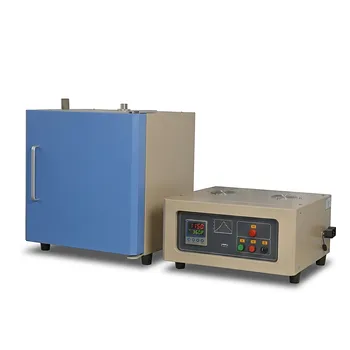
High Temperature Muffle Furnace with Alloy Chamber for Debinding and Sintering Applications
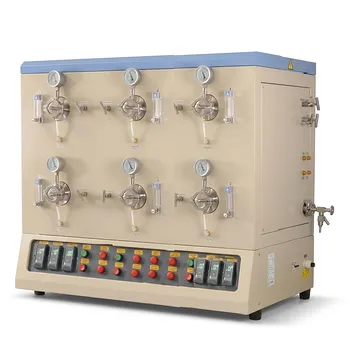
1200C High Throughput Multi Channel Tube Furnace with 50mm Quartz Tubes for Annealing and Material Phase Diagram Research
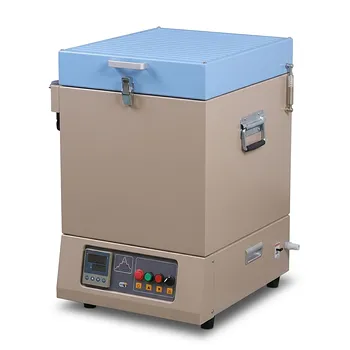
High Temperature Vertical Crucible Furnace with 22L Heating Chamber and 1200C Maximum Temperature
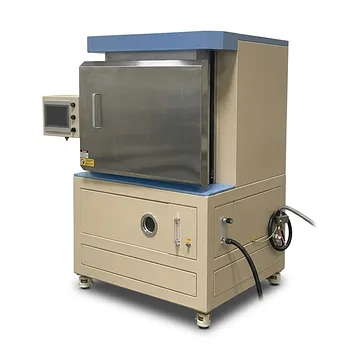
1650C High Temperature Atmosphere Controlled Box Furnace with 65L Chamber for Advanced Material Sintering and Industrial Heat Treatment

High Temperature Tube Furnace 1500C with Sliding Flanges and 50mm OD for Rapid Thermal Processing Fast Heating and Cooling
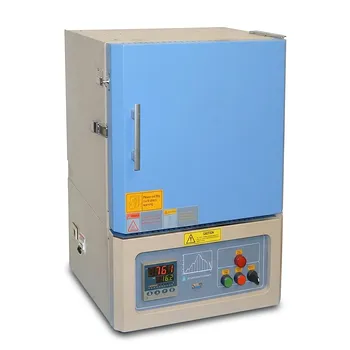
High Temperature 1700C Bench Top Muffle Furnace with Alumina Fiber Insulation and 3.6L Chamber Capacity for Precision Sintering and Heat Treatment

High Temperature 1700C Tube Furnace with High Vacuum Turbomolecular Pump System and Multi Channel Mass Flow Controller Gas Mixer

High Temperature 1700C Benchtop Tube Furnace with 5 Inch Heating Zone High Purity Alumina Tube and Vacuum Sealing Flanges
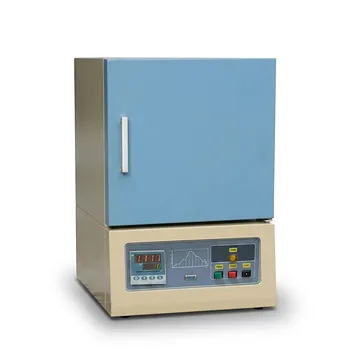
Ultra High Temperature Bench Top Muffle Furnace 1750C Sintering System with Kanthal Super Heating Elements and Precision Digital Control