How does a laboratory hot press ensure the quality of an MEA? Achieve Superior Bonding and Fuel Cell Performance
Updated 6 months ago
Precision thermoforming via a laboratory hot press is the definitive method for transforming individual fuel cell components into a high-performance, cohesive unit. By applying synchronized heat and pressure, the hot press facilitates a molecular-level bond between the catalyst layer and the proton exchange membrane. This process eliminates microscopic gaps, significantly reducing internal contact resistance and ensuring the MEA can withstand the rigors of long-term electrochemical operation.
Core Takeaway: A laboratory hot press ensures MEA quality by creating a seamless, low-resistance interface through the precise synchronization of temperature and pressure, which prevents delamination and optimizes proton conduction.
Achieving Molecular-Level Interfacial Contact
The Role of Synchronized Heat and Pressure
The hot press applies specific temperatures, often around 135°C, and pressures, such as 700 psi, simultaneously to the assembly. This synchronization allows the materials to reach their glass transition state, enabling the catalyst layer and the proton exchange membrane to fuse.
Minimizing Transport Resistance
By forcing these layers together at a molecular level, the hot press minimizes ohmic and proton transport resistance. Excellent interfacial contact ensures that ions can move freely across the membrane, which is essential for achieving high-efficiency electrochemical output.
Optimization of Ion Transport Paths
The thermoforming process does more than just stick layers together; it optimizes the physical pathways for ions. Accurate pressure control ensures that the interface is uniform, preventing "dead zones" where electrochemical reactions might otherwise fail to occur.
Ensuring Structural Integrity and Longevity
Preventing Interlayer Delamination
A primary cause of fuel cell failure is the separation of layers, known as delamination, during long-term operation. The high-precision bonding achieved in a hot press creates a mechanical bond strong enough to resist the stresses of constant hydration and dehydration.
Stability Under Complex Conditions
Fuel cells often face harsh environments and frequent start-up/shut-down (SUSD) cycles. The structural stability provided by hot pressing ensures the catalyst layer does not detach, maintaining the integrity of the Proton Exchange Membrane Fuel Cell (PEMFC) even under fluctuating loads.
Enhancing Mechanical Strength
Beyond electrochemical performance, the hot press physically hardens the MEA against mechanical failure. The resulting assembly is a single, dense film that is more resistant to the internal pressures of a fuel cell or electrolyzer stack.
Precision Control as a Quality Safeguard
Protecting the Membrane from Damage
While high pressure is necessary for bonding, excessive force can puncture or thin the delicate proton exchange membrane. A precision hot press allows for granular control, ensuring the pressure is high enough for bonding but low enough to maintain the membrane’s physical thickness and safety.
Eliminating Internal Micropores
Uniform pressure distribution is critical for removing internal air micropores within the assembly. Eliminating these voids results in a smooth, dense surface that enhances both moisture resistance and the overall power density of the resulting fuel cell.
Maintaining Consistent Thermal Profiles
Inconsistent heating can lead to "hot spots" that degrade the polymer membrane. Precision laboratory presses ensure a uniform temperature profile across the entire surface of the MEA, preventing localized thermal degradation and ensuring a consistent reaction area.
Understanding the Trade-offs and Pitfalls
The Risk of Over-Compression
Applying too much pressure can lead to the "crushing" of the gas diffusion layer (GDL), which reduces its porosity. If the GDL is too compressed, reactant gases cannot reach the catalyst, significantly dropping the fuel cell's performance despite a good bond.
Balancing Temperature and Material Limits
Higher temperatures facilitate better bonding but risk reaching the thermal degradation point of the ionomer or membrane. Operators must carefully calibrate the press to the specific chemistry of the materials being used, as anion exchange membranes (AEM) often require different profiles than proton exchange membranes (PEM).
Time vs. Throughput
Longer dwell times in the press can improve bond strength but may lead to polymer creep or reduced manufacturing throughput. Finding the "sweet spot" where bonding is complete without causing material deformation is a key challenge in MEA fabrication.
How to Apply This to Your Project
When utilizing a laboratory hot press for MEA fabrication, your settings should be dictated by your specific performance requirements and material constraints.
- If your primary focus is Maximum Efficiency: Prioritize higher-precision pressure control (e.g., 5-8 MPa) to minimize interfacial contact resistance and optimize proton conduction paths.
- If your primary focus is Long-Term Durability: Focus on the synchronization of heat (e.g., 135°C - 140°C) and dwell time to ensure a deep molecular bond that prevents delamination during thermal cycling.
- If your primary focus is Membrane Safety: Utilize a press with automated pressure ramping to avoid sudden mechanical shocks that could rupture thin, high-performance membranes.
The laboratory hot press remains the most critical tool for ensuring that an MEA's theoretical electrochemical potential is realized through superior physical construction.
Summary Table:
| Feature | Mechanism | Quality Outcome |
|---|---|---|
| Synchronized Heat/Pressure | Molecular-level interfacial contact | Lower contact resistance & higher efficiency |
| Precision Pressure Control | Eliminates internal air micropores | Prevents delamination & enhances bond strength |
| Uniform Thermal Profile | Consistent surface heating | Prevents membrane degradation & hot spots |
| Automated Ramping | Gradual force application | Protects membrane thickness & structural safety |
Elevate Your Material Research with THERMUNITS Precision Solutions
Achieving the perfect MEA bond requires absolute control over thermal and mechanical variables. THERMUNITS is a leading manufacturer of high-temperature laboratory equipment dedicated to material science and industrial R&D. We empower researchers with the precision needed to realize the full potential of their electrochemical designs.
Our comprehensive range of thermal processing solutions includes:
- Advanced Furnaces: Muffle, Vacuum, Atmosphere, Tube, Rotary, and Hot Press furnaces.
- Specialized Systems: CVD/PECVD systems, Dental Furnaces, and Electric Rotary Kilns.
- Industrial R&D Tools: Vacuum Induction Melting (VIM) furnaces and high-quality Thermal Elements.
Whether you are refining fuel cell components or developing innovative heat treatment protocols, THERMUNITS provides the reliability and performance your project demands.
Ready to optimize your laboratory's heat treatment capabilities?
Contact Our Experts Today to find the ideal equipment for your specific application.
References
- Daojun Long, Zidong Wei. Constructing CO-immune water dissociation sites around Pt to achieve stable operation in high CO concentration environment. DOI: 10.1038/s41467-024-51562-9
Mentioned Products
- High Temperature Vacuum Lamination Hot Press Furnace Machine for Semiconductor Wafer Bonding and Advanced Composite Thermal Processing
- 2500C High Vacuum Ultrafast Heating Pellet Press with Automated 8 Sample Loading System
- High Pressure 600T Vacuum Induction Hot Press Furnace for Advanced Material Heat Treatment and Sintering
- Industrial High Temperature Vacuum Hot Press Furnace and Heated Vacuum Press Machine for Material Science Sintering
- Industrial Vacuum Hot Press Furnace Machine and High Temperature Heated Vacuum Press for Advanced Material Sintering
People Also Ask
- Why is graphite the preferred material for dies and heating elements in Vacuum Hot Press Furnaces? High-Temp Solutions
- What types of heating systems and insulation are used in Vacuum Hot Press Furnaces? Optimize Your Thermal Processing
- What are the structural features of the furnace body and chamber in a Vacuum Hot Press Furnace? Master Material Density
- What is a Vacuum Hot Press Furnace and what are its primary industrial applications? Achieve Maximum Material Density
- What are the primary operational components and mechanisms of a vacuum hot press furnace? A Technical Breakdown

Tech Team · ThermUnits
Last updated on Apr 14, 2026
Related Products
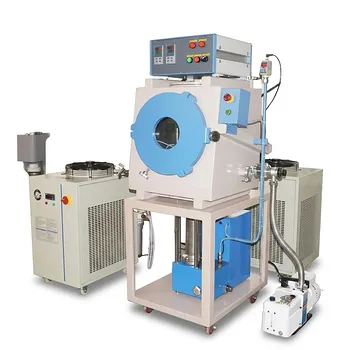
High Temperature Vacuum Lamination Hot Press Furnace Machine for Semiconductor Wafer Bonding and Advanced Composite Thermal Processing
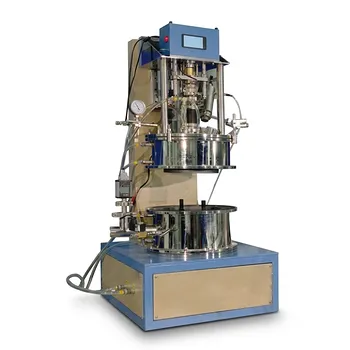
2500C High Vacuum Ultrafast Heating Pellet Press with Automated 8 Sample Loading System
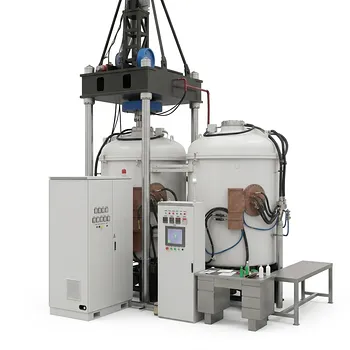
High Pressure 600T Vacuum Induction Hot Press Furnace for Advanced Material Heat Treatment and Sintering
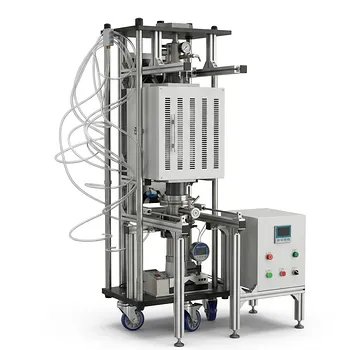
Industrial High Temperature Vacuum Hot Press Furnace and Heated Vacuum Press Machine for Material Science Sintering
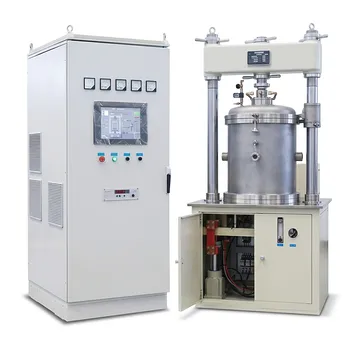
Industrial Vacuum Hot Press Furnace Machine and High Temperature Heated Vacuum Press for Advanced Material Sintering