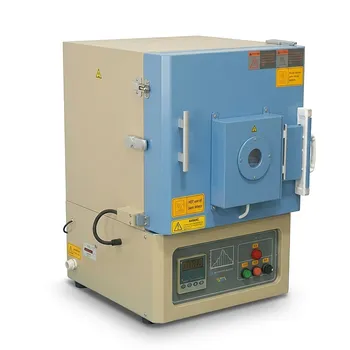
How does an industrial high-temperature muffle furnace function during the calcination of Ce-O-S composite materials?
Updated 5 months ago
The calcination of Ce-O-S composite materials requires a high-temperature muffle furnace to act as a precision thermodynamic reactor. It provides the thermal energy necessary to decompose hydroxide precursors like Ce(OH)3 and facilitate solid-phase reactions that integrate sulfur into the cerium oxide lattice. This process transforms raw chemical components into stable, functional phases such as CeO2, Ce4O4S3, and Ce2(SO4)3 under controlled atmospheric conditions.
The muffle furnace serves as the primary engine for phase transformation and lattice engineering, ensuring that Ce-O-S precursors achieve high crystallinity and specific defect densities through uniform heat distribution. It bridges the gap between amorphous chemical mixtures and structured composite materials by driving thermal decomposition and atom-level doping.
Driving Thermal Decomposition and Phase Evolution
Breaking Down Chemical Precursors
The muffle furnace initiates the process by providing the activation energy required to break chemical bonds in precursors such as Ce(OH)3. This thermal decomposition removes volatile components and residual organics, leaving behind the reactive species necessary for solid-state synthesis.
Synthesizing Complex Ce-O-S Phases
As temperatures stabilize, the furnace facilitates the reaction between cerium, oxygen, and sulfur components. This results in the formation of specific composite phases, including stable CeO2 crystals, Ce4O4S3, and Ce2(SO4)3, which define the material's chemical identity.
Lattice Engineering and Defect Formation
Facilitating Effective Sulfur Doping
Achieving a functional Ce-O-S composite requires the effective doping of sulfur into the cerium-based lattice. The controlled thermal environment of the muffle furnace allows sulfur atoms to migrate and integrate into the crystal structure, a process that is highly dependent on precise temperature maintenance.
Inducing High-Density Oxygen Vacancies
The furnace environment is critical for creating oxygen vacancy defects within the material. These vacancies are essential for the catalytic and electronic properties of cerium composites, and their density is directly influenced by the furnace’s ability to maintain a specific atmosphere (oxygen-rich or inert).
The Importance of Thermal Uniformity
Ensuring Structural Homogeneity
High-temperature muffle furnaces are designed to provide exceptional temperature uniformity across the heating chamber. This prevents localized "hot spots" that could lead to uneven grain growth or inconsistent phase distribution within the Ce-O-S powder.
Controlling Crystallinity and Grain Size
By maintaining a stable thermal field, the furnace determines the final crystallinity and grain size of the composite. Proper thermal soaking ensures that the material achieves its intended structural density and mechanical strength without unnecessary internal stress.
Understanding the Trade-offs
Thermal Gradients and Mechanical Stress
While high temperatures are necessary for phase transformation, rapid heating or cooling cycles can induce mechanical stress. If the muffle furnace is not ramped down carefully, the resulting Ce-O-S composites may suffer from micro-cracking or structural deformation.
Energy Intensity vs. Material Purity
Maintaining the high temperatures required for calcination (often exceeding 600°C to 1000°C) is energy-intensive. However, reducing temperatures to save energy often results in incomplete decomposition, leaving impurities that degrade the performance of the final composite.
How to Optimize Your Calcination Process
Selecting the right furnace parameters is essential for tailoring the properties of Ce-O-S materials to your specific application.
- If your primary focus is high catalytic activity: Prioritize a specific atmospheric control to maximize the formation of high-density oxygen vacancies.
- If your primary focus is phase purity: Utilize longer soaking times at a constant high temperature to ensure the complete conversion of Ce(OH)3 into stable CeO2 and sulfate phases.
- If your primary focus is structural stability: Implement a slow cooling ramp to eliminate mechanical stress and prevent the formation of amorphous defects.
The industrial muffle furnace is the definitive tool for converting raw cerium precursors into sophisticated Ce-O-S composites through the precise application of thermodynamic energy and atmospheric control.
Summary Table:
| Process Stage | Furnace Function | Material Impact |
|---|---|---|
| Decomposition | Breaks bonds in Ce(OH)3 | Removes volatiles & creates reactive species |
| Phase Synthesis | High-temp solid-phase reaction | Formation of stable CeO2, Ce4O4S3, and Ce2(SO4)3 |
| Lattice Engineering | Controlled thermal migration | Facilitates sulfur doping & oxygen vacancy density |
| Thermal Soaking | Uniform heat distribution | Ensures structural homogeneity & controlled grain size |
Elevate Your Advanced Material Research with THERMUNITS
As a leading manufacturer of high-temperature laboratory equipment, THERMUNITS provides the precision thermal environments necessary for complex material synthesis. Our high-performance Muffle, Atmosphere, and Vacuum furnaces are engineered specifically for material science and industrial R&D, ensuring the exact temperature uniformity and atmospheric control required for the calcination of Ce-O-S composites.
From CVD/PECVD systems to Rotary and Hot Press furnaces, we offer a comprehensive range of solutions to optimize your catalytic and electronic material development.
Ready to achieve superior crystallinity and defect control?
Contact our technical experts today to discuss your specific heat treatment requirements!
References
- Yanping Li, Wenyuan Wu. Enhanced Light Response Performance of Ceria-Based Composites with Rich Oxygen Vacancy. DOI: 10.3390/molecules30010127
Mentioned Products
- 1750C Compact Muffle Furnace 1.7L Ultra High Temperature Laboratory Sintering System for Advanced Ceramics and Material Science Research
- Anti Corrosive Muffle Furnace with Sintered Corundum Chamber and 1050C Operating Range for Corrosive Material Calcination
- Compact 1000C Muffle Furnace with Programmable Controller and 2 Inch Top Port for Vacuum and Atmosphere Material Research
- High Temperature 1800C Compact Muffle Furnace with Kanthal Super 1900 Heating Elements and 1.7L Alumina Chamber
- Compact Hybrid Muffle and Tube Furnace for 1000C Controlled Atmosphere Laboratory Material Sintering
People Also Ask
- What role does a laboratory high-temperature muffle furnace play in the ash analysis phase of biomass co-firing research? [Guide]
- What is the function of a high-temp muffle furnace in Ni-V oxide synthesis? Optimize your material's performance.
- What role does a high-temperature muffle furnace play in the synthesis of Melem precursors? Precision Polymerization.
- What is the function of a high-temperature muffle furnace in phosphorus-modified zeolite catalyst preparation?
- What is the function of a muffle furnace in aluminoborosilicate glass prep? Stabilize Raw Materials for Superior Purity

Tech Team · ThermUnits
Last updated on Apr 14, 2026
Related Products
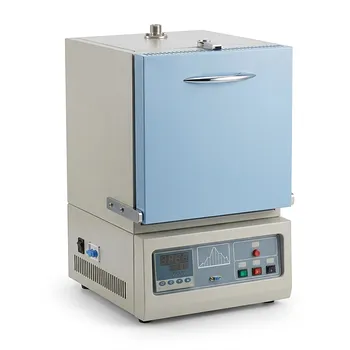
1750C Compact Muffle Furnace 1.7L Ultra High Temperature Laboratory Sintering System for Advanced Ceramics and Material Science Research
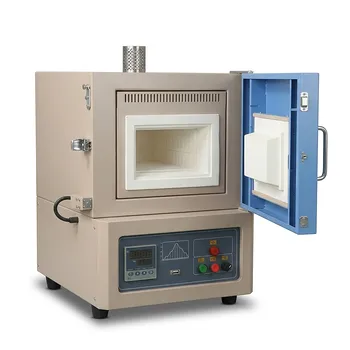
Anti Corrosive Muffle Furnace with Sintered Corundum Chamber and 1050C Operating Range for Corrosive Material Calcination
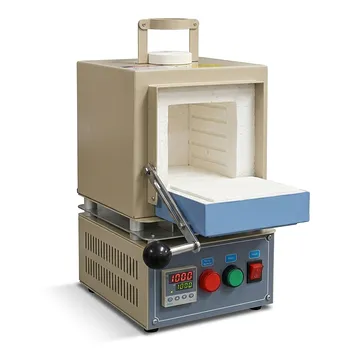
Compact 1000C Muffle Furnace with Programmable Controller and 2 Inch Top Port for Vacuum and Atmosphere Material Research
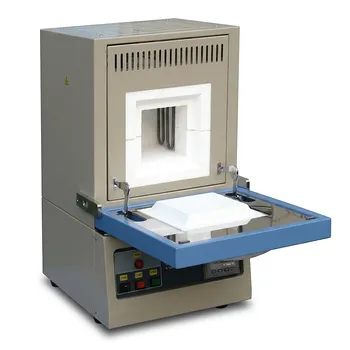
High Temperature 1800C Compact Muffle Furnace with Kanthal Super 1900 Heating Elements and 1.7L Alumina Chamber
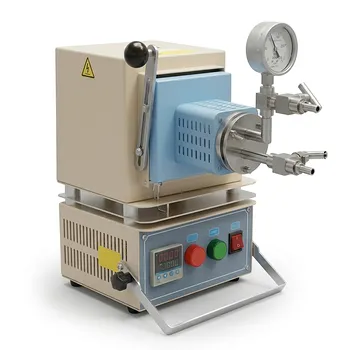
Compact Hybrid Muffle and Tube Furnace for 1000C Controlled Atmosphere Laboratory Material Sintering
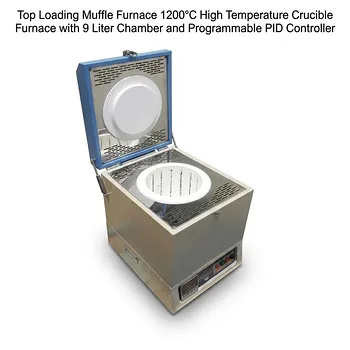
Top Loading Muffle Furnace 1200°C High Temperature Crucible Furnace with 9 Liter Chamber and Programmable PID Controller
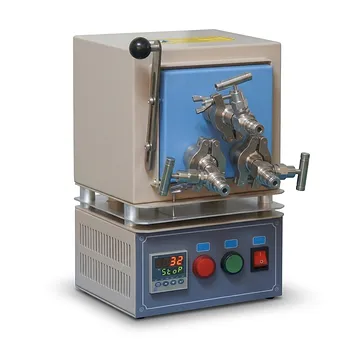
Triple Tube Compact Hybrid Muffle Furnace 1000C High Vacuum Thermal Processing System
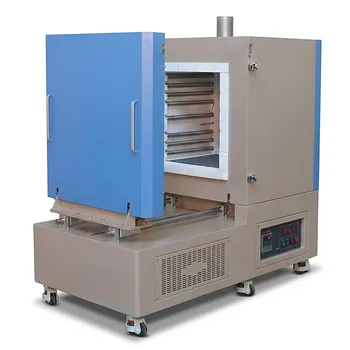
1200C Five Side Heating Muffle Furnace with Sliding Door 125L Volume High Temperature Heat Treatment System for Large Scale Sintering and Annealing
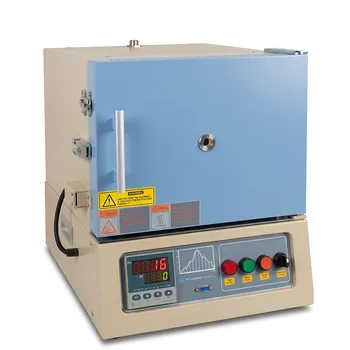
1200C Muffle Furnace 12x8x5 7.2L Heating Chamber with Quartz Observation Window and Vent Port
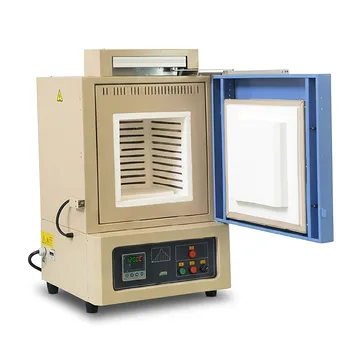
1200C High Temperature Muffle Furnace with Motorized Door and Automated PC Control for Industrial Sintering and Material Processing 27 Liter
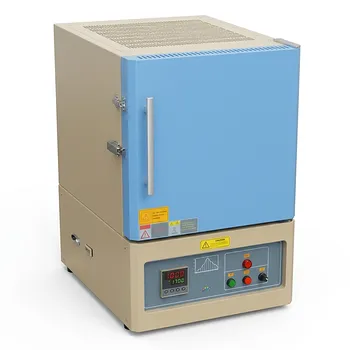
Large Bench Top 1700C High Temperature Muffle Furnace with 19L Chamber for Advanced Material Sintering and Annealing
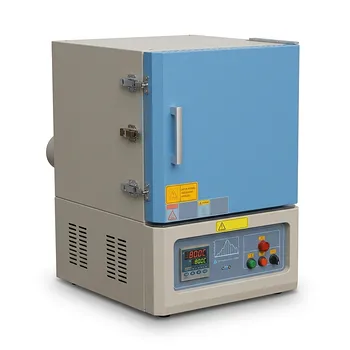
1800C Bench Top Muffle Furnace 18 Liters with Kanthal Super 1900 Heating Elements for High Purity Ceramic Sintering and Material Research
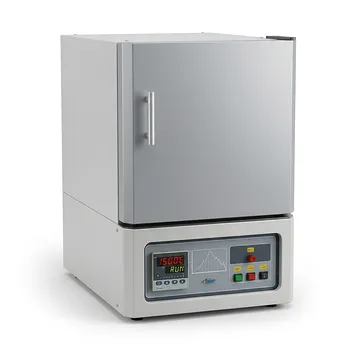
High Temperature 1500C Benchtop Muffle Furnace 3.6L Alumina Fiber Chamber Programmable Controller Sintering Annealing Carbonization Thermal Processing System
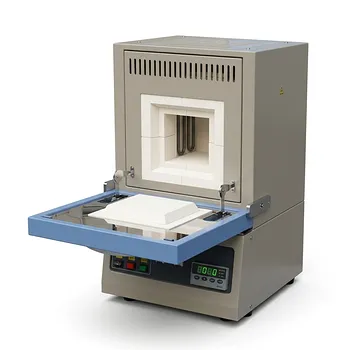
Five Sided Heating Muffle Furnace High Uniformity 1200C Lab Box Furnace 27L Alumina Fiber Chamber
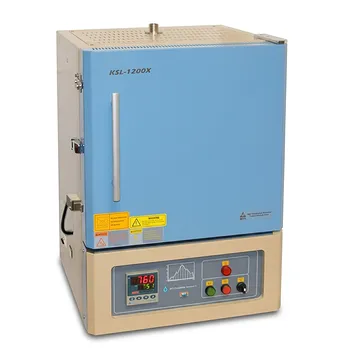
High Temperature 1200C Muffle Furnace 27L Volume 12x12x12 Chamber with Programmable PID Controller for Laboratory Material Science
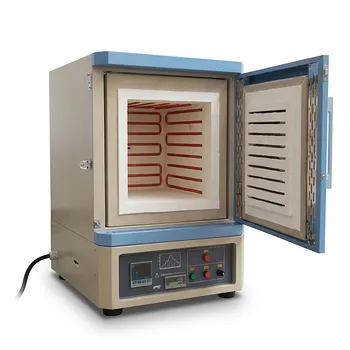
Five Side Heating Muffle Furnace 1200C High Uniformity 64L Chamber 16x16x16 Inch Industrial Heat Treatment
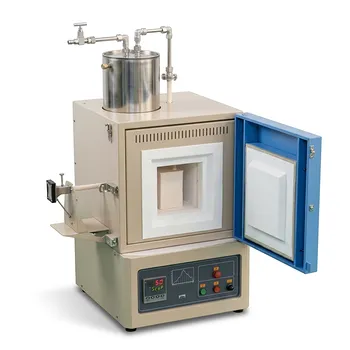
High Temperature Bench Top Muffle Furnace 1700C with Integrated Evaporating Particle Collection and 8x8x8 Alumina Fiber Chamber
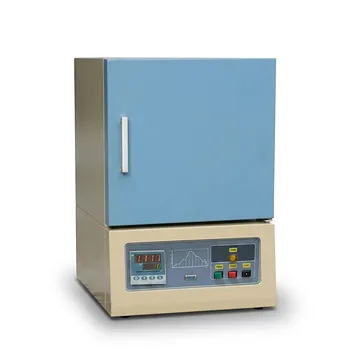
Ultra High Temperature Bench Top Muffle Furnace 1750C Sintering System with Kanthal Super Heating Elements and Precision Digital Control
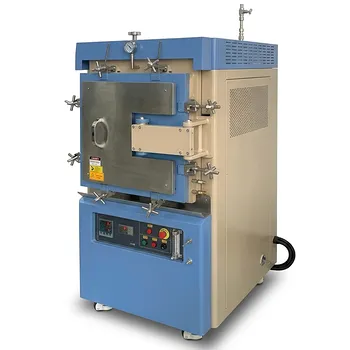
Atmosphere Controlled Muffle Furnace 1700C Maximum Temperature 80L High Capacity Vacuum Inert Gas Box Furnace