What are the advantages of using high-purity corundum boats as containers during high-temperature oxidation experiments?
Updated 3 months ago
High-purity corundum boats are used because they maintain absolute chemical inertness and withstand rapid quenching. Specifically, they do not react with iron or iron oxides at temperatures exceeding 1000 °C, ensuring that experimental data reflects only the sample's behavior. Their ability to survive sudden temperature shifts allows researchers to "freeze" high-temperature phases for precise post-experimental analysis.
High-purity corundum (Al₂O₃) provides a stable, non-reactive environment that preserves the chemical purity of iron oxidation products and supports rapid cooling protocols. This ensures both the accuracy of weight-change data and the integrity of the sample’s microscopic structure.
Chemical Stability at Extreme Temperatures
Eliminating Secondary Reactions
High-purity corundum, a form of alumina, does not interact with iron powder or the resulting oxide scales even at temperatures above 1000 °C. This prevents the formation of complex unwanted compounds that would skew chemical analysis and compromise the experiment.
Preserving Mass Accuracy
Because the boat does not react with the sample or the oxidizing atmosphere, it does not contribute to weight changes. Researchers can rely on precise weight-gain measurements to calculate the exact oxidation kinetics of the iron powder.
Prevention of Sample Adhesion
The material prevents chemical bonding or "welding" between the container and the iron sample during high-temperature exposure. This ensures the sample can be fully recovered and that the oxide film composition remains uncontaminated by the boat material.
The Critical Role of Thermal Resilience
Enabling Phase Freezing
In oxidation studies, it is often necessary to move samples from a high-temperature zone directly to a room-temperature environment. Corundum’s thermal stability allows it to withstand this rapid quenching without shattering.
Capturing Transient States
The quenching process "freezes" the phase composition of the oxidation products instantly. This allows for accurate post-experimental characterization, as the iron oxides do not have time to transition into different phases during a slow cooling period.
Structural Integrity
High-purity corundum maintains its strength and shape under intense thermal loads. This ensures the iron powder remains contained and the structural geometry of the experiment is preserved throughout multiple heating cycles.
Understanding the Trade-offs
Thermal Gradient Sensitivity
While corundum is excellent for quenching, it is still a ceramic and can crack if subjected to extreme, localized thermal gradients. Users must ensure relatively uniform heating across the boat to prevent mechanical failure during rapid temperature shifts.
Cost vs. Performance
High-purity corundum is more expensive than standard alumina or quartz containers. While it offers superior performance, researchers must weigh the cost against the specific purity and temperature requirements of their study.
Purity Grade Requirements
Lower-grade "alumina" may contain silica or other binders that become reactive at high temperatures. To ensure the benefits of chemical inertness, researchers must verify that the boat is indeed "high-purity" (typically >99%) to avoid leaching impurities into the iron powder.
Applying the Right Container to Your Goal
How to Choose Your Experimental Setup
- If your primary focus is phase identification: Use high-purity corundum to enable rapid quenching, which "locks" the high-temperature oxide structures for later analysis.
- If your primary focus is kinetic weight gain data: Rely on corundum's chemical inertness to ensure that every milligram of weight change is attributed to oxygen uptake, not container interaction.
- If your primary focus is material purity: Select 99.7% or higher alumina content to prevent the diffusion of silicon or other impurities from the boat into your iron powder sample.
By providing a chemically neutral and thermally resilient platform, high-purity corundum boats eliminate the variables that typically compromise the validity of high-temperature iron oxidation data.
Summary Table:
| Key Feature | Advantage for Experiments | Experimental Outcome |
|---|---|---|
| Chemical Inertness | Prevents reactions with iron oxides | Accurate mass & purity |
| Thermal Resilience | Supports rapid quenching/cooling | Phase transition freezing |
| Non-Adhesive | No bonding between boat and sample | Full sample recovery |
| High-Temp Stability | Maintains integrity above 1000 °C | Reliable structural support |
Maximize Your Research Precision with THERMUNITS
At THERMUNITS, we understand that high-temperature research requires uncompromising material purity and equipment reliability. As a leading manufacturer of high-temperature laboratory equipment, we empower material scientists and industrial R&D professionals with advanced thermal processing solutions.
Whether you are conducting oxidation studies or complex CVD/PECVD synthesis, our comprehensive range—including Muffle, Vacuum, Atmosphere, Tube, and Rotary Furnaces, as well as Hot Press Furnaces and Vacuum Induction Melting (VIM) systems—is designed for superior performance. We also provide essential high-purity Thermal Elements and laboratory heat treatment equipment to ensure your data remains accurate and your experiments repeatable.
Ready to upgrade your lab's capabilities?
Contact us today to consult with our experts and find the ideal high-temperature solution for your specific application!
References
- Jonas Spielmann, Ulrike I. Kramm. Exploring the oxidation behavior of undiluted and diluted iron particles for energy storage: Mössbauer spectroscopic analysis and kinetic modeling. DOI: 10.1039/d3cp03484d
Mentioned Products
- Anti Corrosive Muffle Furnace with Sintered Corundum Chamber and 1050C Operating Range for Corrosive Material Calcination
- High Temperature Induction Melting System with Integrated Ultra High Purity Glove Box for Metallic Alloy Processing
- High Temperature Vertical Atmosphere Controlled Furnace with Automatic Bottom Loading and 1700°C Capacity for Advanced Material Research
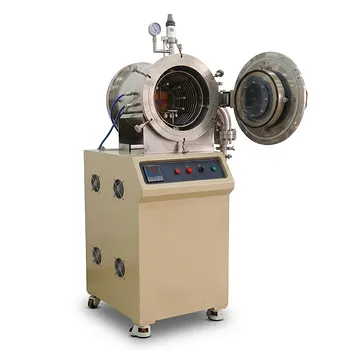
- High Temperature Cold Wall High Vacuum Chamber Furnace 1400C for Advanced Material Processing
People Also Ask
- Why is a corrosion-resistant high-temperature muffle furnace required for the chemical activation of lignocellulose?
- What role does a muffle furnace play in NiMo/gamma-Al2O3 catalyst prep? Optimize Your Synthesis Process
- Why is a high-temperature muffle furnace used for the preliminary calcination of Titanium Dioxide (TiO2) precursors?
- Why must spinel samples be rapidly moved to open air for quenching? Lock in Phase Purity and Structural Integrity
- Why is a muffle furnace necessary for the post-treatment of silicalite-1 zeolite? Unlock Pore Activity & Stability

Tech Team · ThermUnits
Last updated on Jun 02, 2026
Related Products
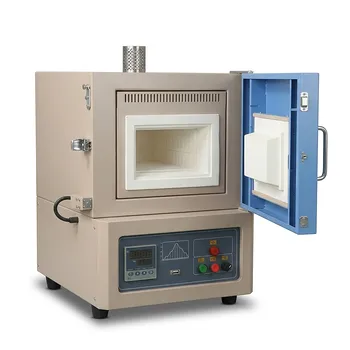
Anti Corrosive Muffle Furnace with Sintered Corundum Chamber and 1050C Operating Range for Corrosive Material Calcination
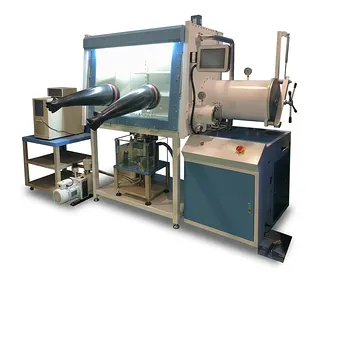
High Temperature Induction Melting System with Integrated Ultra High Purity Glove Box for Metallic Alloy Processing
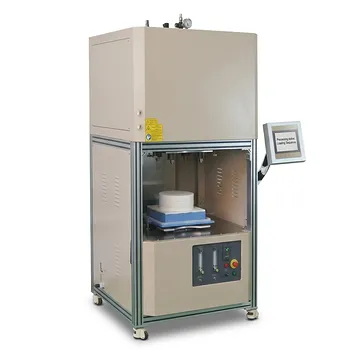
High Temperature Vertical Atmosphere Controlled Furnace with Automatic Bottom Loading and 1700°C Capacity for Advanced Material Research