What are the design requirements for customized exposure sample racks? Optimize Precision in High-Temp R&D
Updated 3 months ago
Designing high-temperature exposure racks requires a dual focus on material thermodynamics and aerodynamic uniformity to ensure experimental validity. For experiments conducted between 600°C and 800°C, the rack must be constructed from oxidation-resistant, chemically stable materials that prevent deformation and cross-contamination. Furthermore, the architecture must facilitate uniform gas distribution to eliminate errors stemming from concentration gradients or gas stagnation.
To achieve reliable results in long-cycle high-temperature experiments, sample racks must act as "invisible" facilitators that maintain structural integrity while ensuring every sample surface interacts identically with the process environment.
Material Integrity at Elevated Temperatures
Resistance to High-Temperature Oxidation
At temperatures between 600°C and 800°C, standard metals can scale or degrade rapidly. The rack material must be specifically rated for high-temperature oxidation resistance to prevent the shedding of oxide flakes onto samples.
This stability ensures that the physical dimensions of the rack remain constant over long-term cycles, providing a repeatable testing environment.
Chemical Stability and Contamination Control
The rack must be chemically inert relative to the alloy samples being tested. This prevents any unintended chemical reactions or diffusion between the rack and the samples.
Avoiding cross-contamination is critical for maintaining the purity of the experimental data, especially when measuring subtle changes in sample mass or surface chemistry.
Preventing Structural Deformation
Long-term exposure to high heat can lead to "creep" or structural sagging. The design must account for the mechanical load of the samples to ensure the rack does not warp over time.
A deformed rack can alter the position of samples, which disrupts the intended gas flow patterns and compromises the consistency of the experiment.
Optimizing the Exposure Environment
Facilitating Uniform Gas Flow
The structural design must allow the flowing process gas to reach all sample surfaces simultaneously. This is achieved by minimizing the physical footprint of the support structures that might block gas movement.
Uniformity is the primary defense against experimental error, ensuring that the environment at the front of the rack is identical to the environment at the back.
Eliminating Gas Stagnation and Gradients
"Dead zones" or areas of gas stagnation can lead to localized depletion of reactants or a buildup of byproducts. The rack must be engineered to promote continuous mixing and flow.
By removing concentration gradients, the researcher can be confident that any observed changes in the samples are due to the material properties rather than micro-climates within the furnace.
Understanding the Trade-offs and Pitfalls
Complexity vs. Aerodynamic Interference
Increasing the robustness of a rack often requires thicker supports, which can inadvertently create gas shadows. Designers must balance the need for structural strength with the requirement for an open, airy architecture.
Over-engineering the rack for strength can lead to significant flow disturbances, while under-engineering leads to catastrophic failure or sample contact during a run.
Material Costs vs. Longevity
Using high-performance alloys for the rack significantly increases initial costs but is often necessary for long-cycle experiments. Attempting to use lower-grade materials frequently results in mid-experiment failures that invalidate months of data.
How to Apply These Principles to Your Project
When commissioning or building a customized rack, align your design choices with your specific experimental duration and gas chemistry.
- If your primary focus is Data Precision: Prioritize a "minimalist" structural design that uses high-strength, thin-profile components to maximize gas flow uniformity.
- If your primary focus is Long-Term Durability: Select advanced nickel-base or specialized refractory alloys that offer the highest resistance to oxidation and creep at the 800°C limit.
- If your primary focus is Preventing Sample Interaction: Use high-purity ceramic coatings or spacers on the rack contact points to provide an absolute chemical barrier between the rack and your samples.
The success of a high-temperature study depends entirely on a rack that maintains a perfectly consistent environment from the first hour to the last.
Summary Table:
| Design Requirement | Key Consideration | Impact on Experimental Validity |
|---|---|---|
| Material Integrity | Oxidation & Creep Resistance | Prevents contamination and physical sagging at 800°C. |
| Chemical Stability | Inertness & Purity | Eliminates cross-contamination between rack and samples. |
| Gas Aerodynamics | Uniform Distribution | Removes concentration gradients and gas stagnation. |
| Architecture | Minimalist Footprint | Balances structural strength with low flow interference. |
Elevate Your Material Research with THERMUNITS
Precision in long-term high-temperature experiments begins with superior equipment architecture. THERMUNITS is a leading manufacturer of high-performance laboratory equipment, providing tailored thermal solutions for material science and industrial R&D.
From custom-engineered exposure racks to advanced furnace systems, we help you achieve flawless data consistency. Our comprehensive product range includes:
- Muffle, Vacuum, Atmosphere, and Tube Furnaces
- Rotary and Hot Press Furnaces
- CVD/PECVD Systems and Dental Furnaces
- Electric Rotary Kilns and Vacuum Induction Melting (VIM) Furnaces
- High-Quality Thermal Elements and specialized heat treatment tools.
Ready to optimize your laboratory’s heat treatment efficiency? Contact our expert engineering team today to discuss your customized rack design or furnace requirements and discover how our technology can accelerate your research goals.
References
- Richard P. Oleksak, Ömer Doğan. Environmental Compatibility Issues for Ni-Based Alloys in Direct-Fired Supercritical CO2 Power Cycles. DOI: 10.2172/2563416
Mentioned Products
- High Temperature 800C Rapid Thermal Processing Furnace with Rotating Sample Holder for Close Spaced Sublimation and Thin Film Solar Cell Research
- High Temperature Bottom Loading Vertical Furnace 1700C Dual Stage Sample Processing System 18L Large Capacity Thermal Treatment Equipment
- Compact High Temperature Bottom Loading Furnace 1700C Rapid Heating Cooling System Small Sample Thermal Cycling Equipment
- 1200 C Maximum Three Sided Heating Top Loading Furnace with 12 x 12 x 8 Inch Chamber for Solid Oxide Fuel Cell Testing and High Temperature RD
- High Temperature Four Chamber Box Furnace for High Throughput Materials Research and Space Saving Thermal Processing
People Also Ask
- What role does a SiC-coated graphite susceptor play in H2Se selenization? Boost RTP Thermal Uniformity & Film Purity.
- What is the purpose of coating ceramic sheets with platinum paste? Achieve Stable High-Temp Ohmic Contacts
- What are the functional advantages of an RTP system for surface deposition? Enhance Heterojunction Interface Integrity
- What are the advantages of RTPR for Pd1/PU catalyst synthesis? Achieve superior single-atom dispersion and stability.
- How does a high-temperature tube furnace optimize palladium thin film pre-annealing? Improve Grain Growth & Stress Relief

Tech Team · ThermUnits
Last updated on Jun 03, 2026
Related Products
High Temperature 800C Rapid Thermal Processing Furnace with Rotating Sample Holder for Close Spaced Sublimation and Thin Film Solar Cell Research
High Temperature Bottom Loading Vertical Furnace 1700C Dual Stage Sample Processing System 18L Large Capacity Thermal Treatment Equipment
Compact High Temperature Bottom Loading Furnace 1700C Rapid Heating Cooling System Small Sample Thermal Cycling Equipment
1200 C Maximum Three Sided Heating Top Loading Furnace with 12 x 12 x 8 Inch Chamber for Solid Oxide Fuel Cell Testing and High Temperature RD
High Temperature Four Chamber Box Furnace for High Throughput Materials Research and Space Saving Thermal Processing
High Temperature 1600°C Three Zone Heated Bottom Loading Box Furnace with Rapid Thermal Processing Chamber 72L Volume
High Temperature Bottom Loading Box Furnace for Rapid Thermal Processing 1700C 40L Capacity
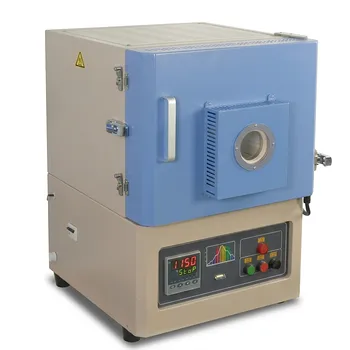
High Temperature Benchtop Muffle Furnace with Quartz Observation Window for Thermal Imaging and Material Analysis
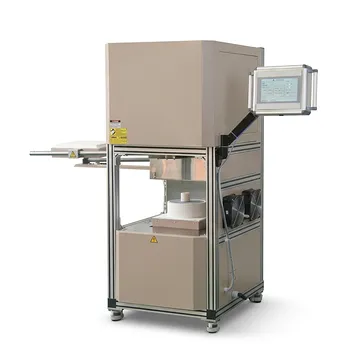
1600C High Temperature Automatic Bottom Loading Furnace for Thermal Shock Cycling and Material Fatigue Testing
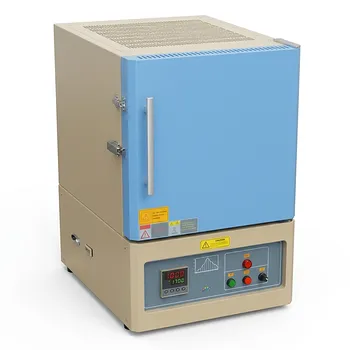
Large Bench Top 1700C High Temperature Muffle Furnace with 19L Chamber for Advanced Material Sintering and Annealing
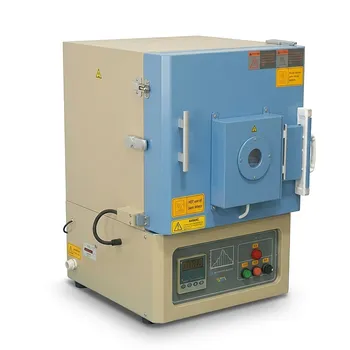
High Temperature Benchtop Muffle Furnace 1500C with 3.6L Chamber and Quartz Observation Window
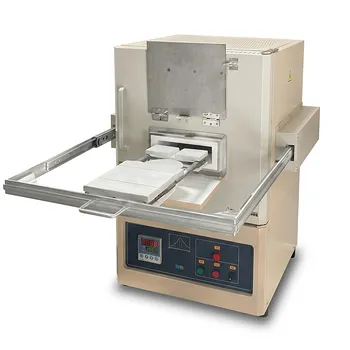
1700C Box Furnace with Sliding Platform for Rapid Heating and Cooling High Temperature Thermal Processing System
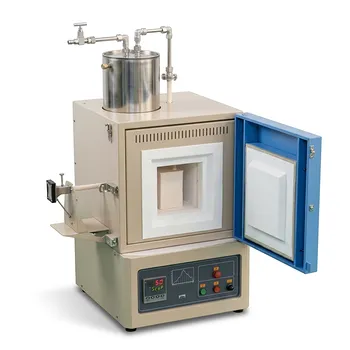
High Temperature Bench Top Muffle Furnace 1700C with Integrated Evaporating Particle Collection and 8x8x8 Alumina Fiber Chamber
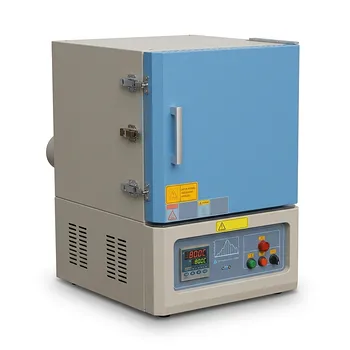
1800C Bench Top Muffle Furnace 18 Liters with Kanthal Super 1900 Heating Elements for High Purity Ceramic Sintering and Material Research
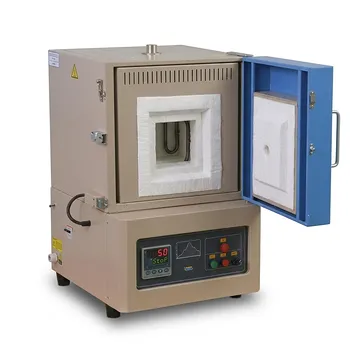
1800°C Bench Top Ultra High Temperature Muffle Furnace with Sapphire Observation Window and Top Feeding Port for Materials Research and Thermal Processing
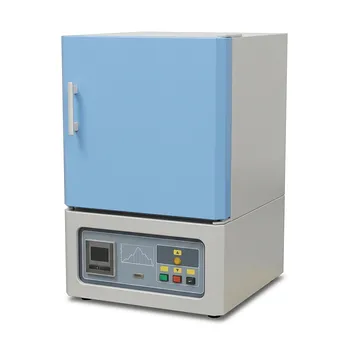
1800C Bench Top Muffle Furnace with Kanthal Super 1900 Heating Elements and 3.6L Alumina Fiber Chamber
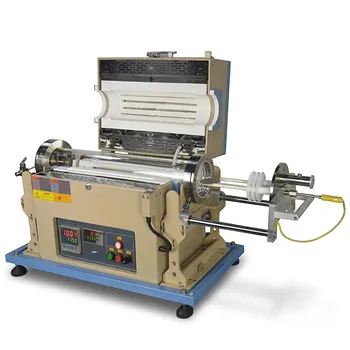
1200°C High Temperature 4 Inch Tube Furnace with Sliding Flange for CVD Systems
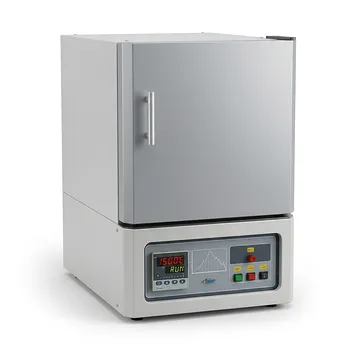
High Temperature 1500C Benchtop Muffle Furnace 3.6L Alumina Fiber Chamber Programmable Controller Sintering Annealing Carbonization Thermal Processing System
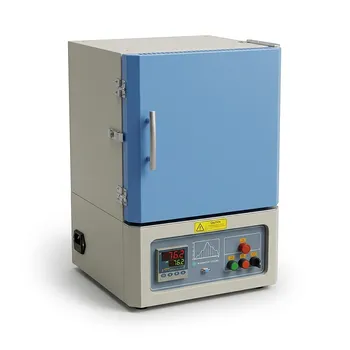
1750C Bench Top Muffle Furnace 3.6L High Grade Molybdenum Disilicide Heating Elements Laboratory Heat Treatment Equipment