What technical advantages does an RTA furnace provide for nanoporous gold? Precision Control of Nanostructures.
Updated 3 months ago
Rapid Thermal Annealing (RTA) serves as a precision instrument for the kinetic control of gold nanostructures. By providing highly controllable cooling rates and instantaneous heating, RTA allows researchers to dictate the degree of undercooling during the solidification of eutectic melts. This technical advantage enables the fine-tuning of pore sizes and ligament dimensions across a scale of tens to hundreds of nanometers, a level of precision unattainable through conventional furnace cooling.
The core advantage of RTA in nanoporous gold fabrication lies in its ability to manipulate solidification kinetics and surface energy. By mastering the cooling rate and dewetting process, you can achieve specific morphological targets while protecting the structural integrity of the material.
Precision Control of Solidification Kinetics
Managing Undercooling via Cooling Rates
RTA furnaces provide a highly adjustable range of cooling rates, typically spanning from 0.7°C/s to 5°C/s. This specific range is critical because it directly influences the degree of undercooling experienced by the gold alloy during the solidification of its eutectic melt.
Tuning Pore and Ligament Dimensions
The ability to control undercooling allows for the morphological adjustment of the final nanoporous structure. By varying the cooling speed, you can precisely scale the pore size and ligament width from tens to hundreds of nanometers to meet specific application requirements.
Kinetic Manipulation of Surface Phenomena
Driving the Dewetting Phenomenon
RTA systems utilize high heating rates to reach temperatures such as 750°C almost instantaneously. This rapid thermal input drives dewetting, a process where continuous gold films retract into isolated, nano-spherical crown-shaped particles due to surface tension.
Facilitating Rapid Alloying Reactions
The high-speed thermal cycles of an RTA furnace allow deposited metal layers to undergo alloying reactions in extremely short timeframes. This is essential for forming stable nanostructures and ohmic contacts without exposing the material to prolonged thermal stress.
Preservation of Material Integrity
Suppressing Deep Atomic Diffusion
One of the most significant advantages of RTA is its ability to suppress the deep diffusion of impurity atoms. Because the thermal treatment is instantaneous, it limits the time available for atoms to migrate, thereby protecting the physical integrity of underlying layers or ultra-thin channels.
Reducing Contact Resistance
The localized and rapid nature of RTA processing promotes the formation of high-quality interfaces. This results in reduced contact resistance, which is vital when the nanoporous gold is intended for use in electronic sensing or electrode applications.
Understanding the Trade-offs
The Risk of Thermal Stress
The "rapid" nature of RTA can introduce significant thermal gradients across a sample. If the heating or cooling is too aggressive, the resulting thermal stress can lead to delamination or structural cracking in brittle substrates.
Complexity of Process Optimization
Achieving the "perfect" morphology requires a narrow window of temperature and time. Small deviations in the cooling ramp can lead to significant variations in ligament size, making the process highly sensitive to calibration errors.
How to Apply This to Your Project
Making the Right Choice for Your Goal
To maximize the benefits of RTA for nanoporous gold, your approach should vary based on your desired structural outcome.
- If your primary focus is Fine-Tuning Pore Density: Prioritize the calibration of your cooling rates between 0.7°C/s and 5°C/s to control undercooling.
- If your primary focus is Creating Isolated Nanoparticles: Utilize instantaneous high-temperature spikes (approx. 750°C) to trigger the surface tension-driven dewetting process.
- If your primary focus is Protecting Sub-layers: Minimize the "soak time" at peak temperature to suppress the deep diffusion of impurities while still achieving the necessary alloying.
By leveraging the rapid kinetic control of RTA, you can transform gold thin films into highly engineered nanoporous architectures with predictable and repeatable results.
Summary Table:
| Feature | Advantage for Nanoporous Gold | Key Metric |
|---|---|---|
| Cooling Rate Control | Precision tuning of pore and ligament sizes | 0.7°C/s to 5°C/s |
| Rapid Heating | Triggers dewetting for isolated nanoparticles | Instantaneous up to 750°C |
| Short Thermal Cycles | Suppresses deep atomic diffusion & impurity migration | Minimized Soak Time |
| Kinetic Processing | Enhances alloying and reduces contact resistance | Optimized Interface Quality |
Optimize Your Nanomaterial Synthesis with THERMUNITS
Achieve unparalleled precision in your research with THERMUNITS, a leading manufacturer of high-temperature laboratory equipment for material science and industrial R&D. Our advanced thermal solutions—including Rapid Thermal Annealing (RTA), Muffle, Vacuum, Atmosphere, and CVD/PECVD systems—are specifically designed to give you total control over solidification kinetics and material morphology.
Whether you are engineering nanoporous gold architectures, developing dental ceramics, or scaling up vacuum induction melting, we provide the reliable heat treatment equipment your project demands.
Ready to elevate your lab's capabilities? Contact THERMUNITS today to discuss your custom thermal requirements!
References
- Lotan Portal, Boaz Pokroy. Morphology Control of Nanoporous Gold Through Selective Dissolution of Au–Ge Eutectic Microstructures. DOI: 10.1002/adem.202401564
Mentioned Products
- Rapid Thermal Processing Atmosphere Controlled Bottom Loading Furnace 1100C with 50C Per Second Heating Rate for Wafer Annealing
- Rapid Thermal Processing Furnace 1100C Atmosphere Controlled Bottom Loading RTP System for Wafer Annealing and Catalysis Research
- Compact Atmosphere Controlled Rapid Thermal Processing RTP Furnace with 4 Inch ID Quartz Tube 1100C
- 900 ºC Max Sliding RTP Tube Furnace with Rapid IR Heating and 4 Inch OD Quartz Tube
- High Temperature 800C Rapid Thermal Processing Furnace with Rotating Sample Holder for Close Spaced Sublimation and Thin Film Solar Cell Research
People Also Ask
- What role does a SiC-coated graphite susceptor play in H2Se selenization? Boost RTP Thermal Uniformity & Film Purity.
- What are the advantages of using a Bottom-Loading High-Temperature Furnace in Barium Titanate Fast Firing? Superior Microstructure
- What are the functional advantages of an RTP system for surface deposition? Enhance Heterojunction Interface Integrity
- Why is an atmosphere-controlled annealing furnace required for the post-treatment of synthesized KTiOPO4 thin films? KTP
- What is the purpose of coating ceramic sheets with platinum paste? Achieve Stable High-Temp Ohmic Contacts

Tech Team · ThermUnits
Last updated on Jun 03, 2026
Related Products
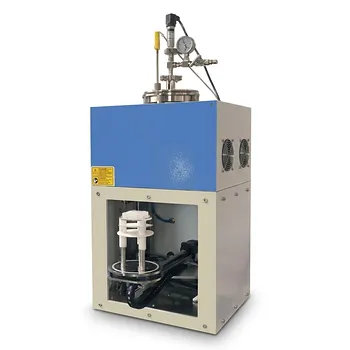
Rapid Thermal Processing Atmosphere Controlled Bottom Loading Furnace 1100C with 50C Per Second Heating Rate for Wafer Annealing
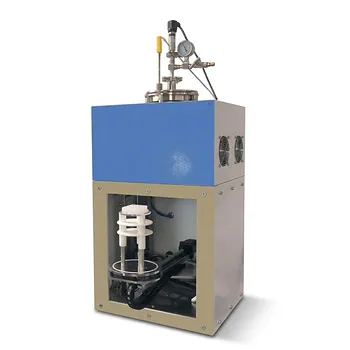
Rapid Thermal Processing Furnace 1100C Atmosphere Controlled Bottom Loading RTP System for Wafer Annealing and Catalysis Research
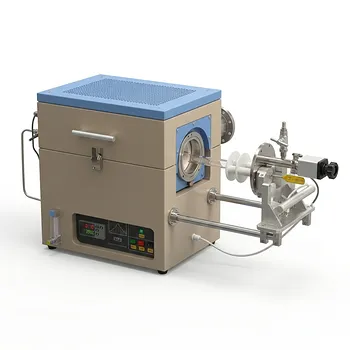
Compact Atmosphere Controlled Rapid Thermal Processing RTP Furnace with 4 Inch ID Quartz Tube 1100C
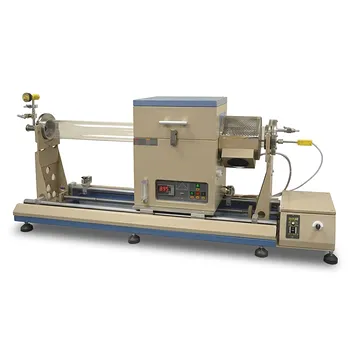
900 ºC Max Sliding RTP Tube Furnace with Rapid IR Heating and 4 Inch OD Quartz Tube
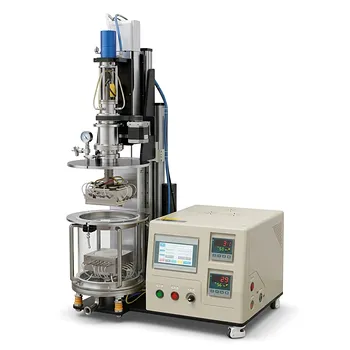
High Temperature 800C Rapid Thermal Processing Furnace with Rotating Sample Holder for Close Spaced Sublimation and Thin Film Solar Cell Research
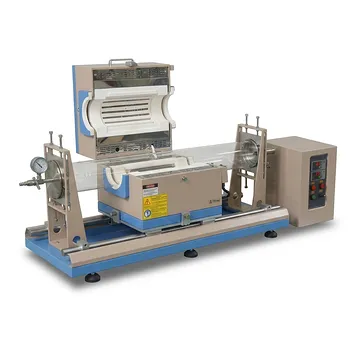
1200C High Temperature 5 Inch Sliding Tube Furnace for Rapid Thermal Processing RTP and Wafer Annealing
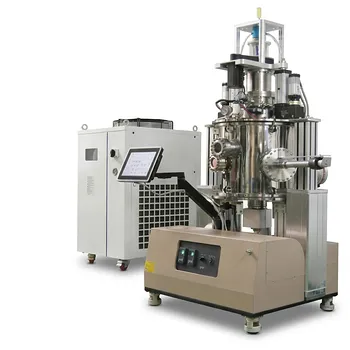
950C Rapid Thermal Processing Furnace for 12 Inch Wafer CSS Coating with Rotating Substrate Holder
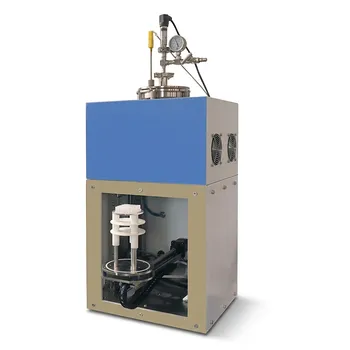
Rapid Thermal Processing RTP Atmosphere Controlled Bottom Loading Furnace 1100C High Throughput 50C per Second Heating Rate
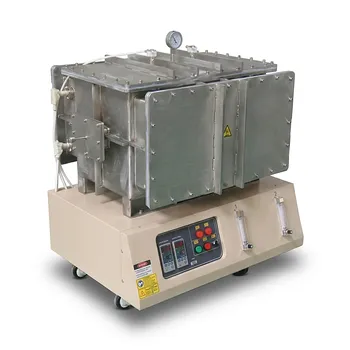
1500°C Atmosphere Controlled Rapid Heating Furnace for Material Science and Battery Powder Sintering
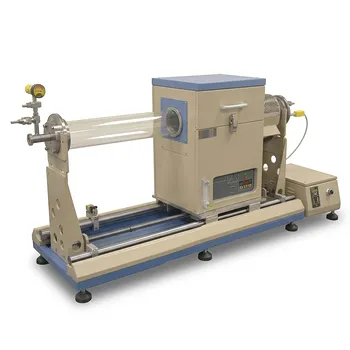
Rapid Thermal Processing Sliding Tube Furnace with 4 Inch OD Quartz Tube and 900C IR Heating
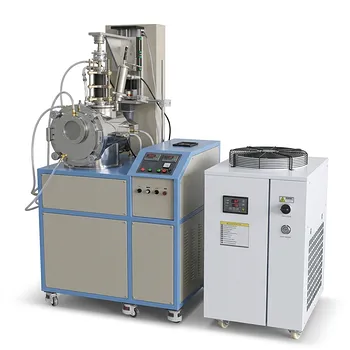
High Temperature Ultrafast Heating Pressing Furnace 2900C Max 100kgf Rapid Thermal Processing System
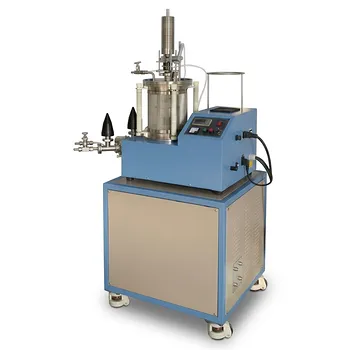
Ultrafast Thermal Pressing Furnace 2900C Max Temperature 200K per Second Heating Rate Vacuum Atmosphere Rapid Processing System
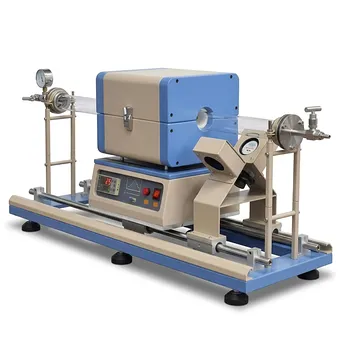
Automated Sliding Tube Furnace for Fast Heating and Cooling 2 Inch OD 1100C Max

High Temperature Tube Furnace 1500C with Sliding Flanges and 50mm OD for Rapid Thermal Processing Fast Heating and Cooling

Compact Vertical Split Quartz Tube Furnace with Stainless Steel Vacuum Flanges for Rapid Thermal Quenching and Controlled Atmosphere Material Processing
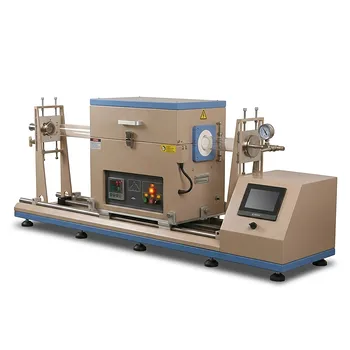
1200C Sliding Tube Furnace for Rapid Thermal Processing and CVD Graphene Growth with 100mm OD Capacity
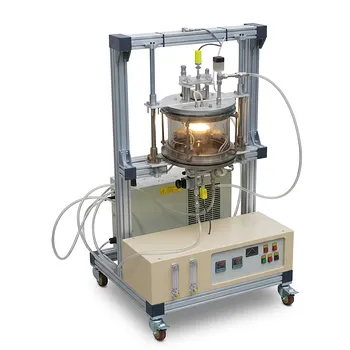
Two Zones CSS Furnace for Rapid Thermal Processing Thin Film Coating 3 Inch Diameter 650C
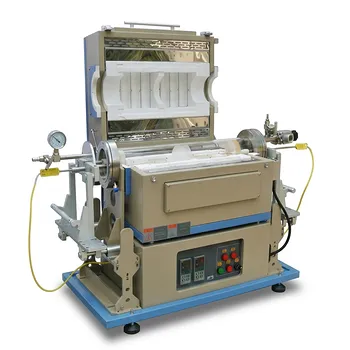
Two Zone IR Heating Rapid Thermal Processing RTP Tube Furnace with 4 Inch ID Quartz Tube and Sliding Sample Holders
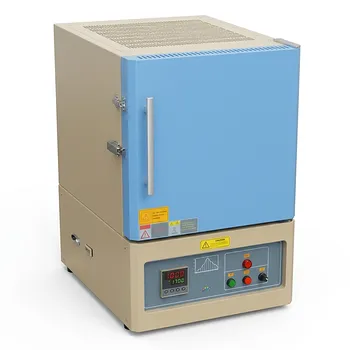
Large Bench Top 1700C High Temperature Muffle Furnace with 19L Chamber for Advanced Material Sintering and Annealing