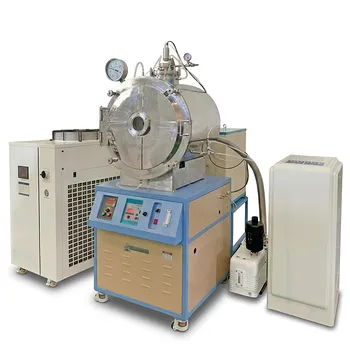
What are the operational advantages of Vacuum Induction Melting in terms of process flexibility and downstream efficiency?
Updated 5 months ago
Vacuum Induction Melting (VIM) provides a highly scalable and contamination-free environment that allows manufacturers to produce ultra-pure alloys with precise chemical homogeneity. By operating in a high vacuum (typically 10⁻² to 10⁻³ torr), VIM eliminates atmospheric contamination, protects reactive elements, and facilitates the removal of dissolved gases. This results in high-integrity melts that significantly reduce defects in downstream processes like investment casting or Vacuum Arc Remelting (VAR), ultimately lowering the total cost of production for high-value components.
VIM is the foundational technology for high-purity metallurgy, leveraging vacuum environments and electromagnetic stirring to ensure chemical precision. Its primary value lies in its ability to eliminate atmospheric contamination and gas impurities, which streamlines downstream manufacturing and enhances the mechanical integrity of the final product.
Achieving Process Flexibility through Scalability and Integration
Extreme Scalability for Diverse Applications
VIM systems are uniquely adaptable, with capacities ranging from a few grams for laboratory research to industrial loads exceeding 30 tons. This range allows the same core technology to be used for both small-scale experimental master alloys and high-volume industrial production.
Versatile Pouring and Integration Options
The process supports various pouring configurations, allowing for seamless integration with investment casting or powder atomization. This flexibility ensures that VIM can serve as the primary melting stage for a wide array of final product forms, from large ingots to fine spherical powders.
Rapid Heating and Precise Control
By utilizing alternating magnetic fields to induce eddy currents, VIM achieves rapid temperature increases and efficient melting. This induction method allows for precise control over the thermal environment, which is essential for managing the melting points of complex, multi-component alloys.
Enhancing Downstream Efficiency via Melt Integrity
Electromagnetic Stirring for Chemical Homogeneity
The induction currents generate a vigorous stirring effect within the melt pool, ensuring that all alloying elements achieve atomic-level uniform mixing. This results in a highly stable chemical composition, which is critical for the performance of alloys like Nickel-Titanium (NiTi) or specialized copper-chromium materials.
Superior Degassing and Impurity Removal
The high-vacuum environment facilitates the desorption of dissolved gases such as hydrogen, nitrogen, and oxygen, which are pumped out of the system. Additionally, the vacuum allows for the selective volatilization of high-vapor-pressure impurities and tramp metals that would otherwise compromise the material's mechanical properties.
Preservation of Reactive Elements
VIM effectively prevents the oxidation and nitridation of highly reactive elements such as Titanium, Aluminum, and Hafnium. By keeping these elements in solution rather than allowing them to form brittle inclusions, VIM produces a "cleaner" melt that is much easier to process in subsequent forging or remelting steps.
Understanding the Trade-offs and Pitfalls
High Capital and Operational Costs
The requirement for sophisticated vacuum pumping systems and high-frequency power supplies makes VIM a capital-intensive technology. It is generally reserved for high-value engineering materials where the cost of the equipment is justified by the superior performance of the final component.
Crucible-Melt Interactions
Although the vacuum prevents atmospheric contamination, the molten metal remains in contact with the refractory lining of the crucible. At high temperatures, some interaction between the melt and the refractory is possible, making the selection of crucible materials a critical factor in maintaining ultra-high purity.
Maintenance of Vacuum Integrity
Maintaining a vacuum of 10⁻³ torr requires rigorous maintenance of seals and pumps to prevent leaks. Even a minor leak can introduce oxygen or nitrogen, which can lead to the oxidation of reactive elements and negate the primary benefits of the VIM process.
How to Apply VIM to Your Project
Depending on your production requirements, VIM can be optimized to solve specific metallurgical challenges.
- If your primary focus is aerospace-grade material purity: Prioritize VIM to eliminate dissolved gases and protect reactive elements like Titanium and Aluminum from atmospheric contamination.
- If your primary focus is reducing downstream scrap rates: Use VIM to produce high-integrity melts with fewer inclusions, which minimizes defects during subsequent Vacuum Arc Remelting (VAR) or investment casting.
- If your primary focus is rapid prototyping of new alloys: Leverage small-scale laboratory VIM systems to achieve precise chemical homogeneity in experimental batches before scaling to industrial production.
By mastering the vacuum and electromagnetic dynamics of VIM, manufacturers can produce the ultra-pure, homogenous alloys required for the world's most demanding technical applications.
Summary Table:
| Feature | Key Benefit | Downstream Impact |
|---|---|---|
| High-Vacuum Environment | Removes dissolved gases (H, N, O) | Reduces defects in casting & forging |
| Electromagnetic Stirring | Atomic-level chemical homogeneity | Ensures stable material performance |
| Scalable Capacity | From grams to 30+ tons | Supports both R&D and mass production |
| Reactive Protection | Prevents oxidation of Ti, Al, and Hf | Preserves expensive alloying elements |
| Integrated Pouring | Supports atomization & investment casting | Streamlines production of final forms |
Elevate Your Material Purity with THERMUNITS
Are you looking to eliminate atmospheric contamination and achieve precise chemical homogeneity in your alloys? THERMUNITS is a leading manufacturer of high-temperature laboratory equipment for material science and industrial R&D. We offer a comprehensive range of thermal processing solutions tailored to your specific needs, including:
- Advanced Furnaces: Vacuum Induction Melting (VIM), Muffle, Vacuum, Atmosphere, Tube, Rotary, and Hot Press furnaces.
- Specialized Systems: CVD/PECVD systems, Dental Furnaces, Electric Rotary Kilns, and Thermal Elements.
Our VIM technology empowers manufacturers to produce high-integrity melts that significantly lower the total cost of production for high-value components. Contact us today to explore our laboratory heat treatment solutions and see how our expertise can enhance your R&D and production efficiency.
Mentioned Products
- 1900C Maximum High Temperature 7KW Vacuum Induction Melting System with 60mm Quartz Tube and Manual Temperature Control for Metallic Alloy Research
- Induction Melting Casting Furnace 1750C Vacuum High Frequency Metal Processing Unit
- High Temperature Induction Melting System with Integrated Ultra High Purity Glove Box for Metallic Alloy Processing
- Atmosphere Controlled Induction Melting Granulating Casting Furnace 1500C 5kg Capacity
- Atmosphere Controlled Induction Melting Casting System 1600C 10L Capacity
People Also Ask
- What is the primary role of a Vacuum Induction Melting furnace in the smelting of Fe-Cr-N alloys? Ensuring High Purity
- How does a Vacuum Induction Melting furnace heat materials while preventing atmospheric contamination? Achieve High Purity
- What are the key structural components that make up a Vacuum Induction Melting (VIM) furnace system? Full Guide
- How does the skin effect influence VIM frequency selection? Optimize Heat Penetration & Stirring Efficiency
- What technical advantages does Vacuum Induction Melting offer regarding alloy homogeneity and purity? Enhance Performance

Tech Team · ThermUnits
Last updated on Apr 14, 2026
Related Products
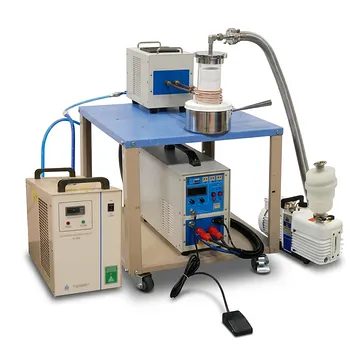
1900C Maximum High Temperature 7KW Vacuum Induction Melting System with 60mm Quartz Tube and Manual Temperature Control for Metallic Alloy Research
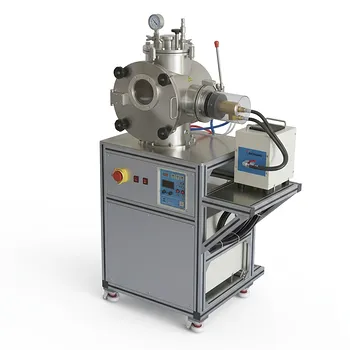
Induction Melting Casting Furnace 1750C Vacuum High Frequency Metal Processing Unit
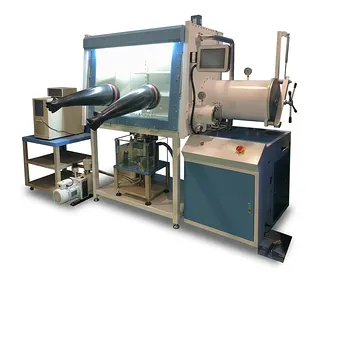
High Temperature Induction Melting System with Integrated Ultra High Purity Glove Box for Metallic Alloy Processing
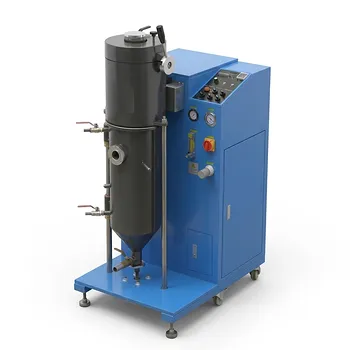
Atmosphere Controlled Induction Melting Granulating Casting Furnace 1500C 5kg Capacity
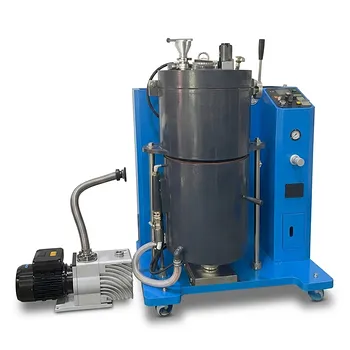
Atmosphere Controlled Induction Melting Casting System 1600C 10L Capacity
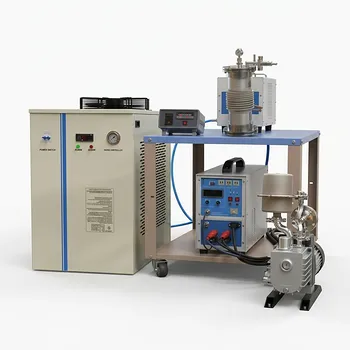
Induction Heating System with Temperature Control for High Temperature Vacuum Sintering and Melting
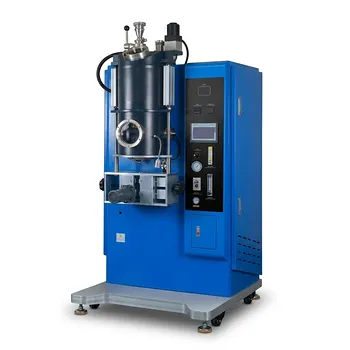
Atmosphere Controlled Continuous Casting Furnace with Secondary Charge Function for Induction Melting and Metal Alloy Wire Production
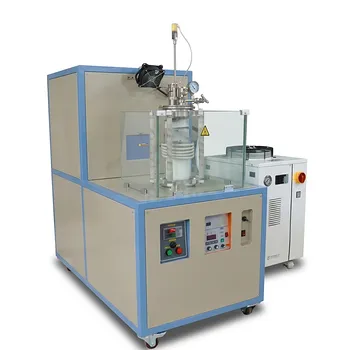
15KW Induction Melting System with Top Suction Casting for Thin Rod Production Up to 1200°C
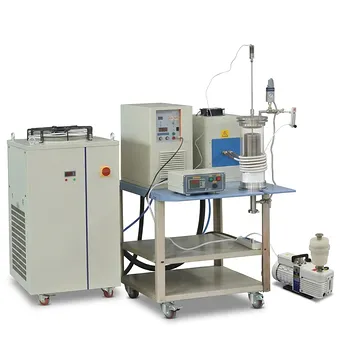
High Temperature Induction Melting System with Multi Cavity Crucible and 15KW Precision Digital Temperature Control
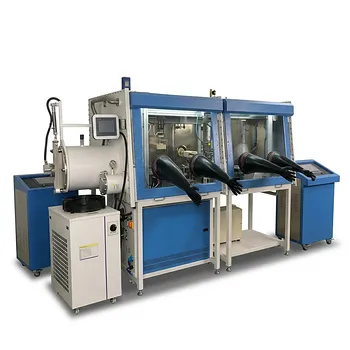
Automatic 10 Crucible Induction Melting and Casting System with Stirring Function and Glovebox Integration 2000C
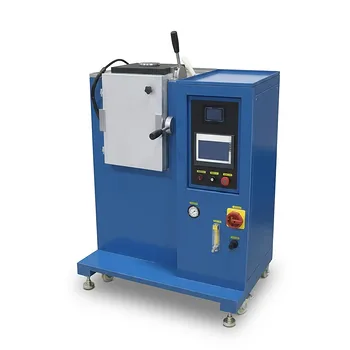
High Throughput Induction Melting and Casting Furnace for Superalloy Research 1700C Atmosphere Controlled Multi Sample System
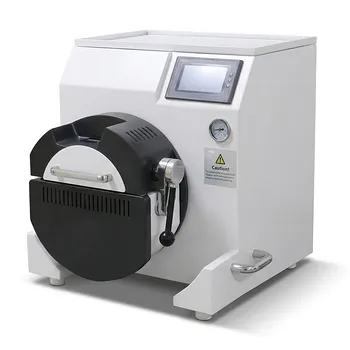
Desktop Induction Melting Furnace with Automatic Rotary Casting Function up to 1700C for Advanced Metal Alloy Research
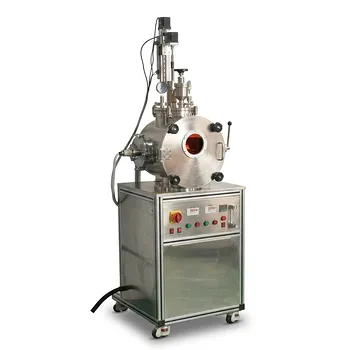
High Vacuum Melting Casting Furnace with Mechanical Stirring and Secondary Charge for Metallic Alloy Research
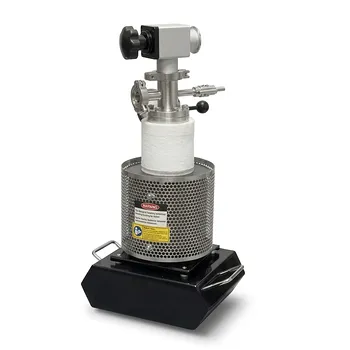
High Temperature 1100C Compact Top Loading Vertical Vacuum Tube Furnace for High Vacuum Noble Metal Melting and Material Research
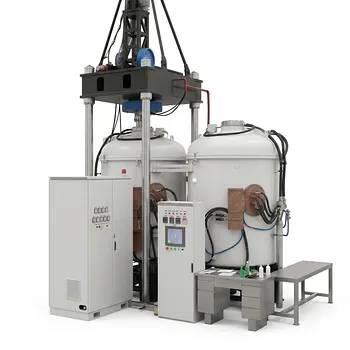
High Pressure 600T Vacuum Induction Hot Press Furnace for Advanced Material Heat Treatment and Sintering
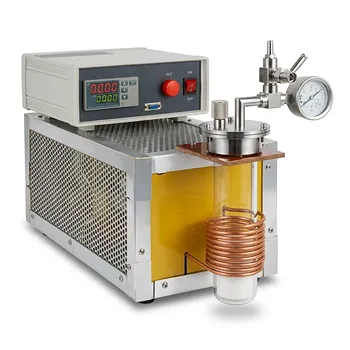
High Temperature Mini Induction Heating Furnace 1600C Laboratory Material Melting System
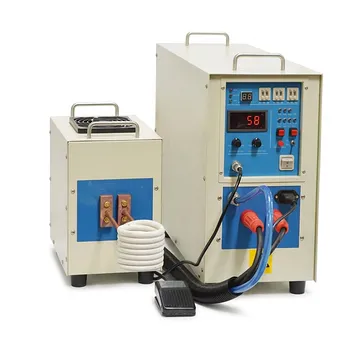
High Frequency Desktop Induction Heater 15 KVA Induction Heating System with Automatic Timer Control for Material Research and Metal Melting
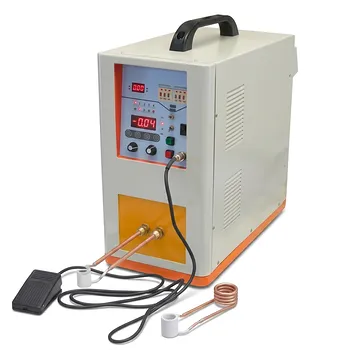
Desktop High Frequency Induction Heater for Precision Metal Melting and Laboratory Thermal Processing 0.6 to 1.1MHz
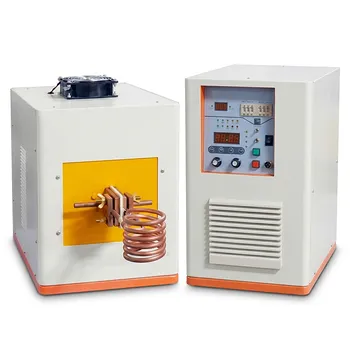
30KW High Frequency Induction Heater for Metal Melting and Industrial Heat Treatment 80-200kHz