What are the process advantages of argon vs nitrogen in SNAT? Optimize Microstructure and Reduce Post-Sintering Costs
Updated 3 months ago
Switching to high-purity argon during the cooling stage of the SNAT process provides a critical chemical "reversal" mechanism. By reducing nitrogen partial pressure, argon facilitates the controlled escape of supersaturated nitrogen from the material's surface, preventing the formation of harmful nitrides and eliminating the need for costly post-sintering heat treatments.
Core Takeaway: High-purity argon acts as a precision tool for nitrogen management, reversing microstructural damage caused by nitrogen supersaturation and ensuring chemical uniformity without secondary processing.
Precise Control of Nitrogen Partial Pressure
Creating a Gradient for Nitrogen Desorption
High-purity argon functions as a strictly inert atmosphere that displaces nitrogen within the furnace. This sudden drop in nitrogen partial pressure creates a concentration gradient that encourages supersaturated nitrogen to migrate from the stainless steel surface back into the furnace atmosphere.
Maintaining System Purity
Beyond nitrogen management, argon effectively excludes oxygen and other reactive gases. This stability prevents the secondary oxidation of the workpieces and ensures that any graphite reducing agents present are not prematurely consumed.
Efficient Removal of Gaseous Byproducts
A consistent argon flow helps carry away residual gaseous byproducts such as CO and CO₂. Removing these gases maintains the chemical purity of the reaction system and helps drive the desired chemical equilibrium.
Preventing Microstructural Degradation
Reversing Cr₂N Nitride Precipitation
Continuous nitrogen flow often leads to excessive infiltration, resulting in the precipitation of Cr₂N nitrides. Switching to argon reverses this precipitation, preserving the chromium content within the alloy matrix.
Halting Austenite Decomposition
Excessive nitrogen causes austenite decomposition, which can compromise the mechanical and corrosion-resistant properties of the metal. Argon switching stabilizes the microstructure by preventing this degradation during the critical cooling phase.
Achieving Chemical Uniformity
The controlled escape of nitrogen ensures that the final chemical composition is uniform throughout the component. This creates a more predictable and high-quality material finish compared to the uneven saturation often found with continuous nitrogen cooling.
Operational Efficiency and Cost Reduction
Eliminating Post-Sintering Treatments
One of the most significant advantages of argon switching is the removal of the need for solution treatments. Because the microstructure is stabilized during cooling, the expensive and time-consuming steps usually required to fix nitride issues are no longer necessary.
Streamlining the Production Cycle
By integrating atmosphere control directly into the cooling stage, the overall production lead time is reduced. This single-step approach minimizes handling and the energy costs associated with secondary heating cycles.
Improving Yield Rates
The transition to an atmosphere-controlled furnace reduces the risk of batch failures due to brittleness or surface oxidation. Greater process reliability leads to higher yields of high-performance components.
Understanding the Trade-offs
The Cost of High-Purity Consumables
Argon is significantly more expensive than nitrogen. While it eliminates post-processing costs, the upfront operational expenditure for high-purity gas must be balanced against the savings in secondary heat treatments.
Atmosphere Switch Timing
The timing of the switch from nitrogen to argon is critical. If the switch occurs too late, nitride precipitation may already be irreversible; if it occurs too early, the required nitridation depth may not be achieved.
Complexity of Furnace Control
Implementing argon switching requires a more sophisticated atmosphere-controlled furnace. This involves more complex gas delivery systems and precise sensors to monitor partial pressures in real-time.
How to Apply This to Your Project
Proper implementation of argon switching depends on your specific production priorities and material requirements.
- If your primary focus is reducing lead times: Implement argon switching to bypass post-sintering solution treatments entirely.
- If your primary focus is maximum corrosion resistance: Use argon to prevent Cr₂N precipitation, ensuring chromium remains available in the matrix to form the protective oxide layer.
- If your primary focus is minimizing gas costs: Evaluate if a diluted argon-nitrogen mix can achieve sufficient partial pressure reduction before committing to 100% high-purity argon.
By mastering the transition from nitrogen to argon, manufacturers can produce superior stainless steel components with optimized microstructures and significantly lower total processing costs.
Summary Table:
| Key Advantage | Technical Function | Impact on Quality & Cost |
|---|---|---|
| Nitrogen Management | Reverses Cr2N precipitation | Maintains alloy corrosion resistance |
| Microstructure Stability | Halts austenite decomposition | Ensures mechanical integrity and uniformity |
| Atmosphere Purity | Removes O2, CO, and CO2 | Prevents secondary oxidation and defects |
| Process Efficiency | Eliminates secondary solution cycles | Drastically reduces lead time and energy costs |
| Yield Optimization | Reduces batch failure risks | Higher ROI through predictable material finishes |
Elevate Your SNAT Process with THERMUNITS Precision Technology
Is your production hindered by brittle nitrides or expensive post-sintering heat treatments? THERMUNITS is a leading manufacturer of high-temperature laboratory equipment dedicated to material science and industrial R&D. We provide the advanced atmosphere control systems necessary to master complex gas switching and microstructural stabilization.
Our comprehensive range of thermal processing solutions includes:
- Muffle, Vacuum, and Atmosphere Furnaces
- Tube and Rotary Furnaces
- Hot Press Furnaces and CVD/PECVD Systems
- Vacuum Induction Melting (VIM) & Electric Rotary Kilns
- Dental Furnaces and High-Performance Thermal Elements
Don't let inefficient cooling cycles compromise your component quality. Our engineering team can help you select the optimal furnace setup to achieve superior chemical uniformity and reduced operational expenditure.
Contact our thermal processing experts today to discuss your specific R&D or industrial requirements!
References
- Weipeng Zhang, Zhengwu Peng. Achieving Homogeneous Microstructure and Superior Properties in High-N Austenitic Stainless Steel via a Novel Atmosphere-Switching Method. DOI: 10.3390/met14070795
Mentioned Products
- Rapid Thermal Processing Atmosphere Controlled Bottom Loading Furnace 1100C with 50C Per Second Heating Rate for Wafer Annealing
- Compact Vertical Split Quartz Tube Furnace with Stainless Steel Vacuum Flanges for Rapid Thermal Quenching and Controlled Atmosphere Material Processing
- Rapid Thermal Processing Furnace 1100C Atmosphere Controlled Bottom Loading RTP System for Wafer Annealing and Catalysis Research
- High Temperature Dual Zone Vacuum Tube Furnace for Material Research and CVD Processing
People Also Ask
- What role does a SiC-coated graphite susceptor play in H2Se selenization? Boost RTP Thermal Uniformity & Film Purity.
- What are the advantages of using a Bottom-Loading High-Temperature Furnace in Barium Titanate Fast Firing? Superior Microstructure
- What are the functional advantages of an RTP system for surface deposition? Enhance Heterojunction Interface Integrity
- Why is an atmosphere-controlled annealing furnace required for the post-treatment of synthesized KTiOPO4 thin films? KTP
- What is the purpose of coating ceramic sheets with platinum paste? Achieve Stable High-Temp Ohmic Contacts

Tech Team · ThermUnits
Last updated on Jun 03, 2026
Related Products
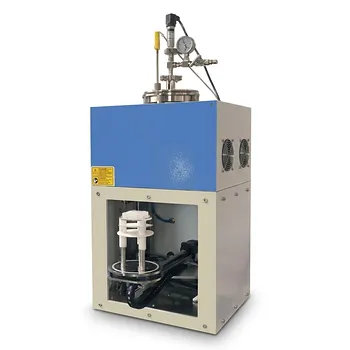
Rapid Thermal Processing Atmosphere Controlled Bottom Loading Furnace 1100C with 50C Per Second Heating Rate for Wafer Annealing

Compact Vertical Split Quartz Tube Furnace with Stainless Steel Vacuum Flanges for Rapid Thermal Quenching and Controlled Atmosphere Material Processing
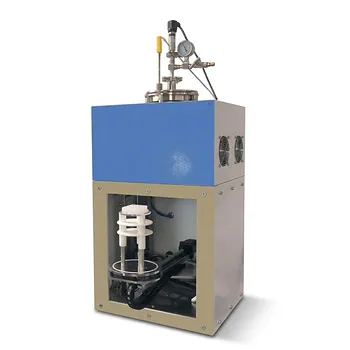
Rapid Thermal Processing Furnace 1100C Atmosphere Controlled Bottom Loading RTP System for Wafer Annealing and Catalysis Research