What are the technical advantages of using alumina ceramic crucibles? Ensure Precise Data & Chemical Inertness
Updated 3 months ago
Alumina crucibles are the preferred choice for gasification research because they maintain total chemical and structural integrity in the presence of corrosive alkali vapors and extreme temperatures. High-purity alumina ensures that devolatilization data is not skewed by crucible-sample reactions, particularly when processing coal or biomass containing reactive ash components.
High-purity alumina crucibles act as an inert "blank canvas" for devolatilization, preventing chemical cross-contamination and background weight fluctuations. This allows researchers to isolate the true reaction characteristics of the sample without interference from the carrier material.
Superior Chemical Inertness in Aggressive Environments
Resistance to Alkali Ash Components
During devolatilization, coal and manure samples release complex ash components such as potassium oxide (K2O) and sodium oxide (Na2O). High-purity alumina does not react with these alkaline species at 1000°C, ensuring the chemical composition of the char remains representative of the feedstock.
Protection Against Background Weight Noise
In thermogravimetric analysis (TGA), even minor reactions between the crucible and the sample can cause "background weight changes." Alumina's chemical stability ensures the purity of the mass signal, meaning every milligram of weight loss measured is strictly due to the sample's devolatilization.
Prevention of Impurity Migration
High-purity alumina prevents external metallic impurities from leaching into the sample. This is critical when studying catalysts or specific mineral behaviors, as it ensures that active sites within the sample are not poisoned or altered by the crucible material.
Thermal Stability and Structural Reliability
High-Temperature Mechanical Strength
Gasification experiments often exceed 1000°C, reaching as high as 1300°C in certain calcination stages. Alumina maintains its structural strength at these extremes, resisting deformation or melting that would compromise the experiment.
Exceptional Thermal Shock Resistance
Devolatilization often involves rapid heating and cooling cycles to simulate industrial gasification conditions. Alumina’s thermal shock resistance prevents the crucible from cracking or spalling during these abrupt temperature transitions, maintaining the safety and continuity of the trial.
Long-Term Durability in Corrosive Gases
The reaction environment in a gasifier can include sulfurization agents or carbon disulfide. Alumina remains non-reactive in these harsh atmospheres, allowing for repeated thermal cycles without the material degrading or losing its inert properties.
Understanding the Trade-offs
Physical Fragility
While alumina is chemically robust, it is a ceramic and inherently brittle. It is susceptible to mechanical impact and can shatter if handled roughly with metal tongs or dropped, necessitating careful laboratory protocols.
Material Purity vs. Cost
The technical advantages described are specific to high-purity alumina. Lower-grade ceramic crucibles containing silica (SiO2) or other binders may react with alkaline ashes, leading to crucible "sticking" or corrupted data, making the higher cost of high-purity versions a necessary investment for accuracy.
Chemical Limitations
Although broadly inert, alumina can still be attacked by certain specialized chemicals, such as hydrofluoric acid or extremely strong molten bases. Researchers must verify that their specific sample additives do not include these rare alumina-corroding agents.
How to Apply This to Your Project
Making the Right Choice for Your Goal
- If your primary focus is TGA accuracy: Use high-purity alumina to ensure that mass loss signals are derived purely from sample devolatilization and not crucible degradation.
- If your primary focus is ash chemistry research: Prioritize alumina to prevent reactions with potassium and sodium oxides, which can otherwise fuse to the crucible walls.
- If your primary focus is high-throughput testing: Leverage alumina’s thermal shock resistance to allow for faster cooling and heating cycles between experimental runs.
By choosing high-purity alumina crucibles, you eliminate the carrier material as a variable, ensuring your gasification data is both precise and reproducible.
Summary Table:
| Feature | Advantage | Technical Impact |
|---|---|---|
| Chemical Inertness | Resists alkali ash (K2O, Na2O) | Prevents sample-crucible reactions and cross-contamination. |
| Thermal Stability | Operates up to 1300°C+ | Maintains structural integrity during extreme heat treatment. |
| Mass Signal Purity | Zero background weight noise | Ensures TGA data reflects only true sample mass loss. |
| Shock Resistance | High thermal shock tolerance | Prevents cracking during rapid industrial heating cycles. |
Elevate Your Research Precision with THERMUNITS
Reliable gasification data starts with the right thermal environment. THERMUNITS is a leading manufacturer of high-temperature laboratory equipment, supporting material science and industrial R&D with precision-engineered solutions.
Our extensive range includes Muffle, Vacuum, Atmosphere, Tube, and Rotary furnaces, as well as CVD/PECVD systems and Vacuum Induction Melting (VIM) furnaces. We provide the thermal stability and control necessary to complement high-purity carriers, ensuring your experiments remain free from contamination and variables.
Ready to optimize your laboratory heat treatment? Contact us today to find the perfect thermal processing solution for your specific application requirements.
References
- Hongqiao Lu, Guangsuo Yu. Study of synergistic behavior during bituminous coal-cow manure co-gasification: The role of intrinsic AAEM and organic matter. DOI: 10.1007/s40789-024-00694-w
Mentioned Products
- 600°C Vertical Crucible Furnace with SS316 Alloy Reactor and 6 Port Vacuum Flange
- Vertical Crucible Furnace 1000C High Temperature Laboratory Equipment 4.7 Inch Diameter Chamber SS316 Anti Corrosive Enclosure
- High Temperature Vertical Crucible Furnace with 22L Heating Chamber and 1200C Maximum Temperature
- 1100C Crucible Melting Furnace with Stirring Function for Glovebox and Air Sensitive Alloy Research
- Automatic 10 Crucible Induction Melting and Casting System with Stirring Function and Glovebox Integration 2000C
People Also Ask
- How does a high vacuum sintering furnace at 600 Celsius affect the microstructure of Al-TiC composites? Expert Analysis
- How should the choice between a Quartz crucible and an Alumina crucible be made for La2O2S? Optimize Material Purity
- Why use ceramic crucibles for coal nano-hybrid heat treatment? Ensure Purity and Thermal Stability.
- What role does a vacuum tube furnace play in palladium membrane treatment? Achieve 600°C Stability & Prevent Brittle Phases
- Why is a high-temperature furnace with precise temperature control necessary for Ag8SiS6 alloy synthesis? Ensure Safety.

Tech Team · ThermUnits
Last updated on Jun 03, 2026
Related Products
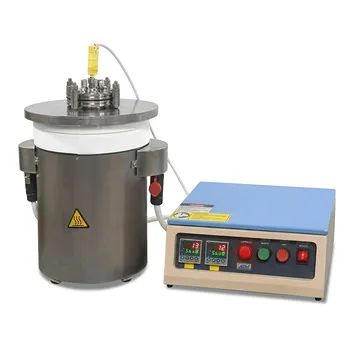
600°C Vertical Crucible Furnace with SS316 Alloy Reactor and 6 Port Vacuum Flange
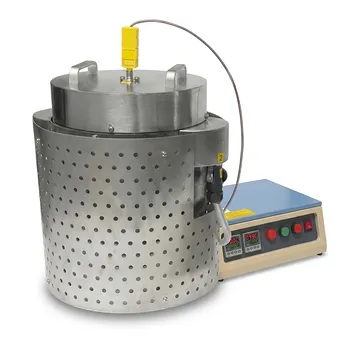
Vertical Crucible Furnace 1000C High Temperature Laboratory Equipment 4.7 Inch Diameter Chamber SS316 Anti Corrosive Enclosure
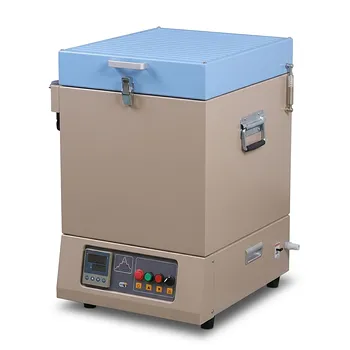
High Temperature Vertical Crucible Furnace with 22L Heating Chamber and 1200C Maximum Temperature
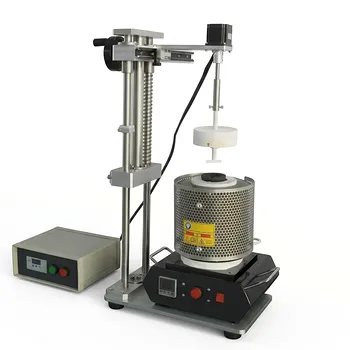
1100C Crucible Melting Furnace with Stirring Function for Glovebox and Air Sensitive Alloy Research
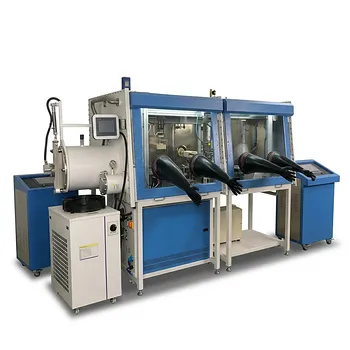
Automatic 10 Crucible Induction Melting and Casting System with Stirring Function and Glovebox Integration 2000C
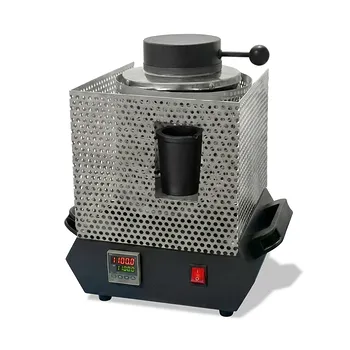
Compact Crucible Melting Furnace 1100C Programmable Temperature Controller Metal Sintering Equipment
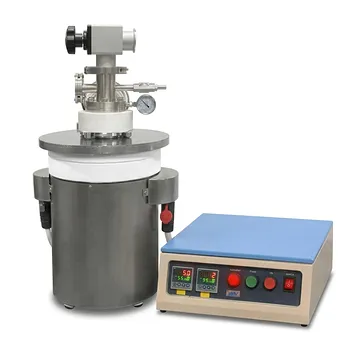
1100C High Temperature Vacuum Crucible Furnace with Quartz Chamber for Thermal Processing and Sintering