What are the technical advantages of using high-temperature ceramic boats for MWCNT synthesis? Enhance Purity & Yield
Updated 3 months ago
High-temperature ceramic boats provide a stable, chemically inert platform that ensures the synthesis of high-purity multi-walled carbon nanotubes (MWCNTs) by preventing contamination and maintaining catalyst integrity. These vessels remain structurally sound and non-reactive at temperatures reaching 1050°C, even within the aggressive reducing atmospheres common in carbon synthesis.
Core Takeaway: Ceramic boats are critical process accessories that safeguard MWCNT purity by eliminating chemical cross-contamination while simultaneously providing the geometric control necessary to regulate gas diffusion and catalyst activity.
Ensuring Material Purity and Chemical Integrity
Unwavering Stability at Extreme Temperatures
High-temperature ceramic boats are engineered to withstand prolonged annealing processes at temperatures as high as 1050°C. Unlike lesser materials, they do not undergo mechanical deformation or structural failure during these intense heating cycles.
Prevention of Chemical Cross-Contamination
A primary advantage is the boat’s chemical inertness, which prevents it from reacting with precursors or their decomposition products. This ensures that no metallic or non-metallic impurities are introduced into the reaction system, a factor that is vital for maintaining the intrinsic properties of the synthesized MWCNTs.
Resistance to Reducing Atmospheres
Synthesis often occurs in high-temperature reducing environments that can leach elements from lower-quality containers. Ceramic boats remain stable in these conditions, ensuring the high purity of the final carbon product and preventing the introduction of unwanted metal ions that could interfere with electronic applications.
Optimizing Growth Dynamics and Catalyst Performance
Preservation of Catalyst Specific Surface Area
The ceramic surface does not react with catalyst particles at elevated temperatures, which is essential for preserving the effective specific surface area of the catalyst. This provides a stable physical platform for the nucleation and directional growth of carbon atoms into nanotubes.
Control Over Vapor Pressure and Gas Flow
The physical design and positioning of the ceramic boat within the reaction tube influence gas flow diffusion patterns. By controlling the local partial pressure of the precursor vapor, the boat acts as a tool to regulate growth rates and ensure the uniformity of the resulting carbon film.
Uniform Heating for Consistent Reactions
The structural design of high-purity boats allows for uniform heating of the precursor material within the furnace chamber. This consistency is necessary to ensure that the carbonization reaction proceeds at the same rate throughout the entire sample, leading to more predictable MWCNT dimensions.
Understanding the Trade-offs and Limitations
Thermal Shock and Fragility
While ceramic boats offer excellent thermal stability, they can be susceptible to thermal shock if heated or cooled too rapidly. Sudden temperature gradients can lead to cracking, potentially compromising the experiment or contaminating the sample with ceramic fragments.
Geometric Influences on Diffusion
The "opening area" of the boat is a double-edged sword; while it facilitates gas interaction, an incorrectly sized boat can create stagnant zones. These zones may lead to uneven precursor concentration, resulting in non-uniform nanotube density across the catalyst bed.
Interaction with Specific Activators
Although generally inert, certain ceramics may still interact with extremely aggressive chemical activators, such as KOH, at very high temperatures. In these specialized cases, high-purity quartz may sometimes be preferred for its specific resistance to alkaline corrosion between 700°C and 900°C.
How to Select a Boat Based on Your Synthesis Goals
Choosing the right carrier depends on the specific requirements of your carbon synthesis process and the nature of your precursor.
- If your primary focus is maximum purity: Use a high-temperature ceramic boat to ensure zero metallic ion leaching during long-duration annealing at 1050°C.
- If your primary focus is growth uniformity: Prioritize a boat with a flat structural design and optimized opening area to ensure consistent gas diffusion and vapor partial pressure.
- If your primary focus is catalyst efficiency: Select a chemically inert ceramic that is verified not to bond with your specific catalyst particles, preserving their active surface area.
- If your primary focus is quantitative analysis: Ensure the boat is resistant to deformation and chemical gain/loss to allow for precise pre- and post-synthesis weighing of the sample.
By serving as an inert and stable foundation, high-temperature ceramic boats allow researchers to control the complex chemical and physical variables necessary for high-quality nanotube production.
Summary Table:
| Key Advantage | Technical Impact | Research Benefit |
|---|---|---|
| Chemical Inertness | Prevents cross-contamination & leaching | Ensures high-purity carbon nanotubes |
| High Thermal Stability | Withstands up to 1050°C without deformation | Reliable for long-duration annealing |
| Gas Flow Regulation | Controls vapor pressure and diffusion | Uniform nanotube density and growth |
| Catalyst Preservation | Maintains active specific surface area | Optimized nucleation and growth rates |
Elevate Your R&D with THERMUNITS Thermal Solutions
Precise material synthesis requires more than just high temperatures; it demands a controlled environment and reliable accessories. THERMUNITS is a leading manufacturer of high-performance laboratory equipment tailored for material science and industrial R&D.
Our comprehensive range includes Tube Furnaces, CVD/PECVD systems, and Atmosphere Furnaces—perfectly suited for MWCNT synthesis and other advanced heat treatments. From high-purity ceramic boats to vacuum induction melting furnaces (VIM), we provide the tools you need to ensure material integrity and process repeatability.
Ready to optimize your lab's performance? Contact our engineering team today to discuss your specific requirements and find the ideal thermal solution for your research goals.
References
- El‐Shazly M. Duraia, Gary W. Beall. Efficient eco-friendly synthesis of carbon nanotubes over graphite nanosheets from yellow corn: a one-step green approach. DOI: 10.1038/s41598-024-65893-6
Mentioned Products
- 1750C Compact Muffle Furnace 1.7L Ultra High Temperature Laboratory Sintering System for Advanced Ceramics and Material Science Research
- 1800C Bench Top Muffle Furnace 18 Liters with Kanthal Super 1900 Heating Elements for High Purity Ceramic Sintering and Material Research
- High Temperature 1700C Vertical Tube Furnace for Powder Spherification and Material Sintering
- 1500C Three Zone Vertical Pyrolysis Furnace for Nanoparticle Synthesis and Advanced Oxide Coating
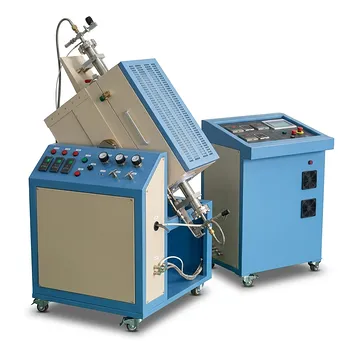
- 1100C High Pressure Rocking Tube Furnace with 2 Inch Super Alloy Processing Tube for Material Synthesis
People Also Ask
- What role does a laboratory high-temperature muffle furnace play in the ash analysis phase of biomass co-firing research? [Guide]
- What is the function of a high-temp muffle furnace in Ni-V oxide synthesis? Optimize your material's performance.
- What role does a high-temperature muffle furnace play in the synthesis of Melem precursors? Precision Polymerization.
- What is the function of a high-temperature muffle furnace in phosphorus-modified zeolite catalyst preparation?
- What is the function of a muffle furnace in aluminoborosilicate glass prep? Stabilize Raw Materials for Superior Purity

Tech Team · ThermUnits
Last updated on Jun 02, 2026
Related Products
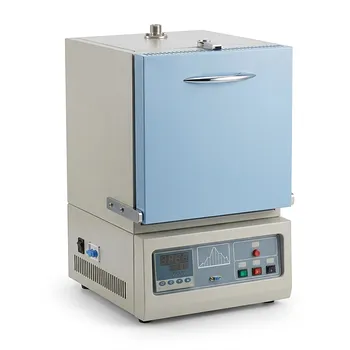
1750C Compact Muffle Furnace 1.7L Ultra High Temperature Laboratory Sintering System for Advanced Ceramics and Material Science Research
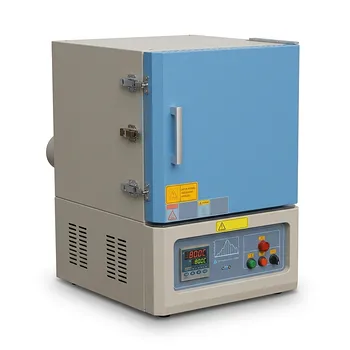
1800C Bench Top Muffle Furnace 18 Liters with Kanthal Super 1900 Heating Elements for High Purity Ceramic Sintering and Material Research

High Temperature 1700C Vertical Tube Furnace for Powder Spherification and Material Sintering
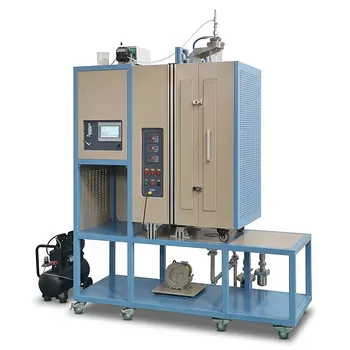
1500C Three Zone Vertical Pyrolysis Furnace for Nanoparticle Synthesis and Advanced Oxide Coating