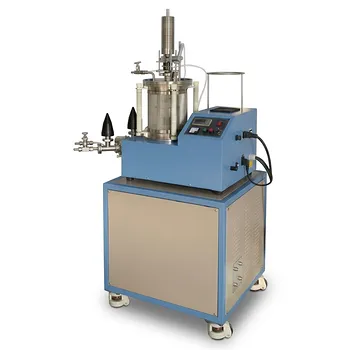
What hot press conditions are needed for MEA fabrication? Optimize Fuel Cell Bonding & Efficiency
Updated 3 months ago
The precision hot press is the critical synchronization point in Membrane Electrode Assembly (MEA) fabrication. This equipment provides the simultaneous application of controlled thermal energy and calibrated uniaxial pressure to the electrode-membrane stack. By maintaining specific conditions—typically temperatures between 120°C and 140°C and pressures ranging from 1.5 MPa to 8 MPa—the hot press facilitates a molecular-level bond that ensures the mechanical and electrochemical integrity of the fuel cell or electrolyzer component.
High-precision hot pressing transforms a loose stack of individual layers into a singular, cohesive electrochemical unit. By balancing material softening with mechanical compression, the process minimizes interfacial contact resistance and maximizes ion transport efficiency, which is vital for high-current-density operation.
The Fundamental Process Parameters
Synchronized Thermal Energy
The hot press applies a set temperature (such as 120°C to 140°C) to the cathode, anode, and ion exchange membrane. This heat softens the polymer membrane and the ionomer within the catalyst layer, allowing them to interdiffuse. This thermal energy is essential for creating a continuous path for ions to travel between the electrodes and the membrane.
Controlled Uniaxial Pressure
Simultaneously with heat, the equipment applies a specific mechanical pressure (often cited between 1.5 MPa and 8 MPa, or specific loads like 1 ton). This pressure ensures that the catalyst layers are pressed into tight physical contact with the membrane surface. Accurate pressure control is vital to achieve uniform thickness and to prevent "dead zones" where contact might be loose.
Precisely Calibrated Dwell Time
While temperature and pressure are the primary variables, the duration of the press is a critical third condition. A short, precise duration allows for sufficient bonding without causing the polymer membrane to degrade or flow excessively. This timing ensures the structural stability of the MEA without compromising the delicate geometry of the catalyst pores.
Enhancing Electrochemical Performance
Reducing Interfacial Contact Resistance
One of the primary goals of hot pressing is to minimize interfacial contact resistance. By bonding the catalyst layer directly to the membrane at a molecular level, the hot press eliminates microscopic gaps that hinder electron and ion flow. This reduction in ohmic resistance directly translates to higher voltage efficiency during operation.
Optimizing Ion Transport Paths
The hot press optimizes ion transport paths by ensuring the ionomer in the catalyst layer is well-integrated with the ion exchange membrane. In Proton Exchange Membrane (PEM) systems, this ensures efficient proton conduction. In Anion Exchange Membrane (AEM) systems, it facilitates the smooth movement of hydroxide ions, which is critical for maintaining high efficiency under high current densities.
Facilitating Catalyst Decal Transfer
In many fabrication workflows, the hot press is used to transfer a catalyst-coated decal onto a bare membrane. The synchronized heat and pressure "release" the catalyst from the carrier film and bond it to the membrane. This method allows for thinner, more precise catalyst layers than direct painting or spraying.
Mechanical Integrity and Longevity
Preventing Interlayer Delamination
A high-precision hot press creates a bond strong enough to withstand the complex operating conditions of a fuel cell, such as humidity cycling and start-up/shut-down (SUSD) cycles. This mechanical strength prevents the layers from delaminating or peeling apart over time. Stable bonding is a prerequisite for the long-term durability of hydrogen-air fuel cells and water electrolyzers.
Protecting Membrane Structural Health
Precision control systems protect the ion exchange membrane from physical damage during the bonding process. Excessive or uneven pressure can lead to "pinholes" or localized thinning, which causes reactant crossover and premature failure. High-precision equipment ensures that pressure is distributed uniformly across the entire active area of the MEA.
Understanding the Trade-offs and Risks
The Risk of Over-Compression
While high pressure reduces contact resistance, over-compression can crush the porous structure of the gas diffusion layer or the catalyst layer. This reduces the "triple-phase boundary" area and hinders the transport of reactant gases (hydrogen/oxygen) and the removal of product water. Finding the "sweet spot" between contact and porosity is the primary challenge in process optimization.
Thermal Degradation Limits
Applying temperatures that are too high can lead to the thermal degradation of the membrane’s sulfonic acid groups or the polymer backbone. If the temperature exceeds the glass transition temperature ($T_g$) of the membrane too significantly, the material may lose its mechanical strength and "flow," leading to internal shorts. Process conditions must be tailored specifically to the chemical stability of the specific membrane material being used.
Optimizing the Hot Press Process for Your Application
To achieve the best results, process conditions must be adjusted based on the specific chemistry and architecture of your MEA.
- If your primary focus is maximizing power density: Use higher pressures (near 8 MPa) and optimized temperatures to achieve the lowest possible contact resistance, provided your catalyst layers are robust.
- If your primary focus is long-term durability: Prioritize a moderate temperature (e.g., 130°C) and a shorter dwell time to create a stable bond without inducing thermal stress or membrane thinning.
- If your primary focus is using fragile, thin membranes: Utilize precision load cells to apply lower, highly uniform pressures (1.5–2 MPa) to prevent physical puncturing or "creeping" of the membrane material.
By masterfully balancing heat, pressure, and time, you can engineer an MEA that achieves peak electrochemical efficiency while maintaining the structural resilience required for real-world operation.
Summary Table:
| Process Parameter | Typical Range | Primary Function |
|---|---|---|
| Temperature | 120°C – 140°C | Softens polymer membrane and ionomer for molecular bonding. |
| Pressure | 1.5 MPa – 8.0 MPa | Ensures uniform contact and minimizes interfacial resistance. |
| Dwell Time | Variable (Seconds/Mins) | Facilitates diffusion without causing thermal degradation. |
| Uniformity | High Precision | Prevents membrane pinholes and ensures consistent thickness. |
Elevate Your Material Research with THERMUNITS
Are you looking to optimize your MEA fabrication or advanced material R&D? THERMUNITS is a leading manufacturer of high-temperature laboratory equipment, providing the precision and reliability required for cutting-edge material science.
Our comprehensive range of thermal processing solutions includes:
- Specialized Hot Press Furnaces for MEA and composite bonding.
- Muffle, Vacuum, and Atmosphere Furnaces for precise heat treatment.
- Tube, Rotary, and CVD/PECVD Systems for advanced chemical vapor deposition.
- Vacuum Induction Melting (VIM) and Electric Rotary Kilns for industrial-scale R&D.
Achieve superior electrochemical performance and mechanical integrity with equipment designed for excellence. Contact our technical experts today to find the perfect thermal solution for your laboratory.
References
- Tao Zhang, Hong Jin Fan. Biaxial strain induced OH engineer for accelerating alkaline hydrogen evolution. DOI: 10.1038/s41467-024-50942-5
Mentioned Products
- High Temperature Vacuum Lamination Hot Press Furnace Machine for Semiconductor Wafer Bonding and Advanced Composite Thermal Processing
- High Pressure 600T Vacuum Induction Hot Press Furnace for Advanced Material Heat Treatment and Sintering
- 2500C High Vacuum Ultrafast Heating Pellet Press with Automated 8 Sample Loading System
- Industrial Vacuum Hot Press Furnace Machine and High Temperature Heated Vacuum Press for Advanced Material Sintering
- Industrial High Temperature Vacuum Hot Press Furnace and Heated Vacuum Press Machine for Material Science Sintering
People Also Ask
- What types of heating systems and insulation are used in Vacuum Hot Press Furnaces? Optimize Your Thermal Processing
- What is a Vacuum Hot Press Furnace and what are its primary industrial applications? Achieve Maximum Material Density
- What are the structural features of the furnace body and chamber in a Vacuum Hot Press Furnace? Master Material Density
- Why is graphite the preferred material for dies and heating elements in Vacuum Hot Press Furnaces? High-Temp Solutions
- What are the primary operational components and mechanisms of a vacuum hot press furnace? A Technical Breakdown

Tech Team · ThermUnits
Last updated on Jun 02, 2026
Related Products
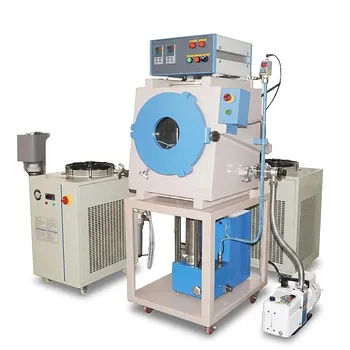
High Temperature Vacuum Lamination Hot Press Furnace Machine for Semiconductor Wafer Bonding and Advanced Composite Thermal Processing
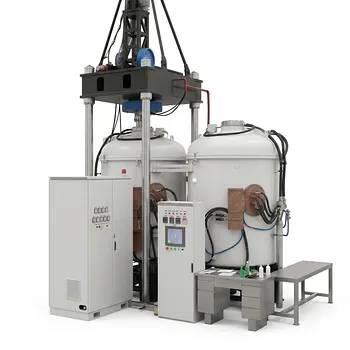
High Pressure 600T Vacuum Induction Hot Press Furnace for Advanced Material Heat Treatment and Sintering
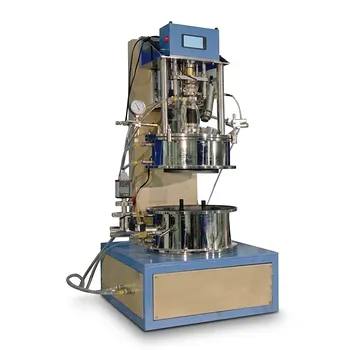
2500C High Vacuum Ultrafast Heating Pellet Press with Automated 8 Sample Loading System
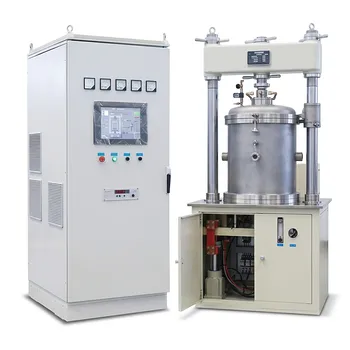
Industrial Vacuum Hot Press Furnace Machine and High Temperature Heated Vacuum Press for Advanced Material Sintering
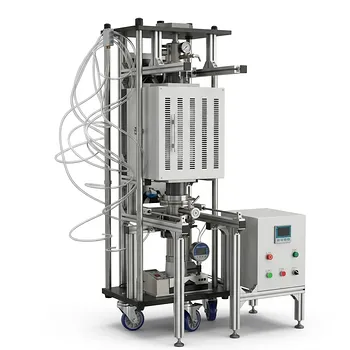
Industrial High Temperature Vacuum Hot Press Furnace and Heated Vacuum Press Machine for Material Science Sintering
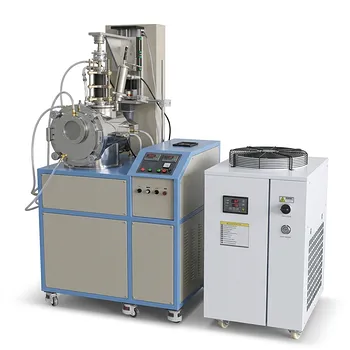
High Temperature Ultrafast Heating Pressing Furnace 2900C Max 100kgf Rapid Thermal Processing System