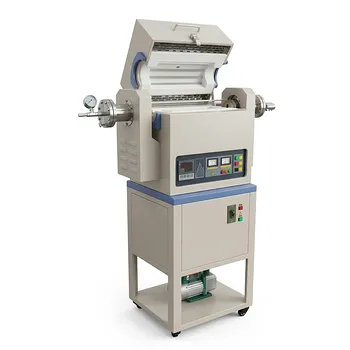
What factors influence material transport and residence time within an electric rotary kiln? Master Thermal Uniformity
Updated 5 months ago
Material transport and residence time in an electric rotary kiln are primarily dictated by mechanical and geometric parameters. Specifically, the rotation speed, the kiln’s angle of inclination, and the material feed rate interact to determine how quickly material moves from the inlet to the discharge end.
Residence time is the result of a delicate balance between mechanical force and gravity. Optimizing this duration requires precise control over the kiln's physical orientation and operational velocity to ensure thorough and uniform thermal processing.
The Mechanics of Material Movement
The Role of Axial Inclination
The primary driver of longitudinal movement is the axial inclination of the kiln. Because the kiln is set at a slight angle, gravity pulls the material toward the discharge end every time it is lifted and dropped.
Without this incline, the material would simply rotate in place without progressing through the heating zones. Even a minor adjustment to the angle can significantly shift the speed of the entire process.
The Impact of Rotational Speed
Rotation speed governs the frequency of the "lift and cascade" cycle. As the kiln turns, internal friction and lifters carry the material upward along the wall until it reaches a critical point and falls back down.
This repetitive motion creates a rolling bed, which is essential for radial mixing. Higher speeds generally increase the velocity of the material through the kiln, thereby reducing the total time it spends in the heat.
Radial Mixing and Thermal Uniformity
Effective transport is not just about forward motion; it is about ensuring the material is mixed radially. The cascading action ensures that particles at the core of the material bed are periodically brought to the surface.
This constant turnover prevents thermal gradients within the material. Consistent radial mixing is the foundation for achieving a uniform product quality at the discharge point.
Factors Determining Residence Time
Influence of Feed Rate on Bed Depth
The material feed rate directly impacts the volume of the material bed within the kiln. A higher feed rate increases the bed depth, which can change the friction dynamics between the material and the kiln wall.
If the feed rate is too high for the current rotation speed, the kiln may become overloaded. This imbalance can lead to "slugging" or uneven flow, which compromises the predictability of the residence time.
How Inclination Angles Shift Dwell Time
The angle of inclination works in tandem with the rotation speed to define the "dwell time" of each particle. Steeper angles provide more gravitational momentum, pushing material through the kiln faster.
Engineers must calibrate this angle during installation or adjustment to match the specific thermal requirements of the material. A well-calibrated angle ensures that the material stays in the hot zone long enough to complete the necessary chemical or physical transformations.
Understanding the Trade-offs
The Risk of Short-Circuiting
One of the primary risks in rotary kiln operation is material short-circuiting. This occurs when material moves through the kiln too quickly to achieve the required temperature, often caused by excessive rotation speeds or an aggressive incline.
Heat Transfer vs. Throughput
There is an inherent trade-off between throughput and thermal soak time. While increasing rotation speed can boost the volume of material processed, it simultaneously reduces the time the material is exposed to the heat source.
If the residence time is too short, the core of the material bed may remain under-processed. Conversely, if the time is too long, you risk overheating the material or wasting energy, which reduces the overall efficiency of the operation.
How to Apply This to Your Process
When optimizing your electric rotary kiln, your adjustments should be driven by your specific production goals:
- If your primary focus is increasing production volume: Incrementally increase the rotation speed and feed rate while monitoring the discharge temperature to ensure the material is still reaching its target state.
- If your primary focus is product consistency: Prioritize a steady, moderate feed rate and a rotation speed that maintains a consistent "rolling" motion of the bed to ensure uniform heat distribution.
- If your primary focus is processing heat-sensitive materials: Use a shallower inclination angle and slower rotation to extend the residence time, allowing for a more gradual and controlled temperature climb.
By mastering the interplay between gravity and rotation, you can transform the rotary kiln from a simple conveyor into a precision thermal instrument.
Summary Table:
| Factor | Primary Influence | Operational Benefit |
|---|---|---|
| Axial Inclination | Controls longitudinal movement speed | Directs gravity-driven material flow |
| Rotation Speed | Governs "lift and cascade" frequency | Ensures radial mixing & thermal uniformity |
| Feed Rate | Adjusts material bed depth & friction | Manages volumetric throughput & dwell time |
| Kiln Geometry | Defines the physical path of particles | Prevents material short-circuiting |
Optimize Your Thermal Processing with THERMUNITS
As a leading manufacturer of high-temperature laboratory equipment, THERMUNITS provides precision thermal solutions tailored for material science and industrial R&D. We offer a comprehensive range of equipment designed to give you absolute control over your heat treatment parameters, including:
- Rotary Kilns & Electric Rotary Furnaces for precise material transport.
- Muffle, Vacuum, Atmosphere, and Tube Furnaces for diverse lab environments.
- CVD/PECVD Systems & Hot Press Furnaces for advanced material synthesis.
- Vacuum Induction Melting (VIM) & Dental Furnaces for specialized applications.
Whether you are refining residence time in a rotary kiln or seeking uniform heating in a vacuum environment, our thermal elements and systems ensure superior results. Enhance your laboratory's capabilities and achieve consistent product quality with our expert engineering.
Contact THERMUNITS today to find your solution!
Mentioned Products
- Electric Rotary Kiln Continuous Working Small Rotary Furnace Heating Pyrolysis Plant
- Electric Rotary Kiln Small Rotary Furnace for Activated Carbon Regeneration
- Electric Rotary Kiln Small Rotary Furnace Biomass Pyrolysis Plant
- 900°C Max Rotary Tube Furnace with 8 Inch 310S Alloy Tube and Optional Multi Zone Heating for Industrial Material Calcination
- High Temperature Tilting Rotary Tube Furnace with Integrated Mass Flow Control and Multi Zone Heating
People Also Ask
- What thermal efficiency can be expected from an electric rotary kiln compared to fuel-fired alternatives? Gain 95% efficiency.
- How does the use of an electric rotary kiln facilitate CO2 capture in cement and lime production? Achieve High-Purity CCUS
- What are the maintenance and service life advantages of an electric rotary kiln? 25+ Year Longevity & Low Maintenance
- How does the electric rotary kiln support environmental compliance and sustainability? Achieve Zero-Emission Production
- What are the primary components and heating mechanisms of an electric rotary kiln? Optimize High-Purity Heat Treatment

Tech Team · ThermUnits
Last updated on Apr 14, 2026
Related Products
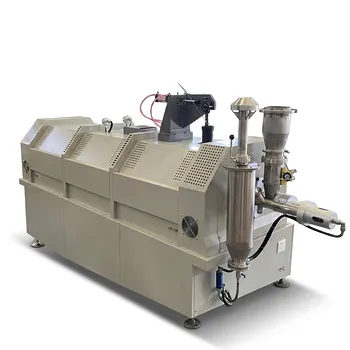
Electric Rotary Kiln Continuous Working Small Rotary Furnace Heating Pyrolysis Plant
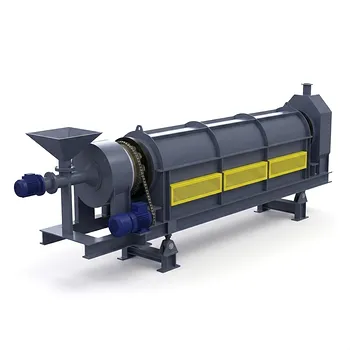
Electric Rotary Kiln Small Rotary Furnace for Activated Carbon Regeneration
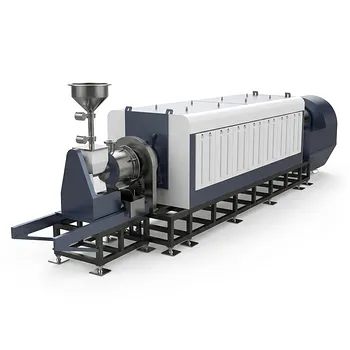
Electric Rotary Kiln Small Rotary Furnace Biomass Pyrolysis Plant
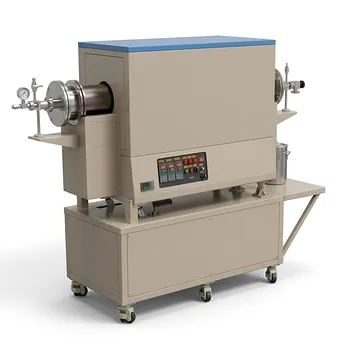
900°C Max Rotary Tube Furnace with 8 Inch 310S Alloy Tube and Optional Multi Zone Heating for Industrial Material Calcination
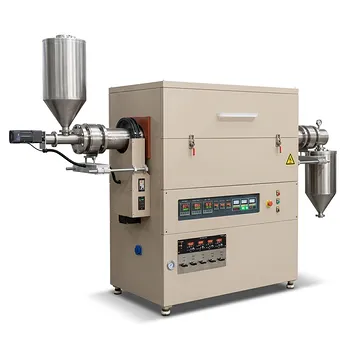
High Temperature Tilting Rotary Tube Furnace with Integrated Mass Flow Control and Multi Zone Heating
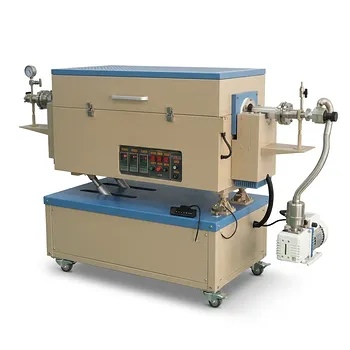
Three Zone Rotary Tube Furnace for High Temperature Powder Processing and Material Research
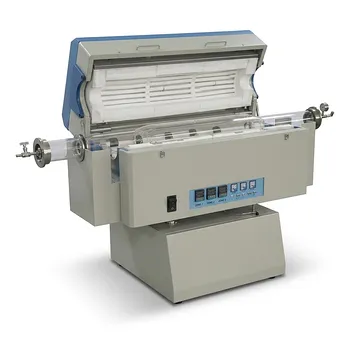
Large Three Temperature Zone Rotating Tube Furnace for High Uniformity Material Sintering
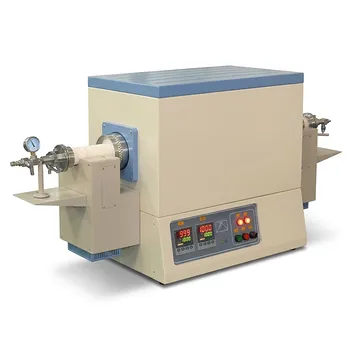
High Temperature 1700C Dual Zone Rotary Tube Furnace with 60mm Alumina Tube and Precision Rotation Control
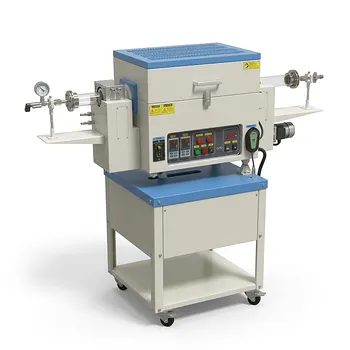
4 Inch Two Zone Rotary CVD Tube Furnace for High Temperature Battery Material Synthesis and Advanced Material Calcination
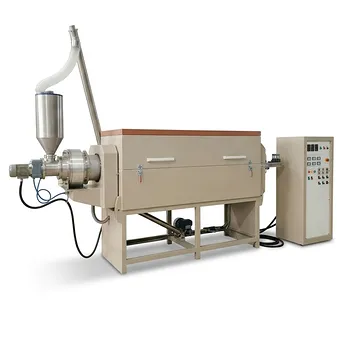
Continuous Feeding Rotary Tube Furnace for Industrial Powder Heat Treatment and Material Research
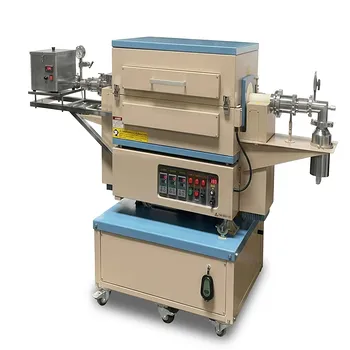
1500C 3-Zone Rotary Tube Furnace 60mm with Automatic Powder Feeding and Receiving System for Continuous Material Synthesis
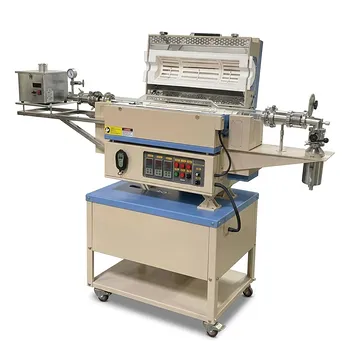
5 Inch Rotary Tube Furnace with Automatic Feeding and Receiving System 1200C Three Zone CVD Powder Processing
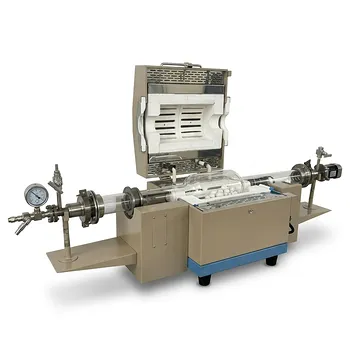
High Temperature Rotary Tube Furnace with Integrated Ball Milling and Gas Flow Function for Powder Nitriding

Vertical 1700C Vacuum and Atmosphere Tube Furnace with 80mm Alumina Tube
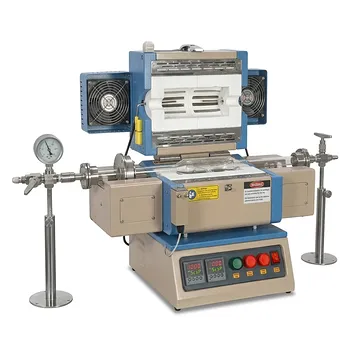
Dual Zone Rotary Tube Furnace for Uniform Powder Calcination 1000C 2 Inch Quartz Tube
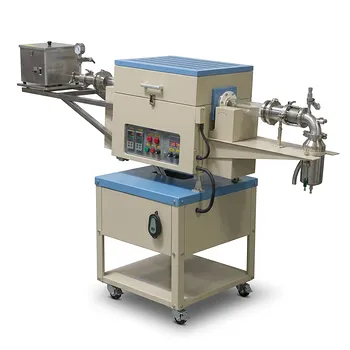
Two Zone Rotary CVD Furnace with Automatic Feeding and Receiving System for Powder Processing
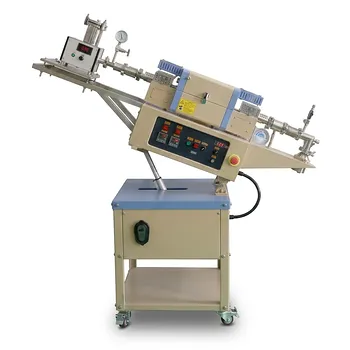
1100°C Dual Zone Rotary Tube Furnace with Automatic Feeding and Collection System for Continuous Powder Processing

5 Inch Three Zone Rotary Tube Furnace with Integrated Gas Delivery System and 1200C Capability for Advanced Material CVD Processing
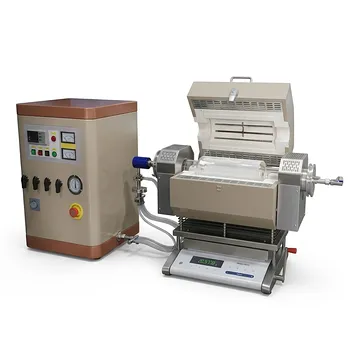
Mini Rotary Tubular Furnaces for Precision Powder Heat Treatment and Thermogravimetric Analysis