What factors should be considered when choosing crucible materials for the molten salt synthesis of Li4Ti5O12 (LTO)? Guide to Purity
Updated 3 months ago
Selecting crucible materials for $Li_4Ti_5O_{12}$ (LTO) synthesis requires a precise evaluation of chemical compatibility with highly aggressive molten fluxes. The primary factors to consider are the crucible's resistance to corrosive alkali metal salt mixtures, such as LiCl-KCl, and the specific purity requirements of the final LTO product.
The choice of crucible material is a strategic trade-off between the cost-effectiveness of high-purity alumina and the absolute chemical inertness of platinum, determined by the need to prevent aluminum or silicon contamination during the high-temperature molten salt process.
The Corrosive Nature of Molten Salt Fluxes
Interaction with Alkali Metal Halides
The synthesis of LTO often employs alkali metal salt fluxes like LiCl-KCl mixtures to facilitate the reaction at lower temperatures. These molten salts are exceptionally aggressive, capable of leaching elements from the container walls through chemical dissolution or grain boundary attack.
Temperature-Induced Chemical Activity
At the high temperatures required for molten salt synthesis, the kinetic energy of the flux increases the rate of chemical reactions with the crucible. A material that appears stable at room temperature may rapidly degrade when in contact with liquid salts at several hundred degrees Celsius.
Preventing Impurity Migration and Contamination
Avoiding Aluminum and Silicon Ingress
The most significant risk during synthesis is the migration of aluminum (Al) or silicon (Si) from the crucible into the LTO lattice. These impurities can alter the electrochemical properties of the anode material, potentially degrading its cycling stability or rate capability.
Requirements for Single-Crystal Growth
When the objective is to grow high-purity single-crystal LTO, the margin for error is non-existent. In these precision environments, even trace amounts of contamination from the crucible can disrupt the crystal structure or lead to the formation of secondary phases.
Material Selection: Alumina vs. Platinum
High-Purity Alumina for Routine Synthesis
High-purity alumina ($Al_2O_3$) crucibles are the standard choice for routine laboratory synthesis and scaling up production. They offer a functional level of resistance to molten salts while remaining cost-effective for bulk material preparation.
Platinum for Precision Research
Platinum crucibles represent the gold standard for high-precision research and the preparation of ultra-pure samples. Because platinum does not react with the molten salt environment, it ensures the integrity of the chemical environment and the purity of the resulting LTO.
Understanding the Trade-offs
Cost vs. Purity
The most obvious trade-off is the significant capital investment required for platinum compared to alumina. While platinum provides a superior chemical environment, its high cost often limits its use to small-scale, high-stakes research.
Lifespan and Thermal Shock
Alumina crucibles are susceptible to thermal shock and may crack over multiple heating and cooling cycles, especially if the flux has infiltrated the material's pores. Platinum is more physically resilient but requires specialized handling to avoid mechanical deformation at high temperatures.
Contamination Risk Management
Using alumina introduces a calculated risk of trace aluminum contamination, which may be acceptable for standard battery testing but unacceptable for fundamental materials science. Users must determine the "purity threshold" their specific application requires before selecting a vessel.
Making the Right Choice for Your Goal
When selecting a crucible for LTO synthesis, align your choice with your specific research or production objectives:
- If your primary focus is routine synthesis or cost-effective scaling: Utilize high-purity alumina crucibles to balance chemical resistance with operational budget constraints.
- If your primary focus is single-crystal growth or precision electrochemistry: Invest in platinum crucibles to eliminate the risk of aluminum or silicon contamination and ensure structural perfection.
- If your primary focus is screening various flux compositions: Start with alumina to minimize costs during the exploratory phase before moving to platinum for finalized, high-purity samples.
Choosing the correct vessel ensures that the electrochemical performance of your $Li_4Ti_5O_{12}$ is a result of your synthesis parameters, not the degradation of your equipment.
Summary Table:
| Crucible Material | Chemical Resistance | Contamination Risk | Cost-Effectiveness | Best Application |
|---|---|---|---|---|
| High-Purity Alumina | Moderate (subject to grain boundary attack) | Risk of trace Al/Si migration | High | Routine synthesis & scaling up |
| Platinum | Excellent (completely inert to flux) | Zero contamination | Low (High investment) | Single-crystal growth & precision R&D |
| Quartz/Silica | Low (highly reactive with Li salts) | High Si contamination | High | Not recommended for LTO synthesis |
Elevate Your Advanced Material Synthesis with THERMUNITS
Precise heat treatment is critical for the success of $Li_4Ti_5O_{12}$ (LTO) synthesis. THERMUNITS is a leading manufacturer of high-performance laboratory equipment designed for the most demanding material science and industrial R&D applications.
Whether you are scaling up production or conducting high-stakes single-crystal research, our comprehensive range of thermal solutions—including Muffle, Vacuum, Atmosphere, Tube, Rotary, and Hot Press furnaces, as well as CVD/PECVD systems and Vacuum Induction Melting (VIM) furnaces—provides the temperature precision and atmosphere control you need to ensure purity and performance.
Don't let equipment limitations compromise your results. Contact our experts today to find the perfect furnace for your molten salt synthesis and take your energy storage research to the next level!
References
- C. Julien, A. Mauger. Fabrication of Li4Ti5O12 (LTO) as Anode Material for Li-Ion Batteries. DOI: 10.3390/mi15030310
Mentioned Products
- Automatic 10 Crucible Induction Melting and Casting System with Stirring Function and Glovebox Integration 2000C
- Compact Crucible Melting Furnace 1100C Programmable Temperature Controller Metal Sintering Equipment
- High Temperature Vertical Crucible Furnace with 22L Heating Chamber and 1200C Maximum Temperature
- 1100C Crucible Melting Furnace with Stirring Function for Glovebox and Air Sensitive Alloy Research
- 600°C Vertical Crucible Furnace with SS316 Alloy Reactor and 6 Port Vacuum Flange
People Also Ask
- Why must high-purity argon gas be used as a protective atmosphere during high-temperature reduction smelting experiments?
- How should the choice between a Quartz crucible and an Alumina crucible be made for La2O2S? Optimize Material Purity
- How does Vacuum Induction Melting mitigate hydrogen embrittlement? Ensure Structural Integrity for Critical Alloys
- What role does Vacuum Induction Melting play in medical implants? Ensure High-Purity Alloys for Superior Performance
- Why is Vacuum Induction Melting preferred for manufacturing corrosion-resistant alloys? Ensure Ultra-High Purity

Tech Team · ThermUnits
Last updated on Jun 02, 2026
Related Products
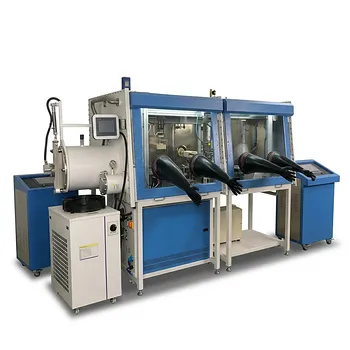
Automatic 10 Crucible Induction Melting and Casting System with Stirring Function and Glovebox Integration 2000C
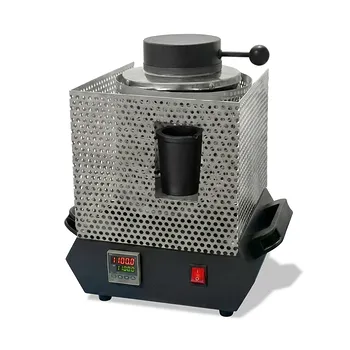
Compact Crucible Melting Furnace 1100C Programmable Temperature Controller Metal Sintering Equipment
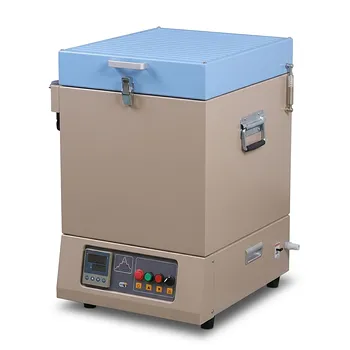
High Temperature Vertical Crucible Furnace with 22L Heating Chamber and 1200C Maximum Temperature
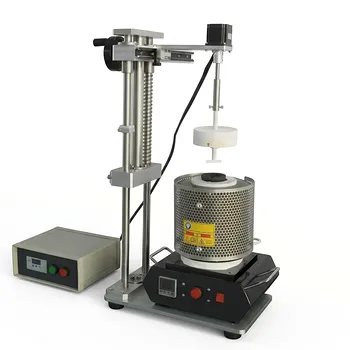
1100C Crucible Melting Furnace with Stirring Function for Glovebox and Air Sensitive Alloy Research
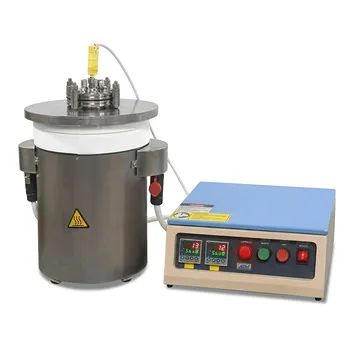
600°C Vertical Crucible Furnace with SS316 Alloy Reactor and 6 Port Vacuum Flange
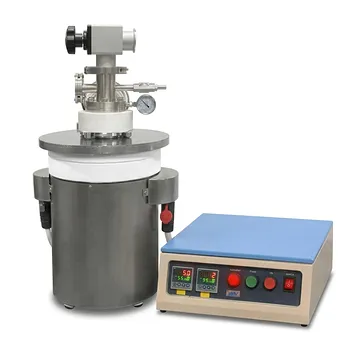
1100C High Temperature Vacuum Crucible Furnace with Quartz Chamber for Thermal Processing and Sintering