What function do high-purity graphite or ceramic crucibles serve during the high-temperature annealing of silicon steel?
Updated 3 months ago
High-purity graphite and ceramic crucibles function as essential high-temperature carriers that provide structural support and thermal stability during the annealing of silicon steel. These materials prevent the infiltration of atmospheric or container-borne impurities into the steel sheets, which is critical for maintaining chemical composition and ensuring the accuracy of grain boundary energy and mobility measurements.
These high-purity vessels serve as a protective barrier and thermal buffer, ensuring that the physical and chemical properties of the silicon steel remain uncontaminated during high-temperature processing. By preventing impurity migration, they allow researchers to reliably calculate grain boundary energy and mobility without interference from external variables.
Structural Support and Thermal Stability
Maintaining Integrity at Elevated Temperatures
High-temperature annealing, often reaching levels like 850 °C, requires carrier materials that will not deform or crack. High-purity graphite and ceramics provide the necessary structural strength to support silicon steel sheets throughout the heating cycle.
Ensuring Uniform Heat Distribution
Graphite, in particular, is prized for its high thermal conductivity. This property ensures that the silicon steel samples are heated uniformly, reducing the risk of thermal gradients that could lead to uneven grain growth or structural defects.
Resistance to Thermal Shock
Annealing processes involve significant temperature shifts that can compromise lesser materials. Both high-purity graphite and alumina ceramics exhibit excellent thermal shock stability, allowing them to maintain their physical shape during rapid heating or cooling phases.
Preservation of Chemical and Physical Purity
Preventing Impurity Infiltration
The primary role of "high-purity" materials is to act as a neutral environment. Using these crucibles prevents the infiltration of external impurities, such as metal ions or atmospheric contaminants, from leaching into the silicon steel during prolonged heating.
Stabilizing Chemical Composition
Silicon steel is highly sensitive to its alloying elements; even minute changes in chemistry can alter its magnetic properties. High-purity carriers ensure the chemical composition remains stable, which is a fundamental requirement for reproducible industrial and scientific results.
Safeguarding Scientific Measurements
In research contexts, maintaining purity is vital for calculating grain boundary energy and mobility. If impurities were to enter the sample, the physical premises for these calculations would change, rendering the experimental data invalid.
Material Selection: Graphite vs. Ceramics
Chemical Inertness of Graphite
High-purity graphite is often chosen because it is chemically inert in specific high-temperature environments, such as nitrogen atmospheres. It resists adhesion with reactants, a common problem with standard ceramic vessels, ensuring the samples can be removed cleanly after annealing.
Superior Stability of Alumina
High-purity alumina (ceramic) crucibles offer exceptional structural strength and can withstand temperatures exceeding 1300°C. They are particularly effective when the process requires a material that is completely non-reactive to transition metal catalysts or carbon-based materials.
Understanding the Trade-offs
The Risk of Carbon Interaction
While graphite is an excellent carrier, it can sometimes facilitate controlled carbon introduction in certain alloys. While this is useful for some materials (like TiAl alloys), it must be carefully monitored in silicon steel to ensure no unwanted carbon contamination occurs.
Fragility and Cost
High-purity ceramic crucibles can be prone to brittleness and may crack if handled roughly or subjected to extreme thermal gradients. High-purity graphite, while more robust in terms of thermal shock, may be more expensive than lower-grade industrial alternatives.
Atmosphere Sensitivity
Graphite may oxidize if the annealing atmosphere contains oxygen. Therefore, the choice between ceramic and graphite often depends on the furnace atmosphere (vacuum, inert gas, or reducing gas) and the specific chemical sensitivity of the silicon steel grade being processed.
Making the Right Choice for Your Goal
When selecting a crucible for silicon steel annealing, your choice should align with your specific experimental or production requirements:
- If your primary focus is thermal uniformity and shock resistance: Graphite is the superior choice due to its high thermal conductivity and ability to withstand rapid temperature changes.
- If your primary focus is absolute chemical purity at extremely high temperatures: High-purity alumina ceramics provide a more inert environment that minimizes the risk of carbon or metallic ion migration.
- If your primary focus is the study of grain boundaries and mobility: High-purity materials (either graphite or ceramic) are mandatory to ensure that the chemical composition of the steel remains unchanged during the test.
Choosing the correct high-purity carrier is ultimately an investment in the accuracy and reliability of the final material properties.
Summary Table:
| Feature | High-Purity Graphite Crucible | High-Purity Alumina (Ceramic) Crucible |
|---|---|---|
| Primary Strength | Superior thermal conductivity & shock resistance | Exceptional chemical inertness & structural strength |
| Temperature Limit | High stability in inert/vacuum atmospheres | Withstands temperatures exceeding 1300°C |
| Best Application | Uniform heating and rapid thermal cycles | Preventing carbon migration & metallic ion infiltration |
| Key Outcome | Reduced thermal gradients & structural integrity | Stable chemical composition & valid research data |
Optimize Your Annealing Process with THERMUNITS
Achieving precise grain boundary energy and mobility measurements requires the perfect synergy between your furnace and your crucible materials. As a leading manufacturer of high-temperature laboratory equipment, THERMUNITS provides the advanced thermal solutions necessary for cutting-edge material science and industrial R&D.
Whether you are performing silicon steel annealing or complex chemical vapor deposition, our comprehensive range of equipment is designed to meet the most rigorous purity and stability standards:
- Advanced Furnaces: Muffle, Vacuum, Atmosphere, Tube, Rotary, and Hot Press furnaces.
- Specialized Systems: CVD/PECVD systems, Dental Furnaces, and Electric Rotary Kilns.
- High-End Melting: Vacuum Induction Melting (VIM) furnaces and specialized Thermal Elements.
Don't let impurity infiltration compromise your research. Leverage our expertise in thermal processing to enhance your lab's efficiency and accuracy. Contact THERMUNITS today to find your solution!
References
- Songtao Chang, Liang Zuo. Texture-Differentiated Grain Growth in Silicon Steel: Experiments and Modeling. DOI: 10.3390/ma17123037
Mentioned Products
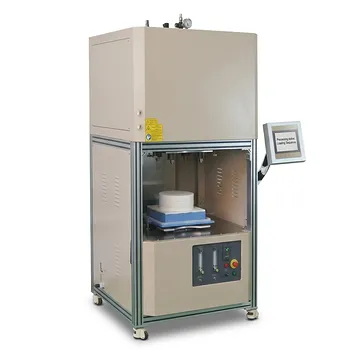
- High Temperature Vertical Atmosphere Controlled Furnace with Automatic Bottom Loading and 1700°C Capacity for Advanced Material Research
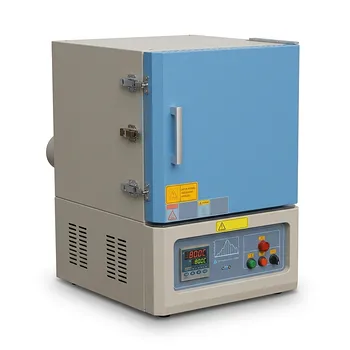
- 1800C Bench Top Muffle Furnace 18 Liters with Kanthal Super 1900 Heating Elements for High Purity Ceramic Sintering and Material Research
People Also Ask
- What role does atmosphere control play in technical ceramics and glass? Master Material Purity and Precision
- What is the function of a vertical tube furnace in MnOx-SiO2 research? Precision Control & Quenching
- What's the Role of Tube Furnaces in FeCuS-N-C Synthesis? Precision Pyrolysis & Atmosphere Control
- What role does a high-temperature atmosphere furnace play in the direct electrochemical reduction of CO2? - Key Insights
- What is the function of a high-temperature tube furnace with atmosphere control? Optimize Carbonization of Composites

Tech Team · ThermUnits
Last updated on Jun 03, 2026