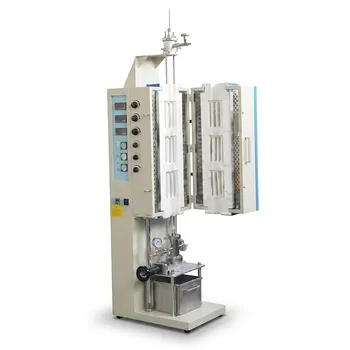
What is the function of a high-temperature tube furnace with atmosphere control? Optimize Carbonization of Composites
Updated 3 months ago
High-temperature tube furnaces with atmosphere control serve as the primary reactor for transforming polymer precursors into structural or functional carbon matrices. By providing temperatures often exceeding 800°C (and up to 1250°C) within a strictly controlled inert environment, these furnaces facilitate the elimination of non-carbon elements and the reorganization of carbon atoms. This process is essential for ensuring the chemical stability, mechanical strength, and electrical conductivity of the final composite material.
The core function of an atmosphere-controlled tube furnace is to provide a precise, oxygen-free thermal environment that enables the physicochemical transition from organic polymers to carbon structures. This equipment ensures that volatile components are removed and carbon chains are reorganized without the material succumbing to oxidative degradation.
The Mechanics of Carbonization and Structural Transformation
Thermal Decomposition and Elemental Elimination
During the carbonization stage, the furnace subjects composite materials to extreme heat to trigger the thermal decomposition of the polymer matrix. This process effectively removes non-carbon atoms, such as hydrogen, oxygen, and nitrogen, from the precursor.
The removal of these elements allows the remaining carbon atoms to concentrate, turning polymer fibers or fillers into a pure carbon skeleton. This transition is what provides the material with its high chemical stability and foundational structure.
Molecular Reorganization and Carbon Chain Formation
Beyond simple decomposition, the high-temperature environment promotes the reorganization of carbon chains into more stable, high-strength configurations. In composite membranes, this process transforms simple polymer fibers into high-strength carbon fibers or conductive nitrogen-doped frameworks.
For specific materials like MXenes or cellulose composites, the furnace facilitates the conversion of the scaffold into a highly conductive carbon matrix. This molecular-level restructuring is what ultimately determines the material's final mechanical properties and electrical performance.
The Critical Role of Atmosphere Control and Sealing
Prevention of Oxidative Loss
The primary reason for atmosphere control is to maintain a strict nitrogen (N2) or argon (Ar) environment that is entirely oxygen-free. At temperatures exceeding 600°C, carbon materials will react with even trace amounts of oxygen and undergo oxidative combustion.
A superior sealing system ensures that the carbon fibers or matrices do not burn away during the heat treatment. This protection is vital for maintaining the "yield" of the process and ensuring that the final composite retains its intended mass and morphology.
Facilitating In-Situ Conversion
Inert atmospheres also allow for the in-situ conversion of specific polymers, such as PVP, into structured carbon substrates. By isolating the material from reactive gases, the furnace enables the polymer to encapsulate other components, like silica nanospheres, without interfering with their chemistry.
This controlled environment is also used to create specialized carbon types, such as amorphous or mesophase carbon from precursors like phenolic resin. Without precise atmosphere control, these sensitive chemical transitions would be impossible to achieve.
Understanding Critical Success Factors and Trade-offs
The Danger of Temperature Gradients
Temperature uniformity within the furnace tube is a decisive factor in the quality of the final composite. If the thermal field is inconsistent, different parts of the specimen will reach different degrees of carbonization.
Non-uniform heating leads to variations in ablation performance and mechanical strength across the material. For high-performance carbon/carbon composites, even minor temperature fluctuations can result in a rejected batch.
Heating Rate and Internal Pressure
The rate at which the furnace temperature increases is just as critical as the final temperature itself. If the heating rate is too high (e.g., significantly faster than 1°C/min), volatiles may escape too rapidly from the material's interior.
This rapid gas escape creates internal pressure that leads to macro-cracks within the carbon matrix. Therefore, the furnace’s ability to execute multi-stage, slow-ramp heating profiles is essential for producing high-quality, defect-free composites.
Optimizing Carbonization for Your Specific Project
To achieve the best results, the furnace parameters must be aligned with the specific requirements of your precursor and desired composite properties.
- If your primary focus is electrical conductivity: Use an inert nitrogen atmosphere and temperatures near 1000°C to promote the formation of nitrogen-doped conductive frameworks.
- If your primary focus is structural integrity and crack prevention: Utilize a highly precise temperature control system to maintain a slow heating rate (approx. 1°C/min) to allow volatiles to escape without damaging the matrix.
- If your primary focus is preserving complex nanostructures (like MXenes): Select a furnace with superior sealing and argon protection to ensure the two-dimensional structure remains intact during the polymer-to-carbon transition.
The high-temperature tube furnace is the indispensable tool that bridges the gap between a polymer precursor and a high-performance carbon composite.
Summary Table:
| Key Feature | Role in Carbonization Stage | Benefit to Composite Material |
|---|---|---|
| Inert Atmosphere | Prevents oxidative combustion at >600°C | Protects material yield and mass |
| Thermal Decomposition | Eliminates non-carbon atoms (H, O, N) | Creates a pure, stable carbon skeleton |
| Molecular Reorganization | Facilitates formation of carbon chains | Enhances mechanical and electrical strength |
| Ramp Rate Control | Manages volatile escape speed | Prevents internal pressure and macro-cracks |
| Thermal Uniformity | Ensures consistent heat distribution | Guarantees uniform ablation and strength |
Elevate Your Material Research with THERMUNITS
Achieving superior carbonization results requires a perfect balance of atmosphere purity and thermal precision. As a global leader in high-temperature laboratory equipment, THERMUNITS provides the advanced technology necessary for cutting-edge material science and industrial R&D.
From Atmosphere and Tube furnaces to Vacuum, Hot Press, and CVD/PECVD systems, our equipment is engineered to deliver the temperature uniformity and gas control your composites demand. Whether you are developing carbon matrices, MXenes, or high-performance ceramics, our solutions ensure your materials meet the highest standards of conductivity and structural integrity.
Ready to optimize your heat treatment process?
Contact THERMUNITS Today to consult with our experts and discover how our thermal solutions can accelerate your innovation.
References
- Xiaohui Zhang, Guobin Wang. Preparation of Phosphorus/Hollow Silica Microsphere Modified Polyacrylonitrile-Based Carbon Fiber Composites and Their Thermal Insulation and Flame Retardant Properties. DOI: 10.3390/pr12112489
Mentioned Products
- High Temperature Vertical Atmosphere Controlled Furnace with Automatic Bottom Loading and 1700°C Capacity for Advanced Material Research
- 1750°C High Temperature Benchtop Vacuum Atmosphere Tube Furnace with Kanthal Super 1800 Heating Elements and 60mm Alumina Processing Tube
- 1700C High Temperature Alumina Tube Furnace with 18 Inch Heated Zone and Vacuum Sealing Flanges
- 1200°C Atmosphere Controlled Automatic Bottom Loading Furnace with 6 Inch Quartz Tube
- 1200C Hybrid Muffle and Tube Furnace for Material Research with Dual Atmosphere Control Quartz Tubes
People Also Ask
- What role does atmosphere control play in technical ceramics and glass? Master Material Purity and Precision
- What is the function of a vertical tube furnace in MnOx-SiO2 research? Precision Control & Quenching
- What's the Role of Tube Furnaces in FeCuS-N-C Synthesis? Precision Pyrolysis & Atmosphere Control
- What role does a high-temperature atmosphere furnace play in the direct electrochemical reduction of CO2? - Key Insights
- What physical conditions does a high-temperature atmosphere furnace provide for MXene exfoliation? Process Guide

Tech Team · ThermUnits
Last updated on Jun 02, 2026
Related Products
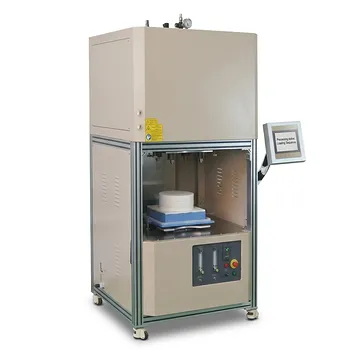
High Temperature Vertical Atmosphere Controlled Furnace with Automatic Bottom Loading and 1700°C Capacity for Advanced Material Research

1750°C High Temperature Benchtop Vacuum Atmosphere Tube Furnace with Kanthal Super 1800 Heating Elements and 60mm Alumina Processing Tube

1700C High Temperature Alumina Tube Furnace with 18 Inch Heated Zone and Vacuum Sealing Flanges
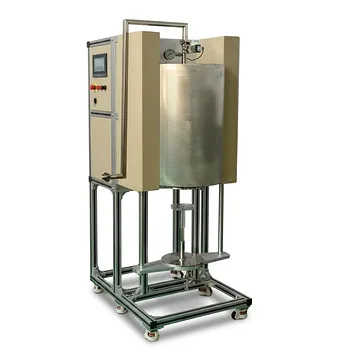
1200°C Atmosphere Controlled Automatic Bottom Loading Furnace with 6 Inch Quartz Tube
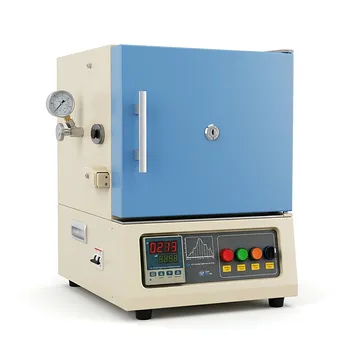
1200C Hybrid Muffle and Tube Furnace for Material Research with Dual Atmosphere Control Quartz Tubes
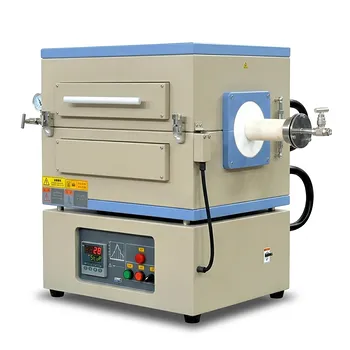
1500°C Split Tube Furnace with Alumina Tube and Vacuum Sealing Flanges for Material Research
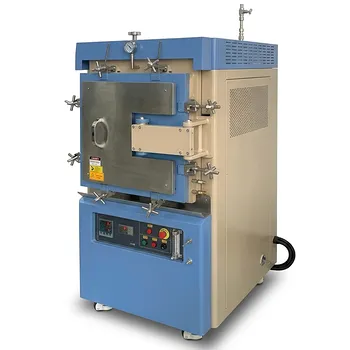
Atmosphere Controlled Muffle Furnace 1700C Maximum Temperature 80L High Capacity Vacuum Inert Gas Box Furnace
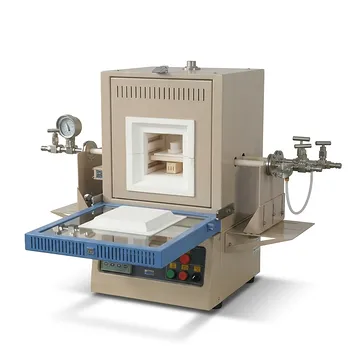
1700C Compact Hybrid Furnace with Dual Layer Box Sintering and Controlled Atmosphere Alumina Tubes

Vertical 1700C Vacuum and Atmosphere Tube Furnace with 80mm Alumina Tube
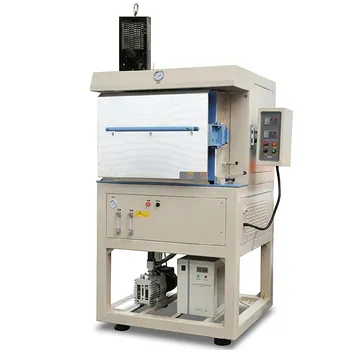
1200C Hydrogen Atmosphere Box Furnace with 5 Heated Sides and 64L Chamber
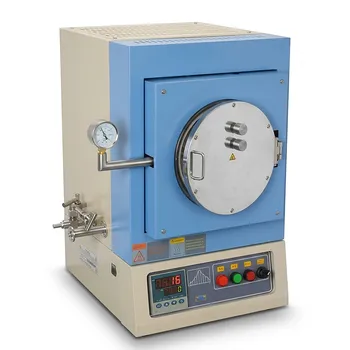
1100°C High Temperature Quartz Chamber Furnace 8 Inch OD with 7.6 Liter Capacity and Vacuum Atmosphere Capability

High Temperature 1700C Tube Furnace with High Vacuum Turbomolecular Pump System and Multi Channel Mass Flow Controller Gas Mixer

High Temperature Tube Furnace 1500C with Sliding Flanges and 50mm OD for Rapid Thermal Processing Fast Heating and Cooling

High Temperature 1700C Vertical Tube Furnace for Powder Spherification and Material Sintering
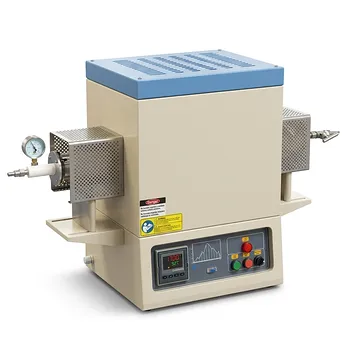
High Temperature Three Zone Tube Furnace 1700C with Alumina Tube and Water Cooled Flanges

High Temperature 1700C Six Zone Split Tube Furnace with Alumina Tube and Water Cooled Flanges

High Temperature 1700C Benchtop Tube Furnace with 5 Inch Heating Zone High Purity Alumina Tube and Vacuum Sealing Flanges
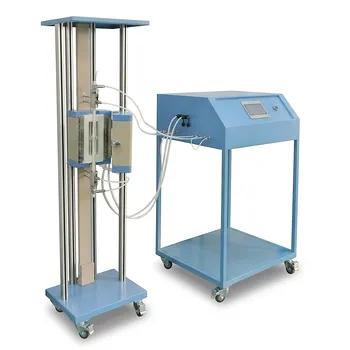
High Temperature Vertical Tube Furnace for Small Solid Oxide Fuel Cell Testing with Four Channel Gas Control
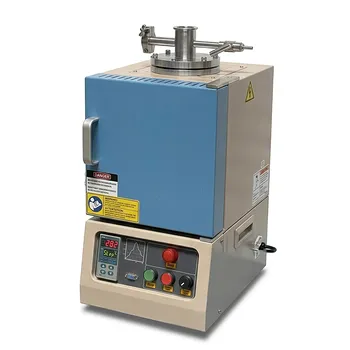
High Temperature Hybrid Muffle and Tube Furnace with Vacuum Capability and PID Control