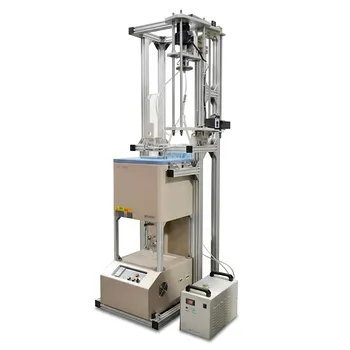
What is the function of a vertical tube furnace in MnOx-SiO2 research? Precision Control & Quenching
Updated 3 months ago
The high-temperature vertical tube furnace serves as a precision thermodynamic reactor that simultaneously controls temperature, gas chemistry, and cooling rates to isolate specific phases in the $MnO_x-SiO_2$ system. By regulating the oxygen partial pressure ($p_{O_2}$), the furnace ensures that manganese remains in a target oxidation state—such as $Mn^{2+}$ or $Mn^{3+}$—which is otherwise highly unstable at elevated temperatures.
Core Takeaway: In $MnO_x-SiO_2$ research, this equipment acts as a controlled environment that stabilizes chemically sensitive manganese oxides and utilizes a vertical "drop-quench" mechanism to preserve high-temperature equilibrium states for room-temperature analysis.
Stabilizing Manganese Oxidation States
Precision Oxygen Partial Pressure Regulation
Manganese is exceptionally sensitive to its environment, transitioning between multiple oxidation states ($Mn^{2+}$, $Mn^{3+}$, etc.) based on the available oxygen. The atmosphere control system uses precise gas mixtures, such as CO/$CO_2$ or $Ar/O_2$, to dictate the exact oxygen partial pressure within the furnace tube. This level of control is the only way to ensure the researchers are studying a specific $MnO_x$ phase rather than an unintended mixture of oxides.
Simulating Industrial and Geological Conditions
By manipulating the gas ratios, the furnace can replicate the specific thermodynamic conditions found in industrial smelting or geological formations. This allows for the creation of phase equilibrium diagrams, which map out how $MnO_x$ and $SiO_2$ interact under varied chemical potentials. Without this active atmosphere management, the manganese would likely over-oxidize or reduce, rendering the phase data inaccurate.
The Advantage of the Vertical Configuration
Gravity-Assisted Rapid Quenching
The vertical orientation is not merely a spatial choice; it is a functional requirement for rapid quenching. Samples are typically suspended in the "hot zone" by a fine wire, which is then fused or released at the end of the experiment. This allows the sample to fall instantly into a quenching medium (like water or oil) at the bottom of the tube, "freezing" the high-temperature microstructure in milliseconds.
Preserving Equilibrium Microstructures
Phase structures that exist at 1300°C often transform or decompose if cooled slowly. Rapid quenching bypasses these low-temperature transformations, ensuring that the crystal structures and chemical distributions observed during later analysis (such as XRD or SEM) are identical to those that existed at equilibrium. This "capture" is essential for accurately identifying the boundaries between liquid and solid phases in the $MnO_x-SiO_2$ system.
Thermal Stability and Material Integrity
Maintaining a Constant Isothermal Zone
To reach thermodynamic equilibrium, a sample must experience a perfectly stable thermal field for extended periods. High-temperature furnaces utilize Molybdenum Disilicide (MoSi2) heating elements to maintain temperatures typically ranging from 1050°C to 1350°C. This stability ensures that the chemical reactions between the slag and the oxides reach a steady state without temperature fluctuations skewing the results.
High-Performance Ceramic Containment
The furnace employs aluminosilicate or high-purity alumina working tubes to separate the sample and controlled atmosphere from the heating elements. These tubes must remain gas-tight at extreme temperatures to prevent atmospheric leaks that would ruin the oxygen partial pressure settings. The vertical setup reduces mechanical stress on these ceramic tubes, extending their operational life during long-term equilibrium experiments.
Understanding the Trade-offs and Pitfalls
Atmospheric Leakage and Contamination
Even a microscopic leak in the tube seals can introduce trace oxygen, which completely shifts the $Mn^{2+}/Mn^{3+}$ ratio. Researchers must constantly verify the integrity of the gas path and use high-purity gases to avoid "poisoning" the sample with unintended elements.
Sample-Crucible Interactions
At high temperatures, the $MnO_x-SiO_2$ slag can be highly corrosive, potentially reacting with the sample holder or the furnace tube itself. Choosing the wrong container material can lead to chemical contamination, where elements from the crucible leach into the slag and alter the phase equilibrium.
How to Apply These Principles in Research
Strategic Execution for Reliable Data
- If your primary focus is Manganese oxidation accuracy: Prioritize the calibration of your gas mixing system and use a zirconia oxygen sensor to verify real-time $p_{O_2}$ levels inside the tube.
- If your primary focus is Phase Identification: Ensure the vertical drop path is unobstructed to maximize quenching speed, as even a one-second delay can allow for phase changes.
- If your primary focus is Isothermal Equilibrium: Use a thermocouple to map the furnace's "hot zone" before the experiment to ensure your sample is positioned exactly in the most stable thermal region.
By masterfully balancing atmospheric chemistry and thermal kinetics, the vertical tube furnace transforms from a simple heater into a definitive tool for mapping complex oxide systems.
Summary Table:
| Key Feature | Role in MnOx-SiO2 Phase Research |
|---|---|
| Atmosphere Control | Regulates oxygen partial pressure ($p_{O_2}$) to stabilize Mn oxidation states. |
| Vertical Configuration | Enables gravity-assisted "drop-quenching" to freeze high-temp microstructures. |
| MoSi2 Heating | Provides precise isothermal stability (1050°C–1350°C) for thermodynamic equilibrium. |
| Gas-Tight Tubing | Prevents atmospheric leaks to ensure chemical purity and reliable phase data. |
Elevate Your Material Research with THERMUNITS
Precision is non-negotiable in phase equilibrium studies. THERMUNITS is a leading manufacturer of high-temperature laboratory equipment, providing the advanced thermal solutions required for complex material science and industrial R&D.
Whether you are mapping $MnO_x-SiO_2$ systems or developing new alloys, our comprehensive range of furnaces—including Vertical Tube, Muffle, Vacuum, Atmosphere, and CVD/PECVD systems—offers unmatched temperature uniformity and atmospheric integrity. We also specialize in Rotary Kilns, Hot Press Furnaces, and Vacuum Induction Melting (VIM) equipment tailored to your specific research needs.
Ready to optimize your heat treatment process? Contact our technical experts today to discuss how THERMUNITS can support your next breakthrough with precision engineering and reliable performance.
References
- Danilo Alencar de Abreu, Olga Fabrichnaya. Thermodynamic modeling of the Mn–Si–O system. DOI: 10.1007/s00269-024-01302-8
Mentioned Products
- High Temperature Vertical Atmosphere Controlled Furnace with Automatic Bottom Loading and 1700°C Capacity for Advanced Material Research
- Three Zone Heating Split Vertical Tube Furnace 1700 High Temperature Vacuum Atmosphere Thermal Process System
- Vertical 1700C Vacuum and Atmosphere Tube Furnace with 80mm Alumina Tube
- 1700C High Temperature Alumina Tube Furnace with 18 Inch Heated Zone and Vacuum Sealing Flanges
- High Temperature Vertical Tube Furnace for Small Solid Oxide Fuel Cell Testing with Four Channel Gas Control
People Also Ask
- What role does atmosphere control play in technical ceramics and glass? Master Material Purity and Precision
- What's the Role of Tube Furnaces in FeCuS-N-C Synthesis? Precision Pyrolysis & Atmosphere Control
- What role does a high-temperature atmosphere furnace play in the direct electrochemical reduction of CO2? - Key Insights
- What is the function of a high-temperature tube furnace with atmosphere control? Optimize Carbonization of Composites
- What physical conditions does a high-temperature atmosphere furnace provide for MXene exfoliation? Process Guide

Tech Team · ThermUnits
Last updated on Jun 02, 2026
Related Products
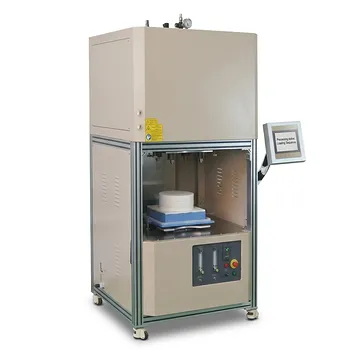
High Temperature Vertical Atmosphere Controlled Furnace with Automatic Bottom Loading and 1700°C Capacity for Advanced Material Research
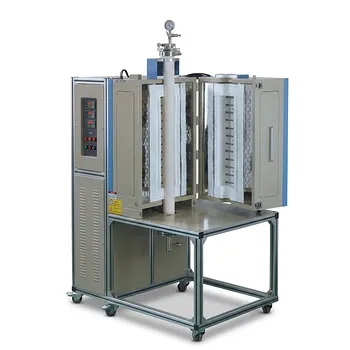
Three Zone Heating Split Vertical Tube Furnace 1700 High Temperature Vacuum Atmosphere Thermal Process System

Vertical 1700C Vacuum and Atmosphere Tube Furnace with 80mm Alumina Tube
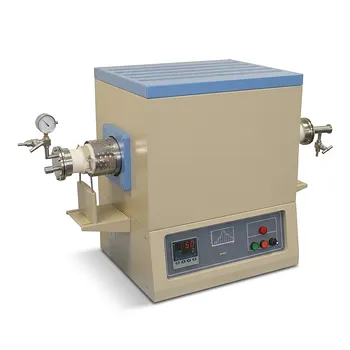
1700C High Temperature Alumina Tube Furnace with 18 Inch Heated Zone and Vacuum Sealing Flanges
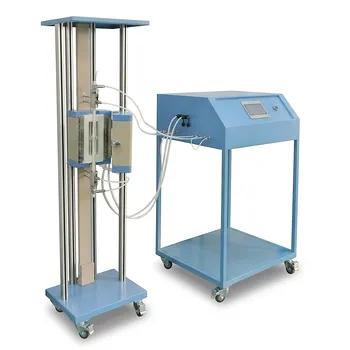
High Temperature Vertical Tube Furnace for Small Solid Oxide Fuel Cell Testing with Four Channel Gas Control
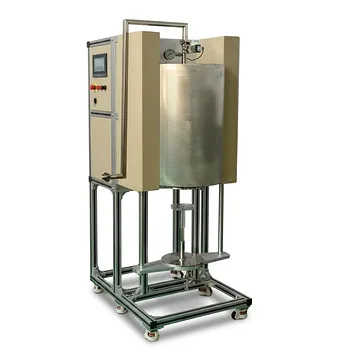
1200°C Atmosphere Controlled Automatic Bottom Loading Furnace with 6 Inch Quartz Tube
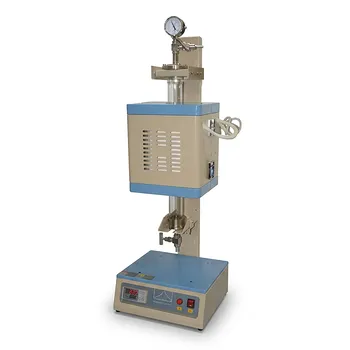
Compact Vertical Split Quartz Tube Furnace with Stainless Steel Vacuum Flanges for Rapid Thermal Quenching and Controlled Atmosphere Material Processing
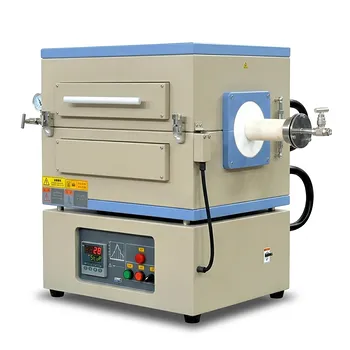
1500°C Split Tube Furnace with Alumina Tube and Vacuum Sealing Flanges for Material Research
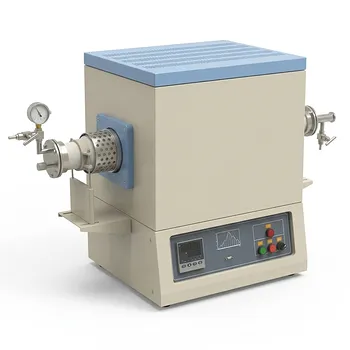
1750°C High Temperature Benchtop Vacuum Atmosphere Tube Furnace with Kanthal Super 1800 Heating Elements and 60mm Alumina Processing Tube
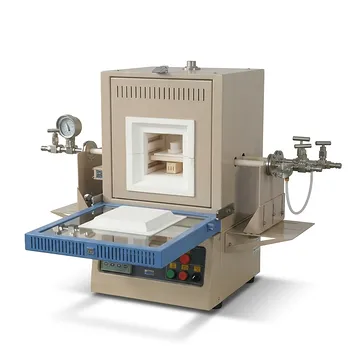
1700C Compact Hybrid Furnace with Dual Layer Box Sintering and Controlled Atmosphere Alumina Tubes

High Temperature 1700C Vertical Tube Furnace for Powder Spherification and Material Sintering
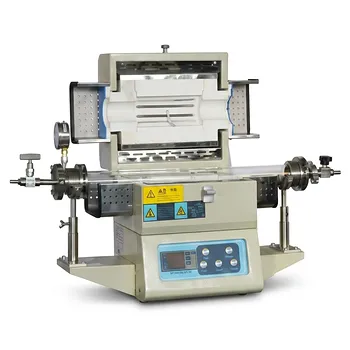
High Temperature 1200C Split Tube Furnace for CVD Research and Vacuum Atmosphere Heat Treatment
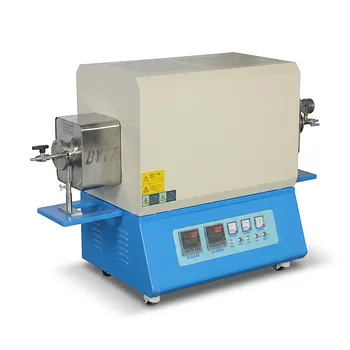
High Temperature Dual Zone Split Tube Furnace for Advanced Atmosphere Sintering and Vacuum CVD Applications
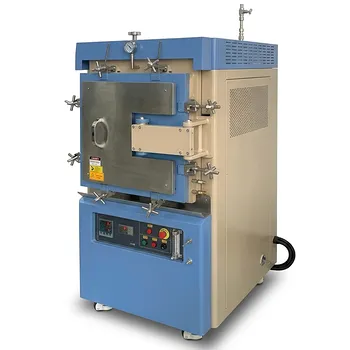
Atmosphere Controlled Muffle Furnace 1700C Maximum Temperature 80L High Capacity Vacuum Inert Gas Box Furnace
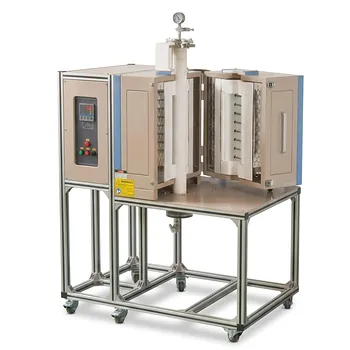
High Temperature 1700C Vertical Split Tube Furnace for Material Quenching and Single Crystal Growth

High Temperature 1700C Tube Furnace with High Vacuum Turbomolecular Pump System and Multi Channel Mass Flow Controller Gas Mixer
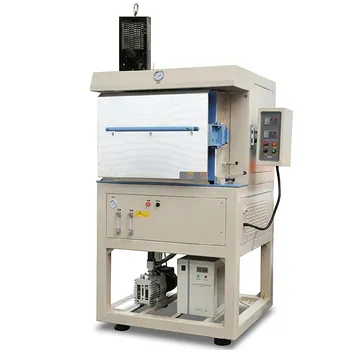
1200C Hydrogen Atmosphere Box Furnace with 5 Heated Sides and 64L Chamber
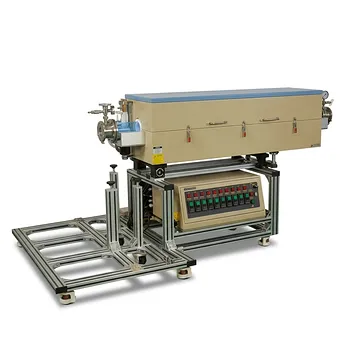
Ten Zone Multi Orientation Laboratory Tube Furnace for 1200C High Temperature Gradient Thermal Processing
1200°C 5 Inch Vertical Quartz Tube Furnace with Stainless Steel Vacuum Flanges