What is the function of a Fused Quartz Chamber in the context of infrared monitoring? Ensuring High-Precision Results
Updated 3 months ago
In high-temperature thermal processing, a Fused Quartz Chamber acts as both a protective atmospheric barrier and a critical optical component. It allows for the maintenance of a vacuum or inert gas environment while remaining transparent enough for infrared thermal imagers to measure the internal temperature of a workpiece. Because it sits directly between the sensor and the target, the chamber is a functional lens that must be accounted for in the measurement physics.
The Core Takeaway: A Fused Quartz Chamber serves the dual role of maintaining a high-purity environment and acting as an optical window for infrared monitoring. To achieve accurate temperature data, the chamber's transmittance, thickness, and thermal state must be integrated into the overall optical system calibration.
Dual-Purpose Functionality in Thermal Processing
Environmental Containment and Stability
The primary physical role of the chamber is to serve as a sealed vessel. It is designed to hold a vacuum or maintain a high-purity argon environment, which is essential for preventing oxidation or contamination of the workpiece during extreme heat.
The Optical "Window" Effect
Beyond containment, the chamber functions as an external optical lens. Fused quartz is selected for its high transmittance—approximately 0.94 in specific infrared bands—which allows thermal radiation from the workpiece to reach the infrared camera with minimal interference.
Variables Influencing Infrared Accuracy
Geometric and Positional Impact
The wall thickness of the Fused Quartz Chamber and its distance from the camera are not negligible variables. These geometric factors determine how much the infrared signal is refracted or attenuated before it reaches the sensor.
Thermal Emission Interference
The real-time temperature of the chamber walls themselves can influence the radiation signal received by the thermal imager. As the quartz heats up, its own thermal emission can blend with the radiation from the workpiece, potentially skewing the data if not properly filtered.
Critical Challenges and Calibration Pitfalls
The Risk of Signal Distortion
Treating the chamber as a "perfectly transparent" barrier is a common mistake that leads to significant temperature errors. Even with a transmittance of 0.94, the remaining 6% of energy is lost to reflection or absorption, which must be compensated for in the software.
Calibration Complexity
Because the chamber is part of the optical path, it cannot be calibrated separately from the camera. The entire optical system, including the chamber walls, must be calibrated as a single unit to ensure that the temperature read by the imager reflects the actual state of the workpiece.
Optimizing Your Monitoring Setup
Strategies for High-Precision Results
Achieving professional-grade accuracy requires moving beyond basic observation and treating the chamber as a precision instrument.
- If your primary focus is atmospheric purity: Ensure the fused quartz seals are rated for high-vacuum levels to prevent oxygen ingress that could degrade the workpiece.
- If your primary focus is temperature accuracy: You must integrate the chamber's specific transmittance and real-time temperature data into your thermal imager’s compensation algorithms.
- If your primary focus is system longevity: Monitor the quartz for "solarization" or surface deposits over time, as these will alter the transmittance and invalidate your initial calibration.
By treating the Fused Quartz Chamber as an active participant in the optical chain rather than a passive container, you ensure the integrity of both your environment and your data.
Summary Table:
| Function | Key Feature | Impact on Monitoring |
|---|---|---|
| Environmental Seal | Vacuum/Inert Gas Support | Prevents oxidation and contamination of the workpiece. |
| Optical Window | High IR Transmittance (~0.94) | Allows thermal radiation to reach infrared sensors with minimal loss. |
| Calibration Component | Systemic Refraction | Necessitates integrated software calibration for measurement accuracy. |
Optimize Your Thermal Research with THERMUNITS
High-precision monitoring requires high-performance equipment. THERMUNITS is a leading manufacturer of high-temperature laboratory equipment for material science and industrial R&D. We offer a comprehensive range of thermal processing solutions, including Muffle, Vacuum, Atmosphere, Tube, Rotary, and Hot Press furnaces, as well as CVD/PECVD systems and Dental Furnaces.
From vacuum induction melting furnaces (VIM) to specialized electric rotary kilns, we provide the tools you need for reliable heat treatment. Our experts can help you integrate your fused quartz chambers and infrared sensors into a perfectly calibrated system.
Contact us today to discover how THERMUNITS can enhance your laboratory's efficiency and data integrity!
References
- Jordan Stone, Elizabeth S. Sooby. High-temperature thermal imaging to inform the arc-melt synthesis of nuclear materials. DOI: 10.3389/fnuen.2023.1322209
Mentioned Products
- 1100°C High Temperature Quartz Chamber Furnace 8 Inch OD with 7.6 Liter Capacity and Vacuum Atmosphere Capability
- Vertical Vacuum Furnace 1100C High Temperature 8 Inch Quartz Chamber Water Cold Flange System
- 1100C High Temperature Vacuum Crucible Furnace with Quartz Chamber for Thermal Processing and Sintering
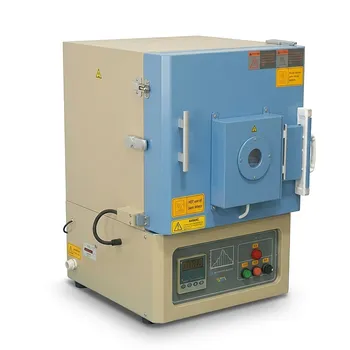
- 1200C Muffle Furnace 12x8x5 7.2L Heating Chamber with Quartz Observation Window and Vent Port
- High Temperature Benchtop Muffle Furnace 1500C with 3.6L Chamber and Quartz Observation Window
People Also Ask
- Why is a quartz tube furnace necessary for phosphorus-doped MoS2/GO preparation? Ensure Purity & Precise Synthesis
- Benefits of high-vacuum quartz tube furnaces with N2 for Co3O4 nanosheets: Purity and Structural Integrity.
- What conditions does a quartz tube furnace provide for AlxCoCrFeNi steam corrosion tests? Achieve Precise R&D Control.
- Why is high-temperature annealing in a quartz tube furnace done after HfO2 deposition? Unlock peak film performance.
- Why is a high-purity quartz tube used for SP-Fe3O4-C? Ensure Chemical Purity & Catalytic Stability

Tech Team · ThermUnits
Last updated on Jun 03, 2026
Related Products
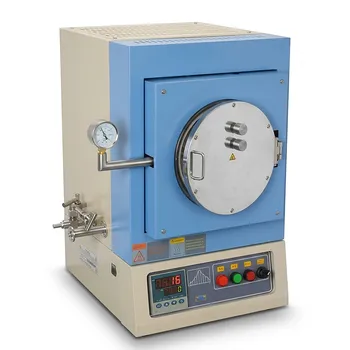
1100°C High Temperature Quartz Chamber Furnace 8 Inch OD with 7.6 Liter Capacity and Vacuum Atmosphere Capability
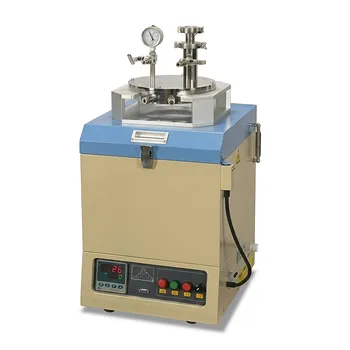
Vertical Vacuum Furnace 1100C High Temperature 8 Inch Quartz Chamber Water Cold Flange System
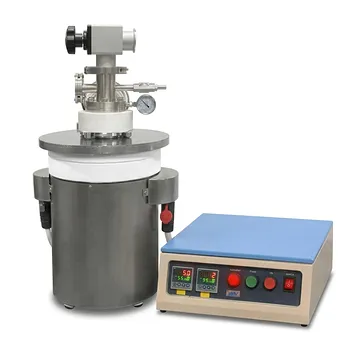
1100C High Temperature Vacuum Crucible Furnace with Quartz Chamber for Thermal Processing and Sintering
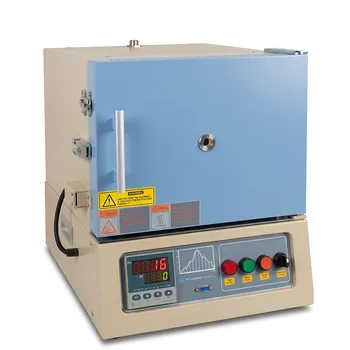
1200C Muffle Furnace 12x8x5 7.2L Heating Chamber with Quartz Observation Window and Vent Port