What role does a sintering furnace play with silver paste? Essential Thermal Management for Power Device Packaging
Updated 3 months ago
In advanced device packaging, the high-power sintering furnace serves as the critical engine for creating high-conductivity thermal interfaces. By applying a precise combination of heat and pressure, the furnace transforms silver paste into a dense, monolithic metallic layer that bonds a semiconductor device to its heat sink. This process is essential for reducing thermal resistance and ensuring the reliability of high-power components like MOSFETs.
Core Takeaway: The sintering furnace acts as the primary facilitator for fusing silver particles into a high-density connection layer. This transition from a liquid-like paste to a solid metal bond is the key to achieving superior heat dissipation in modern power electronics.
Facilitating the Transition from Paste to Solid
The Dual Role of Debinding and Sintering
The furnace first performs debinding, where it carefully burns off organic binders within the silver paste. If these organics remain, they create voids that compromise the mechanical and thermal integrity of the bond.
Once the organics are removed, the furnace facilitates diffusion and reorganization. Silver microparticles or nanoparticles begin to fuse, transforming the fragile paste into a robust, high-conductivity metal entity.
Precision Thermal-Pressure Profiles
Unlike standard ovens, a high-power sintering furnace manages a precise thermal-pressure profile. The simultaneous application of heat and physical pressure ensures that the silver particles pack tightly during the fusion process.
This pressure is vital for eliminating porosity. A highly dense connection layer is formed, which is necessary to support the mechanical stresses and high-temperature environments of modern power devices.
Impact on Device Thermal Management
Significant Reduction in Thermal Resistance
The primary goal of using silver paste over traditional solder is the reduction of packaging thermal resistance. Sintered silver provides a much higher thermal conductivity than lead-based or lead-free solders.
By creating a nearly seamless metallic path between the device and the heat sink, the furnace ensures that heat is evacuated from the semiconductor junction rapidly. This efficiency prevents thermal throttling and extends the operational lifespan of the device.
Supporting Next-Generation Semiconductors
This sintering process is particularly critical for wide-bandgap materials like Beta-Ga2O3 (Gallium Oxide) MOSFETs. These devices operate under extreme power densities where traditional bonding methods would fail.
The furnace enables these devices to be tightly bonded to their bottom heat sinks. This creates a stable thermal environment that allows the device to function reliably under high-pressure and high-temperature conditions.
Understanding the Trade-offs
Process Complexity and Precision
While sintering offers superior performance, it requires much stricter process control than reflow soldering. The furnace must maintain uniform pressure and temperature across the entire bonding surface to avoid "cold spots" or uneven bonding.
Material and Equipment Costs
High-power sintering furnaces are specialized pieces of capital equipment that represent a higher initial investment than standard reflow ovens. Additionally, nano-silver pastes are generally more expensive than traditional solder pastes, making this a solution primarily for high-performance applications.
How to Apply This to Your Project
Making the Right Choice for Your Goal
- If your primary focus is Maximum Thermal Conductivity: Use a high-power sintering furnace to process nano-silver paste, as this creates the most efficient heat path currently available for power devices.
- If your primary focus is High-Temperature Reliability: Prioritize sintering over soldering to ensure the bond does not remelt or degrade when the device operates near its thermal limits.
- If your primary focus is Cost-Sensitive Mass Production: Evaluate whether traditional solder paste meets your thermal requirements before committing to the more complex sintering infrastructure.
By mastering the sintering furnace's ability to fuse silver particles into a dense metallic bond, you can effectively eliminate the thermal bottlenecks that limit modern power electronic performance.
Summary Table:
| Feature | Sintering Furnace Role | Impact on Thermal Management |
|---|---|---|
| Organic Debinding | Burns off binders/organics | Eliminates voids for high bond integrity |
| Particle Fusion | Facilitates silver diffusion | Creates a dense, monolithic metal layer |
| Pressure Profile | Simultaneous heat & pressure | Maximizes density & mechanical stability |
| Heat Dissipation | Forms high-conductivity path | Reduces thermal resistance for MOSFETs/Ga2O3 |
Maximize Your Device Performance with THERMUNITS
Are thermal bottlenecks limiting your power electronics? THERMUNITS is a leading manufacturer of high-temperature laboratory equipment specifically engineered for material science and industrial R&D. We provide the precision required for advanced silver sintering and heat treatment processes.
From high-performance Muffle, Vacuum, and Atmosphere furnaces to specialized CVD/PECVD systems and Vacuum Induction Melting (VIM) furnaces, our thermal solutions are designed to ensure your semiconductor devices achieve maximum reliability and superior heat dissipation.
Ready to elevate your thermal processing? Contact our engineering experts today to find the perfect equipment for your laboratory or production line!
References
- Zhenyu Qu, Xin Ou. Extremely Low Thermal Resistance of β-Ga<sub>2</sub>O<sub>3</sub> MOSFETs by Co-integrated Design of Substrate Engineering and Device Packaging. DOI: 10.1021/acsami.4c08074
Mentioned Products
- High Temperature Horizontal Electrical Assisted Sintering Furnace with 3KW Programmable Power Source for Advanced Ceramic Materials
- Compact Spark Plasma Sintering SPS Furnace 1200 C Max 100 MPa Pressure High Speed Sintering System for Material Research
- High Temperature 1000C Vacuum Furnace with 8 Inch ID Chamber for Material Sintering and Research Annealing
- 1200C High Temperature Muffle Furnace with Motorized Door and Automated PC Control for Industrial Sintering and Material Processing 27 Liter
- Roller Table Atmosphere Furnace 1500C High Temperature Battery Material Sintering System 112L Capacity
People Also Ask
- How does the temperature control precision of a high-temperature sintering furnace affect Na1+xLa1-xZr2O6-δ ceramics?
- How does a high-temperature sintering furnace environment enhance NdFeB magnets? Achieve 98%+ density with precision.
- Why is a high-temperature sintering furnace required for the preparation of Li(Nb,Ta)O3 precursors? Essential Insights
- How does a high-temperature sintering furnace contribute to the interfacial strengthening of SS316L and zirconia?
- Why is a sintering furnace or Rapid Thermal Processing (RTP) equipment necessary for the formation of electrodes? Master Solar Ohmic Contacts.

Tech Team · ThermUnits
Last updated on Jun 03, 2026
Related Products
High Temperature Horizontal Electrical Assisted Sintering Furnace with 3KW Programmable Power Source for Advanced Ceramic Materials
Compact Spark Plasma Sintering SPS Furnace 1200 C Max 100 MPa Pressure High Speed Sintering System for Material Research
High Temperature 1000C Vacuum Furnace with 8 Inch ID Chamber for Material Sintering and Research Annealing
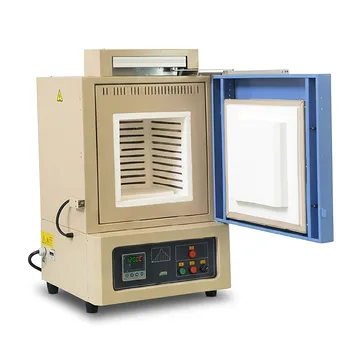
1200C High Temperature Muffle Furnace with Motorized Door and Automated PC Control for Industrial Sintering and Material Processing 27 Liter
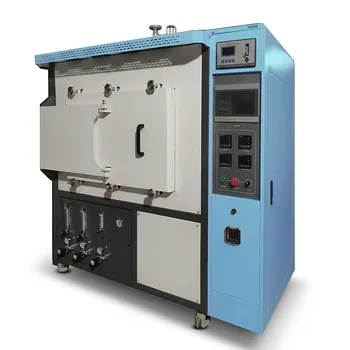
Roller Table Atmosphere Furnace 1500C High Temperature Battery Material Sintering System 112L Capacity
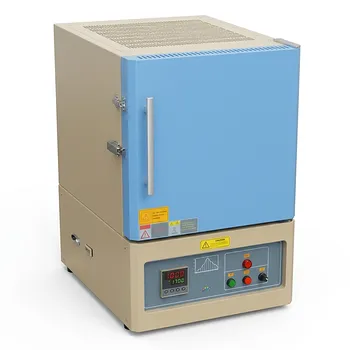
Large Bench Top 1700C High Temperature Muffle Furnace with 19L Chamber for Advanced Material Sintering and Annealing
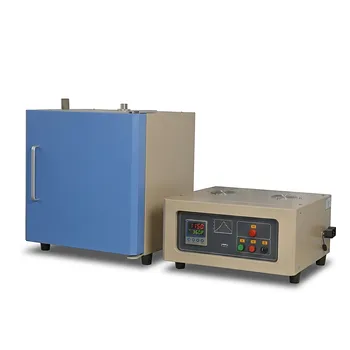
High Temperature Muffle Furnace with Alloy Chamber for Debinding and Sintering Applications

High Temperature 1700C Vertical Tube Furnace for Powder Spherification and Material Sintering

Compact High Temperature 1600C Tube Furnace with 50mm Alumina Tube and Vacuum Flanges for Material Sintering
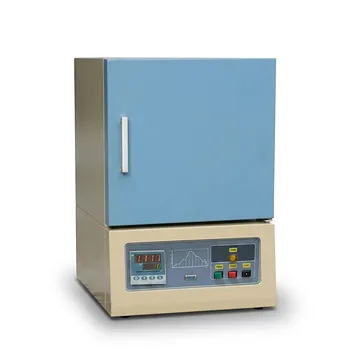
Ultra High Temperature Bench Top Muffle Furnace 1750C Sintering System with Kanthal Super Heating Elements and Precision Digital Control
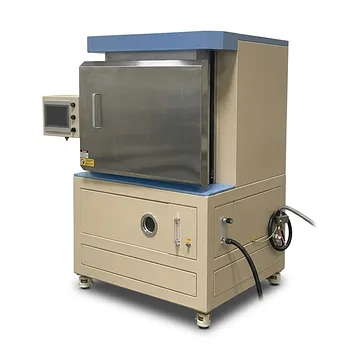
1650C High Temperature Atmosphere Controlled Box Furnace with 65L Chamber for Advanced Material Sintering and Industrial Heat Treatment
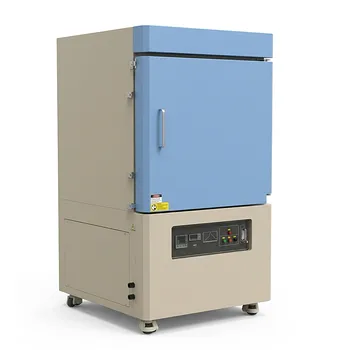
Industrial Large Box Furnace 1700C 216L High Temp Muffle Sintering System
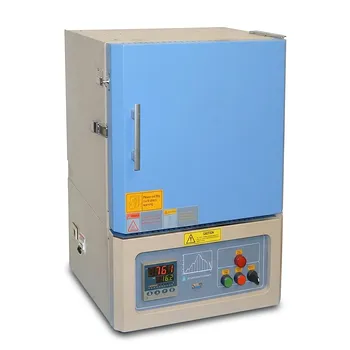
High Temperature 1700C Bench Top Muffle Furnace with Alumina Fiber Insulation and 3.6L Chamber Capacity for Precision Sintering and Heat Treatment
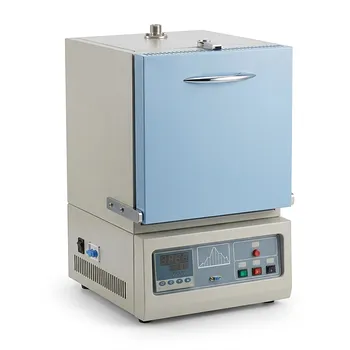
1750C Compact Muffle Furnace 1.7L Ultra High Temperature Laboratory Sintering System for Advanced Ceramics and Material Science Research
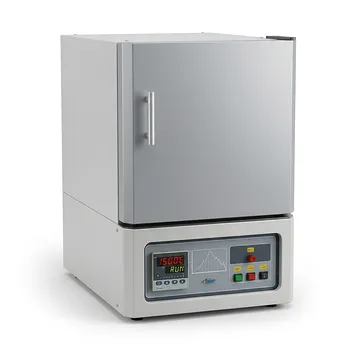
High Temperature 1500C Benchtop Muffle Furnace 3.6L Alumina Fiber Chamber Programmable Controller Sintering Annealing Carbonization Thermal Processing System
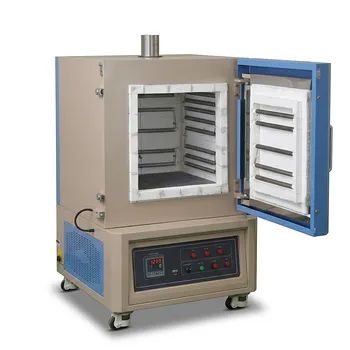
1200C High Temperature 125L Muffle Furnace 5 Side Heating for Large Batch Sintering with Optional Alloy Debinding Chamber
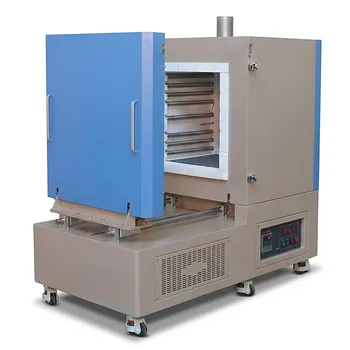
1200C Five Side Heating Muffle Furnace with Sliding Door 125L Volume High Temperature Heat Treatment System for Large Scale Sintering and Annealing
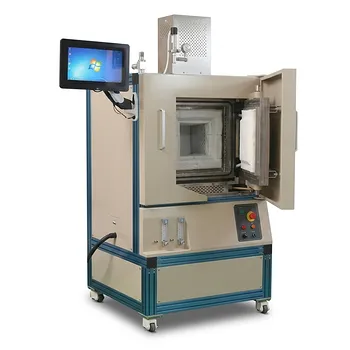
High Temperature Oxygen and Inert Atmosphere Controlled Furnace 8 Liter 1700C Sintering System for Advanced Materials RD
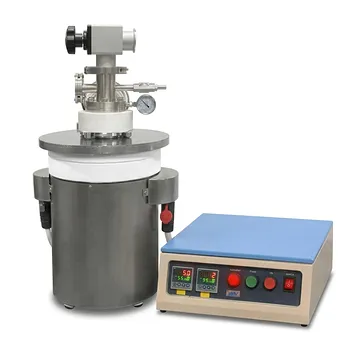
1100C High Temperature Vacuum Crucible Furnace with Quartz Chamber for Thermal Processing and Sintering