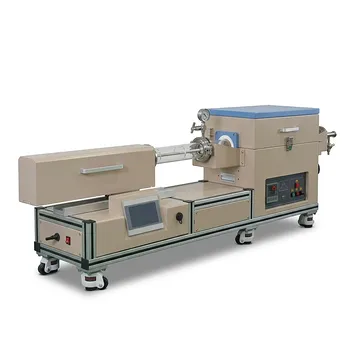
What is the function of argon flow in SnSe cooling? Protecting Film Purity and Integrity
Updated 3 months ago
Controlling the argon (Ar) gas flow rate during the cooling stage of two-dimensional tin selenide thin film growth is a critical process step used to preserve the film's structural and chemical integrity. By regulating this flow, engineers prevent film oxidation, control the rate of temperature decline, and ensure a stable environment that protects the wafer from cracking or peeling caused by thermal stress.
Core Takeaway: During the cooling phase, high-purity argon acts as both a chemical shield and a thermal regulator, ensuring the synthesized thin film transitions from high growth temperatures to room temperature without degrading or losing its structural uniformity.
Protecting Chemical and Structural Integrity
Preventing Post-Growth Oxidation
High-purity argon creates an inert atmosphere that effectively excludes oxygen and moisture from the reaction chamber.
Because tin selenide is highly reactive at elevated temperatures, even trace amounts of oxygen can lead to secondary oxidation, which would compromise the purity and electronic properties of the 2D film.
Removal of Residual Byproducts
The continuous flow of argon serves to sweep away residual reaction byproducts remaining in the chamber after the growth phase.
By carrying these contaminants into the exhaust, the gas flow ensures that they do not deposit onto the surface of the cooling film, which would otherwise lead to surface contamination or unwanted secondary phases.
Thermal Management and Stress Mitigation
Regulating the Cooling Rate
The mass flow controller allows for precise adjustment of the convective cooling rate provided by the gas.
Controlling how fast the temperature drops is essential because abrupt changes can lead to thermal shock, while a controlled decline allows the crystal lattice of the tin selenide to stabilize properly.
Ensuring Flow Field Uniformity
A stable and consistent gas flow field ensures that the cooling effect is distributed uniformly across the entire surface of the wafer.
Uniform cooling is the primary defense against thermal stress, which is a leading cause of film cracking or peeling when different sections of the film contract at different rates.
Understanding the Trade-offs
Balancing Flow Speed and Thermal Gradient
If the argon flow rate is too high, it may induce localized "cold spots" on the wafer, creating steep temperature gradients that result in structural fractures.
Conversely, if the flow rate is too low, the cooling process may be inefficient, and the concentration of residual byproducts may remain high enough to allow for surface defects or minor oxidation.
Impact on Wafer-Scale Quality
For large-scale (wafer-scale) production, the stability of the gas flow becomes even more sensitive.
Any turbulence or instability in the gas field during the cooling stage can lead to non-uniform morphology, making it difficult to maintain the consistent electronic properties required for high-performance 2D devices.
How to Apply This to Your Process
Optimization Based on Growth Goals
- If your primary focus is structural longevity and preventing cracks: Maintain a moderate, highly stable flow rate to ensure the most uniform thermal distribution across the wafer surface.
- If your primary focus is maximum chemical purity: Increase the flow rate slightly during the initial cooling phase to rapidly purge residual byproducts and ensure a strictly inert environment.
- If your primary focus is morphological consistency: Use a mass flow controller to program a multi-stage cooling ramp, adjusting the argon flow in tandem with the furnace power to avoid sudden shifts in the flow field.
Through the precise management of argon gas flow, you can successfully bridge the gap between high-temperature synthesis and a high-quality, stable final product.
Summary Table:
| Function | Mechanism | Benefit |
|---|---|---|
| Inert Shielding | Prevents oxidation and moisture ingress | High Chemical Purity |
| Byproduct Purging | Sweeps residual contaminants from chamber | Surface Cleanliness |
| Thermal Regulation | Controls convective cooling rates | Mitigates Thermal Stress |
| Flow Uniformity | Ensures even heat distribution | Prevents Film Cracking |
Optimize Your Thin Film Synthesis with THERMUNITS
At THERMUNITS, we understand that precision is paramount in material science. As a leading manufacturer of high-temperature laboratory equipment, we provide the advanced thermal solutions necessary to master processes like 2D material growth.
Our CVD/PECVD systems, Tube Furnaces, and Atmosphere Furnaces are designed with high-accuracy gas management to ensure your research achieves maximum structural integrity and chemical purity. Whether you are focused on industrial R&D or laboratory heat treatment, our range of products—from Vacuum Furnaces to Electric Rotary Kilns—offers the reliability your project demands.
Ready to enhance your lab's performance? Contact THERMUNITS Today for a Professional Consultation
References
- Sungyeon Kim, Joonki Suh. Phase‐Centric MOCVD Enabled Synthetic Approaches for Wafer‐Scale 2D Tin Selenides. DOI: 10.1002/adma.202400800
Mentioned Products
- Radio Frequency Plasma Enhanced Chemical Vapor Deposition RF PECVD System for Laboratory and Industrial Thin Film Growth
- Inclined Rotary Plasma Enhanced Chemical Vapor Deposition PECVD System for Thin Film Deposition and Nanomaterial Synthesis
- High Temperature 1200C Automatic Sliding Dual Zone Tube Furnace for 2D Transition Metal Dichalcogenides Growth and Material Sublimation Research
- 1200C Dual Temperature Zone Slidable Tube Furnace for 2D Material Growth and TCVD Synthesis
- 1200C Sliding Internal Crucible Tube Furnace for Controlled Atmosphere Thin Film Deposition and Material Sublimation Research
People Also Ask
- What are the advantages of PECVD systems for nano flame retardant films? Protect Heat-Sensitive Polymers with Precision
- How does PECVD differ from conventional thermal CVD? Key Advantages of Low-Temperature Deposition for R&D
- What is the role of CVD/PECVD systems in the research of optoelectronic materials and functional coatings? Expert Guide
- What are the benefits of using PECVD for optical and photonic coatings? Achieve High-Precision Thin-Film Deposition
- How do RF frequency and power settings influence the characteristics of a PECVD process? Master Quality & Efficiency

Tech Team · ThermUnits
Last updated on Jun 03, 2026
Related Products
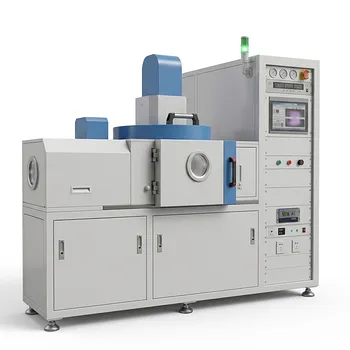
Radio Frequency Plasma Enhanced Chemical Vapor Deposition RF PECVD System for Laboratory and Industrial Thin Film Growth
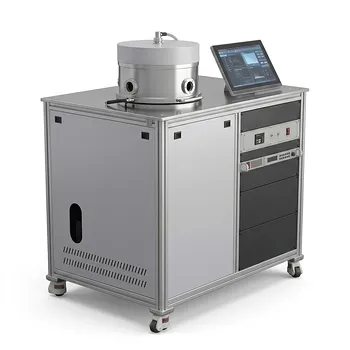
Inclined Rotary Plasma Enhanced Chemical Vapor Deposition PECVD System for Thin Film Deposition and Nanomaterial Synthesis
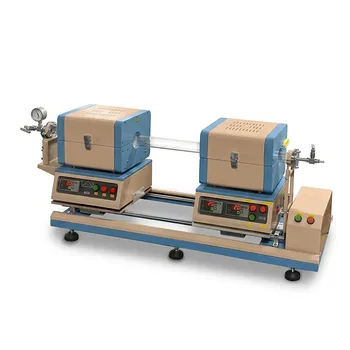
High Temperature 1200C Automatic Sliding Dual Zone Tube Furnace for 2D Transition Metal Dichalcogenides Growth and Material Sublimation Research
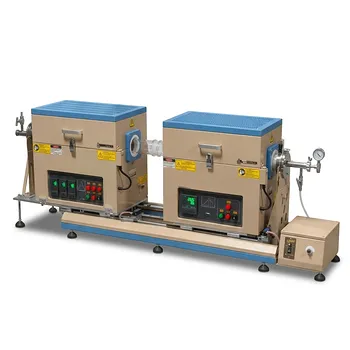
1200C Dual Temperature Zone Slidable Tube Furnace for 2D Material Growth and TCVD Synthesis