What is the mechanism behind the Peltier effect in thermoelectric cooling devices? Precision Solid-State Cooling Guide
Updated 5 months ago
The Peltier effect is a solid-state heat transfer mechanism. When an electric current passes through the junction of two different conductors or semiconductors, it causes heat to be absorbed at one junction and released at the other. This process effectively converts electrical energy into a temperature differential across the device without the need for moving parts.
The core of the Peltier effect is the active transport of thermal energy by charge carriers across a material junction. By controlling the direction of the electrical current, you can precisely manage where heat is removed and where it is deposited.
The Mechanics of Energy Displacement
Charge Carriers as Thermal Transporters
In a Peltier device, charge carriers (electrons or "holes") act as the medium for energy transfer. As these carriers move through the electrical circuit, they physically carry thermal energy away from one junction and toward the other.
The Importance of Material Junctions
The effect specifically occurs at the interface of dissimilar materials, typically p-type and n-type semiconductors. This junction creates a change in the energy levels that the carriers must navigate, leading to the absorption of energy (cooling) or the release of energy (heating) at the point of contact.
Solid-State Cooling Advantage
Unlike traditional refrigeration, this mechanism requires no compressors or chemical refrigerants. This makes the Peltier effect ideal for precision cooling in sensitive environments, such as laboratory equipment or high-end electronics.
Dynamic Control of Heat Flow
Current-Driven Reversibility
One of the most unique aspects of the Peltier effect is its reversibility. By simply flipping the polarity of the DC power supply, you change the direction of charge carrier flow, effectively swapping the "cold" side and the "hot" side.
Sustaining the Temperature Gradient
As long as current flows, the device maintains a heat flux across the module. This continuous movement of energy allows for a stable temperature difference (Delta T) between the two surfaces of the thermoelectric cooler.
Critical Trade-offs in Thermoelectric Design
Low Thermodynamic Efficiency
Peltier devices are generally less efficient than traditional vapor-compression cycles. They consume a significant amount of electrical power to move relatively small amounts of heat, making them better suited for localized cooling rather than large-scale refrigeration.
The Challenge of Heat Dissipation
A common pitfall is failing to dissipate heat from the "hot" side effectively. If the hot junction is not cooled by a secondary heatsink or fan, the accumulated heat will eventually conduct back to the cold side, neutralizing the cooling effect.
Thermal Back-Leakage
Because the materials used are both electrically conductive and (to some extent) thermally conductive, heat naturally tries to flow back from the hot side to the cold side. Designing a device requires a delicate balance of materials that maximize electrical conductivity while minimizing thermal conductivity.
Applying Peltier Technology to Your Project
When integrating a Peltier device, your success depends on how you manage the thermal energy moved by the mechanism.
- If your primary focus is Precision Temperature Control: Use a Peltier device with a PID controller to achieve sub-degree stability in sensitive optical or medical applications.
- If your primary focus is System Compactness: Leverage the small footprint of Peltier modules for cooling small enclosures where traditional fans or pumps cannot fit.
- If your primary focus is Maximum Energy Efficiency: Consider hybrid cooling solutions, as the high power consumption of Peltier devices can be a limiting factor for battery-operated or high-load systems.
The Peltier effect remains the gold standard for reliable, vibration-free thermal management in specialized technical environments.
Summary Table:
| Feature | Description | Key Benefit |
|---|---|---|
| Mechanism | Solid-state heat transfer via charge carriers | Vibration-free with no moving parts |
| Reversibility | Switch polarity to swap heating and cooling | High-precision temperature control |
| Material Base | p-type and n-type semiconductor junctions | Compact and reliable thermal management |
| Best Application | Localized cooling for sensitive electronics | Ideal for lab and R&D environments |
Elevate Your R&D with THERMUNITS Thermal Expertise
Optimizing heat management—whether through the Peltier effect or advanced furnace technology—is critical for material science breakthroughs. THERMUNITS is a leading manufacturer of high-performance laboratory equipment, providing the precision and durability required for industrial R&D.
Our comprehensive thermal processing solutions include:
- Furnaces: Muffle, Vacuum, Atmosphere, Tube, Rotary, and Hot Press Furnaces.
- Advanced Systems: CVD/PECVD systems, Dental Furnaces, and Electric Rotary Kilns.
- Specialized Equipment: Vacuum Induction Melting (VIM) furnaces and high-quality Thermal Elements.
From precise temperature stability to robust industrial heat treatment, THERMUNITS delivers the technology to power your research.
Contact our technical experts today to find your custom thermal solution!
Mentioned Products
- Compact High Temperature Bottom Loading Furnace 1700C Rapid Heating Cooling System Small Sample Thermal Cycling Equipment
- Automated Sliding Tube Furnace for Fast Heating and Cooling 2 Inch OD 1100C Max
- High Temperature Tube Furnace 1500C with Sliding Flanges and 50mm OD for Rapid Thermal Processing Fast Heating and Cooling
- High Temperature Compact Automatic Bottom Loading Furnace with Rapid Cooling for Autonomous Material Research
- Dual Zone Split Tube Quenching Furnace with High Vacuum Atmosphere Control and Rapid Cooling
People Also Ask
- What are the advantages of using a Bottom-Loading High-Temperature Furnace in Barium Titanate Fast Firing? Superior Microstructure
- What are the advantages of using a rapid heating box furnace for catalyst precursor transformation in MS-SOECs? Boost Efficiency
- What function does a ceramic sample boat perform during the reforming of plastic powders? Optimize Thermal Conversion
- How should the choice between a Quartz crucible and an Alumina crucible be made for La2O2S? Optimize Material Purity
- Why is a laboratory box furnace used for the pre-oxidation treatment of lotus-root-like nanofibers? Boost Porosity

Tech Team · ThermUnits
Last updated on Apr 14, 2026
Related Products
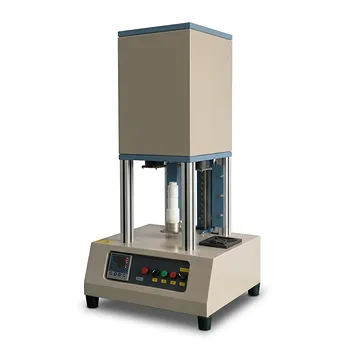
Compact High Temperature Bottom Loading Furnace 1700C Rapid Heating Cooling System Small Sample Thermal Cycling Equipment
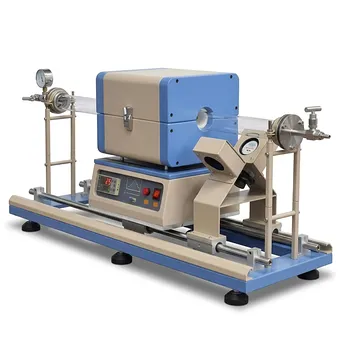
Automated Sliding Tube Furnace for Fast Heating and Cooling 2 Inch OD 1100C Max
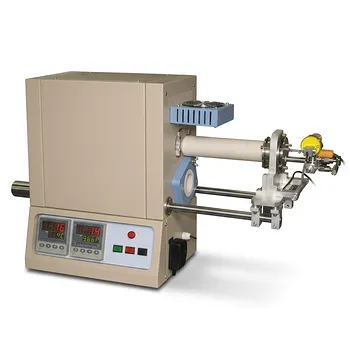
High Temperature Tube Furnace 1500C with Sliding Flanges and 50mm OD for Rapid Thermal Processing Fast Heating and Cooling
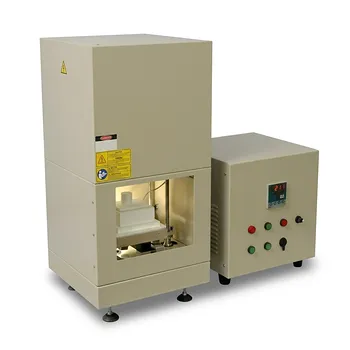
High Temperature Compact Automatic Bottom Loading Furnace with Rapid Cooling for Autonomous Material Research
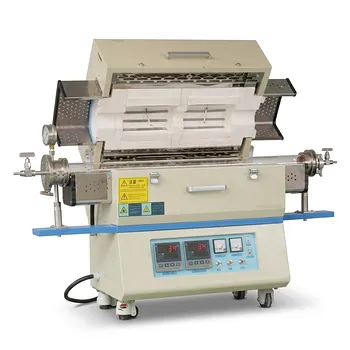
Dual Zone Split Tube Quenching Furnace with High Vacuum Atmosphere Control and Rapid Cooling
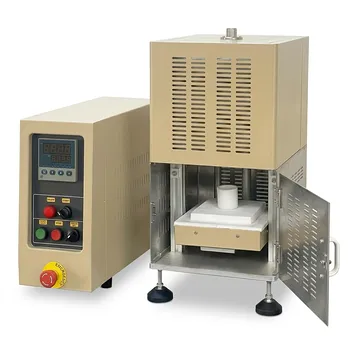
1200C Compact Automatic Bottom Loading Furnace with Precision Controller and Rapid Cooling Capability