What is the necessity of the calcination step in the sol-gel synthesis of SrTiO3? Unlock High-Purity Perovskites
Updated 3 months ago
Calcination is the critical thermal bridge between a chemical precursor and a functional ceramic. In the sol-gel synthesis of Strontium Titanate ($SrTiO_3$), this step is mandatory to transform an amorphous, chemically "crowded" gel into a highly ordered perovskite crystal structure. Without the high temperatures provided by a muffle or tube furnace, the material remains a mixture of unreacted precursors and organic residues rather than a pure oxide.
Core Takeaway: Calcination provides the thermal energy necessary to drive out volatile organic impurities and trigger the solid-phase reactions required to form a stable, crystalline $SrTiO_3$ phase. It is the decisive stage where the material's final chemical purity and crystal symmetry are established.
Driving Phase Transformation to Perovskite
Converting Amorphous Gels to Crystals
The initial product of the sol-gel process is an amorphous gel, which lacks the periodic atomic arrangement required for $SrTiO_3$ to function. High-temperature furnaces provide the kinetic energy needed for atoms to rearrange themselves into a complete perovskite structure.
Promoting Solid-Phase Reactions
As temperatures rise between 650°C and 900°C, components within the gel begin to react at the solid level. This thermal energy facilitates solid-state diffusion, allowing strontium and titanium species to bond into the correct stoichiometric lattice.
Transitioning from Polycrystalline to Single-Phase
Precise temperature control ensures the transition from a disorganized polycrystalline state to highly crystalline nanocubes or powders. This consistency is vital for ensuring the material possesses the intended dielectric or catalytic properties.
Eliminating Organic Impurities and Volatiles
Removal of Precursor Residues
The sol-gel method uses various organic precursors that leave behind residual carbon and nitrates. Calcination in an oxidizing atmosphere effectively "burns off" these impurities, leaving a clean inorganic framework.
Degassing and Decomposition
High temperatures facilitate the thermal decomposition of salts, such as carbonates or oxalates, into oxides. This process releases carbon dioxide ($CO_2$) and moisture, which would otherwise create defects or secondary phases in the final ceramic.
Surface Cleaning and Activation
The furnace environment removes excess surface hydroxyl groups and other volatile components. This results in a "clean," highly active surface that is essential if the $SrTiO_3$ is to be used for subsequent noble metal loading or catalyst support.
Ensuring Structural Integrity and Density
Achieving Uniform Phase Composition
Using a tube furnace or muffle furnace provides excellent temperature uniformity throughout the sample. This uniformity prevents the formation of secondary impurity phases, ensuring that the powder is chemically consistent from batch to batch.
Strengthening Chemical and Mechanical Properties
The calcination process drives the formation of stable chemical bonds, increasing the mechanical strength of the resulting nanocomposite. It "anchors" the active components into a stable matrix, making the material durable for high-stress applications.
Controlling Porosity and Surface Area
Thermal treatment helps facilitate the formation of mesoporous structures. By precisely controlling the heating rate (e.g., 7 °C/min), engineers can balance the removal of organics with the preservation of surface area for diffusion-heavy applications.
Understanding the Trade-offs
Temperature vs. Grain Growth
While higher temperatures (above 900°C) ensure complete phase purity, they often trigger excessive grain growth. This can lead to the agglomeration of nanoparticles into larger clusters, significantly reducing the active surface area and ruining the "nano" benefits of the sol-gel method.
Energy Consumption and Processing Time
Calcination is the most energy-intensive part of the synthesis, often requiring several hours at peak temperature. Shortening this time may result in incomplete decomposition, leaving residual carbon that acts as a structural impurity and degrades the material's performance.
Applying This to Your Project
Recommendations Based on Your Objectives
- If your primary focus is High Phase Purity: Target the upper end of the calcination range (850°C–900°C) to ensure the complete removal of carbonates and the full development of the perovskite lattice.
- If your primary focus is Nanoparticle Size Control: Use the lowest possible calcination temperature (approx. 650°C) and a slow heating rate to prevent sintering and particle agglomeration.
- If your primary focus is Catalytic Activity: Prioritize a clean surface by ensuring a stable oxidizing atmosphere in a muffle furnace to thoroughly remove all organic oxalates and nitrates.
By mastering the furnace parameters of time, temperature, and atmosphere, you transform a fragile gel into a robust, high-performance ceramic material.
Summary Table:
| Stage | Primary Purpose | Key Outcome |
|---|---|---|
| Phase Transformation | Conversion from amorphous gel to perovskite | Periodic atomic arrangement & symmetry |
| Impurity Removal | Thermal decomposition of organics & nitrates | High chemical purity inorganic framework |
| Solid-Phase Reaction | Facilitate solid-state diffusion (650°C-900°C) | Stable stoichiometric lattice formation |
| Structural Control | Precise temperature & heating rate management | Controlled grain growth & porosity |
Elevate Your Material Research with THERMUNITS Precision Furnaces
Achieving the perfect perovskite structure in SrTiO3 synthesis requires the absolute temperature uniformity and atmospheric control that only professional-grade equipment can provide. THERMUNITS is a leading manufacturer of high-temperature laboratory equipment specifically designed for material science and industrial R&D.
Our comprehensive range of thermal processing solutions includes:
- Muffle & Tube Furnaces for precise calcination and sintering.
- Vacuum, Atmosphere, & Hot Press Furnaces for advanced material bonding.
- CVD/PECVD Systems for high-performance thin-film deposition.
- Rotary Kilns & Vacuum Induction Melting (VIM) for specialized heat treatments.
Whether you are refining nanoparticles or developing new catalytic materials, our equipment ensures your thermal steps are consistent and reliable.
Empower your laboratory with THERMUNITS technology — Contact our experts today!
References
- Yulong Wu. Synthesis of SrTiO3 nanoparticles for photocatalytic applications. DOI: 10.54097/hay5w567
Mentioned Products
- Anti Corrosive Muffle Furnace with Sintered Corundum Chamber and 1050C Operating Range for Corrosive Material Calcination
- 1750C Compact Muffle Furnace 1.7L Ultra High Temperature Laboratory Sintering System for Advanced Ceramics and Material Science Research
- Top Loading Muffle Furnace 1200°C High Temperature Crucible Furnace with 9 Liter Chamber and Programmable PID Controller
- Large Bench Top 1700C High Temperature Muffle Furnace with 19L Chamber for Advanced Material Sintering and Annealing
- 1800C Bench Top Muffle Furnace 18 Liters with Kanthal Super 1900 Heating Elements for High Purity Ceramic Sintering and Material Research
People Also Ask
- Why is a corrosion-resistant high-temperature muffle furnace required for the chemical activation of lignocellulose?
- What role does a muffle furnace play in NiMo/gamma-Al2O3 catalyst prep? Optimize Your Synthesis Process
- Why is a high-temperature muffle furnace used for the preliminary calcination of Titanium Dioxide (TiO2) precursors?
- Why must spinel samples be rapidly moved to open air for quenching? Lock in Phase Purity and Structural Integrity
- Why is a muffle furnace necessary for the post-treatment of silicalite-1 zeolite? Unlock Pore Activity & Stability

Tech Team · ThermUnits
Last updated on Jun 03, 2026
Related Products
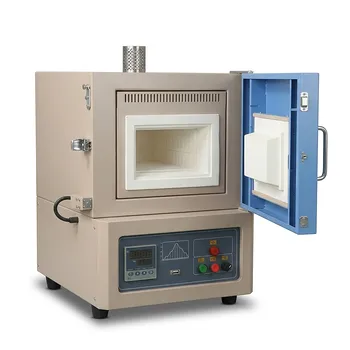
Anti Corrosive Muffle Furnace with Sintered Corundum Chamber and 1050C Operating Range for Corrosive Material Calcination
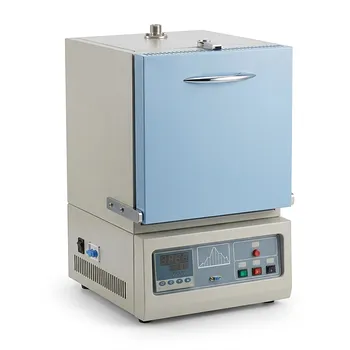
1750C Compact Muffle Furnace 1.7L Ultra High Temperature Laboratory Sintering System for Advanced Ceramics and Material Science Research
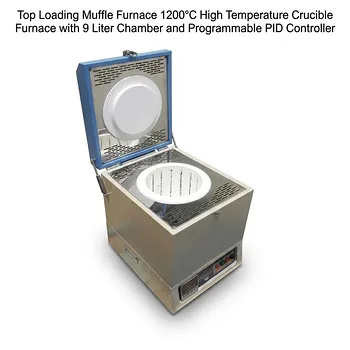
Top Loading Muffle Furnace 1200°C High Temperature Crucible Furnace with 9 Liter Chamber and Programmable PID Controller
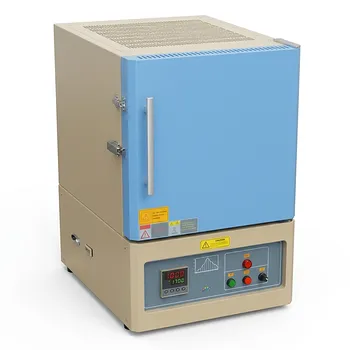
Large Bench Top 1700C High Temperature Muffle Furnace with 19L Chamber for Advanced Material Sintering and Annealing
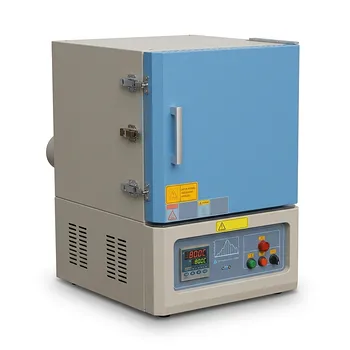
1800C Bench Top Muffle Furnace 18 Liters with Kanthal Super 1900 Heating Elements for High Purity Ceramic Sintering and Material Research
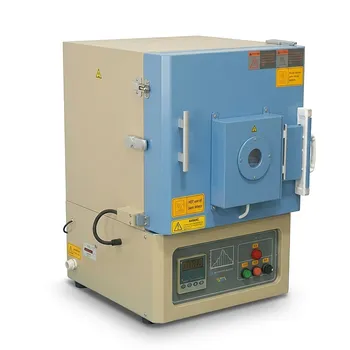
High Temperature Benchtop Muffle Furnace 1500C with 3.6L Chamber and Quartz Observation Window
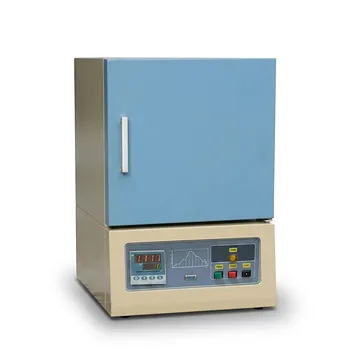
Ultra High Temperature Bench Top Muffle Furnace 1750C Sintering System with Kanthal Super Heating Elements and Precision Digital Control
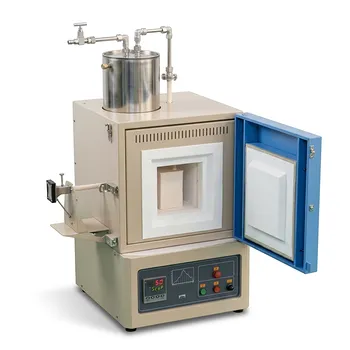
High Temperature Bench Top Muffle Furnace 1700C with Integrated Evaporating Particle Collection and 8x8x8 Alumina Fiber Chamber
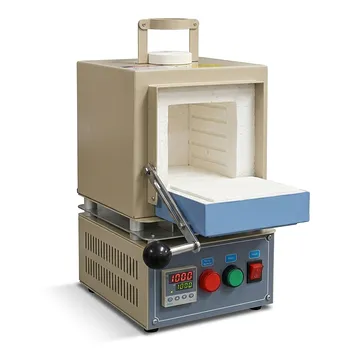
Compact 1000C Muffle Furnace with Programmable Controller and 2 Inch Top Port for Vacuum and Atmosphere Material Research
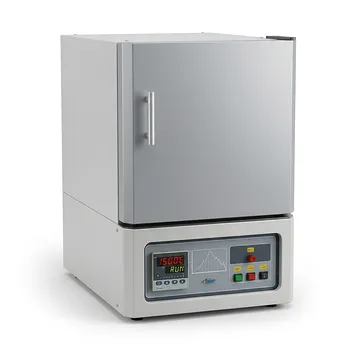
High Temperature 1500C Benchtop Muffle Furnace 3.6L Alumina Fiber Chamber Programmable Controller Sintering Annealing Carbonization Thermal Processing System
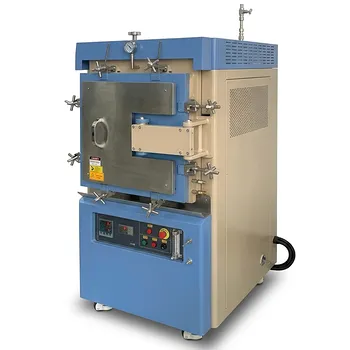
Atmosphere Controlled Muffle Furnace 1700C Maximum Temperature 80L High Capacity Vacuum Inert Gas Box Furnace
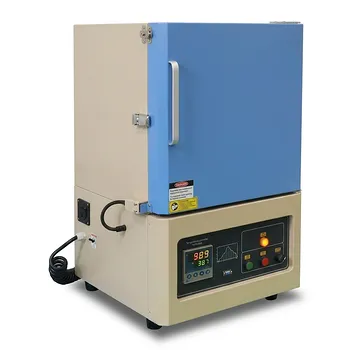
1200°C High Temperature Muffle Furnace 19L Chamber with 50 Segment Programmable Controller
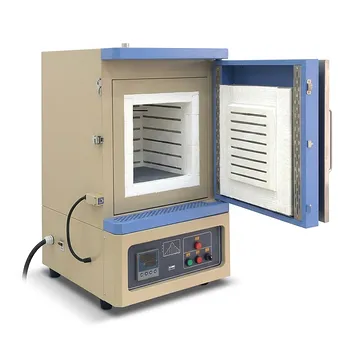
Five Side Heating Muffle Furnace High Purity Alumina Fiber 27L Chamber 1200C High Temperature Thermal Processing System for Sintering Annealing and Materials Research
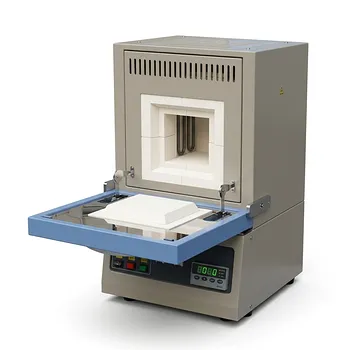
Five Sided Heating Muffle Furnace High Uniformity 1200C Lab Box Furnace 27L Alumina Fiber Chamber
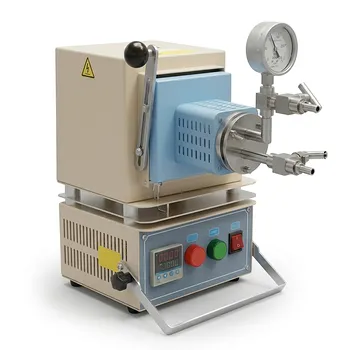
Compact Hybrid Muffle and Tube Furnace for 1000C Controlled Atmosphere Laboratory Material Sintering
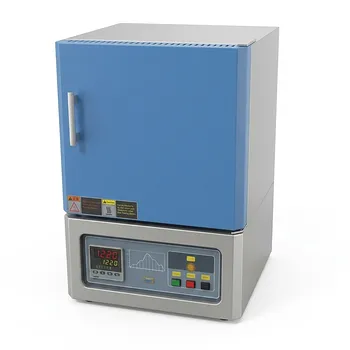
High Temperature Benchtop Muffle Furnace 1700C 10L Chamber Alumina Fiber Insulation MoSi2 Heating Elements
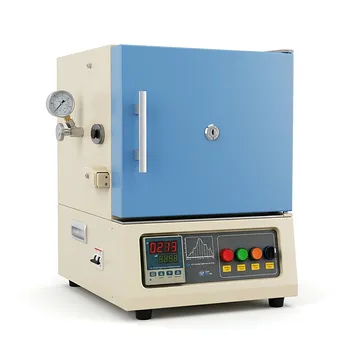
1200C Hybrid Muffle and Tube Furnace for Material Research with Dual Atmosphere Control Quartz Tubes
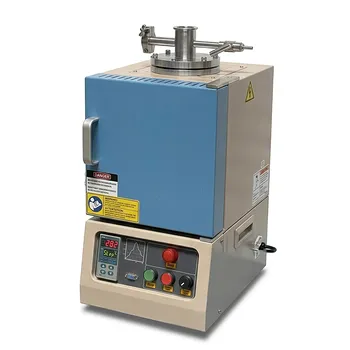
High Temperature Hybrid Muffle and Tube Furnace with Vacuum Capability and PID Control
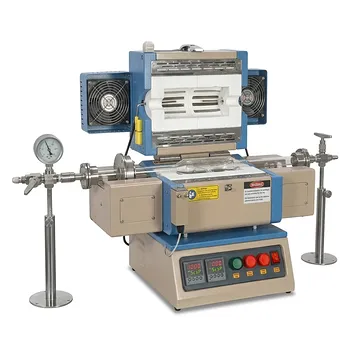
Dual Zone Rotary Tube Furnace for Uniform Powder Calcination 1000C 2 Inch Quartz Tube